Wednesday, November 19, 2014

These Just In: Interesting New Books

These are books that passed the first chapter test. Some are enticing me in spite of myself. Naturally that means that although I haven't read them yet I wanted to give you a heads up in case they entice you too.

The Ancient Path: Old Lessons from the Church Fathers for a New Life TodayThe Ancient Path: Old Lessons from the Church Fathers for a New Life Today by John Michael Talbot and Michael Aquilina
In the 1970s, John Michael Talbot was new to the Christian faith and developed a habit of looking to the Church Fathers, including St. Ambrose, St. Jerome, St. Augustine and Gregory the Great for guidance. This book tells the story of how these men helped Talbot through spiritual and professional challenges throughout his life, and how these ancient Christians are relevant to the lives of modern believers today.
I'll be participating in the blog tour for this book. They had me at Aquilina. Then they threw in the Church Fathers and John Michael Talbot whose music, I'll be honest, I've never listened to. However, I'm friends with one of his longtime friends (the main deacon in our parish) and so am interested in his story. Plus, when flipping through I could see his memoir intertwines with the Fathers' stories in a way that just pulls me in.


Then Comes Baby by Greg and Lisa Popcak
Greg and Lisa Popcak lend readers the benefit of their twenty-five years experience in parenting and marriage and family counseling to help them navigate the earliest years of parenthood. They recommend rituals, routines, and tips on how to manage feeding, fatigue, and finances and how also to prioritize marital bonding and faith life, suggesting that setting the pattern early will pay dividends later ... while seeing these everyday experiences through the lens of Catholic teaching on the purpose of family life.
To be honest, I'm not going to actually read this whole book. However, I loved the Popcak's Just Married book and that gave me the impetus to flip through this one. I saw so much common sense displayed, combined with sensible Catholic grounding, that I resolved to buy two more copies to give to some young mothers I know.


Practical Theology: Spiritual Direction from St. Thomas AquinasPractical Theology: Spiritual Direction from St. Thomas Aquinas by Peter Kreeft
Here are 359 pieces of wisdom from St. Thomas's masterpiece, the "Summa Theologiae," which ... have helped Kreeft in the struggles of real life, to live in the real world, to grow closer to the Lord, and he hopes they will do the same for his readers. After each passage directly from Aquinas, Kreeft provides brief spiritual commentary to help explain it and apply it - practical, personal, existential, livable thoughts. He has framed these readings as answers to questions that people actually ask their spiritual directors. Each answer is taken word for word from Aquinas.
I've been noting Jeff Miller's (The Curt Jester) progress with this book at Goodreads. Though he is a fast reader, this book's been taking him a while. I've never been interested in reading Aquinas and Jeff's slow progress wasn't inspiring me to get a copy of the book, though I am a Peter Kreeft fan from way back. Then, lo and behold, a review copy came in the mail.

And it happened. Kreeft laid a zinger on me on the very first question ...Yes, organized religion is a crutch. You mean you didn't know that you are a cripple? ... and I was hooked. These bits of Aquinas aren't easy. They require slowing down, mulling them over, and really thinking. It's been a while since I've had to do that. But they definitely look worthwhile. I'll be working my way through them at a rate of one per day. So in about a year I may be a little wiser. And maybe (fingers crossed!) a bit closer to heaven.


Chastity Is for Lovers: Single, Happy, and (Still) a VirginChastity Is for Lovers: Single, Happy, and (Still) a Virgin by Arleen Spenceley
Seasoned journalist and self-professed “happy virgin” Arleen Spenceley offers a mature, funny, and relatable vision of Catholic teaching on chastity for young adults. Chastity Is for Lovers provides perspective on a variety of topics—the difference between chastity and abstinence, how virginity is an affirming and valuable life choice, how the word “purity” can be harmful in ministry settings, how to date well, and why sexual self-control is the best form of marriage preparation—and gives single adults the best possible chance to find true love. She carefully avoids using language that shames readers and instead presents a view of chastity that is joyful and positive.
I'm not the target market for this book but I know lots of young women who are. That's what made me flip through the book. I kept coming across sections that caught my attention and made me want to know the rest of the story. I finally realized that I'm going to have to read this book even if it isn't aimed at me. Which says a lot about how personable this author is. And, let's face it, if I know people in the target market then I need to know what this author's saying because it could come up in conversation. Such are the times in which we live.

Worth a Thousand Words: The Night Before Christmas

The Night Before Christmas illustration/cut-paper
by Himmapaan
Continuing our weeklong look at Himmapaan, we jump ahead seasonally. Look through the art featured at the linked post above and then go to the Amazon listing for The Night Before Christmas and look at the reader uploaded scans. That end pop-up has to be seen to be believed.

Well Said: The One Who Says "Come and See" to Pilgrims

Antoine Lafréry, Visit to the Seven Churches of Rome, 1575
This image of pilgrims going from one church to another highlights an important connection: that between prayer and visibility. Every journey undertaken in a spirit of prayer leads in fact to something visible: a mountain, a grotto, a temple, seven churches. On arrival, the pilgrim's experience is structured through rites nicely calculated to satisfy his desire to see something: processions, the exhibiting of relics, the veneration of images. Interesting, in this respect, the language used by the Florentine Giovanni Villani, present in Rome in 1300 for the first Jubilee, who tells us that "for the consolation of Christian pilgrims, every Friday and solemn feast day, the Veil of Veronica was exhibited" — the veil bearing the imprint of Christ's face, that is. But this rite served for "the consolation of Christian pilgrims," because human beings yearn to see God and are thus consoled in seeing his image. That is the connection: images presented to pilgrims at journey's end console them. Like the first disciples, pilgrims set out in response to One who says, "Come and see" (John 1:39a), and in Veonica's Veil or some other relic—as in the architecture and art they find on reaching their destination—they contemplate his face and behold his abode under the form of images.
Timothy Verdon, Art & Prayer
I never thought about the images at the end of the pilgrimage as being the "consolation of pilgrims." Or about connecting the end of the trip to the invitation to "Come and see." This is something I must reflect upon.

NOTE:
Of course, I am drawn right now to pilgrimage meditations because of the proposed pilgrimage to the Holy Land with Diana Von Glahn, The Faithful Traveler. We can't go if enough people don't go with us. Perhaps that is also the consolation of the pilgrim? Fellow travelers on the way? I know that often it takes someone else to point out what should be blindingly obvious to me. If you think you might be interested in journeying to "Come and see" the Holy Land, check out the link. And sign up!

After yesterday's horrific attacks in Jerusalem I almost removed this post which I had prepared yesterday. However, Diana got a note from a friend there who said that they need the tourism trade and that pilgrims are generally safe. This made me think about pilgrims through the centuries who we often forget braved physical danger in their quest to see where Jesus walked. And it puts me in touch with them in a more real way than ever...

In which we vacation in a very foreign land -- the past!

An audio sampler of The Time Traveler's Guide to Medieval England by Ian Mortimer ... at Forgotten Classics podcast. Enjoy!

Tuesday, November 18, 2014

Well Said: Pilgrimage and Spaces of Prayer

... the pilgrims who, still today, ascend this "holy staircase" on their knees to glimpse beyond the grate the untouchable space of the "Holy of Holies" are people who have come from afar to mount the stairs that have been moved in order to see relics brought from elsewhere and a portable icon. In this case especially it is clear that the "space of prayer" is that which pilgrims themselves define as they relive in their hearts the passion of One who presented himself as the new "temple" and personal "holy place" of all who believe in him, Jesus Christ.
Timothy Verdon, Art & Prayer
As you know I am supposed to go on a Holy Land pilgrimage with Diana Von Glahn next spring. I say "supposed to" because participation thus far is very low and we may not have enough to fill the tour, in which case it is off.

I'm not sure why there is low participation because of all the people I'd want to travel with, Diana is tops on my list. Outside of family that is. Let's get real, after all.

Seriously though, anyone who's ever watched her Faithful Traveler show knows how great it would be to have her company anywhere, much less on a pilgrimage. If you are at all interested, I encourage you to check out the pilgrimage and sign up! The deadline is in January so we have time to fill it up, but not if everyone hangs back too long.

At any rate, I have been thinking about what a pilgrimage means in terms of travel so much that I'd forgotten what author Timothy Verdon points out above. Physical space is important to prayer and to pilgrimage. But it is what the pilgrim brings in their hearts which defines the "space of prayer."

Isn't that what God reminds us of again and again? It is what is inside us that defines the import of what  comes out of us, whether actions or words or any other physical element.

I have no great revelations to share based on this. But I ponder it.

Blogging Around: Diving Deeper Edition

This Just In — The Pope is Catholic

Which means he's not easy to define when you want to slap labels like conservative or liberal on him. As should be the case for any Catholic living the Church's teachings and following Jesus. GetReligion takes a look at the AP's Vatican correspondent's latest piece which someone summed up thusly:
Francis is a RADICAL – no, no, sorry about that–he is now a conservative who sounds just like Benedict -- NO, WAIT -- he really is a liberal at heart, but he is being FORCED by those evil, evil right-wing conservatives to cave--he is at WAR with his own CDF chief (you know, the one he re-confirmed -- but never mind) -- AT WAR, I TELL YOU!
This isn't news to many of us, but if you've been believing the main media headlines then this piece is a nice lesson in how to logically read a news story.

The Most Wrong Thing on the Internet Ever

Darwin Catholic points to a great review which will have Catholics and historians everywhere saying, "Finally!" At least those who know more about history than what "everyone knows." The book is God's Philosophers which I now want to read.

The review is by Tim O'Neill who is an atheist but one who cares passionately about truth. Which is my kind of atheist. One look at his piece Cartoons and Fables - How Cosmos Got the Story of Bruno Wrong made me want to kiss him. It was that very episode of Cosmos which made me vow never to watch again and also filled me with a deep distrust of Neil deGrasse Tyson. Anyone who gets the facts that wrong is trying to do so. And it makes me feel I can't trust him to tell me about science either.

Thinking About Interstellar

Now that I've seen the movie, I felt free to read the reviews and articles I'd been saving so I didn't encounter spoilers. The two that resonated most deeply and were the most interesting were both from Tor.com. The headlines sum up nicely and they are definitely worth reading. Beware: here there be spoilers.
  • Why Do We Reject Love as a Powerful Force in Interstellar? (Speaking about the science fiction community's reaction to parts of the movie. I don't know what they were expecting. Didn't they all watch Inception?
  • To Explore is to Take Care of Us All
    Because really, there will always be a time of crisis, won’t there? There will always be a need for caretakers and there will always be a need for explorers. They are, in fact, an inclusive concept. Exploring is caretaking and caretaking is exploring and Interstellar brings us a story about a family that boldly asserts the need for humanity to keep caretaking and exploring.

Worth a Thousand Words: Rubaiyat of Omar Khayyam Cover

RUBÁIYÁT OF OMAR KHAYYÁM Cover Art
by Himmapaan
Himmapaan illustrated the Folio Society's 2009 Limited Edition: a frontispiece, 15 full-page illustrations and 5 small line drawings in total. If you check the link above you'll see the art displayed and it is absolutely glorious.

Monday, November 17, 2014

Interstellar - a few thoughts

Interstellar ★★★★

I enjoyed Interstellar but it seemed rather unfocused as if Nolan had so many related ideas to cram into the story that he couldn't choose one way to go. I feel as if this movie would have benefited from the treatment given to Inception's script: left in a bedstand drawer for 10 years, occasionally pulled out and rewritten.

Overall, Nolan is still looking at the themes we have seen in his other original movies like Memento and Inception: why do we choose truth or lies, how love and people define us, and what drives us to be our best or worst selves. Early on I kept thinking of M. Night Shyamalan's Signs and although this movie goes in a very different direction, I'm not sure that was a wrong unconscious turn of my mind. Both movies are their directors' musings about humanity and what matters most deeply to each of us.

There were many things I enjoyed about this which I can't discuss without spoilers. Although one thing I CAN mention is that my husband's first comment upon leaving the theater was, "Jonathan Nolan just can't tell a story without using books these days, can he?" (Referring to an essential device from Person of Interest.) That hadn't occurred to me but it is very true. I also loved that two of the books whose spines we do see are The Stand and one by Arthur Conan Doyle (title unshown). These also provided food for thought...

Also, last but not least: best robot ever. Especially the design. Best. Ever.

Worth a Thousand Words: How the Whale Got His Throat

How the Whale Got His Throat
Just So Story illustration by Himmapaan
Niroot Puttapipat is a London-based illustrator who uses the name “Himmapaan.” I came across him via Lines and Colors. I was staggered at the variety his work shows. He seems to be able to move effortlessly between Golden Age style illustration, naturalist drawings, silhouettes, paper cut outs, and fanciful dinosaurs. I'm going to feature him all week so you can enjoy all the styles.

Friday, November 14, 2014

Like a Tramp, Like A Pilgrim by Harry Bucknall

Like a Tramp, Like A Pilgrim: On  Foot, Across Europe to RomeLike a Tramp, Like A Pilgrim: On Foot, Across Europe to Rome by Harry Bucknall

My rating: 3 of 5 stars


These days it seems almost commonplace to encounter stories about walking a pilgrimage on The Way of St. James – El Camino Pilgrimage in Spain. I've read a number of these and lately have been wondering if The Way is really crowded. Certainly a large number of people's experiences have made it into print.

Therefore I was interested to see this book by Harry Bucknall about his pilgrimage walking the Via Francigena from Canterbury to Rome. I'm not the only one who's never heard of this ancient pilgrim trail considering how few pilgrims the author encounters on his way. Bucknall does a nice job of relating his walking adventures and tying in the history of the places on the route. As a straight forward travelogue it is enjoyable.

However, it falls short when it comes to a significant part of a pilgrim's experience. Bucknall very rarely lets us see his inner self. There are about four times in this 272 page book where we get any hint of what he hopes for, is surprised by, or learns about himself. Any of these experiences would have given the most average person reason for reflection which one might reasonably expect to be shared in a book like this. I don't demand one be a believer, which this author is not, or religious fervor from such a book. In fact, one of my favorite pilgrimage books is Virgin Trails by an atheist. I don't even have to agree with the person's personal conclusions, as witness my feelings about Grandma's on the Camino, another book I can recommend.

However, there is a special blend of tour guide, introspection, and the author as friend that the best books convey about such journeys. One need only look at H.V. Morton's travel books, most of which are not religious at all, to get a sense of that special blend. I'm not sure if this was an editorial or authorial decision, but Bucknall seems to hold himself aloof from opening up. This leaves one with the sense that we are just skimming the surface.

I can recommend it on the basis of simply seeing what it is like to undertake walking a pilgrimage in modern times while holding to medieval paths. The history, landscape, and journey itself are interesting. Just don't expect to find out what internal changes one might experience.

NOTE
This was a free review copy. I think we can all see that didn't influence my review.

Worth a Thousand Words: Ural Owl

Ural Owl
taken by Remo Savisaar
This is so atmospheric. How does he get these amazing photos?

Thursday, November 13, 2014

50% Off - A Year with the Saints by Paul Thigpen

A Year With the Saints: Daily Meditations with the Holy Ones of GodI love this book and was meaning to mention it to you even before I saw that Tan Books is offering it for half price until November 19.

I recently finished reading a page every day. Then I went back to the beginning of the book to begin it again.

I can't tell you how many times I've read the wisdom from a saint in the morning and had it tell me exactly what I needed to hear, whether wise advice, a timely warning, or just a reminder to be joyful because of our faith.

My review is here if you want to see a sample.

What I've Been Reading Lately: The Mostly 5-Star Stuff

Some quick looks at books I've enjoyed lately which you may not hear talked about much.


The Time Traveller's Guide to Medieval England: A Handbook for Visitors to the Fourteenth CenturyThe Time Traveller's Guide to Medieval England: A Handbook for Visitors to the Fourteenth Century by Ian Mortimer

My rating: 5 of 5 stars


This is a superbly written book which gives you excellent insight into what it would have been like to live back in the 1300s, by the simple method of acting as a travel book for your trip through time. I had several stereotypes upset (they did like to bathe and noticed people who smelled bad), was made to think of things which never occurred to me (such as how bad a pothole really can get), and most of all was able to relate to the human beings who lived in those days.

As is often the case, what we find is that human beings are still the same now as then, in our loves, hobbies, fears, and ambitions. Most of all I appreciated the author taking the trouble to remind us that these were real people who felt as we do. He didn't dwell on it excessively or bring it up often, but when he did it was just what was needed to jolt me out of my modern "superiority."


The Princess and the Goblin The Princess and the Goblin by George MacDonald

My rating: 5 of 5 stars

This is a book my mother has long tried to get me to read since it was a childhood favorite of hers. Over the years I have heard it was also a favorite of C.S. Lewis, Madeleine L'Engle, G.K. Chesterton and (possibly) J.R.R. Tolkien. With all that going for it, you'd think I'd have jumped on the bandwagon long ago.

It took me finding this LibriVox recording from one of my favorite narrators who has lamentably few books recorded, Andy Minter. He is simply superb. I get that delicious feeling of being a child snuggled down for a story being read by a favorite uncle as I am listening. It was funny, sweet, exciting, and was very enjoyable indeed.


One Bright Star to Guide ThemOne Bright Star to Guide Them by John C. Wright

My rating: 5 of 5 stars

I'm not sure how Wright did this. This novella picks up the idea of what happens when the children who were once engaged on a grand adventure (a la The Lion and the Wardrobe) reach middle age. The adventure has been sublimated to the necessities of adult life. When the call goes out for their heroic talents how will they respond? What will be the consequences for each of them? And for the rest of the world?

This is a very deep story with much to ponder and it promises rich enjoyment upon rereading. I now want the sequel.


Tales Before Tolkien: The Roots of Modern FantasyTales Before Tolkien: The Roots of Modern Fantasy by Douglas A. Anderson

My rating: 5 of 5 stars

This is an anthology of short stories (specifically fantasy) that J.R.R. Tolkien read and which could have sparked his imagination. It is the sort of book where I don't feel I have to painstakingly read every story if one isn't the sort I like. A quick skimming is perfectly adequate to give me the gist.

I've been surprised at how many of the stories I have enjoyed and how many have a fresh, modern feel considering how old they are (most from 1919 and earlier).

I also enjoyed the author's story introductions and the fact that he didn't try to force the idea that Tolkien read each of these or that each influenced him. It is enough that this is the fantasy atmosphere which was floating around during his formative and reading years before he began writing.


Tales Before Narnia: The Roots of Modern Fantasy and Science FictionTales Before Narnia: The Roots of Modern Fantasy and Science Fiction by Douglas A. Anderson

My rating: 4 of 5 stars


As with this editor's Tales Before Tolkien, this collection presents not only tales Lewis read but those which would have been in the current story environment when he was growing up. A really wonderful collection and one which I enjoyed thoroughly, all the moreso for the inclusion of short stories by some of Lewis's fellow Inklings who are lesser known.

I didn't feel I had to painstakingly read every story if one wasn't the sort I like. A quick skimming was perfectly adequate to give me the gist. If one approaches it that way then you will probably like it just as much as I did.


H.P. Lovecraft's Favorite Weird Tales: The Roots of Modern HorrorH.P. Lovecraft's Favorite Weird Tales: The Roots of Modern Horror by Douglas A. Anderson

My rating: 5 of 5 stars

I come to this book via two influences. The first is that of The H.P. Lovecraft Literary Podcast which, when they finished discussing all of Lovecraft's writing, then proceeded to read the authors and stories mentioned in his influential essay, Supernatural Horror in Literature. Hence, I've heard many of these stories discussed even though I haven't read them.

Secondly, this was a logical progression after reading Douglas A. Anderson's Tales Before Narnia and Tales Before Tolkien, both of which I greatly enjoyed.

This collection earns an additional star than Anderson's other anthologies simply because I am enjoying every single story in it. That speaks more to my enjoyment of weird tales than to Anderson's selection but it is a fact that this is the collection I'll be buying and rereading in the future.


The Problem of PainThe Problem of Pain by C.S. Lewis

My rating: 5 of 5 stars

If there is a God, then why is there so much suffering and pain in the world?

This is a common problem brought up by atheists and C. S. Lewis says it was a problem for him before he became Christian. Somehow it's not a question that ever bothered me whether I believed or didn't. So I welcomed the premise of the book since that's a question that always stops me in my tracks. I also was happy to see my library had it available on audio.

This is one of those books that pulls no punches. In his trademark style, Lewis applies logic, common sense, and his considerable breadth of knowledge to the question. Whether he convinces any unbelievers or not, I don't know. But he includes so much that I either agreed with or found to be "mooreeffoc" thinking that I now want to get the print version for leisurely rereading.

Wednesday, November 12, 2014

Well Said: Before we commit a sin ...

Before we commit a sin, Satan assures us that it is of no consequence; after we commit a sin, he persuades us that it is unforgivable.
Venerable Archbishop Fulton Sheen
And there we have the Father of Lies' interference in our lives brilliantly summed up. What is worse, we know these things and we still listen. Or at least I do. I am very lucky that my conscience or guardian angel or the Holy Spirit are all there to whisper in my other ear, reminding me of reality.

And if I am very determined and allowed the grace to do so, I make my choices determined not by what I'd like, what would be easy, what I want ... but by that reality. Every time I do I'm the better for it. What gets me is why it never seems to get easier.

Blogging Around: Informative Edition

What Many Catholics Don't Know About Divorce and Receiving Communion

I was as surprised as Deacon Greg to find that many people don't know this basic fact:
Let me state this plainly: if you are divorced but have not remarried, and have no mortal sins to confess, you can receive communion. Simply being divorced does not bar you from the Eucharist.
He's got more but that's the gist. The very important gist.

Braving Ebola

Via GetReligion comes this pointer to an excellent NYTimes photo essay of those who labor and those who survived at an Ebola treatment center in rural Liberia. Informative. Inspirational. Humbling.

The Kenyan Bishops Expose WHO and Unicef

From Pia de Solanni:
... the Bishops of Kenya issued what appeared to be a courageous statement exposing a clandestine population control program disguised as a tetanus vaccine program.
I hadn't heard of this until now and, like Pia, feel it goes hand-in-hand with the much better publicized story of the 11 women who died after being paid to undergo sterilization in India. Do go read Pia's posts because she has some good points about what this says about how women are viewed in many cultures and the value of NFP (Natural Family Planning) whose high success rates seem to be a well kept secret.

"Blue Bloods" Runs Cold on Church's Treatment of Homosexuals

I'm not a Blue Bloods fan myself, but I know a lot of Catholics who appreciate their relatively positive portrayal of Catholicism on the show. It seems that they decided to get "edgy" and take on the Church's stance on homosexuals. I can't speak to this, as I say, since I don't watch. This piece on the episode is worth reading because not only is the author a regular viewer but also represents the Church's teachings well when discussing the episode. (Thanks to regular commenter Mack Hall for the heads up on this one.)
But in “Burning Bridges,” the episode that aired Oct. 10, Goldberg and Co. decided to mount a full, frontal assault on the Church and her teaching on homosexuality. But it was an anemic one, as my anger ultimately gave way to amusement: It was evident that the producers and script writer were too afraid to give the Church real equal time in addressing the controversy.

Monday, November 10, 2014

Blogging Around: Priests Who Forsake Their Vows and Adultery

Priests who forsake their vows and the women who love them

Deacon Greg at The Deacon's Bench points out a New York Times story "Support groups spring up for women in love with priests." Most interesting of all for me were Deacon Greg's comments on this.

Adultery is not the only option

Jennifer Fitz at Sticking the Corners uses Deacon Greg's story as a springboard to consider this fact: The temptation to adultery is boringly common.

She gives us five things "grown-ups do to avoid letting that falling-in-love impulse get out of control." Here's a snippet from #4, which is about removing yourself from the scene of temptation. This applies to much more than inappropriate romantic impulses.
People will go on and on about how if only you were a good Christian with a pure heart, you could lay down naked in a locked room with the most attractive person in the world, and never think or do one impure thing. Well that’s true as far as it goes, but you aren’t that good of a Christian. Get over yourself. Do like the rest of us wannabes and flee temptation.

Tales of Terror - read by Victor Garber

Tales of Terror Collection: A Night in Whitechapel, Was It a Dream?, Caterpillars, John Mortonson's FuneralTales of Terror Collection: A Night in Whitechapel, Was It a Dream?, Caterpillars, John Mortonson's Funeral by E.F. Benson

My rating: 4 of 5 stars

"Night in Whitechapel" - Guy de Maupassant
When two young men make a trek to London on a cold December evening, they expect to take in the city and maybe a pub or two along the way. But a chance encounter with a mysterious woman soon has them questioning not only the proceedings of their evening but their sanity as well.

"Was It a Dream?" - Guy de Maupassant
A young man recounts the tragic death of his love, claimed by an unknown illness. In his grief, he wanders the cemetery where she is buried to find a dark secret that she, and many other corpses, share.

"Caterpillars" - E.F. Benson
A man recalls his terrifying stay at a haunted Italian villa. You will never look at caterpillars in the same way.

"John Mortonson’s Funeral" - Ambrose Bierce
The mourners at this funeral will be forever changed.
This collection is well named. All of these tales have a certain creepiness factor that will leave your skin crawling if you think about them too much. They also have the virtue of not being the usual "classic" horror tales included in most anthologies, although they are by authors acknowledged as master storytellers.

What enhances the subtlety and creeping horror is Victor Garber's soft spoken narration. As any good actor would, he reads each tale differently to reflect its own character, but never with obvious technique that draws the listener away from the story itself. My favorite was "Was It a Dream?" in which the protagonist's lovelorn state gradually gives way to shuddering fear in the graveyard. The transition was so seamless that I couldn't tell you when it happened and by the end of the tale I myself was horror stricken.

The collection is short, clocking in at slightly more than an hour, but it is choice. Definitely recommended.

NOTE
I received this audio as a review copy for SFFaudio. My love for Victor Garber and these tales is my uninfluenced own opinion (if you can count loving the first two seasons of Alias as no sort of influence at all).

Saturday, November 8, 2014

Weekend Comic: Mustache Power!


And we're thankful!

Both for Tom Selleck's super-power and Doug Savage's permission to share this comic!

Friday, November 7, 2014

Well Said: Saints and Constellations

The saints bring to light in creative fashion quite new human potentialities… The saints are themselves the living spaces into which one can turn. ... One might say that the saints are, so to speak, new Christian constellations, in which the richness of God’s goodness is reflected. Their light, coming from God, enables us to know better the interior richness of God’s great light.
Pope Benedict XVI
Having just been deeply influenced by reading about Satoko Kitahara this quote rings very true.

Thursday, November 6, 2014

Well Said: What God Seeks

God neither seeks or asks anything more of us than that we willingly love him, avoid all that offends him, and always and everywhere give him thanks.
Thomas a Kempis
Oh, well, ok. If that's all.

It sounds easy until you start to think about what it encompasses. And you pretty quickly realize it encompasses everything in your life. You will be remade if you agree with what God asks.

Is it worth it?

Indubitably.

But it ain't always easy.

Wednesday, November 5, 2014

Well Said: The misunderstandings between Britain and America

Half the misunderstandings between Britain and America are due to the fact that neither will regard the other as what it is — in an important sense of the word — a foreign country. Each thinks of the other as part of itself which has somehow gone off the lines.
John Buchan
Isn't that an interesting observation and one made by a Canadian. I didn't realize until just recently that John Buchan was not only an author of "every man" adventure tales but a highly placed Canadian government official. That makes his observation even more amusing and, dare I say even at this later day, truer.

Worth a Thousand Words: Gray Seal

Gray Seal
taken by Remo Savisaar
First of all, look at those crazy balancing powers!

Second of all, it is as if someone posed those two shapes deliberately to complement and offset each other in the photo. Simply amazing.

Tuesday, November 4, 2014

Leave It to Computer Geeks to Understand the Pope on Evolution

Ars Technica is one of my husband's regular stops on the internet. They are a lively community who are more likely to argue about computer coding technique than about Catholicism.

However, they took notice when Pope Francis talked about evolution and science. The Ars Technica report was a fine piece of straight forward reporting which dealt very well with the history of the Church and evolution.

Even the comments are pretty much on target. Under the article is a "Promoted comment" that is really good. A promoted comment "gives Ars editors and writers the ability to “promote” a reader comment from the comments section to the bottom of the actual story. We will now endeavor to promote the best one or two comments from reader discussions into the story, with an eye toward one goal: making you the most informed readers in tech. This means that we’ll promote the best comments, not necessarily the comments that agree with our reporting. It's our hope that this practice will help raise the signal-to-noise ratio in article discussions by celebrating the best comments.

It was a real pleasure to read such interested reporting and comments after seeing the mess that regular media and hostile blogs made of the Pope's address. Do go to the link and read it.

Well Said: Christ and Cultural Catholics

Jesus Christ did not come to suffer and die so that he could make "cultural Catholics."
Archbishop José Gomez, Los Angeles
That's gotta sting.

And it is meant to. I know a surprising number of people who say they are Catholic but never observe their faith. Being Catholic isn't like being Italian, it follows you wherever you go. Cultural Catholics are the lukewarm of their faith, not caring enough to cast off the "Catholic label" or to live it.

And we know how God feels about being lukewarm.
So, because you are lukewarm--neither hot nor cold--I am about to spit you out of my mouth.
Revelation 3:16
Whoever has ears ought to hear ...

Monday, November 3, 2014

The Smile of a Ragpicker by Paul Glynn, S.M.

The Smile of a Ragpicker: The Life of Satoko Kitahara Convert and Servant of the Slums of TokyoThe Smile of a Ragpicker: The Life of Satoko Kitahara Convert and Servant of the Slums of Tokyo by Fr Paul Glynn

My rating: 5 of 5 stars

Satoko Kitahara was a young Japanese woman born to a wealthy family with a prestigious heritage. In 1947 she, like so many of her contemporaries, had a feeling that life contained nothing but pointless emptiness after her country was defeated. Then one day she wandered into a Catholic church for the first time in her life and was drawn to a plain plaster statue of Mary, Our Lady of Lourdes.
This was the very first time I had seen a statue of the Blessed Mother. Drawn, I know not why, to enter that church, I gazed on the statue, sensing the presence of a very attractive force that I could not explain. I had always experienced a vague but strong yearning for the Pure. It was not something I could describe in words but it was definitely with me from childhood. ...
That encounter led to investigating Catholicism and conversion, which made her a definite oddity in post-war Japan.

Fr. Glynn tells us how Satoko lived her faith so completely that she remains a well known heroine for Japanese of all religious persuasions. As Satoko strove to follow Christ to the fullest extent she wound up becoming the "Mary of Ants Town," living with with the destitute in a shanty town in a public park where subsistence living came from ragpicking. One might call Satoko Kitahara the "Mother Teresa" of Tokyo to get an idea of the depth of her Christian example.

Father Glynn does an excellent job of bringing the reader into Japanese sensibilities and mind set so that we understand Satoko's life. In a broad sense, it is like a sequel to his more famous novel A Song for Nagasaki about Takashi Nagai. In that book we got a history of Catholicism in Japan along with Nagai's life story. The Smile of a Ragpicker brings us a deeper view of Japanese spirituality and the spirit of the country after losing World War II. I thought I knew a lot about such things already but Glynn's lyrical descriptions gave me a much deeper understanding.
She stood there for some time, both repelled and attracted by this ugly place that was home for one hundred people. The dingy huts were built from odds and ends, the bare earth was a festering mess of mud, puddles and rubbish. Some roughly dressed men and women had emptied a big cart full of rubbish collected from city bins and were now sorting it, indifferent to her presence. Suddenly she found herself doing something so typically Japanese. She lifted her eyes from the squalor, focusing them on the serenely flowing Sumida, and then on across the river to Mukojima, where cherry trees flung up bare limbs in silent prayer for spring to come quickly. Silhouettes of rooftops and chimneys stood out sharply against the opaque winter sky. "It was like a Sesshu sumie painting," she writes. "I was moved by the beauty of the setting.
This is a rich story on many levels. I especially appreciated the way gruff, rough anti-religious Mitsui was just as influential in Satoko's spiritual growth as she was on his. That was a surprise but one that was only possible because Satoko was so open to following God in every way she could.

Among the other surprises I encountered were:
  • A Polish history lesson also, all wrapped around Brother Zeno and (wait for it) Maximilian Kolbe. In all the stories I've read of this saint somehow the fact that he went to Japan and founded a ministry there (before returning to Poland and his well known eventual martyrdom at the hands of the Nazis) completely escaped me. Fascinating.
  • There was a special Japanese - Polish connection after World War I due to an effort to return orphans to Poland.
  • The Japanese people's famous sense of wonder and appreciation of beauty allows them to appreciate grandeur even in the midst of disaster such as an air raid.
On a personal level I cannot stress enough the effect this gentle saintly girl's story continues to have on me. I won't go into details here but her honesty in her spiritual journey, her complete faith and dedication, and her love of Mary affected me deeply.

This is a simply wonderful book that I will read many times in the future. I can't recommend it highly enough.

Saturday, November 1, 2014

All Saints Day (Holy Day of Obligation): We Must All Desire to Be Saints

Reposted from last year ... because it still holds true for me.


The Forerunners of Christ with Saints and Martyrs (about 1423-24), Fra Angelico, via Wikipedia
Therefore, another one of those times that turned out to be historical, as far as my own soul is concerned, was when Lax and I were walking down Sixth Avenue, one night in the spring. The Street was all torn up and trenched and banked high with dirt and marked out. with red lanterns where they were digging the subway, and we picked our way along the fronts of the dark little stores, going downtown to Greenwich Village. I forget what we were arguing about, but in the end Lax suddenly turned around and asked me the question:

“What do you want to be, anyway?”

I could not say, “I want to be Thomas Merton the well-known writer of all those book reviews in the back pages of the Times Book Review,” or “Thomas Merton the assistant instructor of Freshman English at the New Life Social Institute for Progress and Culture,” so I put the thing on the spiritual plane, where I knew it belonged and said:

“I don’t know; I guess what I want is to be a good Catholic.”

“What do you mean, you want to be a good Catholic?”

The explanation I gave was lame enough, and ex pressed my confusion, and betrayed how little I had really thought about it at all.

Lax did not accept it.

“What you should say”– he told me — ”what you should say is that you want to be a saint.”

A saint! The thought struck me as a little weird. I said:

“How do you expect me to become a saint?”

“By wanting to,” said Lax, simply.

“I can’t be a saint,” I said, “I can’t be a saint.” And my mind darkened with a confusion of realities and unrealities: the knowledge of my own sins, and the false humility which makes men say that they cannot do the things that they must do, cannot reach the level that they must reach: the cowardice that says: “I am satisfied to save my soul, to keep out of mortal sin,” but which means, by those words: “I do not want to give up my sins and my attachments.”

Lax said: “All that is necessary to be a saint is to want to be one. Don’t you believe that God will make you what He created you to be, if you will consent to let him do it? All you have to do is desire it.”
Thomas Merton, The Seven Storey Mountain
Looking back I see that I have posted the quote about desiring to be a saint every year.

Finally having listened to most of The Seven Storey Mountain, though, I know that the context provided by Merton's confession of inner thoughts is key to the desire.

At least that is the case for me.

I, too, like Merton, use the saints' holiness as an excuse for laxness and lukewarmness.

Once I realized this, I also realized the simplicity and truth of Lax's statement, "All you have to do is desire it."

I have begun focusing on that desire more ever since that self-discovery.

Obviously, I have not become a saint. For one thing, saints usually take very long times to grow and mature. I am no exception.

However, I can say that I recently noticed a big change in that my desire to be a saint has grown by leaps and bounds. It is the center of my prayer. It sometimes bobs to the surface just when I need a hint to put a rein on undesirable behavior.

In turning my desire over to God, He has responded by letting that desire increase.

It is not an obsession but it is always there and often is the center of all my prayer.

I count that as a great grace and today, on All Saints' Day, it helps me look at the great cloud of witnesses and feel closer to them, my brothers and sisters of the Church Triumphant who are cheering all of us on in our race to Heaven.

They, too, had that great desire.

They let that desire and love push them past fear, lukewarmness, laziness, and any other impediments.

They put themselves into God's hands to see what He would make of them.

Their hearts were changed and they, in turn, changed the world around them as they showed God's love for us all.

I pray that He will do the same with me and with you.

All we must do is desire it.

That seems too simple, doesn't it? We have lives to live, families, supper to cook, houses to clean, and so forth and so on. Certainly these are the mental objections I raise sometimes.

The problem is in thinking that the saints waited until their schedules were clear to do great things for God.

OR, in thinking that there are no saints that do regular things.

My grandfather is one of those saints who this feast day is for ... a saint that the Church doesn't know about. He was a businessman, a father, a husband, a grandfather (possibly the best ever), a neighbor, and to the cursory glance he was ordinary.

Everyone who ever knew him though, knew one thing. He was a saint among us.

Just as surely as Mother Teresa. Just as surely as St. Patrick. Just as surely as any saint you want to name.

He did it all within the confines of living his "ordinary" life.

If God put me or you into the midst of an "ordinary" life, then what does He want us to do?

He wants us to transform it into an extraordinary life while cooking, cleaning, going to work, buying groceries, mowing the lawn, and loving all those around us.

So, we can't let ourselves off the hook.

There is no other time.

All we have is now.
Not all of us can do great things. But we can do small things with great love.
Mother Teresa

Friday, October 31, 2014

The Oval Portrait by Edgar Allen Poe

The Oval Portrait as narrated for SFFaudio by me and also by Wayne June. Take your pick as to which interpretation you like best! I personally like Jesse's illustration most of all. Check it out!

Thursday, October 30, 2014

Worth a Thousand Words: Impression, Sunrise

Impression, sunrise, Claude Monet, 1873
via WikiArt
You can read more about this at WikiArt but I included it because it looked hauntingly foggy.

Tuesday, October 21, 2014

2014 Ladies' Horror Film Fest Report

This isn't every movie we tried because some movies ran into technical or other difficulties (Shaun of the Dead had accents too strong for Mom to understand but we couldn't get the captioning on her tv to work right, for example). Some she just didn't like so we quit watching after 15 or 20 minutes.

We also took a leisurely attitude. Sometimes we did outside activities like cutting out quilting materials for Mom or making a cake or sitting by the ocean for a lovely dinner. And so forth. Such are the joys of homegrown film festivals!

The ratings below reflect my own opinion and not those of my fellow viewers. Also, don't miss below for What We Learned!

It was a blast overall and I highly recommend such festivals to any movie-loving family! In fact, we were already beginning a list for the next film fest (not horror based) before we left.

FRIDAY

Halloween 1978

★★★★★

Part of the horror film fest that my mother, oldest daughter and I had over the weekend. We watched my mother's copy. Yeah. You read that right. I told you she was a horror film fan, which was confirmed when she said she watched The Texas Chainsaw Massacre to see why a friend liked it. Bottom line, she was surprised that it was so funny.

My daughter and I hadn't seen Halloween before. Loved it! There is one scene that suddenly brought the whole thing into focus and made me embrace it ... you know what I'm talking about, probably. It involves a gravestone and a pumpkin ... Truly a classic horror film that was delightful in its simplicity.

Poltergeist 1982

★★★

The second of our ladies' horror film fest (Mom, daughter Hannah, and me). This did not age as well as one could have hoped for. As my mother said, it came off as a combination of ET and a horror movie. It was a bit slow in the story telling and as a look back at that particular style I could appreciate it. However, the second ending was too much and I wish they'd have wrapped it up more quickly.


The Woman in Black 2012


★★★★

The final film of Friday for our horror film fest. I'd always meant to watch this and I can understand complaints I'd seen that it was a bit slow and not much happened. However, we were all pleased with the sheer beauty of the film and the hovering spookiness of Daniel Radcliffe's experiences in the old house. Honestly, if you want someone to stand around looking gloomy and startled, I can hardly think of anyone who could have done it better.

SATURDAY

The Haunting 1963

★★★½

This was on Saturday's bill of fare for our horror fest. We all had read The Haunting of Hill House (on which it is based) so many times that we could pick out where it diverged from the original story. Honestly, they did a really good job of adapting the book faithfully, except for Eleanor's love interest and the character of the professor's wife. None of us could figure out how those changes were an improvement to the story or any easier to film but they didn't make the movie any less enjoyable.


Mama 2013

★★★★★

Saturday evening's showing in our horror film fest. I'd been avoiding this because I thought it would be a lot more violent and disturbing than it actually was. It had the feel of a lot of Guillermo del Toro's work, which isn't surprising since he produced it and one wonders if he didn't advise also. However that may be I was surprised at how much I really liked this movie.


SUNDAY

The Night of the Hunter 1955

★★★

Mom has been pushing me to watch this for years and not surprisingly it was her pick for winner of our horror film fest. I was not quite as taken with it. It felt like three different movies sewn together with Mitchum's terrorization of the kids leading into a slow, meditative Huck Finn turn, followed by spunky Lilian Gish showing us how good parenting is really done while taking on Mitchum. I really loved Lillian Gish's sung response to Mitchum's trademark gospel song. I can understand why Charles Laughton's direction is always mentioned because he had some really wonderful moments of staging that will stick with me for a long time.


Pitch Black 2000

★★★★

A guilty pleasure and not strictly part of the ladies' horror film fest we were staging. We didn't think Mom would enjoy it, so Hannah and I put it on and watched it bit by bit whenever Mom was taking a nap. We didn't finish it but somehow it was always there in the background. Alien monsters and Vin Diesel. 'Nuff said.


Young Frankenstein 1974

★★★★★

This was the final film we watched in our horror film fest. It was just what we needed to wind up feeling good and finding our way back into the real world where people don't sit around watching movies all day long. It's practically perfect in every way.


WHAT WE LEARNED
Watching so many of these back to back we soon learned that there were common themes for certain elements. We took these to heart. So much so that by the last evening I was made nervous by looking in a bathroom mirror

Disregard these hard-earned lessons at your peril!

In no particular order:
  1. Do not trust ethereal women in black. They are not nice.
  2. If you've seen a mysterious, masked, disappearing man and then the boy you're babysitting sees a mysterious, masked, disappearing man — they are connected. Listen to the children.
  3. If a doctor/professor is writing a paper on psychic phenomenon, do not think he ever has your best interests at heart.
  4. Flickering lights almost never mean a bad electrical connection.
  5. You are never going to get a good night's sleep in a looming house — especially on a hill — especially when it is loaded with Victorian decorations.
  6. Begin investigations in the morning, not in late afternoon when it's getting dark and all you have is a candle or tiny flashlight.
  7. Do not look in the mirror. I repeat — do not look in the mirror.

Thursday, October 16, 2014

We're Leaving Town - Bye, Bye


Hannah and I are winging our way to Florida to see Mom. We're going to be soaking in the horror movies for three days solid since that's a passion that Hannah and Mom share.

Me? I'll be counting on Hannah to tell me when jump scenes are coming.

Of course, we'll also be having fun cooking and talking and everything else that goes with fun family visits. But it's mostly about the horror. Of course.

Mom's choices: Halloween • The Night of the Hunter • The Haunting

Hannah's choices: 28 Days Later • Sharknado • The Conjuring (and about 15 more)

My choices: Aliens • Young Frankenstein • Attack the Block • King Kong (the original of course!)

And a couple of non-horror choices just in case we need to break the mood: Stranger Than Fiction • Lars and the Real Girl

I'll let you know how many of these we got through when we return.

Wednesday, October 15, 2014

Well Said: A Lesson We All Need

It is a lesson we all need—to let alone the things that do not concern us. He has other ways for others to follow him; all do not go by the same path. It is for each of us to learn the path by which he requires us to follow him, and to follow him in that path. Let us remember our Master's injunction, and we shall be saved from many pitfalls: "What is it to you? You follow me" (John 21:22).
Saint Katherine Drexel
It is impossible for me to state how very strongly I agree with this statement.  Therefore I will simply leave it here for contemplation without further comments.

In which we sample some of the ghastly, ghostly goodness ...

... from The Big Book of Ghost Stories. Now at Forgotten Classics.

Tuesday, October 14, 2014

Well Said: A Holy Curiosity

The important thing is not to stop questioning. Curiosity has its own reason for existing. one cannot help but be in awe when he contemplate the mysteries of eternity, of life, of the marvelous structure of reality. It is enough if one tries merely to comprehend a little of this mystery every day. Never lose a holy curiosity.
Albert Einstein
Yes. Yes, yes, yes.

Worth a Thousand Words: Nothing like a mud bath to get the wrinkles out

Nothing like a mud bath to get the wrinkles out
taken by Valerie, ucumari photography
Creative Commons License, some rights reserved

Troubleshooting and the Synod on the Family

Will Duquette has some sound advice on why you shouldn't either flip your lid or celebrate too soon over some of the news scraps coming from the Synod on the Family.

He points out that the Synod is essentially a troubleshooting session, just laying everything on the table to see where it all fits (or doesn't) into understanding and approaching solutions. He makes me think of the scene from Apollo 13 where Ed Harris dumps a box full of odd items onto the table and tells the scientists they have to come up with an air filter.
First, you have to consider all of the possible causes, including the ones that seem obviously wrong on the face of it. Things really do work better when you plug them in, and just because you think it’s plugged in doesn’t mean that it is.

Second, you have to consider all of the possible solutions, including the ones that seem obviously unworkable, infeasible, or (in this case) unethical or heterodox. ...
Go read all of it before reacting or commenting or anything else.

This makes me think of something I just came across in The American Catholic Almanac where Pope Paul VI had asked a commission to consider contraception. The committee drafted The Majority Report and a few dissenting members drafted The Minority Report.

The Majority Report said Catholics should be allowed contraception, which makes it easy to figure out what the Minority Report said. The pope considered both reports for about a year before coming out with Humanae Vitae which explicitly rejected his commission's recommendations from The Majority Report.

Leaking these documents to the press and the subsequent speculation about The Majority Report contributed greatly to the confusion and disappointment when Humanae Vitae came out.

So let's all settle down and let everyone talk over the issues, shall we? And not get too worked up until something conclusive is produced.

Art, Poetry, and Literature: Two New Books on Prayer You Need to Get

I haven't done more than dip into these books but I already know enough to recommend them. Full reviews will follow but I didn't want to wait until I was finished to tell you about them.


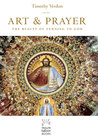
Art and Prayer: The Beauty of Turning to GodArt and Prayer: The Beauty of Turning to God by Timothy Verdon
There is an “art of prayer,” when faith and prayer become creative responses by which creatures made in the image and likeness of the Creator relate to him with help of the imagination. ... Richly illustrated, Monsignor Verdon explains that images work in believers as tools that teach them how to turn to God.
They had me at "richly illustrated." Over the years I have become more and more attracted to paintings as keys to helping me connect more honestly and deeply with God.

The book does indeed have many gorgeous pieces of art which are wonderfully explained and made personal by the text of the book. For example, looking at both the inset and whole painting of Piero della Francesca's Baptism of Christ, the author takes us through what the painter hopes to show us, the importance of the original setting for the piece and it's possible impact on the monks who would have seen it daily, and the importance of interior transformation for every one of us. He then uses the painting's landscape to segue into nature, Scripture, and imagination before moving on to the next piece for inspiration. All this is by page 6, by the way.

Needless to say, I am finding this thought provoking, eye opening, and inspirational. This is a gem.


Light Upon Light: A Literary Guide to Prayer for Advent, Christmas, and EpiphanyLight Upon Light: A Literary Guide to Prayer for Advent, Christmas, and Epiphany by Sarah Arthur

One of my favorite inspirational books is At the Still Point (my review here). It is an unusual devotional for ordinary time with thematically arranged classic and contemporary fiction and poetry which pulls the reader deeper into prayer and worship.

My one wish was that it would be popular enough that author Sarah Arthur would do similar devotionals for the other liturgical times of the year. With Light Upon Light, my wish is  coming true. Appropriate themes take us through the liturgical seasons from expectation and longing to joyful arrival and the cost of such a gift as Christ's incarnation. There is traditional and modern poetry, as well as literary excerpts which are not confined to those we'd expect such as A Christmas Carol (though that is there also).

This is a real treasure, not least because it may introduce you to new sources of inspiration you wouldn't have encountered otherwise.

Monday, October 13, 2014

Well Said: Success and Failure

Success isn't permanent and failure isn't fatal.
Mike Ditka
And if he could say it, then it must be true. At least for football. But I need this reminder too, as the product of a society that preaches perfection is the only acceptable result.

Be Careful What You Wish For ...

We go to the most formal of our parish Masses with a full choir and the most likelihood of having older songs selected. As my husband puts it, "the good ones, written before 1900."

So some time ago when we began singing the "Lamb of God" bit of the liturgy in Latin (Agnus Dei) I though it was charming. Since it was short I was able to go through the mental translation into English while I was singing and still get something out of it.

Then, months ago, the Glory to God in the Highest went partially to Latin (Gloria in excelsis Deo). I likewise mentally translated that. It was getting painful (I ain't that good at it) but I was hanging on.

Recently we had the third Latin encroachment and the "Holy, holy, holy" turned completely into the Sanctus. This was too much for me to mentally translate and I took the tactic of lowering my head and murmuring the English words to the tune. Otherwise I was left in the cold for any meaning on this third section.

Unusually enough, I didn't mention it to anyone, not even my husband. I thought of Augustine asking Ambrose about different customs and receiving the advice, "When you are in Rome, live in the Roman style; When you are elsewhere, live as they live elsewhere." But I really saw the wisdom of the Novus Ordo being in a language we commoners could understand.

This Sunday the Sanctus went back into English. As I listened to the lector teaching the congregation and heard the "solemn modern" tune, I looked at Mary's statue and thought, "What would Mary do? She would do what the elders of the temple said." I inwardly laughed, thinking that I got the English I wished for, but at a cost.

So I resigned myself and forgot it until that moment broke upon us during the Mass. I sang and looked at the crucifix. I thought of the real suffering of Christ and my whining about a simple tune. In the middle of these thoughts I was startled at what shot abruptly and sharply into my mind, "Hey, I have to listen to it. Just sing."

So I sang. And laughed.

I love a mutual sense of humor.

Dallas - 30. Seattle - 23.

With 14 of the Seahawk's points were given to them by the Cowboys special teams.

In Seattle, one of the toughest locations for teams to visit.

I was honestly dreading this game, fearing a meltdown under pressure. But they turned in a solid performance such as I hardly dared hope for.

HOW 'BOUT THEM COWBOYS!

Saturday, October 11, 2014

Friday, October 10, 2014

Blogging Around: Heavenly Spy, Casablanca, Big Weddings, Singing Nun, Gone Girl, and the Catholic No-Go

Heavenly Spy

A new blog ... Lebanese Catholic ... with some interesting things to say. Check it out and say hi!

Gone Girl and Christian Engagement With Art

Jeffrey Overstreet on a subject dear to his (and my) heart. Be sure to read it all because this is just the tip of the iceberg.
... there is a distressing delusion at the heart of so much Christian engagement with art: It's the delusion that says "The style and the substance are two different things. We should care much, much more about substance than we do about style.

Here's the thing: Style is substance.

Casablanca and the Four Main Types of Love

Ferdy on Films is not the place where I'd expect to find a discussion of how we see the four types of love as the Greeks defined it. What's more, Casablanca doesn't automatically spring to mind in this mix either. Definitely read this piece.
Casablanca is much more than just a boy-meets-girl kind of romance, and to show that, I’m going to have to go all schoolmarm on you. The birthplace of most of the philosophies that guide Western societies is Greece, and the Greeks had four terms for the main types of love human beings experience: agape, eros, philia, and storge. Agape means love in a spiritual or humanitarian sense, wanting the good of another. Eros, the most common love in Hollywood romances, is the passionate love of longing and desire. Philia is more general and can extend to family, friends, or activities. Finally, storge is natural love, as by a parent for a child; importantly, Greek texts also use this term for situations people must tolerate, as in “loving” a dictator. Casablanca activates each of these forms of love, giving audiences a quadruple whammy of loves so powerful that the film has become the stuff of legend, with well-remembered quotes that distill the essence of these forms of love.

Singing Nun Sister Christina Releasing an Album for Christmas

I've seen just enough Sister Christina clips from Italy's "The Voice" tv show to know one thing. I want this album. Old news maybe but I thought you'd like to know ... read more at The Deacon's Bench.

Mega-Weddings: Why You Should Say I Don't

Although this showed up in the WSJ's financial section it could easily have been an advice column. Financial strain isn't the only thing wrong with extravagant weddings. It may be an early indicator to underlying problems. It seems to me that if more couples were paying for their own weddings instead of relying on fond parents to cough up the cash, this might be less of a problem.
"The evidence suggests that the types of weddings associated with the lower likelihood of divorce are those that are relatively inexpensive but high in attendance," write Messrs. Francis and Mialon.
(This is a subscriber only feature on the internet. But if you look it up on Google and click through there you should be able to read the whole thing.)

Why is Gay Marriage the Catholic No-Go?

This question comes up more and more, especially as the Synod on the Family is going on in Rome. Jen Fitz sets it out for us clearly and understandably.
I’d like therefore to review some of the myths concerning Catholic teaching on same-sex attraction and Church participation, because the reality is both more extreme and not nearly as extreme as people guess, and that paradox is what bites.

Thursday, October 9, 2014

Well Said: Obsessed With Purpose

Would it not be strange if a universe without purpose accidentally created humans who are so obsessed with purpose?
Sir John Templeton

Wednesday, October 8, 2014

Pasta Sauce and a Little English Village

A couple of things I've got located elsewhere:

- Spicy Sausage Ragu, perfect for Fall weather, at Meanwhile, Back in the Kitchen

- Another Place, a little English village just like the kind you might find in The Twilight Zone, at Forgotten Classics.

Worth a Thousand Words: Badger

Badger
taken by Remo Savisaar
I hear "Badger" and think of The Wind in the Willows. Somehow those illustrations and my mental pictures don't match the badger in this image. I love the nose. Just imagine how helpful it is in tunneling and finding one's way underground. Or perhaps the idea that they live in underground comes from The Wind in the Willows. I'm not sure about that...