Tuesday, October 14, 2014

Art, Poetry, and Literature: Two New Books on Prayer You Need to Get

I haven't done more than dip into these books but I already know enough to recommend them. Full reviews will follow but I didn't want to wait until I was finished to tell you about them.


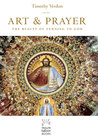
Art and Prayer: The Beauty of Turning to GodArt and Prayer: The Beauty of Turning to God by Timothy Verdon
There is an “art of prayer,” when faith and prayer become creative responses by which creatures made in the image and likeness of the Creator relate to him with help of the imagination. ... Richly illustrated, Monsignor Verdon explains that images work in believers as tools that teach them how to turn to God.
They had me at "richly illustrated." Over the years I have become more and more attracted to paintings as keys to helping me connect more honestly and deeply with God.

The book does indeed have many gorgeous pieces of art which are wonderfully explained and made personal by the text of the book. For example, looking at both the inset and whole painting of Piero della Francesca's Baptism of Christ, the author takes us through what the painter hopes to show us, the importance of the original setting for the piece and it's possible impact on the monks who would have seen it daily, and the importance of interior transformation for every one of us. He then uses the painting's landscape to segue into nature, Scripture, and imagination before moving on to the next piece for inspiration. All this is by page 6, by the way.

Needless to say, I am finding this thought provoking, eye opening, and inspirational. This is a gem.


Light Upon Light: A Literary Guide to Prayer for Advent, Christmas, and EpiphanyLight Upon Light: A Literary Guide to Prayer for Advent, Christmas, and Epiphany by Sarah Arthur

One of my favorite inspirational books is At the Still Point (my review here). It is an unusual devotional for ordinary time with thematically arranged classic and contemporary fiction and poetry which pulls the reader deeper into prayer and worship.

My one wish was that it would be popular enough that author Sarah Arthur would do similar devotionals for the other liturgical times of the year. With Light Upon Light, my wish is  coming true. Appropriate themes take us through the liturgical seasons from expectation and longing to joyful arrival and the cost of such a gift as Christ's incarnation. There is traditional and modern poetry, as well as literary excerpts which are not confined to those we'd expect such as A Christmas Carol (though that is there also).

This is a real treasure, not least because it may introduce you to new sources of inspiration you wouldn't have encountered otherwise.

Monday, October 13, 2014

Well Said: Success and Failure

Success isn't permanent and failure isn't fatal.
Mike Ditka
And if he could say it, then it must be true. At least for football. But I need this reminder too, as the product of a society that preaches perfection is the only acceptable result.

Be Careful What You Wish For ...

We go to the most formal of our parish Masses with a full choir and the most likelihood of having older songs selected. As my husband puts it, "the good ones, written before 1900."

So some time ago when we began singing the "Lamb of God" bit of the liturgy in Latin (Agnus Dei) I though it was charming. Since it was short I was able to go through the mental translation into English while I was singing and still get something out of it.

Then, months ago, the Glory to God in the Highest went partially to Latin (Gloria in excelsis Deo). I likewise mentally translated that. It was getting painful (I ain't that good at it) but I was hanging on.

Recently we had the third Latin encroachment and the "Holy, holy, holy" turned completely into the Sanctus. This was too much for me to mentally translate and I took the tactic of lowering my head and murmuring the English words to the tune. Otherwise I was left in the cold for any meaning on this third section.

Unusually enough, I didn't mention it to anyone, not even my husband. I thought of Augustine asking Ambrose about different customs and receiving the advice, "When you are in Rome, live in the Roman style; When you are elsewhere, live as they live elsewhere." But I really saw the wisdom of the Novus Ordo being in a language we commoners could understand.

This Sunday the Sanctus went back into English. As I listened to the lector teaching the congregation and heard the "solemn modern" tune, I looked at Mary's statue and thought, "What would Mary do? She would do what the elders of the temple said." I inwardly laughed, thinking that I got the English I wished for, but at a cost.

So I resigned myself and forgot it until that moment broke upon us during the Mass. I sang and looked at the crucifix. I thought of the real suffering of Christ and my whining about a simple tune. In the middle of these thoughts I was startled at what shot abruptly and sharply into my mind, "Hey, I have to listen to it. Just sing."

So I sang. And laughed.

I love a mutual sense of humor.

Dallas - 30. Seattle - 23.

With 14 of the Seahawk's points were given to them by the Cowboys special teams.

In Seattle, one of the toughest locations for teams to visit.

I was honestly dreading this game, fearing a meltdown under pressure. But they turned in a solid performance such as I hardly dared hope for.

HOW 'BOUT THEM COWBOYS!

Saturday, October 11, 2014

Friday, October 10, 2014

Blogging Around: Heavenly Spy, Casablanca, Big Weddings, Singing Nun, Gone Girl, and the Catholic No-Go

Heavenly Spy

A new blog ... Lebanese Catholic ... with some interesting things to say. Check it out and say hi!

Gone Girl and Christian Engagement With Art

Jeffrey Overstreet on a subject dear to his (and my) heart. Be sure to read it all because this is just the tip of the iceberg.
... there is a distressing delusion at the heart of so much Christian engagement with art: It's the delusion that says "The style and the substance are two different things. We should care much, much more about substance than we do about style.

Here's the thing: Style is substance.

Casablanca and the Four Main Types of Love

Ferdy on Films is not the place where I'd expect to find a discussion of how we see the four types of love as the Greeks defined it. What's more, Casablanca doesn't automatically spring to mind in this mix either. Definitely read this piece.
Casablanca is much more than just a boy-meets-girl kind of romance, and to show that, I’m going to have to go all schoolmarm on you. The birthplace of most of the philosophies that guide Western societies is Greece, and the Greeks had four terms for the main types of love human beings experience: agape, eros, philia, and storge. Agape means love in a spiritual or humanitarian sense, wanting the good of another. Eros, the most common love in Hollywood romances, is the passionate love of longing and desire. Philia is more general and can extend to family, friends, or activities. Finally, storge is natural love, as by a parent for a child; importantly, Greek texts also use this term for situations people must tolerate, as in “loving” a dictator. Casablanca activates each of these forms of love, giving audiences a quadruple whammy of loves so powerful that the film has become the stuff of legend, with well-remembered quotes that distill the essence of these forms of love.

Singing Nun Sister Christina Releasing an Album for Christmas

I've seen just enough Sister Christina clips from Italy's "The Voice" tv show to know one thing. I want this album. Old news maybe but I thought you'd like to know ... read more at The Deacon's Bench.

Mega-Weddings: Why You Should Say I Don't

Although this showed up in the WSJ's financial section it could easily have been an advice column. Financial strain isn't the only thing wrong with extravagant weddings. It may be an early indicator to underlying problems. It seems to me that if more couples were paying for their own weddings instead of relying on fond parents to cough up the cash, this might be less of a problem.
"The evidence suggests that the types of weddings associated with the lower likelihood of divorce are those that are relatively inexpensive but high in attendance," write Messrs. Francis and Mialon.
(This is a subscriber only feature on the internet. But if you look it up on Google and click through there you should be able to read the whole thing.)

Why is Gay Marriage the Catholic No-Go?

This question comes up more and more, especially as the Synod on the Family is going on in Rome. Jen Fitz sets it out for us clearly and understandably.
I’d like therefore to review some of the myths concerning Catholic teaching on same-sex attraction and Church participation, because the reality is both more extreme and not nearly as extreme as people guess, and that paradox is what bites.

Julie and Scott read a vampire novel by a horror writer they feel will be popular one day.

Keep writing Steve! Success is just around the corner! Yes, we've arrived at 'Salem's Lot ... launching our celebration of October at A Good Story is Hard to Find podcast.

Thursday, October 9, 2014

Well Said: Obsessed With Purpose

Would it not be strange if a universe without purpose accidentally created humans who are so obsessed with purpose?
Sir John Templeton

Wednesday, October 8, 2014

Pasta Sauce and a Little English Village

A couple of things I've got located elsewhere:

- Spicy Sausage Ragu, perfect for Fall weather, at Meanwhile, Back in the Kitchen

- Another Place, a little English village just like the kind you might find in The Twilight Zone, at Forgotten Classics.

Worth a Thousand Words: Badger

Badger
taken by Remo Savisaar
I hear "Badger" and think of The Wind in the Willows. Somehow those illustrations and my mental pictures don't match the badger in this image. I love the nose. Just imagine how helpful it is in tunneling and finding one's way underground. Or perhaps the idea that they live in underground comes from The Wind in the Willows. I'm not sure about that...

Tuesday, October 7, 2014

What We're Watching: Person of Interest

After last season's ending I really wasn't sure where this series would be able to go.

Having watched the first two episodes I can say that it was a fascinating job of reorientation to "the same old thing" of working the numbers to save people and simultaneously adjusting to the fact that our heroes are the hunted.

Most interesting of all was the strong moral statement in the first episode from the most psychopathic character. Just as I've mentioned before, it is a pleasure to watch a show that affirms so many of the values I hold.

Finch: In the face of such a struggle what do one or two lives matter?

Root: Every life matters. You taught me that.

We often see the greater good for the greatest number being held up as an ideal but this show repeatedly points out that we can't ignore each person, no matter how easy it would make our lives.

The second episode ended by strongly affirming free will.

Finch is struggling with how to convince someone to make the right choice, wondering if The Machine would give him a plan for manipulation. Root points out that "she" (The Machine) would tell him just what he taught it ... that each person must make their own decisions. As happened in the last season, we were left longing for someone to make the right choice, knowing that force would not have served in the long run.

All that with Michael Emerson and Jim Caviezel too. What a pleasure!

Well Said: The Humble Man

The humble man receives praise the way a clean window takes the light of the sun. The truer and more intense the light is, the less you see of the glass.
Thomas Merton
Yes. Am I letting Christ shine through me? Only if my best self is there to let Him do so. Looking at myself, looking at Christ, it makes me so grateful for His grace and the gift of confession.

Monday, October 6, 2014

Well Said: If a man dethrones God in his heart ...

If a man dethrones God in his heart, Satan must ascend to His position.
Stephen King, 'Salem's Lot
Foreshadowing of The Stand! I've seen several things as I read which King later picked up on and developed in The Shining and The Stand. It is interesting to read this earlier work with those so firmly in mind.

Scott chose Salem's Lot to launch October's Halloween emphasis at A Good Story is Hard to Find and I've got to say I rarely have enjoyed disliking a story more. King really conveys with conviction the utter contempt that evil carries for anything good.

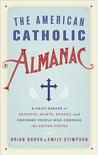
The American Catholic Almanac: A Daily Reader of Patriots, Saints, Rogues, and Ordinary People Who Changed the United States

The American Catholic Almanac: A Daily Reader of Patriots, Saints, Rogues, and Ordinary People Who Changed the United StatesThe American Catholic Almanac: A Daily Reader of Patriots, Saints, Rogues, and Ordinary People Who Changed the United States by Brian Burch

My rating: 4 of 5 stars


I'm a sucker for daily readers whether they are devotionals, writings of the saints, or historical almanacs. So if you combine American History with Catholicism naturally I'm going to be interested. I grew even more interested when a cursory glance revealed that General Longstreet, Buffalo Bill, and General Sherman were all Catholics. I did know that John Wayne became Catholic but not that famed director, and Wayne's longtime friend, John Ford was Catholic. Some of these famous men were more devout than others, some were late comers to the faith, but Catholicism helped define who each of them were.

The American Catholic Almanac by Brian Burch and Emily Stimpson looks not only at famous Catholics but at famous people who flirted with the faith in one way or another (Ronald Reagan and Mark Twain among them) although they never went all the way. It also tells us about people and events who are much less known but should be remembered by all of us today.

I was really interested to see how many "modern" hot button topics were a struggle for Catholics much earlier in our history. Separation of church and state became a Catholic issue in 1828 when schismatic priests appealed to President Andrew Jackson complaining the pope was acting like a "sovereign ruler." Nuns of today who shed their habits as a sign of "freedom" might be surprised to learn that in 1843 the Sisters of Mercy longed for the freedom to wear their habits but had to wear secular clothing because of the prevalent anti-Catholicism. The eugenics enthusiasts of 1927 would be openly approving of today's ability to test for such things as Down's Syndrome and would approve even more of the modern trend to abort any baby who the test shows might have it. We haven't really progressed as far as we'd like to think in that area. And those who lambast today's courts for not holding the high ideals of old times, might be surprised to learn that the Supreme Court supported Virginia's eugenics law with only one justice, a Catholic, dissenting. The authors don't make those comparisons for us, by the way. They leave us to draw our own conclusions and simply present the facts for our perusal.

It's not all serious, of course. In addition to tales of the famous people I mentioned above, there are stories of explorers, tales of churches, celebrations of faithful Catholics, and reminders of those who were not a credit to the faith. There is no telling when something will pop up to remind you how you are connected to the faith throughout our history and across our country. I was surprised to learn there is a cathedral in Dodge City, Kansas, where I lived for a year and a minor basilica in Victoria, Kansas. My husband and I were interested to read about the founding of St. Mary's in Galveston, Texas, because that is the church his grandmother fled to as a child during the devastating 1900 hurricane. It stood and she survived.

Speaking of my husband, I must praise the cover for this book which caught his attention and made him begin perusing it. He's not given to reading about Catholicism but this grounding of it in American history is right down his alley. Chalk one up for the value of having a printed book around to pique interest and keep him asking, "Who is it about today?" when he sees me pick it up for breakfast reading.

The one flaw is that it needs an index. There are a few appendices but if you want to find Sherman or Longstreet or Edgar Allen Poe then you've got to page through the book hoping they aren't too buried in the pages. Hopefully there will be a reprinting and this lack can be rectified.

Regardless of the lack of an index, this is a really great book and I highly recommend it.

NOTE
I received a review e-book and print copy of this work. My comments, as readers here know, are solely my own opinion.

Friday, October 3, 2014

The Joyful Beggar by Louis de Wohl

The Joyful BeggarThe Joyful Beggar by Louis de Wohl

My rating: 4 of 5 stars


What is it with Louis de Wohl's books? They're like peanuts or popcorn. You just keep tossing back handfuls because they're so good and go down so tastily.

I received The Joyful Beggar on a Saturday at noon in the mail. Sunday at noon I was 75% done. It really grabbed me, obviously. I should've expected that since I've had that reaction to de Wohl's books before. They are consistently entertaining, historical fiction of saints and the times in which they lived.

I'm aware of the details of St. Francis's life but have never felt much connection with this saint. I wondered if sinking deeper into his life could help my life as a Christian. That's another of Louis de Wohl's talents, by the way. Whether or not you feel a personal affinity for someone, he brings to light aspects of their lives that illuminate your own.
Sharp as a blade, the Pope's mind put it all together. This beggar was a troubadour, a Minnesanger, as they called them in Germany, a "singer of love," but for once here was one who was singing in praise of the Love of God.

"I am the poor woman in the desert," Francis explained merrily. "And I trust my Lord, the King. he will look after my sons."

A jester and a dancer; a beggar and a troubadour; a preacher, a monk, a teller of parables, and perhaps a saint: there was no end to the man. If Satan could distort the minds of many to preach against the Church in the name of purity, here was one who could preach for the Church in the same name; here was, perhaps, the antidote against the poison in the veins of Europe, the man to give fresh life to a world grown cold. And therefore this man could be, nay, was the one who held up the falling walls of the Church. And that was all Innocent wanted to know.
What I felt after reading this book was Francis's joy in serving, his release from fear, his complete trust in God. I especially appreciated the way Francis connected Brother Sun and Sister Moon and all the other elements of his famous Canticle of the Sun with Jesus. It was that connection which made nature holy, the connection with our Lord in his Incarnation. Beautiful.

As always, de Wohl shows us the saint's story through other imagined characters who have their own journeys to God. This is very useful for explaining the history and customs of the times. Quite often there is a contrast which layers meaning and context for the overall power of that particular saint. In this book there were both Clare of Assisi on her own journey to holiness and Roger of Vandria, continually striving to simply regain his ancestral lands. As they grow so do we.
"In that case, why not make a test?" Francis suggested. "Let a great fire be lighted before your tent, and these learned priests of yours and I will enter it. Then God may show which is the true faith."

Roger gasped. If that was supposed to be a bluff, it was a very dangerous one. There were fanatics enough among Moslem priests, and at least some of them might accept the challenge.

The sultan glanced at his imams and mullahs. they looked a little vague, as if they had not understood the little dervish's words, and one of them, standing at the back, began to move with great dignity toward the exit of the tent.

"I don't think my priests are very likely to consent to this test of yours, little dervish," Al Kamil said, smiling.

He's got out of it, Roger thought, half relieved, half angry.

"Then I will enter the fire alone," Francis said quietly, "If you promise for yourself and for your people that you will worship Christ if I come out of the fire unhurt." After a little pause he added, "If I should be burned to death, it will be due only to my sins. But if God protects me, it is a clear sign of his holy will, and you must all accept Christ.

Now he has killed himself, Roger thought. This is too good a spectacle for the sultan to miss. The man is mad. He is a fanatic. He is magnificent. By all the angels and devils, he is the only crusader in the army. What a pity he is done for. Those priests will take him at his word, even if the sultan doesn't.
Did I wind up best friends with Francis of Assisi? No. But we can't be best friends with everyone. I did, however, wind up as more than a casual acquaintance with my own life enriched thanks to the story of the joyful beggar.

NOTE:
This is a review book from Ignatius Press. This opinion is my own, uninfluenced by anything as paltry as a free book. As anyone is well aware who reads this blog regularly.

For a good overview of the novels, take a look at Rose Trabbic's piece Discovering the Novels of Louis de Wohl. Also well worth reading is Will Duquette's review of The Citadel of God where he gives a concise commentary on de Wohl as an author, with which I completely agree.

Wednesday, October 1, 2014

Worth a Thousand Words: Pepsi 12 Oz.

Pepsi 12 Oz.
painted by James Neil Hollingsworth
I'm continually in awe of James Neil Hollingsworth's realistic paintings. Just look at the way the empty bottle refracts the box. This one is best viewed large to really appreciate it. If you click through the link and then on the painting you'll see what I mean.

Tuesday, September 30, 2014

The Sacred Year by Michael Yankoski

The Sacred Year: Mapping the Soulscape of Spiritual Practice -- How Contemplating Apples, Living in a Cave, and Befriending a Dying Woman Revived My LifeThe Sacred Year: Mapping the Soulscape of Spiritual Practice -- How Contemplating Apples, Living in a Cave, and Befriending a Dying Woman Revived My Life by Michael Yankoski

My rating: 4 of 5 stars

Father Solomon spoke again, and the shaking of my foundation continued. "The God who called you into existence ex nihilio—out of nothing—is the same God who holds you in existence this moment and every moment. Were he to withdraw his hand, you would vanish wihtout memory. All things would. No, you can't make God love you. You can't make God like you. But nor do you need to; he already does. Never forget that is why he made you—because he wants you to exist. He wants you to live life in all its fullness."
Now this is interesting. What happens when a Protestant motivational speaker realizes he is in perpetual inner turmoil, goes to a monastery to rest for a week, and takes a monk's advice to explore spiritual practices for a more authentic encounter with God? Is there a way to live intentionally that shapes us so we can better catch God's wind in our sails and "allow Him to move us?"

Catholicism has a long tradition of various disciplines designed to help believers do this. Not every Catholic practices such disciplines. It just depends on the person. Yankoski's dive into different spiritual practices is a bit more extreme than the average Catholic, I'd say, because he's meeting every few weeks with a spiritual director and their conversations lead him from one discipline into another.

This is interesting me both as a Catholic and as someone who too often skirts the shallow end of the pool. Which is probably why the Patheos book club began soliciting Catholics to read this book.

Right from the beginning this book is compelling. I'm more or less familiar with most of the practices that Yankoski engages with. Some are part of me, like lectio divina, and keeping the Sabbath. Others I dance around, trying and leaving, then returning to again occasionally. Yet others I have sampled and found not to be helpful.

Every chapter in the book had at least one moment that made me more aware. I've practiced keeping the Sabbath for several years now. And so while I was nodding my head at some of Yankoski's realizations on that topic, he also had some wonderful moments like this one which opened my eyes.
One thing this Sacred Year is beginning to show me is how each of these spiritual practices can work like an antidote to some of the more poisonous aspects of our culture today. Tey are refreshing and life giving, whereas so often the habits and methods I've developed in my frenzied, stressed-out life are deadly poisons. The spiritual practices work like balm on wounds,healing even if painful at first.

Thus silence counteracts noise. And contemplation counteracts commodification.

Might Sabbath counteract the idol of the self-made man?

No wonder I mocked Sabbath at first: idols always die hard.
I have to say there are some practices that I had a hard time accepting that the author was coming to completely unawares, such as being aware of how our lives often affect those who are less fortunate (think Chinese children working in shoe factories sort of situations). That is, after all, one of the cries of conscience of our secular society, to be aware of how privilege comes at such a cost. However, perhaps it had never occurred to him to connect it with faith somehow. However, even these chapters had moments that were valuable for me.

This book is inspirational for any Christian who struggles with how to be "in the world" and yet not "of the world." That is a line that both Catholic and Protestant struggle with. If we read enough history, we know that it is also something that not only modern people have struggled with. Michael Yankoski discovered that turning to these spiritual traditions eases the way to help us "live life in all its fullness" ... and he shares that discovery with us.

I really enjoyed this book and will be rereading it.

Note: I wish they'd have included an appendix briefly explaining how to do some of the traditional practices (like the Examen).

REVIEW COPY PROVIDED FREE
The review copy was provided by the Patheos Book Club. Publishers pay for Patheos to feature their books. My review is my own based solely on the book's merits.

Well Said: Pope Benedict is like the "grandfather of all grandfathers"

Retired pontiff Benedict XVI joined some 50,000 pilgrims in Saint Peter’s Square on Sunday, Sept. 28 for a meeting between Pope Francis and elderly people from around the world.

Welcoming his predecessor, the Holy Father described Pope Benedict as the “grandfather of all grandfathers.”

“I have said many times that it gives me great pleasure that he lives here in the Vatican, because it is like having a wise grandfather at home. Thank you!”
Catholic News Agency, via The Deacon's Bench
I love the idea of Pope Francis bumping into Benedict XVI in the garden in the evenings and the two of them exchanging a few words about whatever is on the Pope's mind at the time. For some reason that possibility just never occurred to me. It sounds very companionable and comfortable.

Saturday, September 27, 2014

Weekend Joke: Atheists


This is from xkcd (Randall Munroe) who graciously allows me to share his humor here.

He's got a new book out which has me drooling just having looked through the Amazon sample: What If? Serious Scientific Answers to Absurd Hypothetical Questions. It isn't cartoons, other than those which illustrate the answers. Orson Scott Card's review gives a good idea of what it's like.

Friday, September 26, 2014

Herbed Pita Crisps

You want to make these. Heck, you definitely want to eat these! Get 'em at Meanwhile, Back in the Kitchen.

In which a vacation turns into an encounter with gods older than recorded history ...

...  in our latest sampling of "tall tales told in taverns"  at Forgotten Classics podcast.

Great Expectations Time After Time

One of my GoodReads friends said that watching me try to force myself to finish Great Expectations was better than the book itself. I feel rather proud actually as my usual practice is to just toss a book when it's not working for me. Even the classics (especially Russian classics).

But this is Charles Dickens who I learned to love with A Tale of Two Cities, and who left me awestruck after reading Bleak House and Little Dorrit. And I am now quite glad I did. If you're interested, a tale of my trek through Great Expectations follows.

Great ExpectationsGreat Expectations by Charles Dickens

My rating: 4 of 5 stars


A kind friend gave me the Blackstone Audio read by Simon Prebble, a narrator whose shoes other readers are not fit to touch.

I've never really been interested in reading Great Expectations. However, it's been too long since I've had any Dickens in my life. At least a month or two. And that's too long.

Oh Dickens, Dickens. I'm still in the very early pages but already his little observations are making me laugh.

UPDATE
I really hate Pip. Really, really. However, I had a great breakthrough when I went and read G.K.Chesterton's introduction to this novel. It made me realize Dickens' boldness in writing a novel with an antihero. I realize he is far from the first to do so, but I really hadn't expected it since his other books that I've read have all had at least one likable heroic protagonist. This accounts for my difficulty in connecting with the book, which I'm a third of the way through. And it helps me to reorient mentally on the story.

Secondly, something Chesterton said made me go look at GE's chronology. I hadn't realized it was the next to the last finished novel Dickens wrote, thus making it more a more mature work. I realized that I needed to trust this author to show me something new, to sit back and let the story sink in, rather than to rush to judgment because I would like to give Pip a good smack.

Chastened ... I continue ...

UPDATE THE SECOND
Just can't make myself go back to this book after I stopped to read something else. Even fantastic narration can't make up for the fact that I'm just not into the story. If I pick this up, and anything is possible (!), it will be in print because that will go much faster than audio.

BEGINNING AGAIN and ENDING

Having finished all the Jane Austen books and casting around for a classic for "background" reading ... I thought I'd give this book yet another try. My method was to skim the second half of the book from my Kindle as fast as I could (a couple of hours ... I'm a topnotch skimmer). Naturally as the plot twisted and turned I found myself slowing down in many spots to enjoy the story's development. Oh Dickens ... you did it again. This is not Bleak House or Little Dorrit (or even A Tale of Two Cities) but the second half definitely redeemed the first half.

... AND ONCE MORE FROM THE MIDDLE
I am now listening to the second half in audio so I pick up the details I missed in my breakneck race through the print version. I picked up the library's audiobook which is by Michael Page and I like this narration much better, though I couldn't tell you why as Simon Prebble is a longtime favorite of mine. But, once again, it is making all the difference. Audio got me through Jonathan Strange and Mr. Norrell. It got me through The Lord of the Rings. It got me through C. S. Lewis's space trilogy. And now, it is redeeming Great Expectations for me.

I am really enjoying all the funny bits that Dickens includes in the midst of the drama, such as Pip and Bentley Drummle standing shoulder to shoulder refusing to give up the fire, or the Aged's reading of the newspaper aloud.

I still feel all the mooning after Estella to be quite boring but am willing to put up with it based on the rest of what is happing.

I was interested to see that this book has two endings. The original and the one that Dicken's good friend Edward Bulwer-Lytton asked for. I love that Dickens was so obliging as to write a second ending for him. My copy had both. I'm not sure which I preferred as both work well.

Well Said: Rain

Planting seeds inevitably changes my feelings about rain.
Luci Shaw
Context is all. The trick is to keep the context when it is outside one's immediate experience. Or to say it another way, the trick is thinking outside the box, thinking outside my box.

Being a Christian has made me much better at that because Jesus continually demands it. All you have to do is read the Gospels with any attention to see how He was always asking people to tilt their heads and look at things from a new angle, from God's angle. I forget to do that a lot of the time, but I do remember sometimes.

Worth a Thousand Words: French Mediterranean

French Mediterranean
via The French Sampler
I'd like to be able to look across the street (or plaza or whatever) and see this.

Wednesday, September 24, 2014

Die Schleuse

Die Schleuse (the lock)
painted by Edward B. Gordon
I can hear the waves slapping on the walls, feel the uncertainty of the boat not centered where it should go, in sum - I'm there.

Well Said: The Romance of Catholicism

Outside Christianity, the magic is not in life. For the pagan or neopagan progressive, life is pain followed either by endless nothingness or by endless reincarnations of endless pain. ...

But I am a Catholic. In my world, every sunrise is the trumpet blast of Creation, more astonishing than the bomb burst, and every nightfall is the opening of a vast roof into the infinite dance of deep Heaven, where the stars and planets reel and waltz to the music of the spheres. ...

Romance? Let me say something of the wild poetry that now rules my life.

I have a charm chalked on my front door to call a blessing down from wide Heaven. I carry a Rosary like a deadly weapon in my pocket and hang the medallion of Saint Justin Martyr, whose name I take as my true name, atop my computer monitor where he can stare at me.

Two angels follow me unseen as I walk, and I live in a world of exorcists and barefoot friars, muses and prophets, healers who lay on hands, mighty spiritual warriors hidden in crippled bodies, and fallen angels made of pure malicious spirit obeying their damned and darkened Sultan from his darkest throne in Hell. And I live in a world where a holy Child was born a secret king beneath a magic star, and the animals knelt and prayed. And from that dread lord, the small Child will save us.

You might think my world inane, or insane, or uncouth, or false, but by the beard of Saint Nicholas, by the Breastplate of Saint Patrick, and by the severed head of Saint Valentine, no one can say it is not romantic.

My life these days is a storybook story. If there were more romance in it, it would be enough to choke Jonah’s whale. Without Catholicism, there is no romance. Outside the Church, where are the miracles?

Should I hide this? Should I hide a world larger and more glorious than mortal worlds?

It is the only type of story worth a man’s time to tell or heed.

I enjoyed the entire article but when I got to the part excerpted above it was as if I had drums beating in the background, that martial music played in Battlestar Galactica. It was the same way I feel when I read St. Patrick's Breastplate aloud. I read this to my husband and to our priest. By the time I got done both were laughing and nodding and had a certain light in their eyes as they said, "Yes. Exactly!"

Tuesday, September 23, 2014

Well Said: Being Cynical and Naive

He remembers being both cynical and naive in those days. "I assumed humans were basically bad people and if you stumbled…you would be devoured," he says. "I don't believe that anymore." Instead, he has been heartened by the hospitality that he's encountered while traveling around the world, even in places he thought would be hostile to Americans. "It made me hopeful and made me feel better about the human species," he says. "We like to be good, we aspire to do good things, and we're generally trudging through life trying to do the best we can."
I like the realization that one can be "cynical and naive." Usually being cynical is represented as a response to "lost naivety." However, Bourdain puts his finger on the fact that often cynicism can be a response coming from a lack of experience. It was an eye opening realization to me.

Monday, September 22, 2014

Lagniappe: Egg McMuffin and Mobile Apps

Troubled by criticisms that it has fallen behind the times and is losing its appeal to hungry but progressive millennials, McDonald's is developing mobile apps allowing patrons to access data about the company's social responsibility.

This is the best news ever. And not just for young people. I can't tell you how many times I've been standing in line at McDonald's trying to decide whether to have the Sausage Burrito or the Egg McMuffin when the issue of the firm's social responsibility has suddenly popped into my head. And once that door swings open, I simply cannot get it closed.
Sometimes the joke just writes itself. Especially when the company's move smacks of desperation.

Blogging Around: the Super-Duper Long Edition

Saving Dr. Brantly: The Inside Story of a Medical Miracle
GetReligion tells us that another miracle, aside from that reported on Matt Lauer's NBC special about Dr. Brantly's recovery from Ebola, is that faith and the "miracle" aspect were fully discussed and never shied away from. Well done, Matt Lauer!

Why the Seal of the Confessional Can't be Broken

I try not to make a habit of wading into swamps, but there’s something going on in Louisiana that should not be ignored.1 The state Supreme Court ruled that, once a penitent has waived confidentiality, what was discussed in the sacrament of confession can be fair game in court. The diocese of Baton Rouge has recently appealed the case to the United States Supreme Court. The case is particularly challenging because the confession in question was made by a girl who was being abused by a parishioner, and it appears from her testimony that the priest did not do anything to help her.

Much of the discussion thus far has been about what Louisiana law requires and whether or not the seal of confession supersedes it. But this misses two important questions — one about what should have happened, and one about why the seal cannot be waived, even by the person who made the confession.
Sam Sawyer at The Jesuit Post has an excellent piece about why the seal of the confessional is so important. I've been surprised how much this topic has arisen lately in my life. Understandably, it first came up when Scott Danielson and I at A Good Story is Hard to Find podcast were discussing I Confess. Then my movie viewing group at Caruth Haven has had it pop up a couple of times.

If you haven't considered the topic, Louisiana is making sure that you do. This is important.

Dante's Lessons for Millenials

And then, a year ago, I stumbled into the Divine Comedy by accident. I was going through a deep personal crisis and couldn’t see any way out. One day, browsing in a bookstore, I pulled down a copy of Inferno, the first book of the Commedia trilogy, and began to read the first lines:

Midway along the journey of our life
I woke to find myself in some dark woods,
For I had wandered off from the
straight path.
(trans. Mark Musa)


Well, yes, I thought, I know what that’s like. Like me, Dante (the character in the poem) was having a midlife crisis. I kept reading and didn’t stop until months later, when I slogged with Dante through Hell, climbed with him up the mountain of Purgatory, and blasted through the heavens to see God in Paradise. All made sense after that pilgrimage, and I found my way back to life. I was, in a physical and spiritual sense, healed.
That’s the testimony of a forty-seven-year-old writer, late to wisdom. What if I had encountered Dante as a young man and taken the lessons the pilgrim learned on his journey to heart back then? Would I have had an easier time staying on the straight path? Perhaps. At least I would have been warned how to avoid the false trails.
Rod Dreher's been digging deep into Dante lately and I hear tell he's writing a book. Which I can't wait for, by the way. Having read the Divine Comedy once, I know that's not enough. It didn't hit me the way it did Dreher, but then I've been gobsmacked by Tolkien, C.S. Lewis, and Jane Austen lately. I'm working my way up to diving beneath the layers in Dante. If Dante doesn't sound like your cuppa tea, read Dreher's piece. Heck, read it anyway. He's good.

Comic Book Superheroes and the Moral Struggle

We all need guardian angels. In fact the Catholic Church teaches that we each have one – a supernatural entity assigned at conception, not to dominate us, but to prevent us being dominated; to defend us against our supernatural enemies, giving us the space to live our human lives in a world that is much bigger and scarier than we think (what the Rangers do for the Shire in The Lord of the Rings). Comic book superheroes and supervillains are the angels and demons of this cosmic spiritual warfare reinvented for the secular imagination, and they resonate with us because on some level we know that we need them. At the same time, they give us something to aspire to (the corresponding Christian doctrine istheosis or divinization by grace). These are not all protectors sent to us from outside – like the boy from Krypton, or Thor – more often they are ordinary human beings (Peter Parker, Bruce Wayne, Tony Stark, Hal Jordan) who by providential accident or brilliant design find themselves possessed of a power beyond the lot of mortals. And “with great power comes great responsibility”, as they quickly learn. These are flawed human beings who have to become heroes, fighting alongside the guardian angels for the right of human beings to live a meaningful life. (“I have come to set them free,” says Loki. “Free from what?” asks Fury. “Freedom,” comes the reply.)
Stratford Caldecott, whose name I have come to know lately via my own Tolkien appreciation, wrote a wonderful piece that any lover of pop culture will enjoy. And those who decry pop culture may find hope in his words. Via Steven D. Greydanus.

Cardinal Dolan and the St. Patrick's Day Parade That Won't Go Away

An excellent piece from The Anchoress which I am sorry to say will probably be wasted on either side which has its mind made up. Another good piece on the topic comes from Pia de Solenni. And if anyone cares what the Cardinal himself has to say, he wrote a column about it for New York Catholic.

Concerning Pope Francis, "Trial Marriages" and Poorly Covered Media Rites

My friend Scott often remarks that when he hears reporting the latest "mold breaking" thing Pope Francis has said or done, then he knows it is time to look for indepth coverage. Because news bytes are inevitably wrong about how the Church works.

Here's an excellent piece from GetReligion which begins with the Catechism of the Catholic Church and then dives into how the news media has been representing Pope Francis' recent remarkable marriage of 20 couples. A follow-up piece, also from GetReligion, looks even further into the event and the heretofore unknown significance.

Your Marriage IS Worth Saving–And YOU Can Save It.

When Divorce is Not an Option: How to Heal Your Marriage and Nurture Everlasting Love is a book for couples who want to know what it takes to get their marriage back on track. Solo spouses can
also use the book to heal a marriage even if his or her mate isn’t interested in working on the relationship.
Dr. Greg Popcak, who I greatly respect, has a book that sounds as if a lot of couples could benefit from it.

Friday, September 19, 2014

Well Said: To Confess Your Sins to God ...

To confess your sins to God is not to tell him anything he doesn't already know. Until you confess them, however, they are the abyss between you. When you confess them, they become the bridge.
Frederick Buechner
I knew that. But I never saw it so perfectly worded before. Worthy of writing down on a Post-It just to keep in front of me for reflection.

Which Chili Will Mom Pick?

Texas-style or Cincinnati-style? Get the recipes and the story at Meanwhile, Back in the Kitchen.

Thursday, September 18, 2014

In which friendship, a newspaper, and a steam fish help our heroes home.

The finale of The People of the Mist by H. Rider Haggard. Hear it at Forgotten Classics podcast.

Emma by Jane Austen

Emma Emma by Jane Austen

My rating: 5 of 5 stars


What a terrific book! I'd heard about how unlikable Emma is as a character and I have to disagree. Yes, she can be infuriating but she is truly sorry for her mistakes, tries to change, and has a sense of humor when she catches herself falling back into her bad habits. I found her lively, open, and lovable. I especially loved the tender way she took care of her father.

Interestingly, everyone in the book falls prey at some point to Emma's habit of drawing completely wrong conclusions except Mr. Woodhouse and Miss Bates. I quickly grew very fond of both those characters who did everything with a great concern for those around them. It was just everyone's misfortune that they had such quirky ways of expressing their concern. Every time they would appear I'd settle back with great enjoyment to hear them talk since they were so hilarious (unintentionally on their parts, completely intentional on that of the author).

It was also interesting to see Austen work with such a closed society. Occasionally people would come or go but our focus is always on Highgate. It was almost like watching a scientific experiment as to what the effect would be on the settled social system by adding a young eligible bachelor or lowbrow social climber. And no wonder people would spend 15 minutes talking about how best to get the mail. Eventually that is one of the greatest points of interest in one's day with so few outside resources. Eventually I would begin laughing when one of those conversations would begin, wondering how long Austen could keep it going by having new people enter the conversation just when it was dying out.

I must mention that I listened to Juliet Stevenson's audiobook and it was simply superb. I credit her with the fact that I enjoyed Mr. Woodhouse, Mrs. Eliot, and Miss Bates so much. Her impeccable inflections, emphases, and characterizations made this book come alive.

All in all, a most delightful book.

Tuesday, September 16, 2014

Ancillary Justice discussion at SFFaudio

The SFFaudio gang (Jesse, Bryan Alexander, Tamahome and I) have mixed reactions to Hugo-winner Ancillary Justice (which I liked a lot, by the way).

Blog Tour for "The Feasts" - The Holy Angels

The Feasts: How the Church Year Forms Us as CatholicsThe Feasts: How the Church Year Forms Us as Catholics by Donald Cardinal Wuerl


I reviewed The Feasts yesterday. Today, as part of the blog tour, we'll take a look at The Holy Angels bit of the book which includes The Feast of Saints Michael, Gabriel, and Raphael on September 29 and the Memorial of the Guardian Angels on October 2.

Devotion to the angels is something integral to the life of God's people. It is a practice that christians and Jews have kept since ancient times, and for good reason. Angels do not move people like chess pieces. They live in relationship with us. The prophet Zechariah quizzed the angels sent to guide him. The young man Tobias spent days in conversation with his heavenly traveling companion. Saint Augustine often described our relationships with the angels as "friendship." God created us to be social, and our society is both earthly and heavenly. It includes family members who look like we do, and family members who are pure spirits and have no physical appearance whatsoever. Yet they are with us, and we should acknowledge them, and we should be grateful for their help.
The Feasts contains one of the best short summaries of angels I've ever seen. In just a few pages we are told the nature of angels and the Scriptural evidence, introduced to the archangels and guardian angels, and told about Michaelmas as a traditional day.

I know whereof I speak. I have read many books about angels.

I
really
like
angels.
A
lot.

What made me grab these feast days for the blog tour was recalling that in the fall after I entered the Church I was just beginning to observe the liturgical year a bit more than the basics. I had just splurged for the devotional In Conversation with God, Feasts July-December by Francis Fernandez when Tom's father had a stroke and we had to rush to Houston.

It was a dire time with much worse news than we could have imagined about his health. I remember brushing my teeth but needing something inspirational no matter how late it was in the day. Wanting to "do it right" I plunged in at our chronological point in time to see what upcoming feasts to expect. It was the Feast of the Archangels and the way this book did it was to not skimp over a single one. Michael, Gabriel, and Raphael each had their own fascinating three-part feast written up. And right behind it — the Guardian Angels! Hey, I'd been wondering about them!

The knowledge of those angels helped hold me up during those days of trial.

That was my first introduction to the idea that I could have my own relationship not only with angels but with feast days. I now have some that I celebrate although our local parish doesn't mention them. I know that somewhere in the world there are parishes who are uniting with me in celebrating yet another unique way that our lives are united to that of Christ.

In those early days I was fumbling my way through understanding feast days and angels and many other "basics" of Catholic life. I'd definitely have welcomed a book like The Feasts which not only informs but inspires.

Monday, September 15, 2014

Huzzah! Another Special Day! Reviewing "The Feasts" by Cardinal Donald Wuerl and Mike Aquilina

The Feasts: How the Church Year Forms Us as CatholicsThe Feasts: How the Church Year Forms Us as Catholics by Donald Cardinal Wuerl

My rating: 5 of 5 stars


The Church's calendar is an intricate, complex, and beautiful technology. It is the work of many human hands and human minds trained to deal with holy things. The seasons turn and the feasts interplay like the gears in a priceless clock. They regulate our religious life and enrich our spiritual life.

They seem to happen automatically, but only because the Church oversees the apparatus, averts temporal collisions, and finely tunes all the components to make the year as festive as it can be.
I am not sure exactly why but one of the things I have always loved about the Church is the liturgical year. The idea that there are a steady series of seasons and feast days linked with our calendar year enhances the richness of my life. Perhaps it is because my mother taught us to love nature and the turn of seasons simply because she herself loves them so much. Perhaps it is because, long before I was a Christian, I read and reread Rumer Godden's masterpiece In This House of Brede where the liturgical year is a continual background to the story.
“Don’t you see, it’s like a pageant. Our Cardinal has said the liturgy entertains as well as feeds us ... Yes, we’re not angels but humans," said Dame Clare, "and human nature is made so that it needs variety. The Church is like a wise mother and has given us this great cycle of the liturgical year with its different words and colours. You’ll see how you will learn to welcome the feast days and the saints’ days as they come round, each with a different story and, as it were, a different aspect; they grow very dear, though still exacting.”
Having unknowingly absorbed all that I suppose it is only fitting that I really enjoyed The Feasts. It covers the background and reasons for feast days, the liturgical calendar (and our calendar in general), and how these enrich our Christian lives. Even those of us who are well informed on the subject will find new information as well as good reminders of things we may have forgotten. For example this is supremely logical but just never occurred to me:
Sunday did not become simply a Christian version of the Sabbath. Christians were wary of enforcing a day of rest, as such enforcement had been turned on Jesus during his earthly ministry (see, for example, Mark 2:23-27). In any event, most Christians could not refrain from labor on Sunday because it was an ordinary workday in the Greco-Roman world.

Christian observance centered on the Mass, which was in most places offered very early in the morning (before work), but sometimes also in the evening (after work). ...
Certainly The Feasts is a worthy accompaniment to Cardinal Wuerl's and Mike Aquilina's previous two books, The Church and The Mass. Taken all together they provide a thorough, accessible, and much needed look at aspects of the Roman Catholic faith which seem very mysterious to outside eyes.

Tomorrow, I'll participate in the Blog Tour for this book by looking more closely at a particular feast. In this case, it will be that for The Holy Angels (which will surprise no one who is a regular reader of this blog).

Saturday, September 13, 2014

Weekend Joke: Changing that Light Bulb

Because those are some of my favorite jokes, don't you know? Here are my favorites.
How many Proletarians does it take to screw in a light bulb?

None, the light bulb contains the seeds of its own revolution.

=====

How many psychiatrists does it take to change a light bulb?

Only one but the light bulb has to want to change.

====

How many Boxers does it take to change a light bulb?

Doesn't matter. You can still play with the ball in the dark!

Friday, September 12, 2014

Cardinal Dolan and the Terrible, Horrible, No Good, Very Bad St. Patrick's Day Parade

Cardinal Timothy Dolan is going to be the Grand Marshal of the next St. Patrick's Day parade in New York. Which was fine and dandy until the parade organizers decided to allow a LGBT group to march with a banner.

So now you'll see a wide variety of Catholics speaking up on whether Dolan should still be Grand Marshal. Which he is, by the way.

My initial question is this: wasn't this LGBT group always marching? Why does them having a banner suddenly make it immoral, according to some, for the Cardinal to participate? Why weren't they bringing this up before? In my view very little has changed. Banner or no banner, this group would have been very obvious to anyone attending. To my mind, this is a non-argument for this very reason.

There's also some discussion out there that since the St. Patrick's Day Parade isn't really a "Catholic" event that the Cardinal shouldn't participate. So if he's ever asked to throw out the first ball at Yankee Stadium he should turn that down too? Again, I understand the sentiment, but this makes no logical sense.

The Curt Jester has a post which sums up various responses around the web, including links. I don't necessarily agree with The Curt Jester's personal conclusion, but his post contains some of the wisest words on the tempest over Cardinal Dolan's participation in the St. Patrick's Day Parade:
Still what it comes down to is my prudential answer to the situation, did not match the Cardinal’s prudential answer to the situation. God is his great wisdom and mercy did not make me a priest or worse a bishop. ..."
Would that more of us kept that in mind when discussing the situation.

I myself keep recalling how many ways Christ participated in common life while people tried to use situations to judge him ... paying taxes, teaching at the Temple, attending a Pharisee's dinner, eating with tax collectors (both Matthew and Zachaeus), recruiting a tax collector as a disciple (that had to be one of the worst offenses, right?), and so forth.

All these actions could be seen as making a public statement for or against a big issue. It just depended on what group you belonged to and what group you were worried about. In fact, some of the situations were setups for traps based on that very concept.

I don't know if Cardinal Dolan's choice is right or wrong. (I really can see the validity of the arguments on both sides, although the venom some exhibit is not at all Christian.) I do know it's not my choice to make and stewing about it isn't going to change things.

(Side note: I'm also struck by what a small issue this is when I look at what people were complaining about in our bishops ten years ago, when I began blogging. Compared to the weak examples back then on issues like abortion, Dolan still comes out on the side of the angels.)

I'm not a cardinal and I thank God that I don't have to juggle all the factors he does in trying to serve God. In fact, I think all of you should also be thankful I'm not in a position of any real power. God definitely knew what He was doing with that one.

No matter whose side you think is right in this situation, let's pray for our our priests, our bishops, our Pope, and Cardinal Dolan.

Thursday, September 11, 2014

Remembering the tragic, sudden, and violent loss of 2,996 innocent Americans

I guess it is a measure of how time softens blows that it was only as an afterthought I realized today would be September 11. That memory makes me reel a bit when I think of how powerful it was to visit the Flight 93 Memorial this summer.

I still have no better tributes than those I have from past years so I present this one here today.
I turn on the TV and watch as the plane slowly flies into the Tower.
Hail Mary, full of grace
My daughter wanders downstairs, shoes in hand,
Turns to look at what has me transfixed on a weekday morning.
The Lord is with thee.
"Where is that, Mommy?" she asks.
Blessed are you among women
"New York," I answer. She nods. The name is familiar,
Like Venus,
Like Mars
And blessed is the fruit of thy womb,
"Do we know anyone there?" Her eyes are blue and full of innocent concern.
Jesus.
"No," I answer, thinking of friends, family, business associates, safe here.
Holy Mary, Mother of God,
She has seen the green glass tower where I work,
Tucked amongst taller builders.
Pray for us sinners
But a skyscraper in one city looks much like one in the next.
Now
"Where's the tallest building in the United States?"
And at the hour of our death.
"Chicago."
Amen.
My daughter looks relieved.

I remember that day and how horrible it was.

I also remember the many accounts and how moved I was by the heroism showed by so many. Looking back through my accumulated links, it moves me still.

One of those heroes was Captain Daniel O'Callaghan, 42, Smithtown, N.Y., whose tribute I wrote for Project 2996. I am reposting Captain O'Callaghan's tribute today.

Other good links from previous tributes:

Tuesday, September 9, 2014

In which there are gemstones, treachery, insanity, and a rip-snorting roller coaster ride.

The penultimate episode of The People of the Mist shows that H. Rider Haggard saved the best for last. Holy mackerel, what a show! Hear it at Forgotten Classics.

Monday, September 8, 2014

Worth a Thousand Words: The Difficult Reply

Guy Rose, The Difficult Reply (also known as The Difficult Response), 1910
I discovered Guy Rose via Lines and Colors, as I have discovered so many wonderful artists. I really love Rose's use of vivid color and patterns. I feel as if I could step right into that room.

Saturday, September 6, 2014

Weekend Joke: Boudreaux and Marie

My favorite Cajun and his wife, Marie, for your weekend humor.
Boudreaux and Marie were having their first fight, and it was a big one.

After a while, Boudreaux said, "When we got married, you promised to love, honor and obey."

Marie replied, "I know. But I didn't want to start an argument in front of all dem people at the wedding."

Friday, September 5, 2014

Worth a Thousand Words: Whale & Mermaid

Whale & Mermaid
by Belinda Del Pesco
I feel as if Belinda should be illustrating children's books. I'd buy them just for the art. Yes, I am that sort of book buyer. I'd do it. She's also got a lot of good info about her process, as always.

Thursday, September 4, 2014

Book Talk: Jane Austen and Me

Northanger AbbeyNORTHANGER ABBEY.
It began with Northanger Abbey. I'm considering reading this on my podcast so I reread it after having done so many years ago.

(And then Jesse from SFFaudio asked if I wanted to discuss it in November. Hey, I can tell when a book is haunting me.)

I know this was an early work and also that it is not as polished or accomplished as Austen's later books. That being said, I am still very fond of this parody of Gothic literature which reminds us that novels are no substitute for experiencing life itself. And it consistently cracks me up. I'm also very fond of P.G. Wodehouse and this book almost falls into that category for me. It doesn't have to be deep to be enjoyable.

And, let's face it. I always go for funny and light when I'm given a choice. Thus are my foibles and sins easily revealed.


Sense and SensibilitySENSE AND SENSIBILITY.
I realized that I'd only read Austen's Pride and Prejudice and Northanger Abbey.

And none of her other books. No, I have no pride at all as a reader. In case you needed more than this as proof.

Plus, didn't you know Jane Austen is kind of boring and that if you've read Pride and Prejudice that you've skimmed the cream of the crop?

Well, maybe not. So I took steps to correct that oversight, beginning with this book.

It took me a while to pick up on what she was doing but I thoroughly enjoyed all the examples of "sense" and "sensibility" that Jane Austen thrusts at us from every direction. It made me appreciate the author's sly wit all the more as I took them in.

Also, I defy anyone reading this book to think that Jane Austen didn't understand the realities of life and only wrote milk-and-water novels. The string of ill-used women whose stories we are told by Col. Braden is realistic in the extreme, to say nothing of the revelations about Mr. Willoughby. The fact that Elinor took it all in stride also informs us about "what everybody knew" back in those days.

I myself was riveted by the romantic stories as well. Would love prevail in the way that seems most likely? Or would there be yet another plot twist to throw us into confusion? I finished this at breakneck speed.

There was a bit of "a shot rang out and everyone fell dead" in the sudden settling of everyone's situations, but all in all, a very satisfactory book which I know I will reread with much pleasure in the years to come.


Whoops! Where did this come from?

I was noodling around in the Kindle "recommended for you" section when I was partly through with Sense and Sensibility.

I like the way it is his memoir of learning how to grow up, with Austen as his guide, and also of how to read novels other than his favorite modernist authors. His self discovery is a nice way to let us in on the larger themes that can be easy to miss in Austen's mannerly comedies.

Also, his comments about Northanger Abbey made me stop apologizing for liking it so much. Turns out it isn't quite as lightweight as everyone likes to say it is.

I'm having to read it in fits and starts because the author can't really discuss the books the way he'd like to with having a few plot spoilers (though he does a pretty good job of it, I think).

I read the Emma chapter as a sample and decided these books have been out for hundreds of years so full speed ahead. That said, however, I had enjoyed watching Sense and Sensibility and Persuasion unfold so I decided to just read this as I went through the Austen books.

It also decided the order in which I'll finish reading the Austen books. Except for Pride and Prejudice which I've read more than once. I'll read that one last.


PersuasionPERSUASION.

Having read Northanger Abbey and Sense and Sensibility I suddenly became addicted to Jane Austen. Persuasion was like crack. The best of Georgette Heyer style storyline combined with Jane Austen's delightfully rapier wit. I stayed up late and grabbed it every time I had a spare five minutes.

Anne's long ago spurned suitor has returned, thinking her to be heartless while she moons over him from as far away as she can get. It's a story line I knew well, as do we all by now, but it also had me on tenterhooks.

I really can't believe how invested I was in this romance. If I sped through Sense and Sensibility, I rocketed through this book. It is practically perfect in every way. What a great novel!


MANSFIELD PARK.
I approached this with trepidation, having heard through the grapevine that the heroine is timid, dull, and not at all like the other Austen protagonists. Luckily that made me dip into the beginning of the Mansfield Park chapter in "A Jane Austen Education" which put the heart back in me and left me open to admiring Fanny for who she is. As well as seeing that she is there to make obvious the problems with the other players, much like Catherine in Northanger Abbey.

I'd really stalled out on this. Too much Austen in a row, methinks. And then, my much loved library branch got in Juliet Stevenson's narration of the book. I can't express strongly enough what a wonderful narrator Stevenson is. She brings out the humor, the incongruities that are hidden in a few words.

I had some basic layout work come up which left me with time to listen to the book, even though I was less than enthusiastic. Contrary to my expectations, it was a real treat to have this to listen to. And I am back on the Jane-train.

And I've got Stevenson's other Austen narrations on request for further listening. Next up will be Emma.
Tuesday, September 2, 2014

Worth a Thousand Words: Tomato Sauce

Tomato Sauce
by the talented Edward B. Gordon
You'd never know this was by a German painter. Except for the title, of course. That's not tomato sauce. Tomato sauce is something completely different. In the U.S. anyway.

Not sure how to spell it, but I do know what it is. And that just makes me think of The Simpsons.
Mr. Burns (at the grocery store): Ketchup. Catsup. Ketchup. Catsup. Mmmm... I'm in way over my head.

Well Said: Criticizing my taste

I have never listened to anyone who criticized my taste in space travel, sideshows or gorillas. When this occurs, I pack up my dinosaurs and leave the room.
Ray Bradbury, Zen in the Art of Writing
I've gotten better at leaving the room instead of arguing to the death. That doesn't mean I don't still argue, but I try to stop when we're all still alive.

Friday, August 29, 2014

Blogging Around

Sabbath as Resistance: Saying No to the Culture of Now by Walter Brueggemann

It’s a weekly retirement from your career. You can find out who you are without your job getting in the way, without your purchasing and competing distracting you from who you are rather than what you’ve won.

It’s a different kind of economy he’s talking about. Six days, we labor and buy and compete, which keeps the market economy moving forward. But then, for a day, we take part in an “economy of neighborliness.” We rediscover who we are.
Orson Scott Card discusses both keeping the Sabbath and Brueggemann's book. As someone who long ago gave in to obeying the 3rd commandment I can tell you that I'd deeply resent going back to treating Sunday like any other day. I'd feel cheated. Card's commentary is part of his Uncle Orson Reviews Everything column so you'll need to scroll down a bit.


SFFaudio's Spin-Offs and Origins

Later episodes take more inspiration from a show called Forgotten Classics.

And, subsequently, The SFFaudio Podcast has spun off, one with Julie Davis of Forgotten Classics, a couple of other podcasts (taking with them SFFaudio.com’s co-founder Scott D. Danielson):

Reading Envy with Jenny Colvin and Scott D. Danielson
A Good Story Is Hard To Find with Julie Davis and Scott D. Danielson
SFFaudio's got me coming and going. I recall when they were not podcasting but simply blogging about science fiction and fantasy audiobooks. They were one of my "must reads" every day and I was surprised and excited when they noticed Forgotten Classics. I'd never have foreseen at the time that I would become good friends with Jesse and Scott and others who have come on board since then.

So naturally I'm proud that my Forgotten Classics was a bit influential and just as proud to tip my hat to SFFaudio for providing some of the impetus to begin A Good Story is Hard to Find.


The Christus Experiment

Melanie Bettinelli at The Wine Dark Sea has a good review of The Christus Experiment, which I recall liking very well. If time travelers kidnapped Jesus for research what would happen? Not blasphemous at all, which is the first nice surprise. Read Melanie's review.


Eat Man Food and Lose Weight

The Art of Manliness repeats it yet again. Forget the fad diets. More calories in than calories used equals overweight. No matter what those calories came from. Twinkies. Pizza. Kale. Your choice. You've just got to keep track. And they've got guidelines for helping do just that.


Touching Story of a Once-Doomed Girl's New Life

In these 244 words, we have the basic elements of the story: Haleigh, whose life once hung in the balance, is alive today. Her adoptive parents are churchgoing evangelical Protestants who, in their faith-infused life, provide her with "a family and community" that bring her joy.
GetReligion points out all the good things about a story full of Christians who "walk the walk" in this story about a girl whose supporters fought to keep her on life support. It's inspirational.


James Foley and Shifting Thoughts on Martyrdom

As a theologian, I see the discussion of martyrdom advancing out of necessity. There are an increasing number of people dying for or because of their faith, including non Christians. What does their witness tell us about them and the type of people they were? Were they people who clung to the truth, insofar as they knew it, to the point of death? I think the conversation began with St. John Paul II. Pope Francis seems to be continuing it. Time will tell.
Pia de Solenni is someone who I've come to rely on for thoughtful consideration of the intersection of current news and faithful Catholicism. If you haven't come across her before this piece is a good place to begin. As well as providing some good context for the question at hand of martyrdom and James Foley.

In which Olfan is noble, Otter is clever, and Nam is treacherous. ...

... As usual. While on the lam. Will our adventurers escape? Chapters 36-37 are ready for your listening pleasure at Forgotten Classics podcast.

Lagniappe: Washington

From my quote journal.
I love to go to Washington--if only to be near my money.
Bob Hope
It's funny because it's true.

Thursday, August 28, 2014

Julie and Scott have an unnecessary fist fight on the ark ...

... over what Julie thought was a cheeseburger but was actually a previously unknown variety of armadillo. They talk about the guy that built the boat: Noah, directed by Darren Aronofsky.

All at A Good Story is Hard to Find podcast.

Wednesday, August 27, 2014

Bellwether by Connie Willis

BellwetherBellwether by Connie Willis

My rating: 5 of 5 stars

Sandra Foster studies fads and their meanings for the HiTek corporation. Bennet O'Reilly works with monkey group behavior and chaos theory for the same company. When the two are thrust together due to a misdelivered package and a run of bad luck, they find a joint project in a flock of sheep. But series of setbacks and disappointments arise before they are able to find answers to their questions.
This is my favorite Connie Willis book, hands down. She blends pop culture, scientific discovery, chaos theory, Robert Browning, fads and an infuriating office assistant to produce a book where thinking for oneself gets you blank looks of incomprehension. Willis's books come in two flavors, either funny or grim (as she herself describes her serious works). This is definitely one of the funny ones.

This was written in 1996 so it is interesting to see that certain fads have evolved and that some have floated away. (It's been a long time since I thought about Pet Rocks or mood rings, for example.) Listening to the audiobook, courtesy of SFFaudio, I realized that it gave me a real sense of perspective on a lot of things that drive me crazy by reminding me that these are simply the most current fads (Paleo / gluten-free diets, smart phones, SnapChat, etc.).  These too shall pass although the chaos will probably remain. And I'm actually ok with that.

Kate Reading's narration really brought the book alive. I especially enjoyed her characterizations of Flip, Management, and Shirl, all of which added extra fillips of humor to the story. Having read the book several times before listening, I was impressed how well she captured the main character that I "heard" mentally. I will definitely be listening to this the next time I need a dose of anti-fad sensibility.

This is a light, fun book which nonetheless has a core of common sense and deeper meaning.
Why do only the awful things become fads? I thought. Eye-rolling and Barbie and bread pudding. Why never chocolate cheesecake or thinking for yourself?

Tuesday, August 26, 2014

Well Said: Roger Ebert on Chocolat

"Chocolat" is about a war between the forces of paganism and Christianity, and because the pagan heroine has chocolate on her side, she wins. Her victory is delayed only because, during Lent, a lot of the locals aren't eating chocolate. [...]

I enjoyed the movie on its own sweet level, while musing idly on the box-office prospects of a film in which the glowing, life-affirming local Christians prevailed over glowering, prejudiced, puritan and bitter Druid worshippers. That'll be--as John Wayne once said--the day.
I miss that man so much. His clear vision, calling it like it is, and the grace with which he expressed himself. Yes, I miss him.