Friday, July 10, 2015

Worth a Thousand Words: Saints Justa and Rufina

Saint Justa, Bartolomé Esteban Murillo
The Meadows Museum

Once again, I'm going to remind anyone living in Dallas that The Meadows Museum at SMU is the city's best kept secret.

Thursday nights are free and so last night Tom and I had a date night perusing The Abelló Collection. It is one of top of private Spanish art collections, including works by some of the greatest artists from the 1500s through modern times. Some of the paintings were truly stunning and I was reminded that the computer is a flat way to see art.

We also went into the other half of the upstairs exhibit space where we encountered some paintings from the regular collection that we either didn't remember or were part of the concurrent exhibit: The Meadows Collects: 50 Years of Spanish Art in Texas.

At any rate, these two beauties by Batrolome Murillo (a favorite of mine) entranced me. I was drawn to them again and again.

I'll be sharing other favorites next week.


Saint Rufina, Bartolomé Esteban Murillo
The Meadows Museum

Thursday, July 9, 2015

Worth a Thousand Words: Common Blue Dameslfly

Common Blue Damselfly
taken by that master nature photographer Remo Savisaar

Reading Slump Solution: Hard-Boiled Detectives

It took Sherry at Semicolon to put a name to my recent reading problem. She talked about nothing appealing to her and said she was in a reading slump.

Yes! It's funny how having a label often brings focus to life.

I'd been drifting lately, with plenty of good books to read for upcoming podcasts but with nothing that really grabbed me, nothing that made it hard to turn out the light because I had to read just one more paragraph. I must have had this happen before but well into the third week I felt life had lost its savor. I never realized just how much I depend on books to invigorate me.

It was so bad that I went through several days without really reading for more than a few minutes at a time.

I know, right? I can't express how startled I was when I realized this.

The Long Goodbye - Raymond Chandler


The solution came from an unlikely combination. It went down like this:

They laid it out right up front. "Two days to do the layout for a 400 page book. Over 4th of July weekend," they said.

I drained the coffee cup. There were grounds in the bottom. The staff was getting sloppy. Maybe there was too much overtime all around. Or maybe they were just sloppy.

I crushed my cigarette in the ashtray.

"I can handle it."

"And revisions," they said, eyes glinting in the car light reflected from the big front window. "That'll be another couple of tough days."

"I said I can handle it!"
When basically tied to the computer for two to four days, what do you do? Load up an audiobook that packs maximum enjoyment and lets your brain glide over the action without having to pay too much attention. Luckily Audible recently put The Long Goodbye on sale and I'd bitten.

Ray Porter is a bit too straight-forward and forceful as Philip Marlowe. I always felt there was more of a laid-back sophistication underlying the dialogue. And I'm used to Porter laying it on thick when he reads Jonathan Maberry's Joe Ledger novels. But you can't beat him for doing the secondary characters. And, who knows? Maybe Marlowe was more of a straight-forward simple guy than I'm giving him credit for.

I'm about a third of the way into it and surprised at how modern the action, attitudes, and dialogue seem. This must have been like dynamite back in the days when it was brand-spanking new.

This began to wake me up but it wasn't something for the eyes, something to pick up and dive into when you couldn't devote time to listening. I needed more.

It was when looking over the Philip Marlowe books that I remembered Raymond Chandler's unfinished novel Poodle Springs was completed by Robert B. Parker. (Did you know there were seven? I had no idea.)

And I remembered it had been a heckuva long time since I'd read a Spenser novel. Even better, the library had the ebook available to download directly to my Kindle. (Sometimes I love living in the future with instant books.) I began instantly and found myself reading every spare moment right up to the time I was falling asleep with the book in my hand.

The Godwulf Manuscript - Robert B. Parker

"A pig is a pig," she said. "Whether he's public or private, he works for the same people."

"Next time you're in trouble," I said, "call a hippie."
Oh yeah, that's the stuff.

I encountered the Spenser novels in the early 1980s and became enamored. I'd never read anything like them.

Of course, I'd never read Dashiell Hammett or Raymond Chandler. I knew of them from movies but hard-boiled didn't appeal as reading material or even, at the time, as viewing material. It took a smart mouth like Robert B. Parker's detective, Spenser, to delight me and pull me into that world.

Now, decades later, I realize the legacy Parker was carrying on. Rereading this book while listening to The Long Goodbye, I really appreciate just how well Parker pulled it off.

For this particular book, the first of the series, it's interesting to me that I recall the solution to the big problem but I have absolutely no memory at all of most of the book. Terry Orchard and her string of problems are completely new to me.

So I am in the unique position of reconnecting with a well-loved literary friend and of reading a "new" book by him. What slump wouldn't that cure?

Next Rediscovery - Lieutenant Luis Mendoza mysteries by Dell Shannon

All these trips down memory lane made me remember a series that my parents loved. It was long running string of police procedurals set in Los Angeles featuring Lieutenant Luis Mendoza.

It has to have been unusual for a Hispanic homicide lieutenant to be the main character of these books but it never struck me at the time. I also never realized that Dell Shannon as a nom de plum.

Amazon says:
Debonair LAPD Lieutenant Luis Mendoza, broke new ground in being one of the first Latino police officers in the procedural genre, and Linington herself was a pioneer in a male-dominated industry, earning the moniker "Queen of the Procedurals."
The Kindle sample made me go right to the library to request the first in the series. No one really remembers them any more but they were really good.

Tuesday, July 7, 2015

Soooo Much Work ...

... which is a good thing.

I was happy to get the opportunity for an emergency book layout job. Yes, such things exist, believe it or not. These jobs don't come along often. So spending most of my 4th of July weekend and yesterday glued to the computer was not as distressing as it might have been.

As the final stages of proofing wear on, I myself am wearing down to the point where blogging is going to have to wait.

I hope to be back tomorrow, refreshed, and with something interesting to look at or read. Until then ...

Friday, July 3, 2015

A Movie You Should See ASAP — Inside Out


Growing up can be a bumpy road, and it's no exception for Riley, who is uprooted from her Midwest life when her father starts a new job in San Francisco. Like all of us, Riley is guided by her emotions - Joy, Fear, Anger, Disgust and Sadness. The emotions live in Headquarters, the control center inside Riley's mind, where they help advise her through everyday life.
There are not enough stars to say how much I loved this movie.

The movie description, while accurate, cannot possibly do this film justice. Ignore it and go anyway because this is one of Pixar's masterpieces.

It works because we all recognize everything going on in this girl's life and in her head. If Pixar had taken a false step we would have felt it, because we all know the source material so well. They hit every note perfectly to tell a nuanced, complex story that made me laugh and cry (just a little), touched my heart and made me appreciate my emotions just a little more.

I didn't read more than the beginnings of all the positive reviews because I didn't want the plot revealed. And I am going to follow that guideline here.

This movie ranks with The Incredibles and Wall-E, which is to say it is Pixar gold standard. This is already a top movie of my year and it may just push its way onto my all-time favorites list.

Get out there and see it in a crowded theater where you can enjoy it best.

Thursday, July 2, 2015

In which we meet The White Moll and Gypsy Nan.


Who could resist a crime novel with someone named Gypsy Nan? I can't!

We're beginning it at A Good Story is Hard to Find podcast.

Well Said: Show me your hands...

Show me your hands. Do they have scars from giving? Show me your feet. Are they wounded in service? Show me your heart. Have you left a place for divine love?
Fulton Sheen
Words worth considering as part of my self examination.

Wednesday, July 1, 2015

Worth a Thousand Words: The Klostersee

The Klostersee
by Edward B. Gordon
It's been too long since we've feasted our eyes on Edward B. Gordon's art at this blog. This is a lovely, pastoral scene.

And it's in Pomerania! I couldn't resist. Though I don't see a single Pomeranian (human or canine) in this painting.

Well Said: The Church's Execution

The notice of [the Church's] execution has been posted, but the execution has never taken place. Science killed her, and still she was there; History interred her, but still she was alive. Modernism slew her, but still she lived.
Fulton Sheen, The Divine Romance

Tuesday, June 30, 2015

Well Said: How Easily You're Offended

How easily you're offended is directly proportional to how dumb you are.
Bill Murray

Supreme Court Decisions and Living the Christian Life

I was surprised at how hard  the decision hit me. I was really hoping they'd go for truth and wouldn't let popular opinion sway them. I was surprised at how fervently I began praying for my country, which I was surprised to realize I love so much, in the midst of its folly.

So — I was surprised by a lot of things. And left feeling adrift, shaken, devastated.

What helped me was two things.

I share them with you in case you're also struggling.

First, I continued my reading of The Everlasting Man, G. K. Chesterton's look at the spiritual journey of humanity through history. After an hour, I switched over to a history of Catholicism from The Teaching Company. I didn't intentionally select these to help my mood. I was just casting around for listening material.

History was the perfect corrective to remind me that this isn't the first time a country has gone off the rails. And the faith persists, because the believers continue to testify to the Truth wherever they are.

Secondly, we had dinner with a young couple that night. When our talk finally lighted on the topic, both said they were dreading having to turn down invitations for gay friends' weddings. The man said that he'd been wrestling all day with how hard this all was.

I'm condensing our conversation here, but in essence he said, "I realized it should be hard. Christianity began as a humble, downtrodden religion. If we fit in too well then something is wrong. We shouldn't be too comfortable."

Those words have come back to me again and again in the days since.

"It should be hard."

That works on a lot of levels.

What hits me in terms of regular life is how hard it is when things become personal rather than an ideal to argue about.

I imagine gay people whose invitations are turned down may think it is because of harsh judgment or bigotry. I'd bet that much more frequently these are reluctant decisions made because the dictates of conscience and faith must be followed no matter how much we love those friends and family.

I always thought of Jesus' words in Matthew 10:34-38 as those for new converts with disapproving relatives. I see that these timeless words apply right now to our society in the wake of the Supreme Court's decision.
Do not think that I have come to bring peace upon the earth. I have come to bring not peace but the sword. For I have come to set a man "against his father, a daughter against her mother, and a daughter-in-law against her mother-in-law; and one’s enemies will be those of his household."

Whoever loves father or mother more than me is not worthy of me, and whoever loves son or daughter more than me is not worthy of me; and whoever does not take up his cross and follow after me is not worthy of me.
Do we love them less?

No. But we love Jesus Christ, the ultimate truth, more. So eventually we are driven to choose.

In other words, "It should be hard."

That's how much we should love and pray for those who put us in the position of choosing.

Basilica of Sts. Peter and Paul
Chattanooga, TN

Finally, John C. Wright wrote a fine piece about what helped him begin to be able to pray for the conversion and salvation of those who have so wounded us.

It begins in a church. It ends with some of his thoughts. No one can be more inspiring when he gets going. Here's a bit.
In one hundred years, when this ruling is only an historical curio, like the Dred Scott Decision ... the One, True, Apostolic and Catholic Church will still be in business, still preaching and teaching the same truths that she has always taught.

And the Church will still speaking the language of sacrifice and self-denying love to a race of fallen beings ... who are so selfish and self-centered that this language is folly and a stumbling block to them.

Selfishness cannot understand selflessness. The darkness cannot comprehend the light, cannot surround and cannot besiege it, cannot defeat it, even in their hour of victory.

Because when we pray for the souls of our deadly enemy, our prayers are answered.
I'd forgotten the Dred Scott decision.

The outrage we feel now must be the same way people felt back then. Not all of them, of course. But over time we have all come to realize the obvious injustice. Which has been corrected.

That's the third thing.

Let us pray.

Monday, June 29, 2015

Well Said: Chris Rock used to tell a joke about racial hardship

In the 1990s, Chris Rock used to tell a joke about racial hardship. "Do you know how hard it is to be black in America?" he would ask the audience. "I'll tell you how hard. There's not a single white person in the audience who would trade places with me. And I'm rich!"

Perhaps Ms. Dolezal is another sign of racial progress.

Thursday, June 25, 2015

Moving Offices

We're moving offices. Part to home where I will work and where Tom will work part-time. The rest to new offices where the rent is cheaper (that's always the name of the game, right?).

The result is that not only do we have to clean out all the junk accumulated over the years at work, but we have to do it in the two bedrooms at home.

Oy! Veh!

On the plus side, though, I did get $70 at Half-Price Books for that pallet full of books I hauled over there. Woohoo!

All of which is to say that I'm going to be scarce around here for the next few days.

Well Said: You're already on the train.

Albert Brooks, however, confesses that when his children resisted going to temple, he said: "Let me explain something to you: If Hitler came back, he's not going to ask if you went to temple. You're already on the train. So you might as well know who you are and why they're going to take you."
Dave Shiflett's review of Sick in the Head by Judd Apatow

In which we learn how to outsmart delinks ... and Huks.

Part 2 of A Matter of Importance by Murray Leinster is ready for your listening pleasure at Forgotten Classics podcast. Plus the latest podcast I've been binge-listening to.

Wednesday, June 24, 2015

Well Said: Epitaph on a Hare

I love that Cowper had a pet hare he loved so much. I also love that he didn't sugar-coat the hare's personality. Sounds a right old crochety fellow, he does.

Epitaph on a Hare

by William Cowper

Here lies, whom hound did ne’er pursue,
Nor swifter greyhound follow,
Whose foot ne’er tainted morning dew,
Nor ear heard huntsman’s hallo’,

Old Tiney, surliest of his kind,
Who, nursed with tender care,
And to domesticate bounds confined,
Was still a wild jack-hare.

Though duly from my hand he took
His pittance every night,
He did it with a jealous look,
And, when he could, would bite.

His diet was of wheaten bread,
And milk, and oats, and straw,
Thistles, or lettuces instead,
With sand to scour his maw.

On twigs of hawthorn he regaled,
On pippins’ russet peel;
And, when his juicy salads failed,
Sliced carrot pleased him well.

A Turkey carpet was his lawn,
Whereon he loved to bound,
To skip and gambol like a fawn,
And swing his rump around.

His frisking was at evening hours,
For then he lost his fear;
But most before approaching showers,
Or when a storm drew near.

Eight years and five round-rolling moons
He thus saw steal away,
Dozing out all his idle noons,
And every night at play.

I kept him for his humor’s sake,
For he would oft beguile
My heart of thoughts that made it ache,
And force me to a smile.

But now, beneath this walnut-shade
He finds his long, last home,
And waits in snug concealment laid,
Till gentler Puss shall come.

He, still more agèd, feels the shocks
From which no care can save,
And, partner once of Tiney’s box,
Must soon partake his grave.

Friday, June 19, 2015

Laudato Si Reactions

I haven't read the new encyclical yet and, frankly, am not planning to for a little while. It is very long for one thing. I've got too much other reading scheduled to fit it in.

You can imagine, therefore, that I've been quite interested in the reactions of those I trust to read it thoughtfully and faithfully.

One thing that especially interested me over the last few days was seeing how many people, especially conservatives, were kind of dreading what the pope would say. They prepared by reminding themselves that an open mind and willingness to be guided by the Holy Father were paramount. Very nice.

Here are a few:

The most valuable (and enjoyable) to me thus far was Tom McDonald's live tweeting, believe it or not. 

I'm suffering from a fair amount of fatigue in being yelled at all the time by social justice warriors, environmentalists, [insert latest righteous cause-ists here]. This encyclical felt as if it could easily be more of the same. Tom's comments showed me there are some interesting layers and that there isn't the scolding I dreaded. Or at least it is qualified and thoughtful scolding.

I still don't have time and it'll have to wait. But at least I'm not dreading it!

Newspeak*: "Trans" and "Cis"

[A quick note about terminology: you'll hear me place people into two subgroups, “trans” and “cis”. “Trans,” of course, means transgender people. “Cis” is the opposite of trans – it's a convenient label meant to designate people whose gender identity is congruent with their birth sex. Basically, if you're not trans, you're cis.]
Skeptoid podcast
I admit the transgender concept baffles me. It just goes to prove that there are people who will pay a lot of money and endure a lot of pain to get life set up just the way they want it.

I'm not sure how happy that will make them because as Thomas a Kempis famously said in The Imitation of Christ:
Wherever you go, there you are.
I also wonder because the desire to continually bring attention to one's transgenderization seems odd. If one finally feels "normal" wouldn't one just shut up and finally enjoy that feeling? For example I have an office mate who has lost 200 pounds in the last two years. His friends and family are pleased for him and he enjoys their congratulations on his accomplishment, but he doesn't go around announcing to everyone he meets that he's lost 200 pounds.

That brings me to the "cis" label.

It is normal for people's "gender identity to be congruent with their birth sex." To add a label it is to assume that it could possibly be abnormal for one's gender to agree with their birth sex. (And just to have to put together the words "birth sex" makes me laugh typing it.)

The day after I came across this term and mentally dismissed it, I read author Ann Leckie's answer to a question about her Ancillary Justice series.
So, I don't think I've ever said that Radchaai are gender neutral--just that they really don't care about anyone's gender, and don't mark it socially or linguistically. So, they're humans, and as such come in all sorts of genders, and they know gender exists, but it's not really a thing they care much about. They care about it, maybe, as much as we care about hair color.

I think it's worth considering (though I know you didn't bring this up explicitly, but I feel it's sort of lurking in the background of your question) how much of what we consider to be "obvious" about someone's gender when we look at them is actually a set of social cues ... And cues that we will often talk about as though they're non-negotiable are full of exceptions--breasts, for instance. I know unambiguously masculine cis-men who have more breast tissue than some unambiguously feminine cis-women.
There was "cis" again.

If you notice, "cis" is completely redundant. If a man was "trans" then wouldn't one expect his body to be consistent with his sex? That's the point of it, right? Leckie's point is moot if the people are not as God made them originally.

The only reason I can see to add "cis" is for political correctness. I'm all for not hurting people's feelings but there's no doubt that such "correctness" changes the way we view others and ourselves.

It's Newspeak*.

And "cis" is Newspeak worming its way into our social consciousness.

Do we need to keep slicing our identities up by continually emphasizing ever-increasing differences? Wouldn't it be better to do as Leckie's "Radchaai" and just not worry about it?

By worrying about how we're different we aren't helping each other. It is only when we recognize how we are the same that we can recognize the humanity inherent in each one of us.

Labeling turns us into the "other" and separates us.

No labels for me, thanks, and I won't use them on you either.
God, give me grace to accept with serenity
the things that cannot be changed,
Courage to change the things
which should be changed,
and the Wisdom to distinguish
the one from the other.

Living one day at a time,
Enjoying one moment at a time,
Accepting hardship as a pathway to peace,
Taking, as Jesus did,
This sinful world as it is,
Not as I would have it,
Trusting that You will make all things right,
If I surrender to Your will,
So that I may be reasonably happy in this life,
And supremely happy with You forever in the next.
Amen.

Reinhold Niebuhr

=========

*Newspeak: language with a limiting and constantly shifting vocabulary designed to control thought and eradicate undesirable concepts. From the novel 1984 by George Orwell,

In which we search for a mysteriously missing space transport ...

... and learn the difference between the police and the military. Part 1 of A Matter of Importance by Murray Leinster at Forgotten Classics podcast. Plus a recommendation of the latest podcast I've been binge listening to!

Thursday, June 18, 2015

Lagniappe: Medieval Cattle and Kobe Beef

What we would think of as a beef animal had the double purpose of being a working or draught animal that could pull heavy loads. There is an old adage, "A year to grow, two years to plough and a year to fatten." The beef medieval people would have eaten would have been a maturer, denser meat than we are used to today. I have always longed to try it. The muscle acquired from a working ox would have broken down over the fattening year and provided wonderful fat covering and marbling. Given the amount of brewing that took place, the odds are that the animals would have been fed a little drained mash from time to time. Kobe beef, that excessively expensive Japanese beef, was originally obtained from ex-plough animals whose muscles were broken down by mash from sake production and by massage. 'd like to think our beef might have had a not dissimilar flavour.
Clarissa Dickson Wright,
A History of English Food (The Medieval Larder)

Worth a Thousand Words: Brown Hare

Brown Hare
taken by Remo Savisaar

The Other Papal Statement: Embracing Catholic Moral Theology the Day After a Gay Rights Parade in Rome

And now for something completely different. Let's take a glance at some mainstream news coverage of that other recent pronouncement by Pope Francis, the one that didn't get very much ink.

Why is that? Well, the problem is that the pope, in this case, warmly and publicly embraced a key element of Catholic moral theology linked to marriage and sexuality. This is not the sort of thing that ends up getting major play in major American newspapers.
Very interesting. Read all about it at GetReligion.

Wednesday, June 17, 2015

Blogging Around: The Leaked Encyclical Edition

In case you're curious, here are some good pieces.


12 Things to Know and Share - Jimmy Akin (via The Curt Jester). Everything from "what's an encyclical" to what happened to the journalist who leaked it to what you should believe.

10 Things That Won't Be In Pope Francis's Encyclical "Laudato Si" - Acts of the Apostasy (again via The Curt Jester). Which means it will be funny (#8 Indulgences will not be granted if you install solar panels on your house). There are some calming words of common sense included too.

Beware of Early Media Speculation - GetReligon

Pope Asks For Open Hearts - Vatican Radio (via The Deacon's Bench)

UPDATE
Here's the link to the final version at the Vatican website.

Seven Continents Book Challenge — UPDATED

Via Melanie Bettinelli, this seemed like fun.

Keep in mind that "favorite" is often a shifting term for me. I have a hard time pinning things down to one favorite.


1. What is your favourite book set in Europe? Who is your favourite European author?
Prince of Foxes by Samuel Shellabarger

J.R.R. Tolkien
2. What is your favourite book set in North America? Who is your favourite North American author?
Uncle Tom's Cabin

Can't really lock an author down as "favorite" — just for the moment let's go with Walter Tevis who wrote the truly amazing Mockingbird.
3. What is your favourite book set in South America? Who is your favourite South American author?
I got nuttin'.

UPDATE: Via J. Balconi at The House of Nonsense, I realized I actually have read a book setin South America — and I liked it! The Bridge of San Luis Rey by Thornton Wilder.
4. What is your favourite book set in Asia? Who is your favourite Asian author?
Bridge of Birds: A Novel of an Ancient China That Never Was which the author very kindly allowed me to read on Forgotten Classics.

Madhur Jaffrey
5. What is your favourite book set in Australasia? Who is your favourite antipodean author?
UPDATE: How can I have forgotten that The Rosie Project is both about a New Zealand couple and by a New Zealander, Graeme Simsion? So much so that we discussed the book on A Good Story is Hard to Find.

Father Paul Glynn who wrote A Song From Nagasaki and The Smile of a Ragpicker
6. Have you ever read, or do you know of, any books written by authors in Antarctica/ the Arctic?
UPDATED: Joseph at Zombie Parent's Guide points out "Brother Guy Consolmagno lived in the Antarctica for a while and I've read a book by him that partially covers his time there, though I don't think he wrote it while he was there." And I loved Would You Baptize an Extraterrestrial by Brother Guy and Joseph Mueller.

And I had the honor of virtually meeting Brother Guy when he chose a book for A Good Story is Hard to Find discussion. So that's a double Antarctic connection!

7. Who are your favourite African authors & books set in Africa?

The No. 1 Ladies' Detective Agency

Elspeth Huxley
I realize what this list really shows is how little actual fiction I read and how much genre / memoir / cookbook reading I do.

I regret nothing!

Your turn ...

Tuesday, June 16, 2015

Well Said: Keeping a Journal

Keeping a journal has taught me that there is not so much new in your life as you sometimes think. When you reread your journal you find out that your latest discovery is something you already found out five years ago. Still it is true that one penetrates deeper and deeper ito the same ideas and experiences.
Thomas Merton
That is certainly true in blog writing. I don't know how many times I've had an "original" idea for celebrating a saint's day only to find I already used the very picture and comment for several years running. One can only hope there is deeper penetration in my mind and soul!

Encountering Truth by Pope Francis

Encountering Truth: Meeting God in the EverydayEncountering Truth: Meeting God in the Everyday by Pope Francis

My rating: 5 of 5 stars

A promise that comforts, a request for generosity, a mission to fulfill. This is how Jesus makes himself present in the life of a Christian. ...

Promise, request, mission. These three moments are found not only in an active life but also in prayer. First, "a prayer without a word of Jesus and without trust, without promise, is not a good prayer." Second, it is good to ask Jesus to help us be ready to leave something behind, and this gets us ready for the third moment, because there is no prayer in which Jesus does not inspire "something to do."
Early every morning, Pope Francis celebrates a personal sort of Mass in the small Saint Martha chapel at the Vatican. The audience is made up of gardeners, nuns, cooks, office workers, and always changes. What doesn't change is that the pope gives his homilies without notes just as he did when he was a parish priest. This book features highlights from almost 200 daily homilies covering a year from March 2013 to May 2014.

I was enthralled by Antonio Spadaro's introduction which has an in-depth look at how Pope Francis prepares, including what the pope thinks is important in contemplating and conveying the Word of God to the faithful. Spadaro also gives a "map" of the way Francis circles round various topics, engaging them from different angles as the liturgical readings progress day to day. That was a new idea for me, that to get a full sense of his teachings one must patiently look at them from day to day.

I have been reading these homilies as daily devotionals and can testify that the "circular" approach is true. As one works through the liturgy with Francis, one begins to see the way he backs up and tilts his head for different angles on the material we've heard so many times that we take it for granted.
The hunt for the only treasure that we can take with us into the life after life is a Christian's reason for being. It is the reason for being that Jesus explains to the disciples in the passage from the Gospel of Matthew: "Where your treasure is, there also will your heart be." ...

"The Lord has made us restless so that we will seek him, find him, grow. But if our treasure is a treasure that is not near the Lord, that is not of the Lord, our heart becomes restless for things that are no good, for these other treasures ... So many people, we ourselves are restless ... To have this, to get that, and in the end our heart becomes tired; it is never satisfied; it becomes tired, lazy, a heart without love. The weariness of the heart. Let's think about that. ...
(I honestly never thought about St. Augustine's "restless until we rest in you" and "For where your treasure is, there your heart will be also." Maybe it's obvious, but it wasn't to me.)

About halfway through I began expecting to be surprised with each homily, even if only by a throw away line that illustrated the main point. The surprise was good because it made me rethink issues, look deeper into myself, and learn to know God a little better.

To be honest, that's not usually the way I feel after reading Pope Francis's writing. So this is a rare find for me. (What can I say? Pope Benedict's style resonated with me from the get-go. It ain't Pope Francis's fault. I get that.)

These are pretty short, about a page and a half usually, and each has the references for the scriptural readings on which Francis was commenting.

This one's good for people who want to know Pope Francis better, need daily inspiration, want a good gift to give new Catholics, need to reinvigorate their relationship with God, and more. Definitely recommended.

Friday, June 12, 2015

Blogging Around: "The Arts" Edition

Oscar-winner Morricone composes Mass for pope, Jesuits

The Washington Post reports that Ennico Morricone is has composed a Mass, “Missa Papae Francisci," in honor of the 200th anniversary of the restoration the Jesuits.

Fantastic!

I notice they mention his score for The Mission but not for Fistful of Dollars or Once Upon a Time in the West.

If there isn't a harmonica in that Mass I'm going to be disappointed!

The Martian Viral Video

You may recall that I was a big fan of The Martian by Andy Weir, as is my husband who doesn't read much fiction but loved this audiobook.

So we've both been eagerly anticipating and simultaneously dreading the movie. Thus far the trailer seems to support the eager anticipation, which we could tell because it has spoilers galore. About a minute into in Tom started saying, "Too many spoilers! Stop!"

What's more fun is this viral video promo which introduces you to the crew before their mission to Mars begins. It is very much in keeping with the book where NASA keeps funding going by pushing mission news through every outlet they can.

Who wrote this amazing, mysterious book satirizing tech startup culture?

A mysterious little book called Iterating Grace is floating around San Francisco right now. At least a dozen people have received the book in the mail—or in my case, by secret hand-delivery to my house. (Which is a little creepy.)

The artifact itself consists of a 2,001-word story interspersed with hand-drawn recreations of tweets by venture capitalists and startup people like Chris Sacca, Paul Graham, Brad Feld, Sam Altman, and others.

The story’s lead character, Koons Crooks, goes on a spiritual quest by contemplating the social media feeds emanating from the startup world. It leads him to a Bolivian volcano and a chillingly hilarious final act with some cans of cat food, a DIY conference badge, and a pack of vicuñas (which are sort of like llamas).
I first heard about this in Robin Sloan's newsletter (the author of Mr. Penumbra's 24-Hour Bookstore who emails so rarely that I forgot who he was ... and I thank him for that lack of clutter in my inbox!).

But you can read about it and pick up a pdf version of the book here. As Sloan said, "P.P.S. If this really is viral marketing I'm going to be so mad."

Scott can't find a match for his Camels. Julie wants beer but all they've got is iced tea. Rose's little man ...

.
..  is warning her about teaming up with these two — even if it is to talk about Double Indemnity.

That's right, baby. It's you and me, straight down the line. Join us at A Good Story is Hard to Find for a discussion of one of Billy Wilder's most famous films.

Thursday, June 11, 2015

Customer Experience happens… one way or the other.

We're all tired of corporations saying they want us to have an "excellent customer experience" ... and then putting us through the wringer.

Tom at General Glyphics has some advice about the "Customer Experience" strategy and how companies get it wrong.

My Interview at Big C Catholics

I am honored to be Matthew Coffin's "June Blog of Note" at Big C Catholics.

Matthew asked thoughtful questions on a variety of topics ranging from coincidence to answering the Church's detractors to what I've been reading lately. I had fun answering them and hope you enjoy reading the results!

Check it out!

Well Said: Life is this simple

Life is this simple: we are living in a world that is absolutely transparent and the divine is shining through it all the time. This is not just a nice story or a fable, it is true.
Thomas Merton

Wednesday, June 10, 2015

I Didn't Know That: Small Sheep

Incidentally, although the Cistercians did much to improve the quality of sheep, the animal remained much smaller than its modern descendants; as late as the early eighteenth century a sheep wasn't much bulkier than a Labrador Dog.
Clarissa Dickson Wright,
The Medieval Larder in A History of English Food

On Small, Petty Men and Loving One Another

Mrs. Darwin wrote about a recent encounter that left her with the "wound that will not heal" — hatred toward an old lady who shrieked at her child in a restaurant.
As we were finishing up everything, William gave one more yip.

"Shut up!" screamed a lady from the card-playing table.

Our table froze in a collective horror. Finally I turned around and looked at the ladies. I stared each one in the face, and I hope I may never again see such coldness and hostility. ...

I stood up, seizing William out of his high chair and knocking over the glass of lemonade.

"I am sorry, " I said, in a voice that was not quite as controlled as I wanted it to be, "that a little child offends you."

The blue lady fidgeted. "He's been screaming ever since you brought him in," she said, gilding the patent falsehood with the very slightest defensive edge of explanation.

I repeated myself.

"Poor parenting skills," said the screamer, and the table tsked and murmured in agreement.
I've been on both sides of this situation. Luckily not as a screaming old lady, but there have definitely been times when I've been wincing at piercing shrieks and wishing that someone would take a child outside.

And I've been the mother of a small child when an old lady shrieked at her across the produce section because my little girl touched the twist ties container. I shrieked back at her, defending my child. My knee-jerk reaction is to lash out. (I'm getting better but that comes with age and Christianity, neither of which I had at the time like I do now!) We're just lucky it was late in the evening and we had relatively few witnesses.

In the days that followed her encounter, Mrs. Darwin was left struggling to bring her better self to the fore while being unexpectedly blind-sided by the hatred that would suddenly begin looping through her brain.

This is something that I struggle with. We all do.

It is part of the human experience.

We've all been wrong. That's the great joke.


In calm, intellectual moments it is easy to see that we are just as C.S. Lewis points out in The Great Divorce.
"Oh, of course, I'm wrong. Everything I say or do is wrong, according to you."

"But of course!" said the Spirit, shining with love and mirth so that my eyes were dazzled. "That's what we all find when we reach this country. We've all been wrong! That's the great joke. There's no need to go on pretending one was right! After that we begin living."
That doesn't always cut it when I'm suffering from the I-want-to-see-you-groveling-at-my-feet-and-begging-forgiveness scenarios that I concoct again and again.

The Middle Manager of My Soul


Luckily I have a loving husband who knows just what to say to restore a sense of proportion.

He once looked at me as I was mid-tirade and said, "'I'm a small, petty man, Bart.'" I stopped short, took it in, and we both completely cracked up.

Recovering, he said, "That's the problem with middle managers, you know. Sometimes they'll fight to the death for control over the most ridiculous things."
Bart: So, I guess the two things sorta cancel each other out, right?

Principal Skinner: I'm a small man in some ways, Bart. A small, petty man. Three months detention.
The Simpsons, The Boy Who Knew Too Much
Is it wrong to write that on a card so I can look at it when the anger gets too great? Because that's what I did.  If I don't make mild fun of the person who has harangued me, then it turns into something that can take over my brain and control me.

The person is almost never actually a middle manager. That's beside the point. As my husband says, "A bad middle manager is frustrated because they can't control the big picture. So they over-manage the things they can control."

It's both jolting and grounding to realize that 90% of the things that infuriate me are because someone is acting like a petty middle-manager, like Principal Skinner.

Without that card, I lose sight of a greater danger. I am also often being "a small, petty man." That quote cuts both ways. Bart is rarely completely innocent.

My life is better when I assume that people are doing their best.


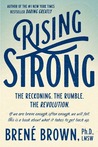
Lately I've also been reflecting on something in Brené Brown's "Rising Strong." Brown was grappling with her feelings about someone whose behavior made my jaw drop when I read it.

Her therapist suggested that perhaps the offender was "doing the best she could." In typical researcher fashion Brown began asking this question of everyone she met. What she found tended to sort people into personality types until she thought to ask her husband.
"Do you think people are doing the best they can?" [...]

Steve said, "I don't know. I really don't. All I know is that my life is better when I assume that people are doing their best. It keeps me out of judgment and lets me focus on what is, and not what should or could be." His answer felt like truth to me. Not an easy truth, but truth.
His answer is one that opens the door for me to follow Jesus more closely: I give you a new commandment: love one another. As I have loved you, so you also should love one another. (John 13:34)

I don't know what someone is going through and they don't know what I'm going through. Only God knows. And how much has God had to forgive me? So very much.

It is only by continually fighting my worst impulses that I get a tiny glimpse of His point of view. Because I can't ignore the fact that, from His point of view, I also am doing my best ... even when I'm being hateful it's not because I set out to be malicious. (I wish I weren't but I can be just as hateful as the next person I will dislike for something.)

And I do strive for my "best" to become better. Just as on a different day the blue-haired lady and Mrs. Darwin may have been completely undisturbed by each other.

A really good prayer


My shorthand for all of the above when I am in such situations is to use a really good prayer, which I will repeat here.
Lord, have mercy on me and bless [insert name here].
Amen.

Tuesday, June 9, 2015

Well Said: Why I Am a Catholic

The difficulty of explaining “why I am a Catholic” is that there are ten thousand reasons all amounting to one reason: that Catholicism is true. I could fill all my space with separate sentences each beginning with the words, “It is the only thing that…”

G.K. Chesterton, Why I Am a Catholic
As you may recall, last week The Anchoress asked why we stay Catholic. My answer was, like many, short and sweet.

Even as I wrote it I was aware that it was woefully inadequate. There were so many different things that added up to the whole: the Eucharist, millennium of thinking and logic and grace to draw upon, my brothers and sisters in Christ here and around the world ... and so much more.

Turns out Chesterton articulated my brief answer beautifully (of course).

His expansion on the subject is quite good also. Click through on the link to read the entire essay.

xkcd: Geeks and Nerds

Courtesy of xkcd
Believe it or not, this actually came up yesterday as Tom was crafting a work email.

Which led us to the natural question, "What's the difference between a geek and a nerd?

Hah! Geeked it!

Free Dracula Audiobook

I just wanted to give a heads up that Sync has a free download of the Naxos recording of Dracula.

If you ever thought you might listen to Dracula it is worth getting.


I'm about an hour and a half in and it is simply wonderful. And it opens one's eyes to more about the book itself. 

For example, listening to Jonathan Harker talk about his encounter with the vampiresses (yes, I'm positive it is a word), we get titillation (which is definitely there). But we also get an intimate look at how a vampire's victims feel, at why they would allow someone to get that close. 

The combination of sexual tension, fascination, and revulsion is really fascinating. It is skillfully done and makes me realize Stoker's craftsmanship with a wonderful story.


If you're not familiar with Sync, SFFaudio did a good post some time ago about how to download Overdrive.

This recording will only be available through Thursday so get it while the getting's good!

The Amazing Barn Owl

Bing.com always has some great image on the home page but today's very short video takes the cake.

Don't miss it. Simply amazing.

Monday, June 8, 2015

Well Said: The Suction of Story

Human minds yield helplessly to the suction of story. No matter how deep we dig in our heels, we just can't resist the gravity of alternate worlds.
Jonathan Gottschall, The Storytelling Animal
Preach it!

Rising Strong by Brené Brown

Rising StrongRising Strong by Brené Brown

My rating: 3 of 5 stars

The physics of vulnerability is simple: If we are brave enough often enough, we will fall. The author of the #1 New York Times bestsellers Daring Greatly and The Gifts of Imperfection tells us what it takes to get back up, and how owning our stories of disappointment, failure, and heartbreak gives us the power to write a daring new ending. Struggle, Brené Brown writes, can be our greatest call to courage, and rising strong our clearest path to deeper meaning, wisdom, and hope.
I scored this off of NetGalley. I was unsure how I'd feel about reading a Brene Brown book since I have only watched her TED Talks and listened to The Power of Vulnerability which is a series of workshop courses she gave.

I shouldn't have wondered. Brown's voice grabbed me from the moment I read the introduction. In fact, early in the book Brown's realization that "you can't skip Act 2" (a reference that will be clear if you read the book) was revelatory for my husband and me in a work situation that we're slogging through at the moment. It didn't change our point on the map, so to speak, so much as to point out where we were and that we weren't really lost in the Slough of Despond ... just working our way through it to Act 3.

I like the way Brown has our innate connection to storytelling as a parallel thread. On one hand, it defines ways we can recognize and recover from dangerous trajectories. On the other, just reading what she's found about us as storytelling beings hits a note that interested and connected with me.

The reason I only gave this three stars is that the last third of the book somehow felt very different, much more self-help oriented than what preceded it. Suddenly there were a lot of acronyms, bullet pointed lists to consider and work through, open ended questions to ask yourself, and a couple of case studies that seemed very unnecessary. My eyes glaze over at that sort of thing which is why I've enjoyed Brown's work so much before this. Now I haven't actually read one of her other books so she may have followed this pattern before. It may work for everyone else in which case the problem is mine alone.

At any rate, I still recommend the book. It allowed me to make a lot of connections in my own life between my behavior, internal logic, and how to avoid or recover personally from falling hard when taking a risk.

Worth a Thousand Words: Brown Bear

Brown Bear
taken by Remo Savisaar
I can't resist this. Who could? And it makes the perfect beginning to the week.

Friday, June 5, 2015

Blogging Around: The Brief Edition

Remembering Carl

A memory from Brandywine Books about growing up on a farm and selling lots of eggs to Carl. I liked it and you will too.

Scammers Selling Tickets to See Pope Francis in America

There are no tickets. Don't fall for this one. The Deacon's Bench has more details.

Milking a Moving Target

Ever seen a cow hop on two legs? That’s how she avoided me when I closed in with the milk bucket.
I was engrossed by this engaging story at The Slow Cook .

Thursday, June 4, 2015

Well Said: The Compliment of Trust

To be trusted is a greater compliment than being loved.
George MacDonald

The Great Divorce by C. S. Lewis

The Great DivorceThe Great Divorce by C.S. Lewis

My rating: 5 of 5 stars


I read this five years ago and, prompted by Louis Markos' chapter about it in Heaven and Hell, picked it up again. Clearly, I read it too soon in my own faith life the first time and now am giving it the proper five-star rating it deserves.

Written as a response to Blake's poem, The Marriage of Heaven and Hell, Lewis is showing that Heaven and Hell must always be divorced from each other by sheer virtue of their essences.

We ride along with Lewis's ghostly form as he boards the bus that will take him from Hell, a ghastly gray town full of quarreling people, to Heaven. As they journey it became for me almost a reversed, positive look at The Screwtape Letters, Lewis's other famous book about how to get to Heaven or Hell. I really loved that Lewis's own heavenly guide was George MacDonald, whose writings were very inspirational to Lewis in real life.

(Who would be my guide? Tolkien? Lewis? Only Heaven knows, I suppose!)

This is such a brief book that I read it in an evening but it really had an impact. It shows reality and our own passions, whether good or bad, in a new light which is both inspirational and enlightening. Or was for me at any rate.

This is one to read again and again.
"Oh, of course, I'm wrong. Everything I say or do is wrong, according to you."

"But of course!" said the Spirit, shining with love and mirth so that my eyes were dazzled. "That's what we all find when we reach this country. We've all been wrong! That's the great joke. There's no need to go on pretending one was right! After that we begin living."

Wednesday, June 3, 2015

Why Do I Stay Catholic?

As I've mentioned many a time, I don't worry about Pew numbers on religion and suchlike. But it does give people something to talk (and blog) about. Which sometimes gets much more interesting than the Pew results.

And sometimes you have fun with it, too.

The Anchoress has some good links AND issued a challenge:
It's a challenge! I'm calling out the entire Catholic World on the Internet. Tell us why you are staying
And I was tagged. Hey, I don't turn down those challenges.

Especially when the answer is as easy as mine. Super. Easy.

Ready?
I stay Catholic because it's true. It's all true.

Where else would I go?
===========

And the makes-me-laugh-but-still-true answer — I met God in the Catholic Church and none of that was coincidental. I dance with the one what brung me. (Plus it all turned out to be ... true.)

Blogging Around: The Romero Edition

I've been interested to read some of the pieces out there now that controversial Archbishop Oscar Romero has become beatified (the last step before sainthood). As it turns out, the controversy has been because of the fact that he existed in an environment that was confusing. To just about everyone.

Here are some links that shed light and help give a balanced perspective.

The Politicization of Everything

I know from experience it is quite easy to fall into this suspicious mindset and to assume something untrue about now-Blessed Romero. ...

What most people don’t realize is that it was Pope Benedict XVI who removed the final hurdle in the 35-year process. Archbishop Vincenzo Paglia told reporters that it was Benedict who “gave the green light.” Paglia says Benedict told him this Dec. 20, 2012 that the case has moved forward. It would seem ironic that the same man who wrote the CDF’s warning on aspects of Liberation Theology, would be involved in Archbishop Romero’s cause moving forward. Ironic only if the Archbishop actually was a proponent of this theology.
Jeff Miller has an interesting overview with plenty of links.

Becoming Blessed Oscar Romero

Critics have faulted “Romero” for the flatness of the supporting characters, a fair charge. Yet the portrayal of Romero himself is admirably textured, from its sensitive depiction of his gradual transformation to its nuanced handling of Romero’s relationship to liberation theology, disparaged by some critics as thinly baptized Marxism.
Steven D. Greydanus says that the film Romero is a good place to begin learning about the now Blessed Oscar Romero. This is a movie I skipped because I just wasn't interested. South American politics. Ugh. I guess I'm more interested now. Plus, Raul Julia!

Profiling Martyrs Who Don't Fit the Typical Categories

Many times this blog has mourned the lack of decent coverage on the persecution religious minorities, which should be the No. 1 religion story in the world every year. The numbers of people dying for their faith – or for stands mandated by their faith (and there is a difference) – is at ever increasing levels according to the latest Pew research.

Which is why it was nice to see Crux’s package this past Sunday on Christianity’s new martyrs in Colombia. Assembled by veteran reporter John L. Allen (who was down that way for beatification ceremonies in El Salvador for Archbishop Oscar Romero), it concentrated on a part of the world that has gotten less attention than, say, the Middle East in terms of human suffering.
Crux has put together a lot of pieces about Columbian martyrs. I'm sending you first to GetReligion because that pulls the links together in one handy spot where the article is a nice overview and guide to what's available.

Tuesday, June 2, 2015

What We've Been Watching

SPY GAME (2001)
Robert Redford, Brad Pitt, director: Tony Scott (Director)

Retiring CIA agent Nathan Muir recalls his training of Tom Bishop while working against agency politics to free him from his Chinese captors.

Reading the reviews ahead of time, I saw people either loved this or didn't believe the relationship between Redford and Pitt.

I was watching this for a movie group I lead and didn't have great expectations after I saw it was directed by Tony Scott. I know watching a Tony Scott movie is going to be entertaining but I don't expect it to be very deep.

So no one was more surprised than me that I loved this movie so much. But it worked for me. Really well. I bought it hook, line, and sinker.

This one benefits from discussion. I watched it for the movie group I lead at a nearby assisted living place and a lot really came out of our conversation. I'm pairing it with Three Days of the Condor, which we'll be viewing in a couple of weeks to contrast and compare Robert Redford then and now, our views of spies and government after Watergate versus after terrorism. ... and much more!

DOUBLE INDEMNITY (1944)
Fred MacMurray, Barbara Stanwyck, Edward G. Robinson,
director: Billy Wilder, screenplay: Billy Wilder and Raymond Chandler

An insurance representative lets himself be talked into a murder/insurance fraud scheme that arouses an insurance investigator's suspicions.

This classic film noir was #10 in my Movies You Might Have Missed series.

I rewatched it because Scott and I will be discussing it for A Good Story is Hard to Find podcast.

Wow. How can I have let so much time go by without watching this? The sizzling dialogue and perfect delivery transported me yet again.

ROBOT & FRANK (2012)
Frank Langella, Susan Sarandon, Peter Sarsgaard

Set in the near future, an ex-jewel thief receives a gift from his son: a robot butler programmed to look after him. But soon the two companions try their luck as a heist team.

The trailers made this look as if it might be too cute and too obvious to work. And one strand of the story was precisely that. The other strand didn't seem to fit in well somehow, being very bittersweet and dwelling on the very real effects of old age.

We liked it but at the end were wondering what we were supposed to take away from it. Great acting but the slight story needed more work.

Worth a Thousand Words: The Blues

The Blues
painted by Karin Jurick
From the Art Institute of Chicago, a woman in blue views Claude Monet's 'Irises'. I love Jurick's series of people watching while they view art.

Monday, June 1, 2015

On the Road to Isengard

Over at SFFaudio we continue our journey through The Lord of the Rings with book 3 (that's the first half of The Two Towers). Aaragorn, Legolas, and Gimli join up with the Rohirrim on a joint quest while Merry and Pippin find Entwash is no match for a good chewable meal and a pipe of Longbottom Leaf.

Worth a Thousand Words: Kingfisher

Kingfisher
Photographed by Remo Savisaar

Friday, May 29, 2015

Blogging Around: The "Finding Religion in Unexpected Places" Edition

Love, Death, and the Communion of Saints: There are Movies for That

Jennifer Fitz had a weekend movie-fest and wound up with a list of recommended movies. I'd never heard of most of these. She gives her impressions with links to the movies so you can go see what they're about. My "to watch" list has grown. Again.

Purity Through Food: How Religious Ideas Sell Diets

Processed food is evil. Natural food is good. These are religious mantras, the condensed version of simplistic fairy tales that divide up foods, and the world, according to moralistic binaries. Genuine nutritional science, like all science, rejects oversimplification. “Natural” and “processed” are not scientific categories, and neither is good nor evil. These terms should be employed by monks and gurus, not doctors and scientists. Yet it is precisely such categories, largely unquestioned, that determine most people’s supposedly scientific decisions about what and how to eat.
The Gluten Lie is a book examining the myths around which many define "healthy eating." What gives this a different twist is that the author is a religion scholar. Here's an interview with him at The Atlantic. (Via Lottie + Doof)

Pete Docter, the devout Christian from Pixar who makes blockbuster movies

Deacon Greg Kandra at The Deacon's Bench noticed an comment by director Pet Docter about using his confirmation money for a youthful purchase.

That sent him down a rabbit hole which wound up uncovering a fascinating interview.

What I learnt from 46 consecutive days in church

Adrian Chiles went to a different church for daily Mass every day of Lent. He saw it as a penance, and to be fair I would too, but it turned out to be a blessing. (As we'd all hope.)

To be fair, church is not an "unexpected place" to find religion. However, the BBC is an unexpected place to find this interesting and heartfelt report about daily Mass that changed one man's life.
From day one, Ash Wednesday, I was captivated. I happened to be in the Swansea area, so I went to St Illtyd's in Port Tennant, a neat little community with rows of terraced houses clinging to the side of a very steep hill overlooking the bay. In every church I went to on this odyssey, without fail there was something to entrance me. It could be anything from the priest's trainers - priestly footwear is something I could write a whole article about - to the majesty of a stained glass window. At St Illtyd's it was the statue outside of Christ on the cross. It was made from some metal that had corroded, kind of creating new stigmata on it. Transfixed, I looked up at it for what must have been ages, until I spotted a couple of teenagers just across the road, cigarettes in mouths, beholding me doubtfully.
(Via GetReligion.)

Well Said: The Four Rungs of Contemplative Life

Morello quotes from a twelfth century monastic letter by Guido II, The Ladder of Monks, on the contemplative life where lectio, meditatio, ratio, and contemplatio are presented as four rungs leading from earth to heaven. The four rungs and what they mean are:

Reading seeks;
meditation finds;
prayer asks;
contemplation tastes. OR,

Reading, so to speak, puts food solid in the mouth,
meditation chews and breaks it,
prayer attains its savor,
contemplation is itself the sweetness that rejoices and refreshes. OR,

Reading concerns the surface,
meditation concerns the depth
prayer concerns request for what is desired,
contemplation concerns delight in discovered sweetness.
From booklady's review of
Lectio Divina and the Practice of Teresian Prayer
by Sam Anthony Morello
I love lectio divina and I love these three ways of looking at these steps. These are not only now in my quote journal but in the front of my Bible.

Thursday, May 28, 2015

Well Said: The No Weapons at Work Policy

“You know that ‘no weapons at work’ policy?” I asked the twitching and growing hairy monstrosity standing less than ten feet from me. His yellow eyes bored into me with raw animal hatred. There was nothing recognizably human in that look.

“I never did like that rule,” I said as I bent down and drew my gun from my ankle holster, put the front sight on the target and rapidly fired all five shots from my snub-nosed .357 Smith & Wesson into Mr. Huffman’s body. God bless Texas.
Monster Hunters International, Larry Correia
What else are you gonna do when your boss turns werewolf?

Unfortunately that's about as interesting as this book gets, but I did love that opening sequence.

Wednesday, May 27, 2015

Well Said: The Church is the Front Lines

When things are crappy, and they often are, sometimes the best you can do is just turn up and do the will of God. That’s what our Lord did, and it was sometimes a pretty nasty experience. It’s okay though, because the miserable part isn’t the end of the story, is it?

Meanwhile, hold onto this thought: The Church is not a safe place. The Church is literally the front lines in the battle between eternal good and absolute evil. It’s going to look, feel, sound, and reek like a battlefield. If everything is always quiet on the front, you probably aren’t on the front.
I need these reminders because, of course, Jen is absolutely right. I tend to forget I'm in the middle of a battlefield.

In which we experience a unique alien invasion and victory.

A special request reading at Forgotten Classics, episode 277. Join us!

Tuesday, May 26, 2015

Well Said: Science, Christianity, and the Poem

In Science we have been reading only the notes to a poem; in Christianity we find the poem itself.
C.S. Lewis, Miracles
Perfectly put. The notes are interesting and valuable but can't convey the whole essence of the thing.

Heaven and Hell: Visions of the Afterlife in the Western Poetic Tradition by Louis Markos

Heaven and Hell: Visions of the Afterlife in the Western Poetic TraditionHeaven and Hell: Visions of the Afterlife in the Western Poetic Tradition by Louis Markos

My rating: 5 of 5 stars


This was an excellent overview of the stories that have influenced and shaped our views of Heaven and Hell from ancient times until now. I particularly enjoyed the author's exploration of the chain of influences that have connected all these stories and the way that they've been tweaked to express new ideas in the "journey to the other side" format. For example, I never realized that the rebellious Titans' deepest level of hell (Tartarus) shows up in 2 Peter 2:4 (the only spot in the Bible) by using the word Tartarus to signify Hell:
"God spared not the angels that sinned, but cast them down to Hell [Tartarus]", and delivered them into chains of darkenss, to be reserved unto judgment." What makes the use here of Tartarus quite stunning is that the rebellious Titans of Greek mythology share much in common with the "sons of God" who mate with the "daughters of men" to produce the nephilim (see Gen. 6:1-4) and who are then (according to the pseudepigraphal book of 1 Enoch) put in prison to await judgment. ... just as Hell in the New Testament is linked both to the angelic rebellion of the "sons of God" and to the punishment of sinners, so Tartarus functions as both the prison of the Titans and the place of suffering for such archetypal sinners as Tantalus, Ixion, and Sisyphus: the sinners, that is, whose cries Orpheus hears rising up from the pit below.
Of particular interest to me were the in-depth looks at the Divine Comedy, the hijacking of Milton's Satan by the Romantics (I will never look at William Blake the same way), and how it continues to influence us today via the Byronic hero.

Louis Markos is a Protestant but he has a deep understanding of Catholic theology that would put many a Catholic to shame. His explanation of Purgatory in his preface to Dante's Purgatorio is masterful in explaining both the theology and the way Americans misinterpret it precisely because of their American identity. This is just a bit:
Purgatory is not about "earning our salvation," but, in having already been saved by Christ's sacrifice on the cross, working with the Spirit to present ourselves as clean vessels. Out of pure grace and love, the Prince lifts Cinderella out of the cinders and takes her to his castle. But Cinderella would never think of entering her future home until she had the chance to wash, fix her hair, and put on her finest gown. The American Christian, in his somewhat adolescent way, asks if all of this is "fair." But Purgatory is not about fairness; it is about freedom.
This signals that I can trust Markos to be just as careful in communicating information I am not familiar with. It's nice to be able to trust an author that much.

There is an extensive bibliography, written in a very readable style, with lots of ideas for further exploration of the topic.

Highly recommended.

Friday, May 22, 2015

Well Said: Survey or Not, Our Mission is Unchanged.

It doesn’t matter what any survey says. Whether our culture is 99.9% Catholic or .00009%, our mission is utterly unchanged.
That Pew survey about more people not calling themselves Christian didn't surprise me one bit. It is just getting closer reporting the actual truth than when people reflexively said, "Of course I'm Christian."

It hits home with more force at this moment because I just finished studying up on St. Francis of Assisi for a conversation at A Good Story is Hard to Find. Francis was radical in every way and that was in 13th century Italy which was 99.9% Chatholic and needed nothing more than a good hard kick in how they lived their faith.

So, here we are again ...