Saturday, November 2, 2013

The Commemoration of All Souls

Reposted from last year with a few updates to my list.

The Day of the Dead, William-Adolphe Bouguereau (1825-1905)
Today we dedicate our prayers in suffrage for the souls in purgatory, still being purified of the remains of sin. Our ties with deceased relatives and friends do not end with their death. Priests can celebrate Mass three times on this day for their benefit, and all the faithful can gain special indulgences to expedite their entrance into heaven.

I think today of my beloved dead. I love them and I miss them. Certainly, I pray for them to be happy and joyful in Heaven.
  • GG
  • Raymond
  • Thelma
  • Grandmama
  • Deedah
  • Tom's father
  • Tom's mother
  • Ivar
  • Dorsey
  • Dorsey's mother
  • Carole
  • Heath
  • Phyllis
  • Jeanmarie, Sydney, Matthew
Here is a litany for the souls in Purgatory.

You can read more about All Souls' Day here. For those with any questions about Purgatory I posted this extremely basic explanation a while back.

Catholic Culture explains indulgences and practices that Catholics can do during the month of November for the Poor Souls in Purgatory. Also be sure to swing by Recta Ratio, who's really got soul ... check out his place. In the past he has examined such fascinating topics as Catholic death customs, especially medieval ones. I hope he reruns it for us this year as well.

Tuesday, October 29, 2013

Worth a Thousand Words: Italian Vacation

Italian Vacation
by Belinda Del Pesco,
a longtime favorite of us here at Happy Catholic

17th century Salem village, Puritans, witch-meetings and pink ribbons.

 What else could it be but Young Goodman Brown by Nathaniel Hawthorne ... at Forgotten Classics.

A Year With the Saints by Paul Thigpen

All Saints' Day is this week with All Souls' Day right behind it. Soon we'll be at the beginning of a new liturgical year. What better time to settle in with a bit of spiritual guidance from the saints?

Yep, that's what I thought too. So it is my great pleasure to tell you about this new book.


Paul Thigpen is a favorite author of mine from way back in the days when his books in The Saints Speak Today series were my favorites (St. Thomas More and St. Augustine). In fact, I still grab copies of those to give to new converts since they were key to my own experience.

All of which is beside the point, I guess, except to help explain that I've been eagerly awaiting this book ever since I first saw it mentioned.

Like the other books in Tan Book's "A Year With ..." series, it has 365 one-page meditations. As is obvious from the name, it takes you through a year with the saints as your spiritual guides.

Each reading begins with a brief summary from Thigpen to orient the reader to the subject. Then an excerpt from a saint's writings brings a topic to light. This is followed by a question or two which help readers relate fully to what was just read. A brief prayer ends the session. In case you want to know a bit more about a particular saint, there is a brief biography of each in the back of the book.

Tan Books has done this book proud, as with all those in the series. Even if you prefer e-books, this is one you want to hold in your hands, just trust me on this. The cover may not be actual leather but it certainly feels like it. Pages are gilt-edged and the ribbon marker is sturdy. Moreover, the book design is elegant and decorative in an understated but classic way. A Year with the Saints is not only useful but a book that could become an heirloom in your family. Readers will know that I do not give this praise lightly.

I've been reading an entry a day since I received the book, which means I'm up to the 7th or 8th one. So far I've been reminded of the marvel that Scripture achieves in having simple meanings and complex meanings in the same passages, perfect for whichever need you have. I've been reminded of the fact that the reason God can work miracles is because he made nature ... and so he has power over it.

And, I've been reminded that faith and reason go hand in hand. I'll be honest. I didn't need reminding of this particular concept, but I like the way St. Thomas More puts it so much that this is the one I'm going to share. For one thing, look at his commonplace examples of the handmaid and of eating. They get the point across perfectly and also make me laugh just thinking of them.
==========
Day 4
Faith and reason

Faith and reason should not be opposed, St. Thomas More reminds us; they should go hand in hand. The use of reason is necessary in matters of faith, but it must always be in service to faith.

Whoever would grasp what he must believe must use reason. Yet reason must not resist faith, but rather walk with her, waiting on her as her handmaid. And even though at times reason seems contrary to faith, yet in truth faith never gets along without her.

The handmaid who loses all restraint, or gets drunk, or grows too proud, will then chatter too much and argue with her mistress, and act sometimes as if she were insane. In the same way, reason--if it's allowed to run riot and lift up its heart in pride--won't fail to rebel against her mistress, faith. On the other hand, if she's brought up well, and guided well, and kept in good temper, she'll never disobey faith because she'll be in her right mind. So let your powers of reason be well trained, for surely faith never gets along without her.

The study of Scripture involves deciphering its meaning, considering what you read, pondering the purpose of various commentaries, and comparing various texts that seem contradictory, even when they aren't. Now in doing all this, I don't deny that the most important thing is to have grace and God's special help. But at the same time, in our Scripture study he uses our human reason as an instrument as well. After all: God also helps us to eat--but not without our mouth!
-St. Thomas More, A Dialogue Concerning Heresies,
I, 23; Letter to William Gonell

In God's Presence Consider...
Do I consider my reason a gift from God to be used in support of my faith? Do I make the best of my reasoning skills when interpreting Scripture by using helpful commentaries and other study resources?

Closing Prayer
Lord, let the reasoning powers you've given me always be employed in the lively service of the faith that's also your gift.

Monday, October 28, 2013

Friday is a Holy Day of Obligation

Friday is All Saints' Day, a holy day of obligation that is surprisingly old. The current date of November 1 was set by Pope Gregory III (who died in 741 AD).

Read all about All Saints' Day.

Read about Holy Days of Obligation.

I'll have a post on All Saints' Day but I wanted to give anyone interested a chance to read up ahead of time.

Why Are Catholic Churches Like That? Reviewing "The Church" by Cardinal Donald Wuerl and Mike Aqulina

The sacramental principle tells us that, since the Word became flesh, God has begun to heal and restore his creation. Spiritual light can now shine through the material world. On one level, bread and wine; on another, oil, candles, fabrics and paint, bricks, blocks, and filigree--all these can mediate God's presence in the world.
I honestly thought I already reviewed this book. When I saw it on my "to review" stack, I thought it was misstacked (I'm pretty sure that's a word ... or, like Shakespeare, I just invented it). Anyway, my apologies for not telling you about this one sooner. Now, let's get down to why I feel that way.
In every church, invisible realities shine through the visible ornaments. Something spiritual shines through all the material elements, inside and out. The ritual book for blessing a church offers a basic explanation of this symbolism: "The church is a visible building that stands as a special sign of the pilgrim Church on earth and reflects the Church dwelling in heaven."
One of the things I love most about the Catholic Church is her insistence that the material matters just as much as the spiritual. Like a pair of folded hands, you can't fully see reality as God intended it without both body and soul. The Catholic attitude to church buildings reflects that same reality. Symbolism is key to all of this because it helps us unlock all the places we can find God shining through into our lives.
God created our bodily senses to lead us to spiritual truth. Thus, Catholic churches engage the human body as God created it. Eyes delight in seeing the play of light through stained glass. When Christians gather for worship, the church is full of the sound of music and sometimes the aroma of incense. Fingers touch stone and wood and dip into holy water. A church well built is a feast for the senses, a festival of praise for the God who fashioned the human body.

Grace builds on nature, heals it, and elevates it. This is one of the fundamental notions in Catholic theology, and is also a key to understanding what one sees and hears and senses in a church.
Sometimes the symbolism is obvious but often the meaning has been lost over time or not passed on due to poor instruction in the faith. That's why we need this book.

The Church: Unlocking the Secrets to the Places Catholics Call Home does exactly what it says in the subtitle. It gives you a key to why there are all those statues, what's up with the kneelers, and why a crucifix holds place of pride at the front of the church. In short, Cardinal Wuerl and Mike Aquilina aim to demystify things so that the next time you go into a Catholic church you can recognize the reminders of God's grace that surround you.

This book will be just as important to Catholics as it is to non-Catholics. The example often told to show how Catholics don't understand their own faith well is that if you ask one why they cross themselves with holy water when entering the church, you rarely find someone who knows the answer. (It's a reminder of your baptism, just in case you're curious.) The Church has both pictures and words that help anchor those important facts in your heart.

This is a companion piece to an earlier book, The Mass. As with that book, I found The Church not only instructive but inspirational. Just to share one example, we are reminded of the scandalous nature of the cross in this book and it helps us understand a Protestant friend who is horrified by the crucifix in the front of our church. Not only that, we are reminded of just how much humiliation Jesus Christ took on for our sakes and how, as St. Paul said, "The cross is folly to those who are perishing, but to us who are being saved it is the power of God." Ultimately, for my own part, I was reminded that just as Christ turned that humiliation into glory, so too His grace and redemption can turn my shortcomings and sins into something good, something greater than I could ever achieve on my own.

I can't recommend this book highly enough. It will open your physical eyes so that your soul can also see the glory that is all around you. You may, like me, find yourself seeing your surroundings in an entirely new way. I can't resist sharing this last bit.
Perhaps the earliest precursors of motion picture photographers were the builders of the great medieval cathedrals. They created images that were invisible to the surrounding world, yet spectacularly beautiful to worshippers inside the church. Catching sunlight, the bits of glass seem to coalesce and come alive, revealing the forms of standing saints in heavenly splendor.

The windows provide motion pictures really: the images change slightly as the earth slowly makes its rounds and clouds pass now and then before the sun.
This never occurred to me and I now look at stained glass windows in an entirely new way. Because, of course, what the building shows our eyes also reflects what is being done in our souls. But I'll let you read more about it for yourselves when you get the book.

Saturday, October 26, 2013

Weekend Joke

We're pretty close to Halloween. I like this list from TrailerGhost.
 

How to Tell if Your Mobile Home is Haunted
  1. A can of Skoal mysteriously floats through the air.
  2. Blood drips out of your simulated wood paneling.
  3. The eyes on the velvet Elvis painting move.
  4. The room is spinning, and you’re not even drunk yet.
  5. That car in your front yard isn’t on blocks -- it's levitating by itself.
  6. Your dog, Bo, gets sucked into the TV set, and he's blocking your view of rasslin'.
  7. That mysterious scratching below the floorboards? The Telltale Raccoon.
  8. The chain the ghost rattles is attached to his wallet.
  9. You feel an eerie presence every time "Freebird" plays on the radio.
  10. The trailer is shaking, but there’s no tornado in sight.
  11. Your Dale Earndhart bed sheets have eyeholes cut in them.
  12. The ghost is completely invisible except for the tobacco juice running down his chin.
  13. Mysterious footsteps seem to be stomping out “Achy Breaky Heart.”
  14. There's a funny howlin' noise comin' from the corn crib--no wait that's Jimmy.
  15. You hear strange moaning—but only during Shania Twain videos.
  16. You're missing four PBR's, and the missus only drinks Old Milwaukee.
  17. The lights turn on and off even though you paid the power bill.
  18. You hear blood-curdling screams, but both neighbors are still in jail.
  19. You get a mysterious phone call that says, "I know what you did last NASCAR race."
  20. Instead of saying "boo" the ghost says "boo-ya'll!"
  21. The veneer of window grime looks just like Calvin... and he's peeing on YOU!!
  22. Instead of naked women, your playing cards, all of a sudden, have pictures of covered bridges on them.
  23. The folks on Jenny Jones discuss domestic problems that eerily resemble your own.
  24. You get a creepy feelin' and it ain't because Richard Simmons is on TV.
  25. You come home one day and it's clean.

Thursday, October 24, 2013

Wait. That Guy is in That Thing? Now I've Got to Watch It.

As I mentioned a couple of days ago, seeing that Karl Urban was going to be in Almost Human piqued my interest.

As an aside, I notice that there were several comments about Karl Urban's looks (ok, ok, including mine) ... but none about Andre Braugher's excellent acting which is what makes me doggedly watch whatever he's in, in the usually vain hope that it won't be cancelled after the first four episodes. Luckily Brooklyn Nine Nine seems good to go for a while.

Back on topic, this made me look for a list I had of actors who will make me take a second look at a show or movie I'd never have considered otherwise. Hey. I told you already ... I make lists. Lots of lists.

This particular list seems embarrassingly long, but I'm going to share it anyway. It seems rather eclectic now that I'm rereading it several months after I first made it. Some of these are just plain American. I mean, really, Will Smith and Robert Downey Jr. are on everyone's list, am I right?

In no particular order except how they popped out of my pen and onto the paper:

  1. Sam Rockwell
  2. Paul Bettany
  3. Nathan Fillion
  4. Andre Braugher
  5. Steve Carrell
  6. Guy Pearce
  7. Jim Caviezel
  8. Alan Rickman
  9. Tyrone Power (yes, you read that right)
  10. Boris Karloff (and yes, you read that right)
  11. Toni Collette
  12. Will Smith
  13. Rachel Weitz
  14. Bruce Willis
  15. Victor Garber
  16. Daniel Craig
  17. Scott Glenn
  18. Robert Downey Jr.
  19. Sean Bean
  20. Emma Stone
  21. Jesse Eisenberg
  22. Benedict Cumberbatch
  23. David Tennant
  24. Karl Urban
Obviously this is a work in progress based on the fact that Karl is last on the list. I only realize these things when I've got to fight off an urge to see The Fifth Estate despite (and strangely enough, because of) Benedict Cumberbatch's weird wig. And then the list gets another name.

Who's on your list?

Notes on Mark: Radiant Glory and the Cloud

MARK 9:2-8
I like the way Mark's description translates to my mind's eye. It is much different than I had pictured, which was more of a white, glowing process. Also, it is fascinating to see connect the overshadowing cloud with events from the Old Testament.
... Mark tells us that the garments of Jesus became radiant. The word he uses (stilbein) is the word used for the glistening gleam of burnished brass or gold or of polished steel or of the golden glare of the sunlight. When the incident came to an end a cloud overshadowed them.

In Jewish thought the presence of God is regularly connected with the cloud. It was in the cloud that Moses met God. It was in the cloud that God came to the Tabernacle. It was the cloud which filled the Temple when it was dedicated after Solomon had built it. And it was the dream of the Jews that when the Messiah came the cloud of God's presence would return to the Temple. (Exodus 16:10, 19:9, 1 Kings 8:10, 2 Maccabees 2:8.) The descent of the cloud is a way of saying that the Messiah had come, and any Jew would understand it like that.
The Gospel of Mark
(The Daily Bible Series, rev. ed.)

If You Will Not Ask The Right Questions - Why Bother to Ask At All?

Tom takes it to Black and Decker ... and most retailers who put surveys out there. Read his experience and, more interestingly, his analysis at the General Glyphics blog.

(OMG, Black and Decker ... your "factory service center" doesn't even have an answering machine? The phone just rings and rings? You've really given up, haven't you ...)

Wednesday, October 23, 2013

What I'm Reading: The Firm

The FirmIn a conversation about movies recently, people were lauding The Firm which I'd never seen. (extreme shock and wonder at such a hole in my movie viewing, though I redeemed myself by expressing my love of Runaway Jury, also originally a John Grisham novel)

That was when I realized I'd never read a John Grisham novel.

"Why ever not?" I was asked. It just never occurred to me to pick one up. I guess I just don't move in the circles where people read or talk about Grisham novels.

Hard upon the heels of that conversation came a featured interview with Grisham in the Wall Street Journal's weekend book section. I don't know much about Grisham but I fell in love with his wife solely based on the comments she gives him on his books.

"What the heck," I thought. "Why not try one?" I'm a Scott Brick fan, so when I saw the library had the audio version that was what I requested.

And here I am, with one CD down and 13 to go. So far, so good. The hook is baited with lots and lots of money and Mitch McDeere is getting ready to bite on a deal that sounds way too good to be true. In fact, I'm positive it is too good to be true because otherwise it's going to be a very boring book.

I've got my seat belt on and am hoping for an entertaining ride.

Monday, October 21, 2013

Karl Urban on TV -- I'm There

I'd seen mentions of Almost Human, almost endless tv commercials actually during any football games on Fox.

"In a not-so-distant future, human cops and androids partner up to protect and serve." The ads didn't grab my interest. Although it did make me think that someone was updating Isaac Asimov's "Caves of Steel" about a robot-hating detective who was teamed up with (you guessed it) a human-looking robot to solve a murder.

Until Hannah pointed out the star is Karl Urban.

Wait. What?

Eomer from Lord of the Rings?

Doctor McCoy from Star Trek?

Those are the movies where I noticed that chameleon, that darned good looking chameleon I might add.

He's just one of those guys who will make me watch something because he's in it.

Much the same way that seeing Andre Braugher got me to watch Brooklyn Nine Nine, which much to my relief came out of the starting blocks as a solid and smart comedy. I mean really. Andre Braugher. Of course, I was going to try it.

And now Karl Urban.

November 4, I'm there.

Sunday, October 20, 2013

The Halloween Tree by Ray Bradbury


It was a small town by a small river and a small lake in a small northern part of a Midwest state. There wasn't so much wilderness around you couldn't see the town. But on the other hand there wasn't so much town you couldn't see and feel and touch and smell the wilderness. The town was full of trees. And dry grass and dead flowers now that autumn was here. And full of fences to walk on and sidewalks to skate on and a large ravine to tumble in and yell across. And the town was full of...

Boys.
And it was the afternoon of Halloween.
And all the houses shut against a cool wind.
And the town was full of cold sunlight.
But suddenly, the day was gone.
Night came out from under each tree and spread.
Scott (from A Good Story is Hard to Find podcast) loves this book and never fails to bring it up around Halloween. I happened to have an Audible credit coming up and figured it is always good to come up to Halloween with Ray Bradbury. Bronson Pinchot's narration is simply wonderful.

The story, which is highly reminiscent of A Christmas Carol, is an enchanting tour of Halloween history and how it is represented in the way we celebrate the holiday ... done Bradbury style with lovely prose as a gang of neighborhood boys strike out into adventure to help an ailing friend.

It is written for younger readers but is equally enchanting for those of us who are merely young at heart.

This went on my Best of 2013 list.

Friday, October 18, 2013

Notes on Mark: On the Mountaintop

MARK 9:2-8

I am going to take several posts to quote William Barclay* on the transformation as I like how he explains both some of the details of this important event. Here we will look at when it happened and just which mountaintop they were on.
Mark says that this happened six days after the incidents near Caesarea Philippi. Luke says that it happened eight days afterwards. There is no discrepancy here. They both mean what we might express by saying, "About a week afterwards." Both the Eastern and Western Churches hold their remembrance of the transfiguration on 6th August...

Tradition says that the transfiguration took place on the top of Mount Tabor. The Eastern Church actually calls the Festival of the Transfiguration the Taborion. It may be that the choice is based on the mention of Mount Tabor in Psalm 89:12, but it is unfortunate. Tabor is in the south of Galilee and Caesarea Philippi is away to the north. Tabor is no more than 1,000 feet high, and, in the time of Jesus, there was a fortress on the top. It is much more likely that this event too place amidst the eternal snows of Mount Hermon which is 9,200 feet high and much nearer Caesarea Philippi and where the solitude would be much more complete.
The Gospel of Mark
(The Daily Bible Series, rev. ed.)
* (Do keep in mind that I like Barclay's insight into language and bygone customs, but his theology can be a bit wacky. That's not to say that I often don't find him inspiring. He can be. But just know that he should be read with caution.)

Wednesday, October 16, 2013

Worth a Thousand Words: Mother and Child

Pablo Picasso, Mother and Child, 1905
sketch-and-study, via Wikipaintings

Notes on Mark: Transfiguration as Suspension of Miracle


MARK 9:2-8
The transfiguration is a mystery pure and simple. I would have been just as dumbfounded as the disciples who were there to witness it. 

I am not sure where I picked up this particular note (perhaps our parish Bible study?), however, it is fascinating to see that St. Thomas Aquinas said the transfiguration was actually the cessation or suspension of a miracle. This is because Christ pulled aside the veil of flesh to allow His natural glory to be seen.

Mind-blowing, am I right?

Let's just wrap our minds around that for a bit and then I'll have some other people's take on the transfiguration for further mind-bending.

Tuesday, October 15, 2013

These Books Just In: Angels, Bones, Marriage, Buckets, and Modern Martyrs

It's book publishing time and often when I check my mailbox I get that wonderful feeling of receiving an unexpected gift. I haven't read these books ... yet ... for the most part, but I will be.

However, I wanted to give a heads up on these because I don't want you to wait on me.

Entertaining Angels by Mike Aquilina
Catholic Scripture Study
Every Sunday Roman Catholics (like many other Christians) stand to profess our faith in God who created "all things visible and invisible." and we confess our sins the presence of "all the angels and saints." Discover that angels are spiritual, personal, and immortal creatures, with intelligence and free will, who glorify God without ceasing and who serve God as messengers of His saving plan!
We all know that I'm a fan of Mike Aquilina's books and anyone who, like me, read his book Angels of God knows that he's wonderful at explaining the ethereal in ways we can relate to. This is a 10-lesson scripture study that covers angelic information from creation to salvation history to spiritual combat and beyond. I've been a fan of the Catholic Scripture Study program since they used to be featured free on Catholic Exchange (yes, waaay back in the day). Aquilina and CSS make a good combo.

These Beautiful Bones: An Everyday Theology of the Body by Emily Stimpson
It was Blessed John Paul II's greatest gift to the Church: The theology of the body. A window into who we are, the theology of the body is a theology for the rooms where we make love. But it's also a theology for the rooms where we work, where we eat, where we laugh, and where we pray. These Beautiful Bones takes you on a walk through those rooms. With both humor and practical wisdom, it sheds light on what the theology of the body has to say about life beyond the bedroom, about the everyday moments of life, helping you discover how to let grace enter into those moments and make of them something extraordinary.
For everyone who thought that the Theology of the Body is only about sex ... which it is ... and it isn't. Full disclosure: I did the graphic layout on the cover and text for this book. I read just enough of it here and there in the course of my work to know that this was a book I wanted to read. Relatable and thought provoking ... at least the parts I read as I went.

Just Married: The Catholic Guide to Surviving and Thriving in the First Five Years of Marriage by Dr. Greg and Lisa Popcak
Nationally syndicated radio hosts and international family life speakers Greg and Lisa Popcak combine decades of counseling, the latest findings in marriage research, twenty-three years of marriage, and the wisdom of Catholic teaching to offer newlyweds a master plan for creating a strong bond in the first five years of marriage.
I know, I know ... blah, blah blah ... self-help ... and so forth. This one I've actually read, albeit super fast. So let me give you the short version: this is now the book I'm going to give newlyweds. I wish we'd had it when we got married. I wasn't religious at all then and my husband was not a practicing Catholic. Nevertheless, I stand by that. It would have helped us tremendously. And it's good for those married longer than that too.

God's Bucket List: Heaven's Surefire Way to Happiness in This Life and Beyond by Teresa Tomeo
Scripture tells us only God knows the desires of our hearts. It was, after all, God who placed them there because they are designed to lead us to His will for our lives. Why, then, is it so challenging at times to figure out if we are on the right track when it comes to what we believe we want or need? God's Bucket List will examine what God wants for each of us: mercy, fruitfulness, fellowship, and peace, just to name a few, and will explain what the Christian faith teaches about these gifts and how we can begin to achieve and cross out, one by one, the items on that heavenly list.
Not being into bucket lists, this didn't sound like the sort of book I wanted to spend time on. However, when I read an excerpt Tomeo was talking about exactly the sorts of things I agree with and struggle to accomplish, like being able to just sit in the back yard and enjoy the day ... without having to be doing anything. And, it was something I needed to hear right then, which is kind of the point of this book. So ... I'm interested.

The Global War on Christians: Dispatches from the Front Lines of Anti-Christian Persecution by John L. Allen Jr.
This book is about the most dramatic religion story of the early twenty-first century, yet one that most people in the West have little idea is even happening: the global war on Christians. We're not talking about a metaphorical "war on religion" in Europe and the United States, fought on symbolic terrain such as whether it's okay to erect a nativity scene on the courthouse steps, but a rising tide of legal oppression, social harassment, and direct physical violence, with Christians as its leading victims. However counterintuitive it may seem in light of popular stereotypes of Christianity as a powerful and some­ times oppressive social force, Christians today indisputably are the most persecuted religious body on the planet, and too often their new martyrs suffer in silence. ...

This is a truly ecumenical scourge, in the sense that it afflicts evangelicals, mainline Protestants, Anglicans, Orthodox, Catholics, and Pentecostals alike. All denominations have their martyrs, and all are more or less equally at risk. A 2011 report from the Catholic humanitarian group Aid to the Church in Need described the worldwide assault on Christians as “a human rights disaster of epic proportions.”

This book looks to shatter that silence.
Gulp.

The mere introduction dealt with horrifying images of what Christians are subjected to, right now, specifically because of their faith. I cringed away from the idea of reading an entire book about this, but felt that if I didn't at least try then I was failing them somehow, was denying that they were actually in the dire straits they suffer. So I accepted the review copy. I trust Allen and I think looking away is not an option for me right now.

Friday, October 11, 2013

Julie's Take - Christianity in Three Books [UPDATED]

These things used to be called memes ... but whatever they're called, I find them difficult to resist.  Basically Rod Dreher has asked his readers, and the internet at large, what three books they would recommend to provide a basic familiarity with Christian theological ideas to someone with little background on the topic. Read all the guidelines here, which is where Jen Fitz found it.

This came to my attention when I saw Jen's answers (and was insanely flattered, by the way, thank you Jen!).

Ahem. Anyway, here is my list. Pick it up, pass it on ... and so forth.

1.  The Hiding Place by Corrie Ten Boom.

Same as Jen's #1 but that's because this is such a great book. I recently reread it and made it a goal to reread it annually. It is a great story and, not coincidentally, is Christianity in a nutshell.

Sheltered spinster, Corrie Ten Boom is 50 years old when the Nazis invade Holland. She and her family shelter Jews targeted by the Nazis and when they are caught, they are sent to prison and eventually concentration camps. This sounds gloomy and like a familiar story. It is not. Every Christian should read this book. If you get the audio, it is even better. Simply fantastic.

2. The Captain from Castile by Samuel Shellabarger 

The classic story of a young Spanish nobleman, Pedro de Vargas, who goes with Cortes to conquer Mexico. Rereading it, Washington Post critic and Pulitzer Prize-winner Jonathan Yardley says in his introduction he "was astonished at how well it has survived. . . . It is accurate, meticulously researched history, and it is a sympathetic, nuanced account of a young man's moral education..." Precisely. Such is also the same of Shellabarger's other books. A prime example of how an excellent piece of fiction can communicate "Truth." Also a favorite, more than this book to be truthful, is Prince of Foxes by this author.

3. In This House of Brede by Rumer Godden

One of the finest authors of our time, largely forgotten, but who always wrote from a deep background of faith. This is the story of Philipa who at the height of a brilliant career and in her 40s decides to enter a cloistered convent. Yes, this is the story of nuns, but the Christianity they practice should be recognizable to Christians of any sort. Not only is it a fascinating tale of what it is like to live in a convent, but it contains a riveting mystery too.

UPDATE
I didn't notice we weren't allowed to have books about a "flavor" of a particular religion, which knocks out my original third choice, which I leave below for your edification. That's ok, it made room for a book I originally was going to include but had dropped in favor of something more obviously theological. Woohoo!

3. Catholic Christianity by Peter Kreeft

Puts the muscle on the "skeleton" of the Catechism, so to speak. This is the book that I read after converting and which brought my understanding fully into line with the teachings of the Church. Eminently logical.

Notes on Mark: The Cost of Discipleship

MARK 8:34-35
This is the famous "take up your cross and follow me" instruction which is followed immediately by "whoever loses his life for my sake and that of the gospel will save it."

How often do I really ponder these words and think about what they meant when Christ said them versus how I translate them into my own everyday life? Not often enough, I fear. Christ never lied to anyone about the cost of discipleship, as Mary Healy points out here.
Jesus does not call his disciples to read this path alone, but following him. Discipleship is a continuous contact with the Master who leads the way at every step.

With the phrase for my sake, the absoluteness of Jesus' claim appears for the first time. Jesus is asking more than any general ever asked of his soldiers or any religious leader ever asked of his adherents. He is not merely demanding a willingness to die for a great cause; he is calling for an unconditional personal allegiance to himself. Whoever loses his life is to do so for the sake of Jesus and his good news. No greater motive is necessary or possible. But this is the very thing that Jesus will do for us: he will give his life (psyche) as a ransom for many (10:45).

Monday, October 7, 2013

The Spirit of Food: Thirty-Four Writers on Feasting and Fasting Toward God

The Spirit of Food: Thirty-Four Writers on Feasting and Fasting Toward GodThe Spirit of Food: Thirty-Four Writers on Feasting and Fasting Toward God edited by Leslie Leyland Fields

My rating: 4 of 5 stars

Even as I ask these questions, I know something is missing. Something our grandmothers and mothers knew at their church potlucks, as they carried to the communal tables Velveeta broccoli casseroles and Jell-O salads greener than any fruit dared to grow. In our zeal for purity and right living, we may have forgotten something other generations and cultures knew. That food is more than politics; food is more than economics; food is more than culture, entertainment, nutrition, even justice. As important as each of these is, none of them singly identifies or describes all that food is and does and is meant to be.

Food is nothing less than sacrament. All food is given by God and is given as a means to sustain not just our bodies, but also our minds and our spirits. In all of its aspects--growth, harvest, preparation, and presentation--food is given as a primary means of drawing us into right relationship toward God, toward his creation and his people. Even its intentional absence, through fasting, pulls us toward a deeper dependence on God and one another.

As I turn to the Scriptures now, I am amazed at the centrality of food in its pages ...

From the introduction
As can often be the case with anthologies, even those for whom the essays are specifically written, one gets a mixed bag. Some of these 34 essays relating food to spiritual search were very moving and hit the mark for me. In particular, the introduction by the editor, the pig farmer's meditations, and the bread baker all had points that moved me and have come back to me frequently in daily life.

Several of the pieces take Father Capon's seminal The Supper of the Lamb as a jumping off point. There is a key chapter of Capon's book included and you can see why it is probably his most reprinted excerpt. Indeed, if you haven't read his book, then save this one for later and read that first. Capon pulls off conveying how the world around us, beginning in our own kitchens, reflects God ... all the while also giving us a functional cookbook. In fact, it is on my Desert Island book list and I probably should read it once a year.

If I could give half stars, this would probably be a 3-1/2 but I am going to give it the benefit of the doubt. Some of the essays struck me as covering very familiar food-writing ground in using their pieces as platforms for complaining, condescending, or posturing. However, these may very well strike others in a different way, especially since few of us are ever in the exact same place in our spiritual journeys, not to mention our levels of exposure to food writing.

Each of the essays has a recipe at the end but, of course, finding new recipes is actually not the point, even if I did find a few I'm going to try out. It is to feed both body and soul that this collection exists and it does a good job.

The Dallas versus Denver game: It's how football was meant to be played

That game was like the Cowboys I remember from times of old, willing to take risks and make the big plays. When you've been refusing to give up and fighting until the end, there's no shame in losing. As Steve Martin said, a game like that was why football was invented. Well done, Cowboys!

Friday, October 4, 2013

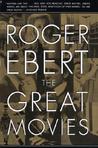
Thumbs Up for The Great Movies by Roger Ebert

The Great MoviesThe Great Movies by Roger Ebert

My rating: 5 of 5 stars


I miss Roger Ebert. Even when I disagreed with his online personal journal entries, which happened fairly frequently, I still loved reading him.

Most importantly, of course, I miss reading his movie reviews every Friday. They were the anchor against which I measured all other critical opinions of a film. Again, I might disagree with him because his range and experience and desires when watching a film were often different from mine. Again, it didn't matter. I loved his way with words, the way he made you understand that his point of view was very valid even if you did disagree, and the way he was unafraid to champion movies others despised. He began this with early support of 2001: A Space Odyssey and later won my heart with his embrace of Abraham Lincoln Vampire Hunter. This is something few movie critics achieve.

The Great Movies collects a series of Ebert's of critical appreciations of movies which deserved a deeper look than a simple review. It ranges across time and genres to choose the best of the best, movies which make you want to grab your friends and force them to watch.

This is one of those books not to read from beginning to end but to flip open and see what catches your eye. Or to pick and choose from the table of contents, either the films you love or the films you never heard of. No matter your method, you will come away both missing Roger Ebert and grateful that his "voice" is still with us in print.

This book makes me appreciate the movies I love even more, makes me realize some movies that I never want to watch, and ... yet ... also makes me appreciate that both sorts can be connected in a way that makes my own viewing richer. This just happened in reading Ebert's comparison between the noir masterpiece Sunset Boulevard (much loved by me) and the Japanese existentialist film The Woman in the Dune (in which simply reading the description was enough, thank you very much).

There are some reviews which I won't read now because those movies, such as Jean Renoir's The Grand Illusion, are on my list to watch. Ebert can't fully discuss these as "great movies" without giving spoilers, so I will deny myself the pleasure of knowing his reasons for recommendation. It is enough to know that I can come back to his discussion when I am ready.

Above all it makes me want to watch some of these great movies again ... or for the first time. Surely that was Ebert's goal and he hits the target with sureness and grace. If you love movies, if you love intelligent and insightful writing, and, above all, if you miss Roger Ebert, then you owe it to yourself to read this collection.

Worth a Thousand Words: Fight

Fight
A stunning moment captured by my favorite nature photographer, Remo Savisaar. Go to his blog to see this photograph in more detail as well as peruse the other wonderful images there.

Wednesday, October 2, 2013

Well Said: Love Drama or Power Drama

We tend to think of Shakespeare's plays as being tragedies or comedies but this opens things up a bit.
If the distinction is not held too rigidly nor pressed too far, it is interesting to think of Shakespeare's chief works as either love dramas or power dramas, or a combination of the two. In his Histories, the poet handles the power problem primarily, the love interest being decidedly incidental. In the Comedies, it is the other way around, overwhelmingly in the lighter ones, distinctly in the graver ones, except in Troilus and Cressida--hardly comedy at all--where without full integration something like a balance is maintained. In the Tragedies both interests are important, but Othello is decidedly a love drama and Macbeth as clearly a power drama, while in Hamlet and King Lear the two interests often alternate rather than blend.”
Harold Clarke Goddard, The Meaning of Shakespeare, Volume 2
I never thought of it this way but Goddard is right. This is a very interesting way to look at the Bard's work. I just can't praise Goddard's books highly enough, by the way, for anyone who is interested in digging deeper into Shakespeare.Insightful, illuminating, and stimulating literary criticism which always respects Shakespeare's text.

Tuesday, October 1, 2013

Fast, Furious, and Stupid: World War Z (the movie)

If I were to give this movie a subtitle it would be "Fast, Furious, and Stupid."

It is already generally accepted that the only things the excellent and intelligently written book and this movie have in common are the title. I'm actually ok with that. I just hope that author Max Brooks is making a ton of cash off of this movie.

If watched solely as a big summer Hollywood thriller, WWZ works overall. It is a roller coaster of jumps and adrenaline thrill rides, strung together by the thinnest of logic. Don't turn your brain on and you'll have a wonderful ride.

And, I must admit, viewing it at home, where we could laugh at the dumb stuff, probably compensated for not seeing the visually impressive scenes on the big screen where they must have been truly spectacular.

The biggest problem with the film was that we only had one character to care about: Garry (Brad Pitt). He seemed in peril numerous times, but let's face it, we never too worried because he is the star of the movie. If anyone is going to make it to the end, it is the star and executive producer.

Some people live, many people die, but we weren't emotionally invested in any of them. Garry's wife and children, the fellow soldiers, the other experts ... none of them had enough character development or even camera time to allow us to see inside and care. I think of other thrill-ride movies with solo heroes: Die Hard, The Hunt for Red October (though I suppose we could argue for a dual hero motif in that one), Clear and Present Danger, and Aliens all come immediately to mind. Each of these had likable supporting characters whose deaths would have caused me emotional turmoil, not to mention how the movies' heroes would have felt. We got none of that from World War Z and that's the biggest crime a movie can commit ... robbing you of suspense and just taking you along for the ride.

What I liked:
  • The way Gerry was so interested, fascinated, and curious that he would continue observing behavior even when he was on the run. That was well shown and, of course, came in handy when he had a chance to slow down and put clues together.
  • The big action sequences. Those zombies spilling over the huge wall around Jerusalem made an arresting visual for the trailers and they were even more effective as one could see them spilling through the city which went in 10 seconds from zombie impact from being a safe zone to being a plague ridden place of terror.
  • Some of the little effects ... especially the zombies teeth snapping reflexively if they were kept from biting someone. When Gerry is on one side of a glass door and a zombie is on the other, there was something about that those teeth snapping that was kind of ... perfect.
  • Israeli soldiers ... tougher than nails and this movie takes full advantage of that fact.
What I didn't like ... and these are a token few items of the stupid "logic" being used throughout this thing (SPOILERS ... though I don't think these ruin anything and I tried to keep them vague):
  • The Captain Kirk investigation technique. So you have the world's one hope in a young brainiac who can analyze the date to find a cure for this zombie plague. What do you do? Send him to South Korea where you've lost contact with your military base and have no idea what's going on. And only send Brad Pitt and about five other guys to protect him. (What can I say. The U.N. is running this operation.)
  • The insistence on finding Patient Zero. Look, these aren't vampires. You don't have to find the Master Vampire and kill him so that all the others die (granted that is a Simpsons' Halloween episode, but still ... that's the sort of logic they're using). Do what anyone does fighting a disease. Catch a few zombies (just stick your arm out the door, that'll work) and start studying them. Sheez. (What can I say. The U.N. is running this operation.)
  • The logic behind the "cure." Both the "scientific precedent" cited and the cure were just about the most ridiculous things we ever heard. I know, I know, the U.N. is running this operation but even I can't blame them for this shoddy storytelling.
I also have two questions:
  • Can these zombies run faster than they did in real life? That's a heckuva virus. They're dead and decomposing but they can do a 10 second mile apparently.
  • Brad Pitt ... what will it take to make him cut his hair? Did his wife cut it with dull scissors? Please, man, give us a break already.
All that makes it sound as if I hated this movie and I did not. I enjoyed it a lot and gave it three out of five stars at Letterboxd. As I say, it works really well at home with popcorn to throw at the screen (which we had, thanks to my forethought), and like-minded pals to make smart aleck cracks ... or appreciative comments (we liked the use of the soda machine).

Monday, September 30, 2013

Worth a Thousand Words: How to Cook a Hare

How to Cook a Hare
taken by EatingAsia's David Hagerman
Yes, this should probably be called How to Eat a Hare, but I went with the post title. If you haven't ever perused EatingAsia, you'll find a fascinating look at culture, food, and travel in places like Turkey, Georgia (the country), Taipei and many other places I'll probably never get to visit. Plus gorgeous photography, of course.

Friday, September 27, 2013

Well Said: Loving the Blessed Virgin

From my quote journal.
Never be afraid of loving the Blessed Virgin too much. You can never love her more than Jesus did.
Maximilian Kolbe
You know, I never thought of it like that. Though my own inclination tends to be to forget all about the Blessed Virgin altogether. Not in the importance of the big picture, of course, but just in my every day life. Which is probably a bit less than Jesus would like ... I mean, she is the first of all disciples and definitely worthy of me keeping her example and help in mind.

My Inadvertent Participation in Banned Books Week

Not that I wouldn't gladly plan to defiantly read a banned book. "Take that, small-minded censors! Ha!" (And I'd flourish the book and toss my head and so forth.)

It's just that I didn't realize it was Banned Books Week until Dappled Things mentioned it. (They also hadn't realized it.)

Imagine my gratification at discovering I already was reading a Banned Book.

And then my consternation at discovering I was reading a Banned Book.

Someone banned or challenged The Lord of the Rings?

Oh, J.R.R. Tolkien, what have you wrought in The Lord of the Rings, to be thus summarily dismissed (or at least to have such a dismissal attempted)? Is it the elves? Is it the magic? Is it the hobbits? Is it the triumph of good over evil ... the use of seemingly unimportant people to do tremendous works of salvation? I'm stumped.

Though on a completely different tack than banned books, it's the first time I've read the whole thing this deliberately and slowly. Just taking in all the scenery on the way instead of dashing to the finish line of the great adventure. I'm enjoying the heck out of it.

Thursday, September 26, 2013

A Lift for My Day: Forgotten Classics in the "What's Hot" iTunes podcasts

Granted, it is featured in the Literature category, a sub-set of the Arts category in podcasts.

Still, it was a decidedly wonderful surprise when I was skimming podcasts to see if some new interesting podcast has begun ... and I saw Forgotten Classics featured. Right in the same special spot as Scott Sigler, Grammar Girl, CraftLit, and The Classic Tales Podcast!

It's funny how little it takes sometimes to put a bright new gloss on the day. Right? A nice little treat along with the fun I've been having looking for a 1930's style science fiction / adventure type story which one of my regular listeners requested, "Something like The Green Girl."

It does keep it all fun, and that is the point after all ... along with doing all I can to tempt people to try some of these forgotten classics which I love.

Well Said: Jesus complicates our life ...

From the Sunday, year B, reflection. Yeah, I know it's year C. Who sez it isn't a good idea to mark up your books? Sometimes you pull out the next devotional volume, flip to the front, and have your eye caught by that bracket in the margin, which yields this gem ... one I need to write on an index card and take everywhere with me.
Jesus Christ complicates our life in a way no other person can. He asks us to follow him through a complete identification of our will with his own.
Francis Fernandez, In Conversation With God, vol. 5

Wednesday, September 25, 2013

It's All Downhill From Here: Church of Trek

From Futurama, via Wikipedia

A little humor to get us through the rest of the week.

This is particularly appropriate considering my conversation about Galaxy Quest with Scott at A Good Story is Hard to Find, where Star Trek as religion was a topic. Indeed, Scott's the one who popped this into a Twitter feed.

Tuesday, September 24, 2013

Worth a Thousand Words: Alcock Nelson Jug

By VAwebteam at en.wikipedia [GFDL or CC-BY-SA-3.0 , from Wikimedia Commons

Look at the intricacy of this jug. Simply amazing and just in case you, like me, didn't realize just how much is conveyed visually, here is a brief description.
Subjects Depicted - The jug bears copies of the reliefs sculpted on the base of Nelson's Column, in Trafalgar Square, which was only about 10 years old in 1852. Admiral Horatio, Viscount Nelson (1758-1805) defeated the French at the Battle of Trafalgar where he died in 1805. The Neptune figure on the handle and other marine motifs emphasise Nelson's maritime prowess.

People - Alfred Henry Forrester (1804-1872) (under the pseudonym of Alfred Crowquill) with his brother Charles Robert (under the pseudonym of Hal Willis) contributed pen-and-ink sketches to periodicals, and exhibited works at the Royal Academy. He wrote and illustrated over 20 humorous works including the Tour of Dr Syntax (1838) and also illustrated his brother's works. He designed 19 objects for Alcock's stand at the Great Exhibition, including a Plate of All Nations, fairy and nautilus cups, a snail ring holder, a butterfly pen holder, and a lily cup and saucer.

Monday, September 23, 2013

Worth a Thousand Words: Leere Flasche 2

Leere Flasche 2
by the brilliant Edward B. Gordon

Well Said: Talk sense to a fool ...

Talk sense to a fool and he calls you foolish.
Euripides, from Bacchae
This was today's Goodreads quote and it hit a chord with me immediately, making me think also of Jesus' comment about not casting pearls before swine.
This whole area can seem as clear as mud sometimes. It is something that I have been reflecting upon lately, along with Christ's counsel, "... be wise as serpents and innocent as doves." (Matthew 10:16)

At any rate, Euripides hits the nail on the head from a practical angle and this is going into my quote journal.

UPDATED: A Big Heart Open to God - Pope Francis's Exclusive Interview

UPDATE
I finished reading the Pope's interview over the weekend and was very happy I did so. Above all the other reasons which most news medias reported (which way will he lead the Church, what does he think about this or that issue, etc.) ... was that I got a look into this priest myself based on his answers.

Since Pope Francis's election I have not felt that I "connected" very well with our new pontiff. I know there have been some hastily written books about him, but I wanted to hear from him in his own words. This interview solves that desire.

I really like the person I "met" because he is thoughtful, smart, willing to take time for discernment, willing to listen to others (but not afraid to make up his own mind), and in many ways makes me think of our pastor. I think out pastor would be very surprised to hear that, but the things which Pope Francis urges us to do (slow down, discern, be slow to anger, think of the whole person, and so forth) are the very things I have heard spoken of so many times, both in homilies or private conversation.

Tom is reading it now and is struck the same way so far. It has led to some fascinating conversations around the house.

I very highly recommend reading this interview (link to pdf below).

=================

Whispers in the Loggia tells us that early in his pontificate Pope Francis sought out the editor of Civiltà Cattolica – the authoritative Italian Jesuit journal vetted by the Holy See before it goes to press and gave an extensive interview.
In English, the result of the conversation – touching on issues ranging from sin, sexuality, the Curia and the pre-Conciliar liturgy to family, politics, books and film – is available via the UK's Thinking Faith and the US' America magazine. On its release today, Spadaro called the encounter "one of the most beautiful spiritual experiences of my life."

Francis approved the original Italian text of the interview before its translation in the relevant languages.

As the story begins to blow up the news-cycle, you will want to read the full text. Repeat: you will want to read the full text, so have at it.
So the interview is out and we all want to read it. Don't we? Of course we do!

Saturday, September 21, 2013

Weekend Joke: Headlines

In this case our weekend humor comes from funny Wall Street Journal headlines that I've collected. I don't know who writes these but every so often they go on a jag, especially in the business section, and I comb the paper looking for them.

  • Peugeot Still Has Trouble Turning
  • China SUV Maker Has Great Wall to Climb
  • Hostess Crumbs Swept Up
  • Self-Driving Cars Accelerate

Thursday, September 19, 2013

Julie thinks the aliens are *SO* cute. Scott asks her if she ever watched the show.

Yep. It's Galaxy Quest time at A Good Story is Hard to Find podcast. We're off for the ultimate space adventure. Or science fiction convention. It's one of those, we're pretty sure.

Quick Asian-Style Dumpling Soup

Get it at Meanwhile, Back in the Kitchen. You want a bowl of this. I'm just sayin' ...

Talk Like a Pirate Day

And, here to help us celebrate it, is one of my favorite cartoons, Savage Chickens!

You'll find a slew of pirate cartoons at Savage Chickens, all very funny.

Wednesday, September 18, 2013

Review: Catholicism - The New Evangelization from Father Robert Barron


I've been a fan of Father Barron's ever since reading his book Catholicism (my review here) and then getting to watch the DVDseries it was written to accompany. He's personable, reasonable, relatable, and communicates joyful faith. Anyone who has seen him on YouTube already knows that but since that's not where I hang out, I was pleased to encounter such a "normal" Catholic. As a more important litmus test, my husband is a big fan and that's not an easy accomplishment where religious broadcasting is concerned.

I was really surprised when I picked up the mail yesterday and found Father Barron's Catholicism: The New Evangelization dvds and study guide (written by Brandon Vogt, who I have met and respect a great deal). I never get review items like this so it was a wonderful treat.

We didn't wait, but watched the main dvd last night.

What's it about? The dvd package puts it best of all, I find.
CATHOLICISM taught us what the Church believes and why.

CATHOLICISM: The New Evangelization shows us how to put our faith into action.
The main message is documentary style and takes us through evangelization in the recent past after Vatican II and today with emphasis on ministries by lay people. Father Barron discusses not only major objections to the Church but movements and individuals who answer those objections through both traditional and new methods (such as new media).

I would say the one thing gap I noticed was that Father Barron tended to focus on ministry begun to "tell people about Christ or the Church" especially within the context of using new media. This is very understandable because it is where he himself is focused. It is too bad that they didn't find a few lay people who found themselves caught up in ministries simply because their joy couldn't be contained and the Catholicism was part of the whole package. It is a quibble, I realize, but there you go. It is how I fall into ministries myself and so I felt that area was left unaddressed.

I came away from this viewing feeling inspired. Joyful. Part of something bigger than I am.

And that was exactly what I needed that very evening. (No coincidences, as I said.) It allowed me to completely take my mind off of my own frustrations and recall that any ministry I am involved in is because I encountered Christ there ... because I felt such joy and surprise and ... yes ... love that I couldn't wait for others to experience it too.

The New Evangelization imbued me with that feeling once again.

It comes with a study book suitable for individuals or parish use. I haven't read the entire thing, but I continually caught myself reading on where I meant to skim. Brandon Vogt's style is engaging, compelling, and nicely complements Father Barron's dvd. The other dvds have additional interviews and materials for a study or formation program.

I'm going to give this to our priest and ask where he may need help in our parish with any new evangelization seeds that it plants. (As Tom points out, our parish is pretty active, but you never can tell where the need is not being met.)

Highly recommended.

Worth a Thousand Words: Nightjar

Nightjar
taken by the incomparable Remo Savisaar
Be sure to click through on the link to see the photo at full size. There is an artistry in the nightjar's feathers that is breathtaking.

Tuesday, September 17, 2013

Notes on Mark: When the King Comes Into His Own

MARK 8:38-9:1
I really always think of Jesus as being confident, especially when he is speaking to his disciples. However, I never really associated it with what Barclay speaks of here ... the seemingly insurmountable odds against success.
One thing leaps out of this passage -- the confidence of Jesus. He has just been speaking of his death; he has no doubt that the Cross stands ahead of him; but nonetheless he is absolutely sure that in the end there will be triumph...

The last part of the passage has caused much serious thought. Jesus says that many who are standing there will not die until they see the Kingdom coming with power. What worries some people is that they take this as a reference to the Second Coming; but if it is, Jesus was mistaken, because he did not return in power and glory in the lifetime of those who were there.

But this is not a reference to the Second Coming at all. Consider the situation. At the moment Jesus had only once been outside Palestine, and on that occasion he was just over the border in Tyre and Sidon. Only a very few men in a very small country had ever heard of him. Palestine was only about 120 miles from north to south and about 40 miles from east to west; her total population was 4,000,000 or thereby. To speak in terms of world conquest when he had scarcely ever been outside such a small country was strange. To make matters worse, even in that small country, he had so provoked the enmity of the orthodox leaders and of those in whose hands lay power, that it was quite certain that he could hope for nothing other than death as a heretic and an outlaw. In face of a situation like that there must have been many who felt despairingly that Christianity had no possible future, that in a short time it would be wiped out completely and eliminated from the world. Humanly speaking, these pessimists were right.

Now consider what did happen. Scarcely more than thirty years later, Christianity had swept through Asia Minor; Antioch had become a great Christian church. It had penetrated to Egypt; the Christians were strong in Alexandria. It had crossed the sea and come to Rome and swept through Greece. Christianity had spread like an unstoppable tide throughout the world. It was astonishingly true that in the lifetime of many there, against all expectations, Christianity had come with power. So far from being mistaken, Jesus was absolutely right.

The amazing thing is that Jesus never knew despair. In face of the dullness of the minds of men, in the face of the opposition, in face of crucifixion and of death, he never doubted his final triumph -- because he never doubted God. He was always certain that what is impossible with man is completely possible with him.
The Gospel of Mark
(The Daily Bible Series, rev. ed.)

Monday, September 16, 2013

What I'm Reading — Genghis Khan: Emperor of All Men by Harold Lamb

This book has been on my To Read stack for some time. Gripped anew by determination to work my way through the books in my house before seeking out others, I picked it up this weekend and have really been enjoying it. (Hey, it's not how many times we fail, but how many times we begin anew that instills virtue, right? I'm counting on that, by the way.)

Genghis Khan: Emperor of All MenGenghis Khan: Emperor of All Men by Harold Lamb


Harold Lamb was fascinated by the people and history of Asia which greatly influenced his fictional short stories, many featuring Cossacks or Mongols as heroes. His fascination just as greatly influenced his string of popular nonfiction histories, of which Genghis Khan was the first, written in 1927. Eventually his skill with nonfiction led to Cecil B. DeMille hiring him as technical advisor and screenwriter on several films.

Lamb's style of writing is easy to read, probably because he began his writing career with his exciting adventure stories. He paints a picture, in this novel at least, of Genghis Khan the man, rather than as simply a leader of Mongolian hordes. The introduction nicely sets him in the context of European history by showing the panic and terror expressed in historical documents of the time. Indeed, one of the chief features which impresses me thus far is that Lamb's sources go back to the very earliest Chinese documents mentioning this particular Khan. The resources list in the back is extremely impressive, as are Lamb's notes about them.

Lamb expressed dismay that modern historians of his time tended to forget that all historical mentions of Genghis Kahn were written by his enemies. Therefore any actual facts had to be teased out of opinions rendered by those who left a written record, which was not a thing the Mongols valued or bothered with. It is also refreshing that Lamb doesn't interject his own opinion or agenda into any of the attitudes or actions of those I have thus read. He simply tells the story of Genghis Khan as best as it can be reconstructed. Would that more of our modern historians would follow this method.

Thus far this is a fascinating book, made all the more so by the hardships and adventures of the great Khan's life and times. Also, of course, it is an easy way to absorb the history of a time and place that are very foreign to us. As I think of the terror of those in Genghis Khan's path, who found his actions and attitudes incomprehensible, it makes me think of the current problems our civilization faces with terrorist threats. History may not literally repeat itself but patterns of behavior do in such a way that we can see connections and this seems to be one of those times.

Friday, September 13, 2013

Which is Quicker? Outwaiting 199 book readers or 51 book listeners?

Reading Jeff Miller's review of The Cuckoo's Calling by Robert Galbraith at Goodreads this morning made me interested in reading it. I remember hearing that J.K. Rowling had written a mystery under a pseudonym which I thought was a good way to see if she could write an adult book without the hoopla that now accompanies her name.

I didn't stop to even mentally register the pseudonym although the rest of Dallas evidently did. I was in a quandary as to which version of the book I should request when faced with monumental numbers waiting ahead of me. It takes longer to listen to a book than to read it, but then some people are slow readers. Did that make the 51 audio requests equal to the 199 print requests?

Then, oh happy day, I found I could request both versions. Kind of like sending your kid to stand in the  grocery line next to you in case it moves faster. (Yes, I've done it. We all have.)

I'm curious to see which line gets me there the fastest ...

Thursday, September 12, 2013

A Continual Feast by Evelyn Birge Vitz

A Continual Feast: A Cookbook to Celebrate the Joys of Family & Faith Throughout the Christian YearA Continual Feast: A Cookbook to Celebrate the Joys of Family & Faith Throughout the Christian Year by Evelyn Birge Vitz

My rating: 5 of 5 stars


At Pentecost a few years ago the usefulness of food for teaching religious ideas really became apparent to me. I was trying to explain to my children what Pentecost was, and their eyes were getting that glassy look that mothers know so well. I was losing them fast. Then (providential inspiration?) I declared, "We are going to bake a cake to eat on the great feast of Pentecost. How shall we decorate it?" Now, as it happens, my children love to decorate cakes and cookies. Their eyes brightened and their ears pricked up. We made a pretty wild-looking bakery item, with flames and doves and rays of light, but we all had a wonderful time, and they certainly knew what Pentecost was by the time we were through.
Evelyn Vitz goes on to give a recipe for making and decorating the Pentecost Cake, but as we can see, this is much more than a cookbook. As the subtitle says, it is: "A cookbook to celebrate the joys of family and faith throughout the Christian year." This book is perfect for the family who wants their faith present in every part of their lives, including the kitchen and dining room.

The first half of the book focuses on "All the days of our lives" with meals for celebrations, daily dining, and hospitality. This is also where the section on fasting and meat-free meals is included. As Vitz points out, abstinence from meat is still required of American Catholics unless they replace it with some other form of penance or good work. And that puts it squarely in the regular part of our meal planning lives.

"The Christian Year" is the focus of the second half which is organized according to the liturgical calendar. Vitz gives good explanations of the evolution and meanings of different customs and rites. Aimed primarily at Catholic and Orthodox families there is still a lot of information for exploration by Protestant families interested in tradition. The recipes in this section include a big section for saints days and special feast days, organized by season.

Lovely drawings and food-faith quotes are scattered throughout the book in pertinent spots. Some of the recipes are simple, some complex, and they are drawn from countries around the world. All were obviously chosen a lot of care and I was impressed with the range. Most of all, though, Evelyn Vitz's warm personality and love of faith come through in every headnote for each recipe.

Here's a sample recipe that caught my eye since autumn is upon us, which means All Souls Day looms ever nearer (November 2). I want to try these.
Beans of the dead
Fave Dei Morti

Here is a recipe for Italian "soul" cookies called Fave dei Morti, "Beans of the Dead." The theme of beans suggests, among other things, the idea of burial in the ground and rebirth. Sometimes "soul" cookies are called Ossi de Morti--"Bones of the Dead"--and are made in the shape of bones. In fact, the central ingredient in all the forms of this cookis is ground or crushed nuts, which are understood to suggest bones. (This theme is also common in bakery items for this day in other countries, such as Mexico.) These perhaps morbid considerations notwithstanding, Fave (and Ossi) dei Morti are delicious.

2/3 cup blanched almonds
3/4 cup sugar
3/4 cup flour
1 teaspoon ground cinnamon
4 tablespoons butter, cut into small pieces and softened
1 egg
1 teaspoon vanilla extract
Grated rind of 1 lemon

Place the almonds on a baking sheet and dry them out for 10 minutes or so in a slow oven: 200°. Reset the oven for 350‚.

Grind the almonds very fine. Place them in a large bowl. Add the sugar, and blend the mixture well with a fork. Add the flour and the cinnamon, then the butter, and finally the egg, the vanilla, and the grated lemon rind, mixing well with each addition. With a fork or floured hands, work the mixture to a smooth paste.

Break off large-bean-sized pieces of paste (about 1 inch long), and place them about 2 inches apart on a greased, floured baking sheet. [My comment ... I would use parchment paper here.] Squash each bean slightly to produce an oval shape like a lima or fava bean.

Bake for about 15 minutes, or until they are a golden color.

Yield: about 100 one-inch beans.

Variation:
Form pieces of dough into the shape of bones, 1 or 2 inches long.
Please Note:
I received this review copy of A Continual Feast from the good folks at Catholic Family Gifts. They've got a lot of great items there, including this cookbook and several others.

Wednesday, September 11, 2013