 |
| Abbott Fuller Graves - From the Terrace (The Boston State House in the Distance) via Gandalf's Gallery |
Click the link above to see the picture full screen. It's just lovely.
|
| Abbott Fuller Graves - From the Terrace (The Boston State House in the Distance) via Gandalf's Gallery |
This is a great reminder that to never give up, never surrender!Sin has not been so powerful that it could completely obliterate the image of God in man, but only "soil it, deform it and weaken it. It was able to wound his soul but not annihilate it. It was able to darken his intellect but not destroy it. Sin managed to open a way for hatred, but not to eliminate man's capacity for loving. It twisted man's will, but not to such an extent as to make rectification impossible" (F. Suarez). This is why, although man tends towards evil when he lets himself be led by his fallen nature, he can nevertheless, with the help of grace, overcome those disordered passions and possess and communicate to others the peace Christ won for us.
Francis Fernandez, In Conversation with God, vol. 4
 |
| VOLKER SCHÖNWART (interDuck): Le Divan Japonais |
 |
| Henri de Toulouse-Lautrec - Divan Japonais |
 Die Duckomenta by interDuck
Last week there was an opinion piece "The Human Cost of Restricting Abortion" in which the author asserted that unwanted children are "prone to" social and emotional disorders. Therefore, they are better off never having been born because of the difficulties they will face in life.
Her final summary of the cost of abortion took into account only one of the two people actively involved:
None of this is to suggest that abortion should be taken lightly. It can pose its own emotional burden on women, and I recommend that women considering it take the time to process their feelings and conflicts before making a decision.
This attitude haunted me and the lapse in considering both sides of the
story was upsetting. Therefore, I wrote a letter and was surprised and happy when it was published today.
All the other letters make great points. I liked that mine appears at the end, as a sort of overall punctuation point.

Whether children are wanted or unwanted, we cannot predict their future for good or ill. Each of us experiences pain, suffering and darkness at some time in our lives. Likewise, all of us experience wonder, joy, friendship and love. We all deserve the chance to see how to overcome our challenges and exult in life’s wonders.
Julie Davis
Dallas, Texas
Note: the links above give access to all the letters and the entire op-ed. You just have to wait a minute or two or swat away a "subscribe" offer before they show the whole thing.
 |
| Monks Playing Bowls, Charles Hermans |
Or, as we'd say, "playing ball." Of a sort because bowls is not really like any ball game we have.
I learned of this delightful painting at J.R.'s Art Place which you should definitely check out for all sorts of good art.
 |
| A Barred Owl chick nuzzles its mother after leaving its nest. |
Lo and behold, we actually have a Barred Owl who stops by once or twice a night for a drink and to dip its feet. Great joy resounded through the household. It was made all the greater when last night a juvenile Barred Owl took a nervous dip and drink.
We knew we'd heard Barred Owl calls ("Who cooks for you, who cooks for you all") and figured there was a nest nearby, but this clinched it.The bonus was that we haven't been seeing much rat activity. (The "owl cam" has been repurposed from one of our two "rat cams.") During the pandemic lockdowns, when restaurants were closed, we were inundated with huge rat populations that destroyed our tomato plants and so forth. It was crazy.
Now things are much more back to normal, but once
the owls began taking evening refreshment in our yard the numbers have
dropped to almost nil.
The photo above is from Wikipedia but we like to think it mirrors the reality outside our house at night.
 |
| Breakfast Still Life, Cornelis de Heem |

What shaped the mind of this great thinker? Jason Baxter argues that Lewis was deeply formed not only by the words of Scripture and his love of ancient mythology, but also by medieval literature. For this undeniably modern Christian, authors like Dante and Boethius provided a worldview that was relevant to the challenges of the contemporary world. Here, readers will encounter an unknown figure to guide them in their own journey: C. S. Lewis the medievalist.
So — yet another book about C.S. Lewis. I was largely disinterested but heard enough about this one to make me try the sample. That hooked me. Author Jason M. Baxter has a real talent for showing what Lewis found attractive about the medieval mindset and transporting the reader there, even if only for a few minutes before our modern minds yank control again.
I am interested in the medieval mindset anyway and this book does a great job of showing how different it was, and also how logical which is not something the modern reader expects. Baxter is equally masterful at laying out the argument for how imbued Lewis's work is with medieval concepts and acting as a bridge between that time and our own.
One of the things I enjoyed most were Baxter's examples of how medieval authors would appropriate older works and rework them for their own audience. That was considered clever and if the author did a good enough job he was celebrated. The author then shows how C.S. Lewis did essentially the same thing by taking the essence of a tale's underlying themes and characters but using them as a springboard for an original work. What comes to mind is how I always felt The Great Divorce contains unmistakable themes of Dante's Divine Comedy. That didn't overshadow the story or distract me in any way. The book feels wholly original.
I loved this book all the way through and can't recommend it highly enough, especially for those who want their Christian world enriched by more than one way of looking at the Truth.
A couple of stories that moved me recently.
“How many more shall be killed before we know peace, security, and freedom in our own land?”
This comes from The Pillar where the email newsletter story caught my attention with this:
Calling what is happening to Christians in Nigeria “persecution” doesn’t really capture the reality. Christians there aren’t just being socially marginalized, or discriminated against. They are being killed, with brutal, unrelenting, metronomic regularity.Read the story here and pray for Christians in Nigeria.
A week ago today, Fr. John Mark Cheitnum was abducted alongside Fr. Donatus Cleopas. They were taken from the rectory of Christ the King Parish, in the Lere region of Kaduna. On Tuesday, it was announced that Fr. Cleopas had managed to escape.
Fr. Cheitnum did not escape. After the abduction, the kidnappers forced the priests to run with them from the rectory cross country. They were concerned that Fr. Cheitnum was not fast enough, and he might slow the group down enough to be caught. So they shot him.
In an interview with ESPN, Harbaugh shared how he has told his family, players, and staff members that if they found themselves in an unplanned pregnancy and could not take care of the baby then he and his wife would raise the child.
“I‘ve told [them] the same thing I tell my kids, boys, the girls, same thing I tell our players, our staff members. I encourage them if they have a pregnancy that wasn’t planned, to go through with it, go through with it,” Harbaugh said. “Let that unborn child be born and if at that time, you don‘t feel like you can care for it, you don’t have the means or the wherewithal, then Sarah and I will take that baby.”
He added, “Any player on our team, any female staff member or any staff member or anybody in our family or our extended family that doesn‘t feel like after they have a baby they can take care of it, we got a big house. We’ll raise that baby.”

The women in an Orthodox Jewish community in Jerusalem are appalled when their synagogue gets a strict new rabbi. The ladies soon decide to fight back against his ultratraditionalist beliefs, while raising money to repair the "women's balcony" in the synagogue.This film was a blockbuster in Israel and it isn't hard to see why. It is witty and intelligent while looking at realistic reactions to a complicated subject. Friendships are broken, marriages are stressed, and budding romances are tested as the moderate-extreme, male-female lines are drawn in this battle over something very dear to the hearts of all: how to practice their faith. However, it is all handled lightly and with good-natured humor.
 |
| Following the trail itself, Whispering Smith rode slowly. Frontispiece from "Whispering Smith" by Frank H. Spearman; illustrator N. C. Wyeth |

Taken by my brother when he was stationed in Hawaii a few years ago. Click through to see the photo in full beauty.
As the sun goes down, a stillness falls over Egypt. Water channels that cross the field turn to the colour of blood, then to bright yellow that faces into silver. The palm trees might be cut from black paper and pasted against the incandescence of the sky. Brown hawks that hang all day above the sugar-cane and the growing wheat are seen no more and, one by one, the stars burn over the sandhills and lie caught in the stiff fronds of the date palms.Isn't this as good as a rest? Read it slowly, let your mind's eye place you there, and take it all in. H.V. Morton is superb at telling us the history and people of a place, but I have never seen anyone dwell upon his lyrical descriptions. They are scattered throughout the book and come to me almost with a shock as he suddenly stops talking about being a tourist and turns attention to the physical.
It is this moment which remains for ever as a memory of Egypt, a moment when day is over and night has not yet unfolded her wings, a strange between-time in whose tremendous hush the earth seems listening for a message from the sky. The fierce day dies and the sand loses its heat and all things are for a brief space without shadow.
H.V. Morton, In the Steps of the Master
... you made my heritage loathsome.I especially hit by the last statements God makes which point out that our sins submit us to a two-fold tragedy. We cut ourselves off from God who is the source of all joy and goodness. And we substitute empty things that lead to our ruin. These two comments from In Conversation with God drive the point home.
The priests asked not,
“Where is the LORD?”
Those who dealt with the law knew me not:
the shepherds rebelled against me.
The prophets prophesied by Baal,
and went after useless idols.
Be amazed at this, O heavens,
and shudder with sheer horror, says the LORD.
Two evils have my people done:
they have forsaken me, the source of living waters;
They have dug themselves cisterns,
broken cisterns, that hold no water.
Sin means making a choice between nothing and the living water that springs up to eternal life. This is the greatest deception a man can fall prey to.No wonder so many are unhappy without knowing what to do about it or maybe even realizing that they are unhappy. They are continually thirsty and nothing but God will suffice.
The solitude sin leaves in the soul should be enough to lead us away from it. The road to hell is itself a living hell.As one who's been there, I can see how true this is.
 |
| Jason Merlo Photography, Big Bend |
This looks more like an impressionist painting than a photograph. Simply beautiful.


I can't help feeling that people ask too much [of life]. They don't keep up with the Joneses any more--they outstrip them. What people call happiness, today, isn't happiness. It's enjoyment. It's pleasure. And between happiness and pleasure there's a very large gap.

The question, I suppose, is what makes us genuinely happy. That is at the bottom of all Cadell's novels.
They are witty, well plotted, and leave you in a good mood. I return to them again and again for light reading.
The covers I've included are from some of my favorites but you can hardly go wrong.
Many of them are now on Kindle and on Audible, some of which are narrated charmingly by Cadell's granddaughter.
 |
| "Our Daily Bread" by Anders Zorn, 1886. |
J.R.'s Art Place (see link) says: It depicts his mother cooking potatoes for workers on the family farmstead.
 |
| Julian Onderdonk, "Moonlight in South Texas," 1912. |

Mafia Queen.Duped and sold to a brothel, a young woman fearlessly reclaims her power, using underworld connections to preside over the world she was once a pawn in.
This isn't usually the sort of movie that would interest me but I'm a sucker for director Sanjay Leela Bhansali. This one doesn't disappoint. It is a fascinating look at a young woman sold into prostitution who rises to run the whole brothel district containing 4,000 women. She does this by both her intelligence and force of personality and the novel idea of protecting the women from the worst depredations of their trade. The story is based on one of the chapters of the nonfiction book, The Mafia Queens of Mumbai.
I've always liked actress Alia Bhatt but have never seen her in a role like this where she exhibits what a wide range she has. Sometimes beautiful and feminine, sometimes swaggering mannishly, sometimes every inch the steely business woman/madam.
Bhansali's films are known for their beauty. Despite this being set in the brothel district of Mumbai, there are still recognizable touches of the director's trademark beauty to be found. The scenes where Gangu is allowing herself to be attracted to the young tailor and the dances showed that familiar style. I appreciated that we are shown the awful life of a prostitute without having to see the details.
Catholics may be interested in a section, based on historical fact,
where a Catholic school near the brothel area begins a campaign to clean
up the area without any plan for how the 4,000 inhabitants would be
able to live. As Catholics we suddenly woke up to the idea that there
should have been Christians working to help those in the less fortunate
area all along.
As is usually the case with Indian movies, this would have benefited from being about 45 minutes shorter. The last half hour in particular was much too long and preachy. Despite being in sympathy with the message — the people who sell girls into prostitution and the people who buy their services get off scot-free while the victims are the ones who suffer — I didn't need it told to me in three ways.
Nevertheless, it is a movie that we've been talking about ever since we saw it and is well worth your time.
Rating — Introduction to Bollywood (come on in, the water's fine!)
On Friday the Ninth of June in the present year, Mr. and Mrs. Boffin (in their manuscript dress of receiving Mr. and Mrs. Lammle at breakfast) were on the South-Eastern Railway with me, in a terribly destructive accident. When I had done what I could to help others, I climbed back into my carriage—nearly turned over a viaduct, and caught aslant upon the turn—to extricate the worthy couple. They were much soiled, but otherwise unhurt. [...] I remember with devout thankfulness that I can never be much nearer parting company with my readers for ever than I was then, until there shall be written against my life, the two words with which I have this day closed this book:—THE END.Thanks to my interest in weird fiction I have heard the story many times of Dickens' close brush with death in that railway accident. It is often told when reading or referring to Dickens' short story The Signalman, which was a favorite of H.P. Lovecraft and makes it into many weird fiction and ghost story collections. It directly shows the effects of that accident upon Dickens' writing.
Charles Dickens, postscript Our Mutual Friend
 |
| The Happiness of the Moment, Edward B. Gordon |
There is not a large selection of bars and restaurants here (at least in my opinion) but it can happen that a complete stranger invites you to a bottle of beer on the banks of the river, after work. Sitting under the delicate leaves of the robinia, looking at the river passing by, admiring the golden light of the sunset, the beer tastes particularly wonderful.
There was a scholar of the law who stood up to test Jesus and said,This is one of the most famous parables, thorougly studied and commented upon over the ages. I'm used to hearing many takes on it. However, these snippets from some commentaries struck me with force this time.
"Teacher, what must I do to inherit eternal life?"
Jesus said to him, "What is written in the law?
How do you read it?"
He said in reply,
"You shall love the Lord, your God,
with all your heart,
with all your being,
with all your strength,
and with all your mind,
and your neighbor as yourself."
He replied to him, "You have answered correctly;
do this and you will live."
But because he wished to justify himself, he said to Jesus,
"And who is my neighbor?"
Jesus replied,
"A man fell victim to robbers
as he went down from Jerusalem to Jericho.
They stripped and beat him and went off leaving him half-dead.
A priest happened to be going down that road,
but when he saw him, he passed by on the opposite side.
Likewise a Levite came to the place,
and when he saw him, he passed by on the opposite side.
But a Samaritan traveler who came upon him
was moved with compassion at the sight.
He approached the victim,
poured oil and wine over his wounds and bandaged them.
Then he lifted him up on his own animal,
took him to an inn, and cared for him.
The next day he took out two silver coins
and gave them to the innkeeper with the instruction,
'Take care of him.
If you spend more than what I have given you,
I shall repay you on my way back.'
Which of these three, in your opinion,
was neighbor to the robbers' victim?"
He answered, "The one who treated him with mercy."
Jesus said to him, "Go and do likewise."
Lk 10:25-37
Clearly the scholar is the illustration of what we've been thinking about from the first reading in Deuteronomy. He knows what is good and what is evil. It is in his heart and he listens. Of course, then Jesus tells him go to and do it, which is the necessary step in being the good neighbor. Don't just think about it, but act on it.Instead of giving the lawyer the answer he demanded, Jesus' answer demands from the lawyer his answer to the question: Are you a good neighbor? He must answer the question now, instead of asking it, and he must answer it in his deeds, not just his thoughts and his words. ... Jesus' answer ["Go and do likewise"] does not tell us who to pin the label of "neighbor" on but tells us to pin it on ourselves by our actions.Peter Kreeft, Food for the Soul, Cycle C
This is my neighbour: he is a man, any man whoever who has need of me. Our Lord makes no specific reference to race, friendship or blood connections. Our neighbour is anyone who is close to us and has need of help. Nothing is said of his country, or of his background or social condition: homo quidam, just a man, a human being.If Jesus answered the question instead of, in classic rabinnical style, turning the question around to the scholar, this is what he would have said. In asking his question, he is answering it. Everyone is our neighbor. I knew that, but because parable goes on to focus on the good Samaritan in such detail, it never struck me with such force as this last Sunday.
Firstly, he went up to him. This is the first thing to be done whenever we encounter misfortune or need; we have to get up close, we cannot just observe the situation from a distance. The Samaritan next did what had to be done: he took care of him. The charity Our Lord asks of us is shown in deeds; it consists in doing whatever needs to be done in each individual case.
God places our neighbour, and his needs, along the road of our life. Love is always ready to do whatever the immediate situation demands. It may not be anything particularly heroic or difficult; indeed what is called for is very often something small and simple: This love is not something reserved for important matters, but must be exercised above all in the ordinary circumstances of daily life (Second Vatican Council, Gaudium et spes).
 |
| ‘Marienkind’ (Our Lady’s Child; or, Mary’s Child) Heinrich Lefler and Joseph Urban |
I discovered these artists at Lines and Colors where there are more images and some fascinating information.

Rosaline's ex-fiancé is a god.I've read many takes on Sleeping Beauty but this is the first where she awakes in 2017. Rosaline is a product of her times in some ways such as moral and cultural codes. But, she's surprisingly adventurous and ready to embrace opportunities and challenges that might daunt a modern person tossed 800 years into the future. I love the way her character is written - just the right blend of old and new that is true to her personality.
At least, that's what he claims to be. He could be a purple gnome for all Rosaline cares, she just wants him out of her life.
Unfortunately, his presence is the result of a curse she brought upon herself when she stole the sacred relics of Ilona the Godslayer.
Since the ill-advised theft, her luck changed for the worse in several ways. Her brother died, she was betrothed to that awful swine, and put into an enchanted sleep for almost eight hundred years. To add insult to injury, her fiancé was somehow still alive when she woke up.
It seems the only way to turn her luck around and get rid of her evil ex, is to return the relics she stole.
Unfortunately, a lot changed while she was in that enchanted sleep. For one thing, everyone now spends most of their time staring at the magic rectangles they keep in their pockets. For another thing, moving human bones across international borders requires a permit.
If Rosaline is to return the relics and break her curse, she has to learn to navigate this new and remarkable world of paperwork and machines.
Luckily, she gets a little help from a friend.
Mark Reid is working toward a master's degree in forensic anthropology. His near-perfect life is turned upside down when what he thinks is a perfectly preserved eight-hundred-year-old corpse turns out to be a princess who is still very much alive.
Now, he must help her integrate into the modern world while somehow convincing her that this holy quest to return the relics she stole is a bad idea.
Moses said to the people:Peter Kreeft looks at what we do in order to be able to ignore God's will. I have a feeling this may be as familiar to you as it is to me.
"If only you would heed the voice of the LORD, your God,
and keep his commandments and statutes
that are written in this book of the law,
when you return to the LORD, your God,
with all your heart and all your soul.
"For this command that I enjoin on you today
is not too mysterious and remote for you.
It is not up in the sky, that you should say,
'Who will go up in the sky to get it for us
and tell us of it, that we may carry it out?'
Nor is it across the sea, that you should say,
'Who will cross the sea to get it for us
and tell us of it, that we may carry it out?'
No, it is something very near to you,
already in your mouths and in your hearts;
you have only to carry it out."
Dt 30:10-14
Tomorrow we're going to take a quick look at the Gospel reading from Sunday, one of the most famous of all parables, The Good Samaritan.This reading shows that Moses is truly a great psychologist. ... The Ten Commandments are clear. It's our own wills that are not clear. They are divided. one part wants to play God and say, "My will be done."The second part wants to obey God and say, "Thy will be done." So what do we do? To justify our weak and divided wills, we pretend that it's God's will that's unclear. We "nuance" the Commandments; we pretend they are unclear and difficult to understand because we find them difficult for our rebellious wills to obey. ... God undercuts that rationalization by giving us conscience. Deep down, if we are honest, we all know very well what we should do and what we should not do 99 percent of the time. ...
Of course, we have to be honest with our conscience. We can easily ignore it, silence it, cloud it, or make compromises with it. We have to be uncompromisingly honest and always ask, What is the truth? What is the true good? That's the first duty our conscience tells us we have: to honestly seek the truth, will the truth, and want to know the truth about what we should and should not do. And then to obey it. ...
We all know—even the most skeptical and unbelieving moral relativist clearly knows— that we must obey our conscience. You will never meet anyone who says it's ok to deliberately disobey your own conscience. We all know it; we just don't do it.Peter Kreeft, Food for the Soul, Cycle C
Jess was always sociable when he traveled. He always used to say that sun, moon, and stars were the same everywhere and only the people were different and if you didn't get to know them you'd as well have stayed home and milked the cows.
Jessamyn West, The Friendly Persuasion
 |
| Self-portrait in red chalk - Leonardo da Vinci via WikiPaintings |
What kind of an interior life can a mother of three children have who is doing all her own work on a farm with wood fires to tend and water to pump? Or the grandmother either?Within those ellipses (...) Day gave a summary of all her activities on the farm with her daughter. Oy veh!
[...]
How to lift the heart to God, our first beginning and last end, except to say with the soldier about to go into battle — "Lord, I'll have no time to think of Thee but do Thou think of me."
Dorothy Day, On Pilgrimage

Gloria is an out-of-work party girl forced to leave her life in New York City, and move back home. When reports surface that a giant creature is destroying Seoul, she gradually comes to the realization that she is somehow connected to this phenomenon.
Impossible to describe without spoiling, this is one of my favorite movies this year. Halfway through it suddenly becomes something different than you signed on for in a way that is disturbing, revelatory, and — by the end — ultimately completely satisfying.
Scott Danielson and I discussed this on episode 169 of A Good Story is Hard to Find podcast.
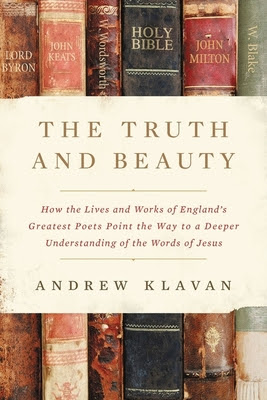
Beauty descends from God into nature, but there it would perish and does except when a Man appreciates it with worship and thus as it were sends it back to God: so that through his consciousness what descended ascends again and the perfect circle is made." — C.S. Lewis, letter to Arthur GreavesAs I read this book it occurred to me that it described the process of Andrew Klavan discovering what Lewis describes above and then fleshing it out using examples from poetry and other written art. He never references the quote but it has long been one of my favorites. Along the way we get the lives of some of the poets and then Klavan's own deeper dive into the Gospels.
.jpg) |
| Self Portrait at Twenty-Eight, Albrecht Durer |
It is the last of his three painted self-portraits. Art historians consider it the most personal, iconic and complex of his self-portraits.[1] The self-portrait is most remarkable because of its resemblance to many earlier representations of Christ. Art historians note the similarities with the conventions of religious painting, including its symmetry, dark tones and the manner in which the artist directly confronts the viewer and raises his hands to the middle of his chest as if in the act of blessing.
Read more at the Wikipedia page. I love Durer's paintings but never realized that he himself was so good looking. I think I might actually prefer this self-portrait from when he was twenty-six. The outfit is great, am I right?
_-_1498.jpg) |
| Self Portrait at Twenty-Six, Albrecht Durer |
 |
| Rembrandt van Rijn, Self Portrait with Two Circles |
They had Rembrandt on the calendar that year, a rather smeary self-portrait due to imperfectly registered color plate. It showed him holding a smeared palette with a dirty thumb and wearing a tam-o’-shanter which wasn’t any too clean either. His other hand held a brush poised in the air, as if he might be going to do a little work after a while, if somebody made a down payment. His face was aging, saggy, full of the disgust of life and the thickening effects of liquor. But it had a hard cheerfulness that I liked, and the eyes were as bright as drops of dew.I don't know if this is the portrait Philip Marlowe was looking at because I discovered that Rembrandt did over a hundred self-portraits in his lifetime. But this expression is the one that came to mind when I read that paragraph. "Hard cheerfulness" is the perfect description.
Raymond Chandler, Farewell My Lovely
I love that this question was being asked as far back as the sixth century and it is still brought up today. What a good answer I have now thanks to that African author!As individual men who received the Holy Spirit in those days could speak in all kinds of tongues, so today the Church, united by the Holy Spirit, speaks in the language of every people.
Therefore if somebody should say to one of us, “You have received the Holy Spirit, why do you not speak in tongues?” his reply should be, “I do indeed speak in the tongues of all men, because I belong to the body of Christ, that is, the Church, and she speaks all languages. What else did the presence of the Holy Spirit indicate at Pentecost, except that God’s Church was to speak in the language of every people?
Sixth century African author, sermon excerpt
 |
| Zinaida Serebriakova (1884–1967) At the Dressing-Table (the self-portrait). |

The Founder is the story of Ray Kroc, a salesman who turned two brothers’ innovative restaurant, McDonald’s, into one of the biggest restaurant businesses in the world with a combination of ambition, persistence, and ruthlessness.This normally isn't the sort of movie I feature as "a movie you might have missed." It's got a big star, a director who's done movies people know (The Blind Side, Saving Mr. Banks), and is about an American institution. And yet I'm continually surprised to find that so few people have heard of it.
Henry James has remarked that there are two different types of intellectual pleasure‚ the pleasure of recognition and the pleasure of discovery. Of course he took five pages to say it, but that was the idea. Chocolate-peppermint cake embodies both pleasures: the surprise of finding that something lurks in the chocolate ambush and the pleasure of recognizing that it is actually a peppermint.I love both Mrs. Appleyard's Year and Mrs. Appleyard's Kitchen so much. They have the homey quality that makes good comfort reading along with the clever humor that surprises you with its intelligence.
Louise Andrews Kent, Mrs. Appleyard's Kitchen

This charming and clever collection of tales is perfect for family snuggling. The stories all stand on their own and are just the right length for bedtime reading. Young readers will enjoy Robert Wenson's sweeping imagination, which takes them from old New Orleans (Esme and the Eloquent Eggplant) to the fictional kingdom of Perinnia (Reynard and the Robotic Robberies), to ancient Greece (Xenophon and the Xanthios Xiphios), to all around the whole world (Yolanda and the Yak Yoghurt). Along the way are daring escapes, dastardly villains, settings historical and fantastic, and an assortment of resourceful and brave young heroes and heroines. Sarah Neville's illustrations provide just the right flourish for each tale.
The above description is from Brendan Hodge's review which he is particularly suited to give since the stories in the book were written over the past few years for his children. Imagine being lucky enough to receive one of these stories in the mail! This is like the sort of magical experience that sets up the beginning of an adventure in a children's book. What a treat that must have been for the Hodge children.
I found these light, funny stories very appealing and not just for children. They are just a few pages long, featuring quick-witted children who must overcome unlikely, whimsical predicaments, often with equally unlikely solutions. The titles give you a sense of the range but not of the author's comic imagination: Alexandra and the Argumentative Alligator, Hendrik and the Horrible Hollyhocks, Neville and the Negligent Neanderthal, and Yolanda and the Yak Yoghurt.
Anyone who has a sense of whimsy will enjoy these stories as much as I did. They were particularly good for my own bedtime reading as one or two were just the thing to prepare me for sleep with a smile on my face.
The Kindle price is inexpensive and it is well formatted with the charming illustrations well displayed. I also picked up a print version because when my grandson is old enough I know he'll enjoy these imaginative, charming stories as much as I do.
Brendan features one of the stories in his review and I urge you to sample it. It is simply delightful as, of course, are all the stories in the book. Then buy the book and read my favorite, Sarah and the Stranded Saturnians. This is going on my Best of 2022 list. Highly recommended.
Note: the author has been diagnosed with cancer. Please keep him in your prayers.
 |
| Self Portrait, James Tissot |
I remember when it broke on me like a lightning bolt that we weren't the first people to think of selfies. Painters have been doing them for some time. I love this one of one of my favorites, James Tissot. He looks very jaunty.
 |
| Cup of Honey, Konstantin Makovsky |
 |
| Fireworks in Nagaoka, Niigata Prefecture, Koichi_Hayakawa |
It is as if the book of Psalms is a condensation of the scripture in the elements that Ambrose describes above.In the book of Psalms there is profit for all, with healing power for our salvation. There is instruction from history, teaching from the law, prediction from prophecy, chastisement from denunciation, persuasion from moral teaching. All who read it may find the cure for their own individual failings. All with eyes to see can discover in it a complete gymnasium for the soul, a stadium of the virtues, equipped for every kind of exercise; it is for each to choose the kind he judges but to help him gain the prize.
Saint Ambrose, Explanations of the Psalms

Loving tells the true story of Richard and Mildred Loving (Joel Edgerton and Ruth Negga), an interracial couple who married and then spent the next nine years fighting for the right to live as a family in their home state of Virginia. Their civil rights case, Loving v. Virginia, went to the Supreme Court, whose 1967 decision in their favor changed marriage in the United States forever.This is a deep, rich telling of a wonderful story without feeling the need to embellish the facts. It is a bit slow, as many reviewers mentioned, and the director knows how to use silence and long shots, so you have to settle in for the long view.
Your Word is like a garden, Lord,I can't remember now where I found this to copy into my quote journal. It's a bit sentimental but I lean toward that with these old hymns. I don't even know the tune. I just know that I love the imagery.
with flowers bright and fair;
and everyone who seeks may pluck
a lovely cluster there.
Your Word is like a deep, deep mine;
and jewels rich and rare
are hidden in its mighty depths
for every searcher there.
Your Word is like a starry host;
a thousand rays of light
are seen to guide the traveler,
and make his pathway bright.
Your Word is like an armory,
where soldiers may repair,
and find, for life’s long battle day,
all needful weapons there.
O may I love your precious Word,
may I explore the mine,
may I its fragrant flowers glean,
may light upon me shine.
O may I find my armor there,
your Word my trusty sword;
I’ll learn to fight with every foe
the battle of the Lord.
Edwin Hodder
Amen to that!In the end, life becomes literature,and literature has meaning because life has meaning. ...
The world has told us that all our truths are merely stories, but this man who walks with us on the road to Emmaus, he told us that all our stories are really truths — truths in human form, which is the form of beauty, which is the form divine, which is his form, the form of the Word made flesh.
Andrew Klavan, The Truth and Beauty
 |
| Jupiter's Great Red Spot, NASA |
(March 1, 1979) As Voyager 1 flew by Jupiter, it captured this photo of the Great Red Spot. The Great Red Spot is an anti-cyclonic (high- pressure) storm on Jupiter that can be likened to the worst hurricanes on Earth. An ancient storm, it is so large that three Earths could fit inside it. This photo, and others of Jupiter, allowed scientists to see different colors in clouds around the Great Red Spot which imply that the clouds swirl around the spot (going counter-clockwise) at varying altitudes. The Great Red Spot had been observed from Earth for hundreds of years, yet never before with this clarity and closeness (objects as small as six hundred kilometers can be seen).


,_p._10.jpg)


.jpg)


