Featured Post

On the road again — back July 6!

Back July 6!  My husband and I are taking a road trip through Utah. We're going to Zion National Park, Brice Canyon and eventually we...

Wednesday, May 9, 2018

Well Said: Marital problems and comfort zones

The biggest contributor to marital problems and, eventually, marital breakdown is that husbands and wives tend to love their own comfort zones more than they love each other.
Greg and Lisa Popcek, Just Married
Ain't that the truth! It is my continual battle with myself, which tells you where I live ... struggling with my comfort zones!

So let me give you part two to that idea, from the same source.
Learning to love your spouse more than you love your comfort zone means being willing to be loving to your spouse in ways that make absolutely no sense to you but mean everything to your mate.
Which is the biggest form of respect in a lot of ways. And also, of course, of love.

Monday, May 7, 2018

Incredible Flying Stingrays


It begins with pelicans but quickly transitions to the flying stingrays. No one knows why they fly but there are lots of theories. I just love watching them!

Worth a Thousand Words: The Family of Cain Wandering

The family of Cain wandering. Paolo Veronese
This is the beauty of artistic imagination. It never occurred to me to think of Cain with his family.

Well Said: Life's meaning

Don't invent a meaning for your life. It is there. Find it.
Dr. Viktor Frankl

Saturday, May 5, 2018

Weekend Joke: In Heaven and Hell

In Heaven the cooks are French, the lovers are Italian, the engineers are German, the cops are English.

In Hell the cooks are English, the lovers are German, the engineers are French and the cops are Italian.
That checks out.

Friday, May 4, 2018

Well Said: Roman Polanski

I've never yet seen one of Roman Polanski's movies that justified his lack of jail time.
Rose Davis
This is especially timely, though Rose said it a year or two ago, since the movie academy just expelled both Bill Cosby and Roman Polanski. That is what it took to make them stop fawning over Polanski and take what he did seriously. Bill Cosby's guilty verdict and the #MeToo movement. About time.

Recipe Revisited: Green Beans with Spicy Beef Sauce

Rose recently made Green Beans with Spicy Beef Sauce from Jim Fobel's Big Flavors cookbook, which rarely disappoints. I always mark up my cookbooks with comments for the next time I'm flipping through for a good meal option. However, I never did that and hadn't made the recipe in 10 years!

Which I discovered only when looking to see if someone had posted the recipe already so I didn't have to retype it for myself. And then I found it on my own food blog!

Well, that's way too long a lapse between us eating this delicious dish. So I'm reminding you of it too. Give it a try!

Thursday, May 3, 2018

Lagniappe: Fate

Fate is like a strange, unpopular restaurant filled with odd little waiters who bring you things you never asked for and don't always like.
Lemony Snicket

Wednesday, May 2, 2018

Worth a Thousand Words: Stage Door

Stage Door, Edward B. Gordon

Well Said: Patience

Patience is not passive; on the contrary it is active, it is concentrated strength.
Edward Bulwer-Lytton
Much more profound than I expected from the fellow who is most famous for "it was a dark and stormy night." To be fair, he was great friends with Charles Dickens so there was probably more there than meets the modern, cursory eye.

What I've Been Reading — Mary Stewart

I have been a fan of Mary Stewart's romantic thrillers since I was in high school, nabbing my mother's copies off the shelves. I haven't picked them up for years but seeing that they are on Kindle for a low price made me go looking for my own paperbacks. Immediately I sank into the pleasure of revisiting much loved characters and settings along with noticing new details. I especially appreciate her combination of beautiful prose, engaging characters, and ability to ratchet up tension until you are reading as fast as possible. This excerpt can't convey all those qualities but it gives an idea of her style.
Further out in the bay, the green and red and golden riding-lights of the bigger ships drowned themselves in long liquid shadows. The ropes looked as fragile and as magical as gossamer.

We stood looking over the sea-wall. A group of sailors, noisily talking and laughing, went past, then a man and a girl, absorbed. Nobody seemed to pay any attention to us, and once again I felt the beginnings of that strangely dreamlike feeling I had experienced before, only this time it was not brought about by weariness, but by something else I could not quite understand. It was as if Richard Byron and I were alone in a bubble of glass, enclosed in its silence, into which nothing could break and out of which we might not go. People, like the dim denizens of some undersea-world in which our bubble was suspended, came and went, floating, soundlessly, amorphous, outside the glass, peering in perhaps, but having no power to intrude upon the silence that enmeshed us. To this day I still remember Marseilles, the noisiest city in the world, as a noiseless background to that meeting with Richard Byron, a silent film flickering on a screen in front of which we two moved and stood and talked, the only living people there.
Madam, Will You Talk?
I hadn't realized until recently that Steward developed the romantic mystery genre for modern times (relatively speaking) with smart heroines who adapt well when they are unexpectedly thrust into dangerous situations. Yet, she is not very well known these days.

She also wrote a celebrated series about Merlin and Arthur which combined historical fiction and fantasy. Those were also good but I always liked her mysteries best.

I'd forgotten how many different settings she used - reportedly always visiting in person to be sure she got the atmosphere and details right. What I did remember is that she writes for the intelligent reader, making it a pleasure to revisit these books recently.

Madam, Will You Talk?Madam, Will You Talk?
When Charity Selborne  arrived on holiday at Avignon, she had no way of knowing that she was to become the principal player in the last act of a strange and brutal tragedy. Befriending a terrified boy and catching the attention of his enigmatic, possibly murderous father, has inadvertently placed her center stage. And now the killer, with blood enough on his hands, is waiting in the wings.
Danger, intrigue, and romance in a breakneck pursuit through Provence as our heroine protects a child from a murderer's pursuit. As always Mary Stewart's powers of description raise this above the usual romance/thriller story. This was the first of her books that I ever read and I found out that it is her first book. Really top-notch for right out of the gate. It was a lot of fun to reread after all these years although it is not my favorite as it used to be.
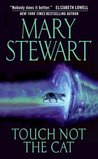
Touch Not the CatTouch Not the Cat
After the tragic death of her father, Bryony returns from abroad to find that his estate is to become the responsibility of her cousin Emory. Her family's estate with its load of debt is no longer her worry. Still, her father's final, dire warning about a terrible family curse haunts her days and her dreams. And there is something odd about her father's sudden death...
This one has an increased sense of terror by the end which is enhanced by the fact that she is in love, but isn't sure of her lover's identity. Yep, it sounds ridiculous but Stewart makes the twist seem totally natural. It's my favorite of her books. For the present anyway.

Nine Coaches WaitingNine Coaches Waiting
When lovely Linda Martin first arrives at Chateau Valmy as an English governess to the nine-year-old Count Philippe de Valmy, the opulence and history surrounding her seems like a wondrous, ecstatic dream. But when an accident deep in the woods nearly kills Linda's innocent charge, she begins to wonder if someone has deadly plans for the young count.
 In this tale, Stewart takes us through a modern gothic romance, a la Jane Eyre, but with a twist and in France instead of England.  Although the governess is inexperienced in the ways of the privileged and of love, she holds her own. A very enjoyable take on Cinderella, which is pointed out a few times in the novel, but one without a fairy godmother.  Cinderella solves this mystery on her own.
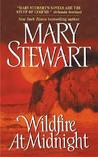

Wildfire at MidnightWildfire at Midnight
A young crofter's daughter is cruelly and ritually murdered on the the Scottish Isle of Skye.. In the idyllic Camasunary Hotel nearby, beautiful Gianetta Brooke cannot seem to escape her pain or her past. Very soon Gianetta finds herself tangled in a web of rising fear and suspicion. One of her fellow guests, however, is also hiding secrets... and a skill and penchant for murder. 
This echoes the feel of mysteries set in isolated mansions, as tourists in an isolated hotel have a string of sacrificial murders happen in the nearby mountains. I had read this book fewer times than the others so the plot was slightly less familiar, adding a nice bit of tension to my rereading. I especially enjoyed the tidbits of Scottish living that found their way even into a hotel setting.

Monday, April 30, 2018

Worth a Thousand Words: Chiffchaff

Chiffchaff, Remo Savisaar

Well Said: Bearing the Face of Christ

Every child who, rather than being born, is condemned unjustly to being aborted, bears the face of Jesus Christ, bears the face of the Lord, who even before he was born, and then just after birth, experienced the world's rejection. And every elderly person even if he is ill or at the end of his days, bears the face of Christ. They cannot be discarded, as the "culture of waste" suggests!

Saturday, April 28, 2018

Weekend Joke

A German tourist walks into a McDonald's in New York City and orders a beer. (In Germany and many parts of Europe, McDonald's actually does serve beer.)

The local guy in the line behind him immediately gives him the jab: "They don't serve BEER here, you MORON!"

The German fellow felt pretty stupid, but suddenly turns to the New Yorker with a surprised look, and begins to chuckle.

"And what's so funny?" the New Yorker demands.

"Oh, nothing really, I just realized that you came here for the food."
We're not really into summer vacation time yet, but I have been thinking about where to plan a road trip. So this fit my mood perfectly!

Friday, April 27, 2018

Well Said: Depictions of Christ in Art, Specifically Movies

Roger Ebert's widow, Chaz, has a blog at the Roger Ebert website. One of the features is other people's discussion of their "My Favorite Roger" columns. I could have sworn I found my way to Ebert's shortened essay about The Last Temptation of Christ via one of those columns but I can't find it any longer.

At any rate, Ebert's comment sent me on another search.
The film is indeed technically blasphemous. I have been persuaded of this by a thoughtful essay by Steven D. Greydanus of the National Catholic Register, a mainstream writer who simply and concisely explains why. I mention this only to argue that a film can be blasphemous, or anything else that the director desires, and we should only hope that it be as good as the filmmaker can make it, and convincing in its interior purpose.
I immediately sought out Greydanus' essay The Last Temptation of Christ: An Essay in Film Criticism and Faith.

I am often caught defending what others may think of as blasphemous or  decrying what others think is inconsequential when seeing faith depicted on the screen. Not in any professional capacity, of course, just as a general film watcher amongst pals.

This is very long but I intend to keep it on hand as a wonderful summary, a litmus test if you will, of how one may consider whether Christ is being portrayed in a blasphemous manner or not.
Now, Christian theology teaches that Jesus Christ was fully human as well as fully divine; and certainly there is nothing objectionable about trying to evoke or express in art the humanity of Christ. A work of art, a film or novel or painting, that evokes the truth of Christ’s humanity is a good and noble thing, even if it doesn’t directly address the subject of his divinity. A recognizably human portrait of Jesus — for example, one that envisions him being capable of suffering weakness, loneliness, fear, exhaustion; of becoming exasperated with his disciples, or of having a good time at a wedding party — all of this can be quite valid and worthwhile.

Moreover, the mystery of Jesus’ dual nature is one that no Christian can claim to fully understand or imagine. In particular the experience of being a mortal man who was also God in the flesh is one we cannot begin to grasp. Unanswered questions exist that leave room for a range of different ways of envisioning the person of Christ in drama and art.

For all these reasons, we must not be too quick to judge any particular portrait of Christ merely because it challenges our expectations or makes us uncomfortable, or because it doesn’t immediately evoke his divinity. After all, Jesus himself often confounded the expectations of his contemporaries, and didn’t necessarily impress most of them as being divine. Indeed, if any believer today were somehow able to see and hear him as his contemporaries did, the experience might not immediately confirm his faith — indeed, it might even give him a moment’s pause.

On the other hand, while Christian belief doesn’t tell us everything about what Jesus was like, much less what it was like to be him, it does give us certain insights into what he wasn’t. We may be unable to fully apprehend human nature united to divinity, but we can easily understand that certain things would be incompatible with this union. Christian belief teaches that Jesus shared our humanity, but not our fallenness and fallibility. Not only did he not sin, he didn’t suffer from our concupiscent appetites, our disordered and inflamed desires. He was tempted as we are — he could feel hunger during a fast, or dread on the eve of his passion — but his will was not pulled to and fro by wayward passions. He may, in his humanity, have had limited knowledge or insights, but he could not be deceived or confused into believing or teaching anything contrary to divine truth. At no time did he suffer doubts about his divine nature or messianic identity.

Imperfect art and the perfection of God
Does a dramatic portrayal of Christ’s humanity have to be perfectly compatible with every article of faith about him in order to have any value? No, not necessarily. Even an imperfect vision of Christ — one that doesn’t entirely correspond to known truths of faith, that contains elements that are clearly erroneous — could still be worthwhile and valuable, if it remains, on the whole, generally evocative of important truths about Christ.

That doesn’t seem like too much to ask or expect: That a work of art be, on the whole, generally evocative of the truth about its subject; that it be reasonably true to that subject, that it not turn the subject into something antithetical to itself. A movie about the man Jesus may have value if is shows Jesus to be recognizably and authentically human, while at least minimally leaving room for his divine nature, remaining at least compatible with Christian belief in his deity — in a word, while not turning him into an fallible, fallen man, one who could not be God.

A Jesus who commits sins — who even thinks he commits sins, who talks a great deal about needing "forgiveness" and paying with his life for his own sins; a Jesus who himself speaks blasphemy and idolatry, calling fear his "god" and talking about being motivated more by fear than by love; who has an ambivalent at best relationship with the Father, even trying to merit divine hatred so that God will leave him alone — all of this is utterly antithetical to Christian belief and sentiment. This is not merely focusing on Jesus’ humanity, this is effectively contradicting his divinity.
Yes. This is why people object to the portrayal of Christ in Jesus Christ, Superstar. Even if the live version was artistically acclaimed.

Do go read the entire thing.

Alfie Evans and Legitimate Parental Authority

I’ve held back from commenting on the Alfie Evans case so far because everybody else and his brother seem to be weighing in, and to be truthful, these cases are extraordinarily complex and I’m not a medical professional.
Me too. Of course, the complex issues involved go beyond medical care to parental versus governmental rights, money, and how we treat the most vulnerable human life.

I already knew about little Alfie Evans and his parents' legal battle with the British hospital which will not release him into his parents' care. I'm not ok with how the authorities have been handling this, both as a Catholic and as a parent. Ok, also as an American.

So many people have articulated my feelings and thoughts on this case much better than I could. Also many of them have additional insights which deepened my understanding. So, here you go!
  • Jennifer Fitz has a good, short summary of the issues surrounding Alfie Evans from a Catholic point of view. She brilliantly connects it to subsidiarity, the idea that things should be handled by the lowest level of authority competent to do so. I love her examples. As she points out: Where the UK has gone terribly wrong is in usurping legitimate parental authority.

  • The Curt Jester mentions how much this reminds him of the Terri Schiavo case. Up to and including a Catholic archbishop approval of the hospital's methods. Yep, I haven't been able to shake that comparison either.

  • Father Dwight Longenecker has more to say about the archbishop.
    The fact that the Archbishop of Liverpool has taken the side of the hospital in this case is shocking. Does he not know the Catholic principles for end of life matters? Does he not stand up for them? Why on earth hasn’t Archbishop McMahon spoken clearly about the Catholic principles on end of life issues? This is not only for the sake of Alfie and his family, but it is a powerful teaching opportunity while the world’s media is watching.
  • GetReligion points out that there has been very little press coverage here of Alfie's story while the press has fixated on the newest royal baby. As one of the pieces they quote says:
    What if Prince George or Princess Charlotte find themselves in the hospital with their own mysterious brain condition? It would be a very sad thing, indeed. No sadder than it would be for any other child, but still sad.

    Do we have any doubts about how the situation would unfold with a royal baby in Alfie's shoes? Need we even debate the subject?
  • National Catholic Register launches a new series, Difficult Moral Questions, with a look at Alfie Evans' case. It digs deeper into Catholic teachings under such circumstances. If you have further questions after reading Jennifer Fitz's piece, then this is a good follow-up.
NOTE
In thinking about subsidiarity, I'd also like to point you to this National Catholic Register piece about Paul Ryan's plan to alleviate poverty by following the model used by Catholic Charities of Fort Worth. It makes so much sense.

Thursday, April 26, 2018

Lagniappe: "I do not know of a happier way to spend an afternoon..."

When we were not doing up jams and jellies, we were down in the brook, which is deep enough to swim in, and shallow enough, with a good sand bank, for the children to play on, so it was a vacation indeed. I do not know of a happier way to spend an afternoon than sitting in a shallow brook with babies paddling happily around. There were little crawfish on the bottom, little minnows darting between your fingers as you try to catch them, boat flies on the surface, and beautiful blue dragonflies flying just above the water. There were neither mosquitoes nor flies nor gnats. The sun-warmed waters of the brook made up for all the "pail baths" we had been taking through the heat. We washed the children's clothes before we went back to the house, and we picked Indian pipes and pennyroyal as we went back through the field.
Dorothy Day, On Pilgrimage
The lovely thing about this journal is that she writes down life as it happens so between thoughts about faith and deep subjects, worries about retreats and how to feed the poor, comes some beautiful writing about episodes like this "vacation." I feel as if I had gone along.

Guards! Guards! by Terry Pratchett

Guards! Guards! (Discworld, #8; City Watch #1)Guards! Guards! by Terry Pratchett


When a disgruntled secret society wants to bring back the monarchy naturally they begin by summoning a dragon. Because, of course, everyone knows that a long lost heir to the throne will emerge to fight it. That should be enough to tell you that you are in Terry Pratchett's Discworld. We also meet the Watch members, charged with maintaining law and order, or at least a fiction of it. Quite enjoyable although indeniably an early Pratchett where he's not at the height of his story telling powers. His humor, though is, as always, right on target.

I just reread this because I wanted something easy for nighttime reading. It was more fun than I expected because after having read the entire City Watch subseries it reminded me of just how far Vimes and all the Watch had come since their humble beginnings in this book.

This is a good place to begin if you want to try Terry Pratchett and jump into Discworld.

Wednesday, April 25, 2018

Well Said: I believe in Purgatory.

I believe in Purgatory.

[...]

I assume that the process of purification will normally involve suffering. Partly from tradition; partly because most real good that has been done me in this life has involved it. But I don't think the suffering is the purpose of the purgation. I can well believe that people neither much worse nor much better than I will suffer less than I or more. . . . The treatment given will be the one required, whether it hurts little or much.
C. S. Lewis, Letters to Malcolm: Chiefly on Prayer
Nothing gets the day off to a good start, I find, better than a little C.S. Lewis. He's so intensely practical and yet helps you keep your eyes on the path to Heaven.