 |
| Taken by Valerie of ucumcari photography, some rights reserved |
Friday, February 19, 2016
Worth a Thousand Words: Blow in my ear...

7 Women: And the Secret of Their Greatness by Eric Metaxas
 7 Women: And the Secret of Their Greatness by Eric Metaxas
My rating: 5 of 5 stars
Just as he did in 7 Men: And the Secret of Their Greatness Eric Metaxas shares the brief biographies of seven inspirational women. Some are familiar, like Mother Teresa and Rosa Parks. Some I had never heard of, such as Saint Maria of Paris and Susanna Wesley.
Metaxas begins the book by considering the way our culture often highly celebrates women who compete with men, as if there is no other way to measure a woman's value. We think of this as putting men and women on equal terms, but it actually pits them against each other in a zero-sum competition. Someone must win and someone must lose. That's hardly "equality." It is ironic that such a standard is so built into our culture that this concept was slightly startling to me. And I'm nobody's knee-jerk "feminist."
I found it amusing, therefore, when Metaxas' first great woman was Joan of Arc. Is there a better female icon for achieving greatness by doing what the boys do, but better? It turns out that one of the contradictions is the little known fact that Joan was not as we portray her these days, like Katniss from The Hunger Games. She was inexperienced, petite, vulnerable, and innocent. It was precisely her feminine, youthful qualities which affected the average fighting man to respect her victories as miracles.
Story after story shows these women just as they were, rising to the difficulties of their circumstances in ways that exemplify true womanhood. Each surrendered themselves to God and sacrificed themselves in some way for the greater good. In so doing, each helped change the world for the better.
Somehow the phrase "true womanhood" equates these days with "namby pamby" or "doormat." Nothing could be further from the truth. As you read these stories you will come away respecting how strong feminine qualities can be under adverse conditions. Examining the lives of these great women helps reset our view by stepping outside of our current assumptions and that can only help inspire all of us. It certainly inspired me.
Thursday, February 18, 2016
What We've Been Watching: The Wages of Fear, Mr. Holmes

The Wages of Fear (1953)
Four men, desperate to escape a South American village, agree to drive trucks of nitroglycerin over mountain passes to where they are needed to stop an oil fire. At its heart this is both a character study and a nonstop thriller. My heart was in my mouth for a good portion of the film.Picking this up on a friend's recommendation, I was completely surprised by my husband's enthusiastic, "I remember watching that when I was a kid! What boy doesn't love guys driving nitroglycerin over mountain passes!" He saw it in the days when the movie was dubbed and shown on Saturday afternoon.
These days, of course, we get the meticulously restored version with 21 minutes added back in and all en Français with captions. Except where they were speaking English or Italian. Those 21 minutes probably removed some jokes or rhetoric which were considered anti-American in 1953. These days we are well used to taking it on the chin, so back in they went. Unfortunately, they served to slow down the story ... a lot.
As I said, the heart of the movie is sound suspense and I was on the edge of my seat. Just let the long, slow beginning wash over you as a preamble. You won't be sorry.
Mr. Holmes (2015)

This was recommended by two very different friends and so we gave it a shot. It turned out that we liked it very much and even more so the next day when we kept bringing it up to each other.
Sherlock Holmes is very aged, living in Suffolk and keeping bees (as he sometimes mentioned wanting to do in the stories), coping with losing his memory, and forging an unexpected friendship with the young son of his housekeeper. The movie accompanies the current day with two other strands of remembered story. One is recent involving a trip to Japan. The other is older and involves Holmes' last case. The way all three strands are woven together forms a lovely final lesson in Holmes' life (I would argue that this itself is Holmes solving his last case).
It is a quiet, life affirming movie with several mysteries that kept us rapt the entire time. Well worth seeing.
The Reign of God 4: The Abraham Principle
Continuing with the excerpt, which ended in Part 3 when God begins to transform the world with an individual, Abraham.
Part 1
Part 2
Part 3
Part 1
Part 2
Part 3
From all this we can already see that the people God chooses and creates cannot rest within itself. It is not self-enclosed, existing for its own sake. It is chosen out of the mass of the nations for the sake of those nations. Abraham was, after all dragged out of his family and his homeland so that he could be a blessing for many others. In the people that came from him was to be made visible and tangible what God wants for the whole world: nonviolence, freedom, peace, salvation.Next Part 5: A Basic Biblical Constant
Because God desires the salvation of the world, that salvation has to be tangibly present in the experimental field of a small nation, precisely so that the other nations can see that there really can be justice and peace in the world, so that they can see that justice and peace are not utopia, not "nowhere," and so that they can freely take on this new social order. Of course that puts a shocking burden on this nation: the burden of election. Because if the people of God does not do justice to its task, if instead of peace in its midst there is conflict, instead of nonviolence it works violence, instead of showing forth salvation it spreads disaster, it cannot be a blessing for the nations. Then it falls short of the meaning of its existence; then it will not only be a laughingstock for the nations but will do great harm
Jesus of Nazareth by Gerhard Lohfink

Wednesday, February 17, 2016
The Reign of God 3: Something New
Continuing with the excerpt, which ended in Part 2 by observing that the individual is the point where God can build on change undertaken freely.
Part 1
Part 2
Part 1
Part 2
That is precisely what the stories of the patriarchs in Genesis tell about. The first pages of the Bible had told of the creation of the world, the development of the story of humankind, and--in a few hints--the growth of human civilization and culture. But along with all that the Bible also spoke immediately of disobedience to God and thus of the growth of destructive rivalries and brutal violence.Next Part 4: The Abraham Principle
But then Genesis 12 starts over with something new. It suddenly ceases to look at humanity as a whole and begins to talk about an individual: Abraham. God begins to transform the world by starting anew, at a particular place in the world, with a single individual:
Now the Lord said to Abraham, "Go from your country and your kindred and your father's house to the land that I will show you. I will make of you a great nation, and I will bless you, and make your name great, so that you will be a blessing. I will bless those who bless you, and the one who curses you I will curse; and in you all the families of the earth shall be blessed." (Gen 12:1-3)Jesus of Nazareth by Gerhard Lohfink
Worth a Thousand Words: Wild Boar
 |
| Wild Boar taken by Remo Savisaar |
Quick Looks at 3 New Books
I haven't had time to read more than a few chapters of each of these books. Those chapters, however, are enough to put them on my "to read" list. I didn't want you to have to wait to find out about them until I'd read them and done a full review.
 Transformed by God's Word: Discovering the Power of Lectio and VISIO Divina by Stephen J Binz
So far it is practically perfect in every way. I especially love the gorgeous icons. Their symbolism tends to be obvious enough to start me contemplating God's mystery, but Binz's notes add to the layers of meaning that I'd otherwise miss.
 You Can Share the Faith: Reaching Out One Person at a Time by Karen Edmisten
I admit that I read five chapters before getting pulled away. They included engaging the culture, hanging with all kinds of people, being honest about struggles, and (most of all) doing it person-to-person. Get it. Read it.
 The Catholic Catalogue: A Field Guide to the Daily Acts That Make Up a Catholic Life by Melissa Musick
I did not have questions about Catholic tattoos, consecrated virginity, planting a Mary garden or Catholic tattoos, but if you do, this is your book. They cover a lot of ground!
Transformed by God's Word: Discovering the Power of Lectio and VISIO Divina by Stephen J BinzBestselling author and biblical scholar Stephen J. Binz offers the first book to combine the ancient Western practice of lectio divina (sacred reading) with the lesser-known Eastern Orthodox tradition of visio divina (sacred seeing). Binz suggests a life-changing way to pray through twenty gospel readings paired with beautiful, never-before-published contemporary icons.It's no secret that I'm a big fan of Stephen Binz's books about lectio divina. I myself have long had an affinity for icons and other art which help me connect with God so you can imagine my delight at receiving this book.
The book's twenty Bible passages--starting with the Annunciation and ending with Pentecost--are paired with full-color icons of each story. The original, never-before-published icons, written by Ruta and Kaspars Poikans, are displayed in the Unity Chapel at the Mary of Nazareth International Center in Israel.
So far it is practically perfect in every way. I especially love the gorgeous icons. Their symbolism tends to be obvious enough to start me contemplating God's mystery, but Binz's notes add to the layers of meaning that I'd otherwise miss.
You Can Share the Faith: Reaching Out One Person at a Time by Karen EdmistenSharing the faith doesn't have to be complicated. After all, Jesus himself just started with one person. Here are practical pointers from the author's own story and those of many others to help you share your faith joyfully, casually, confidently and with compassion.This book resonated with me from page one. I don't know Karen Edmisten has managed to write a book that sounds as if I gave her notes on what I'd write myself, but she did. Her life story is different from mine, but her Catholic way of life is precisely what I answer when people ask me "how to" be a Happy Catholic.
I admit that I read five chapters before getting pulled away. They included engaging the culture, hanging with all kinds of people, being honest about struggles, and (most of all) doing it person-to-person. Get it. Read it.
The Catholic Catalogue: A Field Guide to the Daily Acts That Make Up a Catholic Life by Melissa MusickThis collection of prayers, crafts, devotionals and recipes will help readers make room in their busy lives for mystery and meaning, awe and joy.This actually might be the perfect "Easter season" book to read. Remember, we've got 50 days of Easter after Lent is done. It certainly would be a great gift for new Catholics. It's one of those books with the practical stuff about living the Catholic life. I remember I had questions about how to do Eucharistic adoration, what the Triduum is, how to fast and "give things up" for Lent, and much more.
This beautifully designed book will help readers celebrate Catholicism throughout the years, across daily practice and milestones. Like the most useful field guides, it is divided into user-friendly sections and covers such topics as the veneration of relics, blessing your house, discovering a vocation, raising teenagers, getting a Catholic tattoo, planting a Mary garden, finding a spiritual director, and exploring your own way in the tradition.
I did not have questions about Catholic tattoos, consecrated virginity, planting a Mary garden or Catholic tattoos, but if you do, this is your book. They cover a lot of ground!
Tuesday, February 16, 2016
Appointment With Death by Agatha Christie
I discovered that the library has a few of Agatha Christie's books in audio format so I've been enjoying listening to the familiar tales. I read them over and over when growing up but she still manages to fool me time after time. Quite often I recall the set up but listening makes me slow down and enjoy the small details that familiarity can gloss over. Just as often I find myself really enjoying a book that I previously didn't care about.
What surprises me most of all, listening as a Christian and an adult, is how very moral the stories were, with many mentions of Christianity. There is nothing odd in that, especially for the time in which most of Christie's stories were written. It was an accepted part of the cultural background, for one thing. But it gives one to think, as Poirot would say.
This book is one such example. I recalled the set up and even caught the big toss-off clue, though I got the murderer wrong.
 Appointment with Death by Agatha Christie
My rating: 4 of 5 stars
This is the story of a family on vacation in the Holy Land, whose matriarch is a sadistic monster. By the time the mother is murdered we are nothing but thankful because this lady, we think, does not deserve to live. In fact, that seems to be the opinion of the Colonel and doctor who bring the possibility of murder up in a halfhearted fashion to Hercule Poirot. On one hand they don't approve of murder but on the other, they feel the family is much better off.
This book comes after Murder on the Orient Express, which case is referred to several times by various characters. Anyone who knows the solution to that famous mystery knows that it contained an interesting moral dilemma which Poirot handled in a very different fashion than he seems prepared to do here. Christie seems to be exploring the question of whether murder is ever justified.
Naturally one needs a moral view in a murder mystery, but these themes were unexpected and added to my enjoyment of the book.
What surprises me most of all, listening as a Christian and an adult, is how very moral the stories were, with many mentions of Christianity. There is nothing odd in that, especially for the time in which most of Christie's stories were written. It was an accepted part of the cultural background, for one thing. But it gives one to think, as Poirot would say.
This book is one such example. I recalled the set up and even caught the big toss-off clue, though I got the murderer wrong.
Appointment with Death by Agatha ChristieMy rating: 4 of 5 stars
This is the story of a family on vacation in the Holy Land, whose matriarch is a sadistic monster. By the time the mother is murdered we are nothing but thankful because this lady, we think, does not deserve to live. In fact, that seems to be the opinion of the Colonel and doctor who bring the possibility of murder up in a halfhearted fashion to Hercule Poirot. On one hand they don't approve of murder but on the other, they feel the family is much better off.
This book comes after Murder on the Orient Express, which case is referred to several times by various characters. Anyone who knows the solution to that famous mystery knows that it contained an interesting moral dilemma which Poirot handled in a very different fashion than he seems prepared to do here. Christie seems to be exploring the question of whether murder is ever justified.
Poirot said, "The moral character of the victim has nothing to do with it. A human being who has exercised the right of private judgment and taken the life of another human being is not safe to exist among the community."She also presents us with a vivid example of the danger of turning inward, instead of extending oneself for the larger community.
Naturally one needs a moral view in a murder mystery, but these themes were unexpected and added to my enjoyment of the book.
The Reign of God 2: Starting Small
Continuing with the excerpt, which ended in Part 1 with the question of how God could change society at its roots, leaving us still free.
Part 1
Part 1
It can only be that God "starts out small," beginning at a single place in the world. There must be a place--visible, comprehensible, subject to examination--where liberation and healing begin, that is, where the world can become what it is mean to be according to God's plan. Starting from this place, then, the new thing can spread abroad. But it most certainly cannot happen through indoctrination or violence. Human beings must have the opportunity to view the new thing and test it. Then if they want to they can allow themselves to be drawn into the history of salvation and the story of peace that God is bringing into being. Only in this way can the freedom of the individual and of the nations be preserved. What drives one toward the new thing cannot be compulsion, not even moral pressure, but only the fascination of a world transformed.Next Part 3: Something New
So God has to start small, with a small nation. More precisely, God cannot even begin with a nation. God must start with an individual, because only the individual is the point where God can build on change undertaken freely.
Jesus of Nazareth by Gerhard Lohfink
Worth a Thousand Words: The Rhinegold & The Valkyrie
 |
| Arthur Rackham, The Rhinegold & The Valkyrie, 1910 |
Monday, February 15, 2016
The Reign of God 1: God the Revolutionary
This excerpt is ridiculously long so I will break it into parts. It gives a good idea of the brilliance contained in Jesus of Nazareth by Gerhard Lohfink. It is the big nonfiction book I'm reading during Lent and it is continually eyeopening.
Why is there this unending fixation on Israel in the Old Testament? Is this the inferiority complex of a little nation that had to fear for its existence all the time and therefore almost of necessity developed a theological megalomania? Most certainly not. If we read the Old Testament from beginning to end--from Abraham to Daniel, so to speak--then looking back, considering the whole of it and at the same time incorporating the great revolutions in world history, we could say: The God of the Bible, like all revolutionaries, desires a complete overturning, the radical alteration of the whole of the world's society. For in this the revolutionaries are right: what is at stake is the whole world, and the change must be radical, simply because the misery of the world cries to heaven and because it begins deep within the human heart. But how can God change society at its roots without taking away its freedom and its humanity?Next Part 2: Starting Small
Worth a Thousand Words: Portrait of Pola Negri
 |
| Portrait of Pola Negri (1922). Tadeusz (Tade) Styka via Books and Art |
Friday, February 12, 2016

Thursday, February 11, 2016
NARAL's problem with Doritos
I hadn't heard that the NARAL (National Abortion Rights Action League) complained that the Super Bowl Doritos commercial dangerously “humanized” the fetus.
Well, only if you expect a human being to be born. (eye roll)
I'd never heard of Voluntarism, but Father Barron's got the perfect example in the reaction to this Doritos commercial. Read it all here.
Well, only if you expect a human being to be born. (eye roll)
I'd never heard of Voluntarism, but Father Barron's got the perfect example in the reaction to this Doritos commercial. Read it all here.
Hard Times by Charles Dickens
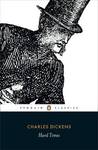 Hard Times by Charles Dickens
My rating: 3 of 5 stars
I listened to Anton Lesser's superb narration has pulled me into a story I frankly feared because of the reputation. None other than G.K. Chesterton succinctly remarked:
Twenty times we have taken Dickens's hand and it has been sometimes hot with revelry and sometimes weak with weariness; but this time we start a little, for it is inhumanly cold; and then we realise that we have touched his gauntlet of steel.Early on, I was surprised to hear of a school and household where not a drop of fantasy is allowed. Only the facts. Whether they convey the truth is a different matter, of course. This put me in mind of J.R.R. Tolkien's famous essay about why children, and indeed all of us, need fantasy. (On Fairy Stories. Dickens' story makes the point before Tolkien did.
Then I was stunned to see that Dickens shares the poignancy of the sadness, or should we say the tears, of a clown. Dickens strikes first again, beating Motown to the punch.
It is clear that we've got a lean, stripped down, no nonsense Dickens here. And yet, I was still enthralled. A large part of this was due to Anton Lesser's skill which carried me away on the story, breathless to see what would happen next despite the Hard Times which all the characters face. Knowing how Dickens loved theater and gave many of his own public renditions of his stories, straining his health in so doing and contributing to his early death, I believe he would approved.
I was really surprised to like this book as much as I did. It was as if Dickens took a good look at one of the subplots he couldn't cram into Bleak House and decided to just make a novella of it instead. Dickens always has enough alternate subplots in a book that he could easily spare this set of characters to make his point about Utilitarianism.
I called this a "novella" but, of course, that is only because I'm used to Dickens' average high page count. This is a 321 page book, 9 cds long if you go by audiobook, which I did most of the way. Toward the end, as usual, I had to abandon the audio and go for print because I just had to know what happened as soon as possible.
The book was not as "hard" as I expected. I feel Oliver Twist has much more difficult passages. It is just that there is not the usual complement of comic characters to lighten the way for us. When I saw that this was written between Bleak House and Little Dorrit the darker tone made sense also. Those are two of my favorite books but there is no denying that the later novels have a darker edge which fits right in with this book.
I'd have given it 3-1/2 stars but rounded down simply because it is a lesser novel. Definitely recommended. Be not afraid.
Worth a Thousand Words: An Artist in His Studio
 |
| John Singer Sargent, An Artist in His Studio, 1904 |
Tuesday, February 9, 2016
Worth a Thousand Words: Venezia Carnivale
 |
| Venezia Carnivale taken by Wanlee, CCL3.0 |
Saturday, February 6, 2016
Just In: A New Book to Consider for Lent

God For Us: Rediscovering the Meaning of Lent and Easter
Editors: Greg Pennoyer and Gregory WolfeReflections by Scott Cairns, Kathleen Norris, Richard Rohr, Ronald Rolheiser, OMI, James Schaap, Luci Shaw, Beth Bevis, and Lauren F. Winner. By delving deeply into the Christian tradition they reveal what one theologian has called the “bright sadness” of Lent—that it is not about becoming lost in feelings of brokenness, but about cleansing the palate so that we can taste life more fully. Lent and Easter reveal the God who is for us in all of life—for our liberation, for our healing, for our wholeness. Lent and Easter remind us that even in death there can be found resurrection.Like its companion volume which focuses on Advent and Christmas (highlighted here), God For Us was originally published in 2007. It is aimed at Christians who don't have a tradition of the liturgical year. For those who already do, you may skip a lot of the introductory material and just go straight to the reflections. The samples I read look very good.
Friday, February 5, 2016


Subscribe to:
Comments (Atom)