Tuesday, February 16, 2016

Appointment With Death by Agatha Christie

I discovered that the library has a few of Agatha Christie's books in audio format so I've been enjoying listening to the familiar tales. I read them over and over when growing up but she still manages to fool me time after time. Quite often I recall the set up but listening makes me slow down and enjoy the small details that familiarity can gloss over.  Just as often I find myself really enjoying a book that I previously didn't care about.

What surprises me most of all, listening as a Christian and an adult, is how very moral the stories were, with many mentions of Christianity. There is nothing odd in that, especially for the time in which most of Christie's stories were written. It was an accepted part of the cultural background, for one thing. But it gives one to think, as Poirot would say.

This book is one such example. I recalled the set up and even caught the big toss-off clue, though I got the murderer wrong.


Appointment with Death (Hercule Poirot, #19)Appointment with Death by Agatha Christie

My rating: 4 of 5 stars


This is the story of a family on vacation in the Holy Land, whose matriarch is a sadistic monster. By the time the mother is murdered we are nothing but thankful because this lady, we think, does not deserve to live. In fact, that seems to be the opinion of the Colonel and doctor who bring the possibility of murder up in a halfhearted fashion to Hercule Poirot. On one hand they don't approve of murder but on the other, they feel the family is much better off.

This book comes after Murder on the Orient Express, which case is referred to several times by various characters. Anyone who knows the solution to that famous mystery knows that it contained an interesting moral dilemma which Poirot handled in a very different fashion than he seems prepared to do here. Christie seems to be exploring the question of whether murder is ever justified.
Poirot said, "The moral character of the victim has nothing to do with it. A human being who has exercised the right of private judgment and taken the life of another human being is not safe to exist among the community."
She also presents us with a vivid example of the danger of turning inward, instead of extending oneself for the larger community.

Naturally one needs a moral view in a murder mystery, but these themes were unexpected and added to my enjoyment of the book.

The Reign of God 2: Starting Small

Continuing with the excerpt, which ended in Part 1 with the question of how God could change society at its roots, leaving us still free.

Part 1
It can only be that God "starts out small," beginning at a single place in the world. There must be a place--visible, comprehensible, subject to examination--where liberation and healing begin, that is, where the world can become what it is mean to be according to God's plan. Starting from this place, then, the new thing can spread abroad. But it most certainly cannot happen through indoctrination or violence. Human beings must have the opportunity to view the new thing and test it. Then if they want to they can allow themselves to be drawn into the history of salvation and the story of peace that God is bringing into being. Only in this way can the freedom of the individual and of the nations be preserved. What drives one toward the new thing cannot be compulsion, not even moral pressure, but only the fascination of a world transformed.

So God has to start small, with a small nation. More precisely, God cannot even begin with a nation. God must start with an individual, because only the individual is the point where God can build on change undertaken freely.
Jesus of Nazareth by Gerhard Lohfink
Next Part 3: Something New

Worth a Thousand Words: The Rhinegold & The Valkyrie

Arthur Rackham, The Rhinegold & The Valkyrie, 1910

Monday, February 15, 2016

The Reign of God 1: God the Revolutionary

This excerpt is ridiculously long so I will break it into parts. It gives a good idea of the brilliance contained in Jesus of Nazareth by Gerhard Lohfink. It is the big nonfiction book I'm reading during Lent and it is continually eyeopening.
Why is there this unending fixation on Israel in the Old Testament? Is this the inferiority complex of a little nation that had to fear for its existence all the time and therefore almost of necessity developed a theological megalomania? Most certainly not. If we read the Old Testament from beginning to end--from Abraham to Daniel, so to speak--then looking back, considering the whole of it and at the same time incorporating the great revolutions in world history, we could say: The God of the Bible, like all revolutionaries, desires a complete overturning, the radical alteration of the whole of the world's society. For in this the revolutionaries are right: what is at stake is the whole world, and the change must be radical, simply because the misery of the world cries to heaven and because it begins deep within the human heart. But how can God change society at its roots without taking away its freedom and its humanity?
Next Part 2: Starting Small

Worth a Thousand Words: Portrait of Pola Negri

Portrait of Pola Negri (1922). Tadeusz (Tade) Styka
via Books and Art

Thursday, February 11, 2016

NARAL's problem with Doritos

I hadn't heard that the NARAL (National Abortion Rights Action League) complained that the Super Bowl Doritos commercial dangerously “humanized” the fetus.

Well, only if you expect a human being to be born. (eye roll)

I'd never heard of Voluntarism, but Father Barron's got the perfect example in the reaction to this Doritos commercial. Read it all here.

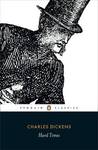
Hard Times by Charles Dickens

Hard TimesHard Times by Charles Dickens

My rating: 3 of 5 stars


I listened to Anton Lesser's superb narration has pulled me into a story I frankly feared because of the reputation. None other than G.K. Chesterton succinctly remarked:
Twenty times we have taken Dickens's hand and it has been sometimes hot with revelry and sometimes weak with weariness; but this time we start a little, for it is inhumanly cold; and then we realise that we have touched his gauntlet of steel.
Early on, I was surprised to hear of a school and household where not a drop of fantasy is allowed. Only the facts. Whether they convey the truth is a different matter, of course. This put me in mind of J.R.R. Tolkien's famous essay about why children, and indeed all of us, need fantasy. (On Fairy Stories. Dickens' story makes the point before Tolkien did.

Then I was stunned to see that Dickens shares the poignancy of the sadness, or should we say the tears, of a clown. Dickens strikes first again, beating Motown to the punch.

It is clear that we've got a lean, stripped down, no nonsense Dickens here. And yet, I was still enthralled. A large part of this was due to Anton Lesser's skill which carried me away on the story, breathless to see what would happen next despite the Hard Times which all the characters face. Knowing how Dickens loved theater and gave many of his own public renditions of his stories, straining his health in so doing and contributing to his early death, I believe he would approved.

I was really surprised to like this book as much as I did. It was as if Dickens took a good look at one of the subplots he couldn't cram into Bleak House and decided to just make a novella of it instead. Dickens always has enough alternate subplots in a book that he could easily spare this set of characters to make his point about Utilitarianism.

I called this a "novella" but, of course, that is only because I'm used to Dickens' average high page count. This is a 321 page book, 9 cds long if you go by audiobook, which I did most of the way. Toward the end, as usual, I had to abandon the audio and go for print because I just had to know what happened as soon as possible.

The book was not as "hard" as I expected. I feel Oliver Twist has much more difficult passages. It is just that there is not the usual complement of comic characters to lighten the way for us. When I saw that this was written between Bleak House and Little Dorrit the darker tone made sense also. Those are two of my favorite books but there is no denying that the later novels have a darker edge which fits right in with this book.

I'd have given it 3-1/2 stars but rounded down simply because it is a lesser novel. Definitely recommended. Be not afraid.

Worth a Thousand Words: An Artist in His Studio

John Singer Sargent, An Artist in His Studio, 1904
Via Lines and Colors where there are interesting details about this painting which Sargent did of a friend on vacation.

Saturday, February 6, 2016

Just In: A New Book to Consider for Lent

God For Us: Rediscovering the Meaning of Lent and Easter

Editors: Greg Pennoyer and Gregory Wolfe
Reflections by Scott Cairns, Kathleen Norris, Richard Rohr, Ronald Rolheiser, OMI, James Schaap, Luci Shaw, Beth Bevis, and Lauren F. Winner. By delving deeply into the Christian tradition they reveal what one theologian has called the “bright sadness” of Lent—that it is not about becoming lost in feelings of brokenness, but about cleansing the palate so that we can taste life more fully. Lent and Easter reveal the God who is for us in all of life—for our liberation, for our healing, for our wholeness. Lent and Easter remind us that even in death there can be found resurrection.
Like its companion volume which focuses on Advent and Christmas (highlighted here), God For Us was originally published in 2007. It is aimed at Christians who don't have a tradition of the liturgical year. For those who already do, you may skip a lot of the introductory material and just go straight to the reflections. The samples I read look very good.

Thursday, February 4, 2016

Worth a Thousand Words: A Moment of Repose

A Moment of Repose (1890). Wladyslaw Czachórski.
Via Books and Art

The Case for Jesus by Brant Pitre

The Case for Jesus: The Biblical and Historical Evidence for ChristThe Case for Jesus: The Biblical and Historical Evidence for Christ by Brant Pitre

My rating: 5 of 5 stars
About ten years ago, while waiting at the Pittsburgh Airport, I met a young biblical scholar named Dr. Brant Pitre. We were both heading to the same biblical conference so we rode together, and in the car we had a lively discussion about biblical interpretation, especially the reliability of the Gospels.

Dr. Pitre shared how annoyed he was by the oft-used comparison between the transmission of the story of Jesus and the “Telephone game” where little children whisper a story to one another, around a group, until the end result is completely garbled and nothing like the original story.

I turned around to Dr. Pitre (I was in the front seat and he in the back) and said, “Yes! Someone needs to write a book dedicated to refuting that stupid comparison.”
Brant Pitre went ahead and wrote it himself. And a darned good book it is.

I've never been subjected to that particular comparison. The one that drives me absolutely nuts is that Jesus didn't ever say he was God.
As we will see, the evidence in the Gospels suggests that Jesus did in fact claim to be God. He did so, however, in a very Jewish way. ... I cannot stress enough: just because Jesus did not go around Galilee shouting, "I am God!" does not mean that he didn't claim to be divine.
Thank you!

There is a lot of confusion out there about Jesus and you've probably come across various claims that "prove" Jesus was not God. These range from the idea the Gospels were anonymous, the existence of "lost" Gospels, the Gospels are folklore instead of biographies, a lack of evidence for the Resurrection, and more.

Just as he did in another of his books that I really liked, Jesus and the Jewish Roots of the Eucharist, Pitre painstakingly builds his defense of Jesus. For each skeptical claim, there is a meticulous evidence trail examining Jesus, historical evidence, Jewish understanding, 1st century cultural context, and why we can trust what we've been told. This might sound drawn out or difficult, but I found it flowed easily and was easy to understand.

I myself especially appreciated that Pitre never lets us forget the inherently Jewish nature of Jesus' teachings and his listeners' understanding. The parallels he points out, often in very clear charts, can be stunningly revealing.

Here's a fairly lengthy excerpt from the chapter about the crucifixion. It illustrates how carefully the examples are drawn. Speaking about the temple of Jesus' body, Pitre quotes Josephus who says the number of lambs sacrificed during Passover was 256,500, and then tells us:
According to ancient Jewish tradition, before the Temple was destroyed in AS 70, the blood of the sacrifices used to be poured into a drain that flowed down the altar of sacrifice to merge with a spring of water that flowed out from the side of the mountain on which the Temple was built:
At the south-western corner [of the Altar] there were two holes like two narrow nostrils by which the blood that was poured over the western base and the southern base used to run down and mingle in the water-channel and flow out into the brook Kidron. (Mishnah Middoth 3:2)
So at the time Jesus lived, if you were approaching the Temple during the feast of Passover from the vantage point of the Kidron Valley, what might you have seen? A stream of blood and water, flowing out of the side of the Temple Mount.

Once you've got this first-century Jewish context in mind, all of a sudden John's emphasis on the blood and water flowing out of the side of Jesus makes sense. This seemingly small detail about his death actually reveals something deeply significant about who Jesus really is. He is not just the messianic son of God; he is the true Temple. In other words, Jesus is the dwelling place of God on earth. For that's what the Temple was to a first-century Jew. As Jesus himself says elsewhere: "He who swears by the Temple, swears by it and by him who dwells in it" (Matthew 23:21).
Woah! If that doesn't give you a thrill of discovery, what will?

Definitely highly recommended.

NOTE: I had both a print galley, which was nicely designed, and the audio version, which was as well read as any material like this can be. I can recommend either or both, depending on your preference.

Wednesday, February 3, 2016

Monday, February 1, 2016

Worth a Thousand Word: Cat in a Snowy Driveway

Taken by Scott Danielson
Just more proof that the weather couldn't be more different between Utah, where Scott is, and Dallas, where we're expecting the thermometer to hit 75 degrees today.

I'd rather have it with all the snow. One of the reasons I love this photo is it takes me back to childhood in Kansas, crunching snow, freezing cold, and walking up the driveway to go into the lovely, warm home.

Thank You, Ellen P.!

Rafael Sabatini's Captain Blood is a story I've enjoyed in the past but it never prompted me to explore his other novels. This is, apparently, the time for exploration. It began with noticing The Sea-Hawk which matches the title of my favorite Errol Flynn movie. Turns out the title is about all they have in common.

What makes Sabatini's stories even better than the average swashbuckler is that he evidently was scrupulous in being historically exact. Yes, Lord Oliver existed and did those things. Now, that didn't keep Sabatini from inventing and exaggerating to give us a fuller story. And I'm ok with that. I'm not reading these because of the history. That's just a bonus.

Yesterday, I began downloading Kindle versions of all his free novels. I put ones I've gotta pay for in my Wish List for when I had to begin buying the ones the library doesn't have.

This is a very long introduction to say that I was dumbfounded this morning to see that Ellen P. gave me Bellarion. Amazon doesn't have a way to thank the giver so I'm doing it here! I'm looking forward to reading it! Thank you Ellen!

Friday, January 29, 2016

Well Said: The Church "Interfering" in Politics

The accusation against the Church for being either right or left wing tells you more about the contemporary political assumptions than about the political inclination of Catholicism. The Church will seem both "right wing" (in promoting the traditional family, opposing abortion, euthanasia, embryonic research, etc.) and "left wing" (in advocating the rights of minorities, social justice, active state support for the poorest, etc.), depending on the political bias of the one accusing .The same bias afflicts Catholics. There are pro-life Catholics who think Catholic social teaching is "socialist," and pro-social-justice Catholics who think pro-life causes are right wing.

The Church will always be accused of "interfering" or trying to "impose" its view when the critic disagrees with its stance; but the same critic will say nothing when the Church has intervened politically on a matter with which he or she agrees. And if the Church has stayed silent, the critic will accuse it of "failing to speak out." Put another way, people are against the Church "interfering" in what they would much rather have left alone; and in favor of "interfering" in what they believe should be changed.

Why and when does the Church speak out on political questions? The answer is rarely and cautiously, and almost always because it is a matter which touches on the Gospel, on core freedoms and rights (such as the right to life, or to religious freedom), or on core principles of Catholic social teaching. In these cases, the Church not only needs to speak out; it has a duty to do so.
Austen Ivereigh, How to Defend the Faith without Raising Your Voice
With politics about to get even more prominent in our lives, I think it's time for me to reread this book!

Worth a Thousand Words: Yucca, Cactus and Fog

Yucca and cactus overlooking a foggy valley
on the last day of fall, 2015 in San Saba County, Texas
Taken by Texas landscape photographer, Jason Merlo

Thursday, January 28, 2016

Well Said: My Brother's Garden

Some young children sported among the tombs, and hid from each other, with laughing faces. They had an infant with them, and had laid it down asleep upon a child's grave, in a little bed of leaves. It was a new grave — the resting-place, perhaps, of some little creature, who, meek and patient in its illness, had often sat and watched them, and now seemed, to their minds, scarcely changed.

She drew near and asked one of them whose grave it was. The child answered that that was not its name; it was a garden — his brother's. It was greener, he said, than all the other gardens, and the birds loved it better because he had been used to feed them. When he had done speaking, he looked at her with a smile, and kneeling down and nestling for a moment with his cheek against the turf, bounded merrily away.
Charles Dickens, The Old Curiosity Shop
Lest one think that the child is untouched by his brother's death, later in the book we learn how much this little boy misses him. What I loved about this was the personal way he called it a garden, how it made him think of his brother feeding the birds, and that nestling on the turf like a hug. It was touching and also lifted me up.