Tuesday, April 21, 2015

Review: Art: A New History by Paul Johnson

Art: A New HistoryArt: A New History by Paul Johnson

In Art: A New History, Paul Johnson turns his great gifts as a world historian to a subject that has enthralled him all his life: the history of art. This narrative account, from the earliest cave paintings up to the present day, has new things to say about almost every period of art. Taking account of changing scholarship and shifting opinions, he draws our attention to a number of neglected artists and styles, especially in Scandinavia, Germany, Russia and the Americas.

Paul Johnson puts the creative originality of the individual at the heart of his story. He pays particular attention to key periods: the emergence of the artistic personality in the Renaissance, the new realism of the early seventeenth century, the discovery of landscape painting as a separate art form, and the rise of ideological art. He notes the division of 'fashion art' and fine art at the beginning of the twentieth century, and how it has now widened.
I love the way that Johnson is able to make everything so clear in terms of how various civilizations' art mirrors their governing styles. He also made me really respect early man (you know, the ones who filled those caves with all that fantastic art) by explaining things I didn't know about both the art and what the artists went through for their accomplishments.

This took me a couple of years to leisurely work my way through. Now that I'm done I'm going to miss Paul Johnson's voice looking at history and art and the fascinating, creative people who are artists.

This is simply superb. Johnson has his prejudices but they are few and fairly discussed. It probably helps that I share many of Johnson's opinions but just never had the wherewithal to understand why. And now I do!

My only wish is for a companion volume that shows all the images that Johnson mentions. There simply wasn't room in this book for enough of the actual art.

I'll be putting this in my rereading stack.

Monday, April 20, 2015

John C. Wright's Grocery List

This is too funny. Here's a bit. Then go read it all...
A fan remarks:
“I would rather read Wright’s grocery list than any of the “literary” stuff in the genre now.”
How funny you should mention that! I happen to have my grocery list right here.
Items to pick up:

A pound of Apples, despite that this mortal fruit is the one whose taste brought all our woe in paradise;

A sack of flour, child of an unworthy grain, those firstfruits offered by the first murderer and his first victim, his brother, which horrid fratricide to this day we repeat;

Rivendell and Lothlórien’s competing bed and breakfasts

Just one of the many topics under discussion in SFFaudio's discussion of The Ring Goes South (a.k.a. the second half of The Fellowship of the Ring). Join Jesse, Seth, Maissa, and me!

Friday, April 17, 2015

Blogging Around: The Media Edition

A New "Wrinkle" in Time

I was fascinated to see that Madeleine L'Engle's granddaughter has discovered a three-page section that was cut from the original classic, A Wrinkle in Time. I didn't know that people looked at Camazotz as a commentary on communism. That never occurred to me. This sheds light on what L'Engle had in mind.
In it, Meg has just made a narrow escape from Camazotz. As Meg’s father massages her limbs, which are frozen from a jarring trip through space and time, she asks: “But Father, how did the Black Thing—how did it capture Camazotz?” Her father proceeds to lay out the political philosophy behind the book in much starker terms than are apparent in the final version.

He says that yes, totalitarianism can lead to this kind of evil. (The author calls out examples by name, including Hitler, Mussolini and Khrushchev.) But it can also happen in a democracy that places too much value on security, Mr. Murry says. “Security is a most seductive thing,” he tells his daughter. “I’ve come to the conclusion that it’s the greatest evil there is.”

Ms. Voiklis said she wanted readers to know the book wasn’t a simple allegory of communism. Instead, it’s about the risk of any country—including a democracy—placing too much value on security. The tension between safety and personal freedom is an idea that resonates in today’s politics.
Read the whole article at the Wall Street Journal. There's a link in the article to a pdf of the omitted pages. I can see how they would have slowed the story down, yet the point L'Engle was making really resonates with me. We're living right now with that same problem of too much prosperity leading to too great a desire for security.

Pope Francis and the CNN Anchor's Renewed Faith

Deacon Greg Kandra is in Jordan right now and you really should take a look at his posts which are fascinating.

I don't know how he has time to also keep track of other news but this one grabbed my attention. Not only does it give a wonderful story of CNN anchor Carol Costello's return to faith, but it shows how Pope Francis is drawing people's attention to Church teachings in a way that lets them see the mercy underlying it.

In an interview with newly appointed Cardinal Lacroix, she pursues her questions about a statement from Pope Francis that surprised her. This is just part so do go read the whole piece for yourself.
But isn't homosexuality a sin in the eyes of the church?

"There is room for everyone. The door is open," Cardinal Lacroix insisted. "Of course you know that the Catholic Church will never promote same sex marriage, but do we respect homosexual persons? Do we welcome them? Do we accompany them? Of course. But to respect the Church and its teaching, which is based on a long tradition and also the word of God, we will not go so far as to bless. But that doesn't mean we reject."

That last sentiment -- "that doesn't mean we reject." -- did it for me.
And that's what I liked. What the cardinal tells her is basic Catholic teaching but in a way that allows her to really hear the whole message. And that's Francis's gift, it seems to me.

Plastic Bags

Like a lot of places Dallas has put a tax on plastic bags from stores. Their heart is in the right place but I never saw any statistics to justify it. Just the same old "everyone knows" argument about helping the environment. So I was really interested when Skeptoid podcast did an episode on that very issue.
Researching this episode was the most difficult time I've had yet doing Skeptoid. Not surprisingly, it's hard to find any information on this topic that isn't advocacy one way or another. There are plausible, reasonable claims that plastic bags aren't that bad - thoughtfully provided by the plastic bag industry. There are horrific tales of disaster - dished up by environmental advocacy groups with their hands out. But actual science? That seems to be pretty rare, and it's hard to dig much up.
But you do get what science there is on the topic which yielded surprising results. You can listen to the Skeptoid episode or read the transcript here which also has links.

Russian Movie Censorship — It's Back!

The Kremlin says upcoming movie "Child 44" distorts historical facts about Soviet Union and presents Russia as a dark land. Consequently the Russian release has been canceled. Well, it is a movie so that's probably true. Hollywood never lets the truth get in the way of a great story. However, the Russians seem pretty paranoid about Stalin's legacy and, let's face it, that legacy isn't one I'd want to hold up to a bright light.
Mr. Medinsky criticized the film not just for its take on the country’s war effort but also for its negative portrayal of life under Stalin in general. He encouraged local viewers to rid themselves of what he termed as “these endless schizophrenic reflections” on Russian history.

“It is time to finally form our own idea about ourselves as the heirs of a great, unique Russian civilization,” he wrote. “Without that, they will crush us.”
For anyone who was around for the Cold War, and I was, this all sounds disturbingly familiar. If the truth hurts, just don't let anyone know it. This one's all around the internet but I read it in the Wall Street Journal.

"Controversial" or "Historic?'

Get Religion asks: Why does Washington Post label one religious freedom law 'controversial' and another 'historic?'
In the media storm over a religious freedom law passed in Indiana, the Washington Post repeatedly used the term "controversial" to describe the measure (examples here, here and here).

However, the Post prefers other words to characterize a gay rights bill passed in Utah, including "landmark" and "historic."
Words matter. Read it all.

=======

NOTE: if you can't read an entire WSJ article, try going to Google or Bing and searching for the article. Often if you come in that "door" the whole article is available.

Well Said: The Utter Reliabililty of God's Love

Christ's death discloses the utter reliability of God's love above all in the light of his resurrection. As the risen one, Christ is the trustworthy witness, deserving of faith (cf. Rev. 1:5, Heb. 2:17), and a solid support for our faith ... Had the Father's love not causes Jesus to rise from the dead, had it not been able to restore his body to life, then it would not be a completely reliable love, capable of illuminating also the gloom of death.
Pope Francis, Lumen Fidei
Yes.

I reread this recently and found so much enlightenment and inspiration within. It is well worth revisiting regularly.

Thursday, April 16, 2015

Worth a Thousand Words: White Stork

White Stork
taken by Remo Savisaar
Doesn't this look like a coy, runway walk?

My Continuing Dickens Exploration: Dombey and Son

Dombey and SonDombey and Son by Charles Dickens

(Writing this without spoilers probably will lead to misdirection, but I feel there are too many people who probably haven't read this book. And I DO want to say some things.)

*big sigh* Oh, that was good.

It is interesting to me that I began reading Dickens with his later books. Going backwards to his earlier creations, one can see the training wheels on in some places. There are some very predictable plot developments that the reader sees as soon as the seeds are introduced. However, Dickens (that genius) still managed to surprise me again and again with unexpected twists that made the story lively and interesting.

One thing that doesn't change from book to book is the creation of eccentric characters who begin by seeming odd and funny but wind up stealing your heart. I'd never have thought that I'd care passionately about Susan Nipper, Cap'n Cuttle, Miss Tox, or Mr. Toots but I really did.

I also appreciated the way that Florence, the character with the least development in many ways (one motivation and one only) was used to show us so much about other characters. Mr. Dombey, Edith, and little Paul all showed surprising depth as they came into contact with Florence whose only desire was love. I was especially impressed with what we were shown of Mr. Dombey's internal character using this technique.

There were times also when the power of Dickens' writing washed over me and left me bereft of my own words. Most notably in Mr. Dombey and Edith's argument in her bedroom, in Mr. Carker's conversation with Edith discussing Mr. Dombey's character, and in the chapter Rob the Grinder Loses His Place where I felt as tired and mentally confused as the fleeing fugitive whose thoughts we read. Here Dickens worked the seemingly impossible feat of making me sorry for someone who I'd been longing to see punished.

On a personal note, I was astounded by in the chapter After a Lapse when Harriet is advancing a proposition to the fellow who plays the violoncello. This book suddenly became a reflection of how many times we stubbornly think we know best and refuse God's love, only to find that his forgiveness and mercy are boundless ... especially when we've fallen the very lowest and don't deserve it ... and yet it is freely and lovingly given. I don't know if that is what Dickens intended, but it is certainly what struck me hard. It was a revelatory moment that left me turning off the audiobook to simply think about the implications of that interpretation when applied to the other stories woven into the novel.

It isn't the perfect Dickens novel. It sagged in the middle when there was a transition from emphasis on Paul to introducing Edith, and there were those predictable plot points I mentioned. It probably won't ever be my favorite (right now those honors are shared by The Pickwick Papers, Bleak House, and Little Dorrit), but it is a great book and very rewarding on a lot of levels.

Wednesday, April 15, 2015

Best Product Review Ever

Lifted from John C. Wright's blog ... I literally laughed out loud.

Product review

Be sure to take a quick glance to the right for the product picture ... it took me a bit to get oriented since the review is on the left.

Review: The Book of Feasts & Seasons by John C. Wright

The Book of Feasts & SeasonsThe Book of Feasts & Seasons by John C. Wright
THE BOOK OF FEASTS & SEASONS is a beautifully mind-bending stroll with a grandmaster of science fiction through the annual Catholic calendar. Over the course of the year, from January to December, the author takes his inspiration from ten different holidays and explores their meanings in a series of stories of marvelous imagination. ... 
I'd already read several of these stories online, exactly where escapes me but probably on the author's blog. However, seeing how many pieces from this collection were nominated for Hugos made me finally pick up the book.

Stories range from noir style mystery to dinosaurs to time travel to mad scientists in the best tradition of solid science fiction. Wright also weaves in Christian themes, often specifically Catholic ones, which is only to be expected since the book's description points out that the author is following the Catholic liturgical calendar.

What is a mystery is how Wright manages write stories so centered in science fiction while also staying so centered in Catholicism. In a sense these could be compared to the Narnia books or C.S. Lewis's space trilogy. Except, of course, they are so obviously the creation of John C. Wright that they are entirely new and fresh.

As in any collection I liked some more than others but all are good. My absolute favorite is Nativity which caught me by surprise and left me off balance. Wright so absolutely captured the mystery, the uncertainty, the doubt, and gift of faith in that story. I felt the reality of the Passion and crucifixion, I felt the wonder and freshness of the nativity, I felt the marvel of Creation. I was in tears at the end and thankful for the goodness of God.

I do wonder whether non-Christians can enjoy these stories but obviously the answer is yes since so many of them were nominated for the Hugos by science fiction fans.

Monday, April 13, 2015

A Magnificent Book: Mockingbird by Walter Tevis

MockingbirdMockingbird by Walter Tevis
Only the mockingbird sings at the edge of the woods.
Why have I never heard of this magnificent book before?

Thank goodness my mother, 80 years old and never afraid of a Kindle Daily Deal, read it and commanded me to do likewise.

In the 25th century all the work is done by robots, the ones that haven't broken down. Mankind stumbles along in a drugged stupor, trained from birth to avoid thinking and that "privacy is supreme. They haven't the basic knowledge to repair anything, much less a complex machine.

One of the last of the great thinking robots, Spofforth is the dean of the university in New York City. Paul from Ohio has taught himself the lost art of reading and wants to teach it at the university. Mary Lou has dropped out of the system only to be tempted into putting herself in harm's way by the lure of "What did you call it? Reading?" These three give us a fascinating and nuanced look at what it means to be human.

I've been jaded by the plethora of recent apocalyptic novels but this one is different. Written in 1980 by the author of such varied works as The Man Who Fell to Earth and The Hustler, this book is eerily prescient.

Perhaps the highest tribute I can give this novel is that when I finished I didn't want to read another book. To do so would sully what I'd just read before I'd finished thinking about it, as well as be unfair to anything that followed because it wouldn't be able to compare.

I can only say, as my mother did, "Why haven't we heard of Mockingbird before? Why isn't it a well-known classic?"

Let's change that. Read it for yourself.

Well Said: The Spider's Web

Outside the moon had come out. It was full, a disk of bright silver. I saw a large, dramatic spider web on my back porch that must have been made while I was in the house with my mind in turmoil; the spider was just finishing the outer circle of it. The moon illuminated the strands of the big taut web so that it seemed to be made of pure light. It was dazzling, geometric and mysterious, and it calmed me just to stop and look at it, at the elaboration and power of life that could make such a design.
Walter Tevis, Mockingbird

Friday, April 10, 2015

Julie and Scott take dance lessons. The result?

Hilarious but insightful, of course! We discuss the 1996 Japanese film Shall We Dance? at A Good Story is Hard to Find podcast. Twirl by and join us!

Thursday, April 9, 2015

Worth a Thousand Words: Aurora Borealis

Aurora Borealis
taken by Remo Savisaar
I really cannot imagine looking out my window and seeing this. It must really feel surreal. Like being on another planet.

Wednesday, April 8, 2015

Books Just In: Tweets, Seeds, Encounters, A Way Forward, and a Giveaway

Ah spring book season, when the new growth of authors and publishers sprout at the mailbox, unexpectedly delighting book reviewers.

I love it.

I won't get a chance to read these as fast as you deserve to hear about them. But they did pass the first chapter test and make it onto my "to read" stack, so here's a heads up.

Tweeting with God: # Big Bang, Prayer, Bible, Sex, Crusades, Sin, Career . . .Tweeting with God: # Big Bang, Prayer, Bible, Sex, Crusades, Sin, Career . . . by Michael Remery

Ok, I might not have been entirely accurate. I have mostly read this book. In record time. But there's a review embargo until the release date of April 14. So details will have to wait.

Suffice it to say for now, I love this book. A. Lot.

5 stars "love it." Have been bugging people I know by showing it to them "love it."

I'm just sayin'.

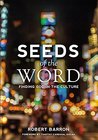
Seeds of the Word: Finding God in the CultureSeeds of the Word: Finding God in the Culture by Robert Barron

In a sense I've read some of this book already since it's a collection of Father Barron's columns from his blog and various other places (I think) around the interwebs.

I always like getting his take on what's happening below the surface in books and movies. This also throws in sections on pop culture and politics so it is bound to be interesting. If I could get a wish it would have been to have printouts of these columns. Wish granted!

GIVEAWAY! [UPDATED] I got two copies of this one so if you want to be entered into a giveaway, just leave a comment for this post. If you have trouble signing in, just leave an Anonymous comment and write your name in the comment. WINNER: Manny!

Encountering Truth: Meeting God in the Every Day by Pope Francis

Early every morning, Pope Francis celebrates a personal sort of Mass in the small Saint Martha chapel at the Vatican. The audience is made up of gardeners, nuns, cooks, office workers, and always changes. What doesn't change is that the pope gives his homilies without notes just as he did when he was a parish priest. This book features highlights from almost 200 homilies covering a year from March 2013 to May 2014.

This doesn't come out until June so this is a really early mention. I was enthralled with the introduction which has an in-depth look at how Pope Francis prepares and what he thinks is important in contemplating and conveying the Word of God to the faithful. He also gives a "map" of the way Francis circles round various topics, engaging them from different angles as the liturgical readings progress day to day. That's a new idea for me, that to get a full sense of his teachings one must patiently look at it from day to day.

The few homilies I've samples left me eager for a deep, slow reading of this book. And, to be honest, that's not usually the way I feel after reading samples of books featuring Pope Francis's writing. So this is a rare find for me.

(What can I say? I loved Pope Benedict's intellectual style. It ain't Pope Francis's fault. I get that.)

Beyond the Abortion Wars: A Way Forward For a New GenerationBeyond the Abortion Wars: A Way Forward For a New Generation by Charles C Camosy

Charles Camosy argues that our polarized public discourse hides the fact that most Americans actually agree on the basic issues at stake in abortion morality and law. ...  Camosy proposes a new public policy that is consistent with the beliefs of the broad majority of Americans and supported by the best ideas and arguments about abortion from both secular and religious sources.

This isn't my usual sort of book. However, this issue matters greatly to me so I agreed to look it over. A quick perusal left me feeling that Camosy takes a similar approach as that proposed in How to Defend the Faith Without Raising Your Voice. That alone makes it worth pursuing.

Plus the very handy chapter conclusions looked like reasoning that goes along with Catholic teachings and that I could agree with. (Yep, I "cheated." We'll call it an in-depth preview. How else am I gonna tell if its worth our time?)

Anyway, this definitely looks worth investigating if you're interested in digging deeper.

Easter Wednesday: Jesus is Risen ... in City Mall, Beirut, Lebanon

Another oldie as I go looking for little reminders of our Easter joy to share all week. Still a goodie!


Now that is giving witness out loud and in public! Plus it is beautiful to hear.

Click on the little "CC" in the red oval to see the English captions. Via Deacon Greg at The Deacon's Bench.

Note:
Fred in the comments elucidates further.
FYI, it is a common refrain in Eastern Orthodox Easter services... repeated over a hundred times in various forms. People in the middle east would recognize it like we recognize the "Hallelujah chorus" in the west. Its one of those that reaches across faith traditions, most people have heard it.
This makes sense because you can see people joining in and singing from around the edges, though not so lustily as the main singers.

Tuesday, April 7, 2015

UPDATED - Congratulations to John C. Wright and Michael Flynn for Their Hugo Nominations!

Imagine my delight in seeing two of my favorite science fiction/fantasy authors among the 2015 Hugo Award nominations. I like their writing just that little bit more because they're Catholic. So sue me.

CONGRATULATIONS guys!

I hadn't made my April book purchase yet so dropped John C. Wright's  The Book of Feasts and Seasons into my Kindle. Several of the stories he's nominated for are from that book. What sf reading Catholic wouldn't love this concept?
... a beautifully mind-bending stroll with a grandmaster of science fiction through the annual Catholic calendar. Over the course of the year, from January to December, the author takes his inspiration from ten different holidays and explores their meanings in a series of stories of marvelous imagination.
I also really enjoyed One Bright Star to Guide Them, another story for which Wright received a nomination. (My review here ... scroll down for it.) He really was popular ... six nominations in all!

In recent years there have been fewer and fewer authors and books I enjoy nominated for Hugos. I just put it down to my personal taste diverging from the general science fiction readers who participate in the nominations. (Not that I haven't enjoyed some of them. Ancillary Justice was a book I couldn't put down and still can't stop thinking about.)

It turns out there may have actually been a reason for that lack of connection. I was completely unaware that a group of authors have been promoting their own slate of suggested nominations. They've been fairly successful so it seems and they must like a different sort of fiction than I do. So no wonder I was paying less and less attention to the Hugos, which used to be a touchstone for informing me about new interesting books.

(Sounds like the Oscars in a way. Which is why I largely tend to ignore them too. I never dreamed that science fiction readers would stoop to the level of the general Hollywood studio. But there I am, proven wrong again.)

This year a different group promoted their own slate of suggested nominations. They must have done a good job because not only were many of their selections nominated but this year the Hugos had about 2000 nominating ballots, which is a record. There are some things that have gotten on the ballot in the past with 30 votes. Maybe I'm not the only one who didn't love those other authors' favorites? (Just a passing thought...)

I frankly was stunned to see all this kerfluffle going on behind the scenes.

If you want to know more, here's a sympathetic piece, here's an upset piece.

I ain't here to fight. I'm here to read.

The broader the variety "allowed" in the nominations, the likelier my chances of finding books that I enjoy and make me think, possibly simultaneously.

I hear the Locus Awards may be a good alternative to the Hugos. Scott Danielson has been following the Hugo folderol for a while and tells me:
The Locus Awards may actually be a more accurate reflection of the history of science fiction than the Hugos. I spent some time yesterday browsing the award history and found myself nodding quite a bit. They compile a list of nominees from various sources (more or less a jury) then the Locus subscribers vote on the list, which includes a write-in slot. The last few years have made me realize that the Hugos are given by a very small group of people.
Uh yeah we've been emailing about this. Have you seen how much science fiction we read and watch at A Good Story is Hard to Find? This is like a soap opera about something I am interested in!

UPDATE
Jeff Miller at The Curt Jester has a good post, Political Correctness Ruins Everything, about his love of science fiction and the way he's observed political ideology taking over science fiction, which led to this head-to-head battle over Hugo nominations. It is definitely worth reading.

Jagi Lamplighter (a.k.a. Mrs. John C. Wright) has a good post, First They Came for the Oscars: My Take on the Hugos. She has an interesting comparison to how the Oscar winners have changed over the years from popular to insular. And then looks at the Hugos through that lens.

Worth a Thousand Words: Cat Cot

Cat Cot
by Belinda Del Pesco
I have enjoyed Belinda's art for many years and lately I've loved everything she's posted (check it out). But this sleeping cat is so perfect I can almost hear the subliminal vibration of contented "sleeping" purrs.

Monday, April 6, 2015

What is the unpardonable sin?

Ethan Brand looks for it endlessly and we discuss it (and the story) at SFFaudio. Join Jesse, Seth, Rose and me for a lively discussion.

Help Christians Suffering Under the Persecution of Militant Islam

Matthew from Big C Catholics writes:
There is an apostolate in my diocese (Burlington, VT), which seeks to help Christians experiencing persecution in the Middle East and elsewhere. Could you let your readers know about it?
Indeed I could. This is a very worthy cause as we all know these days.


Nasarean.org was founded by Father Benedict Kiely, and supported by the good people and businesses of Stowe, VT, to help, in some small way, Christians suffering under the persecution of militant Islam throughout the world.

Throughout the world, but especially in the Middle East, our Christian brothers and sisters are facing persecution, ethnic cleansing, martyrdom and genocide. Nasarean.org is dedicated to helping our brethren by producing items marked with the Arabic "N" - this symbol has been painted on the houses of Christians to identify them for martyrdom and to mark out their presence, similar to the use of the Star of David by the Nazis.

The Arabic letter "Nun" is the first letter of the word "Nasrani" or "Nasarean/Nazarene" - the Muslim word of contempt for Christians. Nasarean.org believes that the wearing of this sign is an act of solidarity with our brethren - is a way to remember to pray for them - and by your generous donation - directly helps them by an act of charity. All donations - after the cost of production - will go directly to one charity with "boots on the ground" - Aid to the Church in Need - actively helping suffering Christians in the Middle East.
You can read Matthew's post here. Or go directly to Nasarean.org.

Friday, April 3, 2015

Julie and Scott are heading to beautiful Terminus to write an Encyclopedia.

They hope to be back in time for the next podcast. Yep, we're discussing the classic science fiction novel Foundation by Isaac Asimov at A Good Story is hard to Find podcast.