Tuesday, July 22, 2014

The Naked Sun by Isaac Asimov

The Naked Sun (Robot, #2)The Naked Sun by Isaac Asimov

My rating: 4 of 5 stars

On the beautiful Outer World planet of Solaria, a handful of human colonists lead a hermit-like existence, their every need attended to by their faithful robot servants. To this strange and provocative planet comes Detective Elijah Baley, sent from the streets of New York with his positronic partner, the robot R. Daneel Olivaw, to solve an incredible murder that has rocked Solaria to its foundations. The victim had been so reclusive that he appeared to his associates only through holographic projection. Yet someone had gotten close enough to bludgeon him to death while robots looked on.
What a shocker! I suspected the murderer but not the ending Asimov gave us. Wow.

The Naked Sun gives us a look at the mysterious Outer Worlds, first mentioned in The Caves of Steel. Solaria has never had a crime, due to their extremely privileged population served solely by robots who, of course, never commit crimes of passion. Lige Bailey finds this open, practically empty environment poses both the challenges of solving the mystery and of adapting his agoraphobic nature, thanks to a lifetime of living in underground cities on overpopulated Earth.

Asimov has fun looking at the sociological effects of a high-tech, low population world. I was fascinated by Asimov's contrast of Elijah Bailey, used only to an overcrowded Earth, with the outworld Solarian society which had open space, eugenics, and many robots. There is no way Asimov could have foreseen our computer-oriented society today, but I found the Solarian society's preference for "viewing" through screens rather than "seeing" in person to be a disturbing echo of what we ourselves seem to be moving toward.

I originally read this long ago and remembered a lot about the Solarian society but almost nothing about the mystery itself. Listening to William Dufris' excellent narration, so long after my first reading, I found this a wonderful mystery which kept me guessing. Dufris surpassed his performance in The Caves of Steel as he voiced a wide range of Solarian characters from sensuous to prim, blowhard to reserved, blustering to withdrawn. My favorite voices actually were the Solarian robots which were precisely what you'd expect, and which we hadn't heard yet though several robots spoke in The Caves of Steel.

If you haven't revisited this series lately I recommend it highly, especially this audio version which brings it to life in a fresh way.

Well Said: Sorrow Doesn't Mean Having to Feel You're Sorry

Sincere sorrow for sin does not necessarily require having to feel sorry. Just like love, sorrow is an act of the will, not a feeling. And in the same way as one can love God deeply without any emotional reaction, one can also be truly sorry for sin without experiencing anything sentimental. Real sorrow is seen principally in the way one unhesitatingly avoids all occasions of offending God and is ready to do specific acts of penance for any infidelities committed.
Francis Fernandez, In Conversation With Christ, vol. 4
I know this. It's just that I catch myself falling into the familiar, popular shallow thinking of our times. That one must have an emotional reaction for a feeling to be sincere. Once I figure it out then it is a great relief to remember I can be sincere without kicking myself for not feeling.

Monday, July 21, 2014

Well Said: Approaching Christ While Leaving the Church to One Side

Those people who claim to approach Christ whilst leaving his Church to one side, and even causing her harm, may one day get the same surprise as Saint Paul did when he was on his way to Damascus: I am Jesus whom you are persecuting. And, the Venerable Bede reflects that He does not say 'why are you persecuting my members,but why are you persecuting me?' For He is still affronted in his Body, which is the Church." Paul did not know until that moment that to persecute the Church was to persecute Jesus himself.
Francis Fernandez, In Conversation With Christ, vol. 4
It's kind of interesting that people know well Paul got his comeuppance by persecuting Christ's church, and yet they themselves will go right ahead and do that same thing. People within the Catholic Church do so as well as those outside of it.

Fernandez goes on to point out that Paul spoke about the Church later as the Body of Christ. Bringing up the logical conclusion, he mentions it is not possible to love, follow, or listen to Christ, without loving, following, or listening to the Church, because she is the presence, at once sacramental and mysterious, of Our Lord, who prolongs his saving mission in the world to the very end of time.

Food for thought, isn't it? The saints worked to improve the Church but through obedience and love. How do we go about it when we see something is going astray? Do we treat Christ's body with medicine or with hatred? Do we love it as we should? This opens up myriad topics for reflection.

Friday, July 18, 2014

Well Said: Preparing the Soil

All men, whatever their lives may have been in the past, are able to become soil that is prepared to receive God's grace. God pours himself into our souls in accordance with the degree of welcome He finds there. God gives us so many graces because He trusts each one of us; there is no soil that is too impervious or too uncultivated for him, so long as it is prepared to change and to respond to him.
Francis Fernandez, In Conversation With Christ, vol. 4
Listening to the Gospel reading last Sunday with the parable of the sowers, this was the very thought that ran through my head. Yes the soil may be packed down hard from people walking on it, but if someone hoes it up, adds some compost, and the soft rain falls? Then it too may be fertile.

I get the point Jesus was making, of course, but considering the farming analogy it seems to me that He also expects us to cultivate our own gardens ... so that we may cooperate with the farmer. In my own life, I can see that the more often I examine my conscience, cultivate the virtues, repent of my sins in confession, and so forth, then the more God's grace can enrich my life.

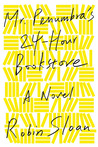
Mr. Penumbra's 24-Hour Bookstore by Robin Sloan

Mr. Penumbra's 24-Hour BookstoreMr. Penumbra's 24-Hour Bookstore by Robin Sloan

My rating: 3 of 5 stars

“[...] We keep a record for every member, and for every customer who might yet become a member, in order to track their work." He paused, then added, "Some of them are working very hard indeed."

"What are they doing?"

"My boy," he said, eyebrows raised. As if nothing could be more obvious: "They are reading.”
Clay Jannon was lucky to find a job at Mr. Penumbra's 24-Hour Bookstore. Times are hard and jobs are scarce. However, the bookstore sells very few books and the few regular patrons seem to have a strange mission that no one will talk about. Then there's the fact that most of the books can't be found in any index of published books. Naturally Clay begins investigating and winds up on a fascinating quest that includes secret societies, museums, ancient artifacts ... and e-books, virtual reality, and Google.

This book feels like a nerd's dream come true. Not only is there the high tech point of view but also the typographer's inside details. Ok, key figure Griffo Gerritszoon is made up, but Francesco Griffo was actually Aldus Manutius' employee. Who was Aldus Minutius? Every time you read something in italics, you can thank him for inventing them.

There is an interesting tension between the old ways and the new: old knowledge in books versus Google, bookstores versus e-books, tradition and innovation. These are things that all of us cope with in our own ways but it's kind of fun to see it all linked together and hanging off of bits of real history, a la DaVinci Code, but with less of a mean spirit than in Dan Brown's book.

If you ever played Zork or Baldur's Gate, if you ever thrilled to a quest in a fantasy book, if you ever played a scavenger hunt or lost hours to solving mysteries, then this book is going to push your buttons. Mix that in with the idea of a "fellowship" and you've got a sense of where this book excels.

It doesn't have deep character development, but that's not the point of this book. It is skimming the surface of some themes but it still manages to present them and give you food for thought while having a good time. In that it is very much like The Haunted Bookshop or Agent to the Stars or The Rosie Project, just to mention a few light books that I love.

It's a light, fun read with a sense of being an adult Harry Potter-ish book. Perfect summer reading.

Worth a Thousand Words: Superdame Gale Allen!

—”Gale Allen” in Planet Comics #12 (1941), writer & artist uncredited
via Not Pulp Covers
Gale Allen, outer-space adventurer and leader of the “Girl Squadron!

We all want to be a superdame like Gale Allen, don't we ladies?

Thursday, July 17, 2014

Worth a Thousand Words: Sleeping Time

Sleeping Time
taken by the incomparable Remo Savisaar
Is it a dream? Is it an artist's fabrication? It is a rare moment in nature. I can almost hear the minute rustling of grass, the silence except for small night creatures' movement.

Well Said: A special kind of serenity

Complete trust in God, using whatever human means are necessary in each situation, gives an incomparable fortitude and a special kind of serenity to the Christian, whatever may happen to him and whatever the tribulations he may have to face up to.
Francis Fernandez, In Conversation With God, vol. 4
So there are two things to think about here, for me anyway.

First, how complete is my trust in God? Do I have that special kind of serenity?

Second, am I using whatever human means are necessary in each situation? I know people who will say they have complete trust in God and then laze around waiting for whatever they've been praying for to drop into their lap.

It takes a fine balance to encompass these two things well.

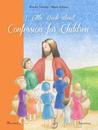
Children's Books: A Little Book About Confession for Children by Kendra Tierney

A Little Book about Confession for ChildrenA Little Book about Confession for Children by Kendra Tierney

My rating: 5 of 5 stars


11. What does going to confession do?

The Sacrament of Penance heals our souls when we hurt it by sinning. When we confess our sins to a priest, it is God who hears us and forgives our sins.18 God always forgives us if we are sorry, no matter how big or how many our sins are.

The Bible tells us the story of how Jesus treated a woman who had committed a big sin.19 She had been arrested, and the people were going to throw rocks at her.

Jesus came and told the people, "Let him who is without sin among you be the first to throw a stone at her." One by one the people put down their rocks and left.

When only Jesus and the woman were left he told her, "Go, and do not sin again."

God always forgives us when we ask, but he also asks us to change our behavior. The Sacrament of Penance helps us with this.20

18. CCC. 1461
19. John 8:3-11
20. CCC 1468
This is a really terrific little book that I think might help parents as much as the children they read it with. For one thing, Kendra Tierney strips matters down to basics, as you can see from the excerpt above, to help everyone see the basis for all the ins and outs of the sacrament.

It begins with a brief glossary and then moves through a series of simple questions and answers. This is followed up with a brief look at a few saints who have links to confession, a simple examination of conscience, and a quick review of what actually happens during the sacrament. A really nice feature is that the cover has a quick reference on the front and back flaps containing the steps of the sacrament, the Act of Contrition, and an extremely brief examination of conscience. Personally, I found the examination of conscience really nice as a way to get back to basics in my own life. That may say more about me than it does about the book but, again, I think adults will find this touches them when they are reading through it.

I'm not crazy about the illustrations since they all look as if children drew them. Skilled children, to be sure, but children nonetheless. Maybe some children enjoy looking at pictures their peers could have drawn. I never found them appealing no matter what age I was. Of course, this is purely a matter of personal taste so don't let that stop you from picking up this gem of a book.

Wednesday, July 16, 2014

Looks wonderful, tastes delicious, and is much easier than you'd think.

Get the recipe for a Pavlova With Strawberries at Meanwhile, Back in the Kitchen.

Children's Books: Angels for Kids by Donna-Marie O'Boyle

Angels for KidsAngels for Kids by Donna-Marie Cooper O'Boyle

My rating: 5 of 5 stars

Artists have painted, drawn, and sculpted Angels in a variety of styles. Angels are many times portrayed as children. This is most likely to convey innocence.

Beginning in about the fourth century, Angels were usually illustrated with wings. That's how we usually see them in books, paintings, on the walls of churches, in icons, or in the art of stained-glass windows. The wings might even be the artist's interpretation of their swiftness. An Angel is able to quickly come to our aid. However, this also has roots in Holy Scripture, since some of the people in both the Old and New Testaments of the Bible describe the angels who appeared to them as having wings.

For instance, we know that Isaiah saw a winged Angel. Ezekiel, too, saw visions of winged Angels. Most times when Angels appear, they look like normal people, always men. Sometimes Angels appear all aglow in awesome splendor. Warrior Angels—like the Archangels—are tremendously tall and powerful.
As you can see from the excerpt, this is a book for older children and might even be good as a quick primer for adults. Donna-Marie O'Boyle has a true talent for explaining the basics about angels, which are a more complex subject than most people might think.

She includes scriptural references, real life stories such as the children at Fatima, and has ways to relate personally to the fact that angels are all around us. The book cover angels in the Bible, their work, what they look like, archangels, fallen angels, a variety of prayers and much more. I also really liked the book design which was simple but beautiful.

I have a special interest in angels myself and consequently have read a number of books about them. This is a really great book that I'm not sure I'll be able to make myself give to the children I know. I might have to buy them their own copy.

Tuesday, July 15, 2014

Well Said: Folk call the road lonely

For myself, the Creek satisfies a thing that had gone hungry and unfed since childhood days. I am often lonely. Who is not? But I should be lonelier in the heart of a city. ... I walk at sunset, east along the road. There are no houses in that direction, except the abandoned one where the wild plums grow, white with bloom in springtime. ...

Folk call the road lonely, because there is not human traffic and human stirring. Because I have walked it so many times and seen such a tumult of life there, it seems to me one of the most populous highways of my acquaintance. I have walked it in ecstasy, and in joy it is beloved. Every pint tree, every gallberry bush, every passion vine, every joree rustling in the underbrush, is vibrant. I have walked it in trouble, and the wind in the trees beside me is easing. I have walked it in despair, and the red of sunset is my own blood dissolving into the night's darkness. For all such things were on earth before us, and will survive after us, and it is given to us to join ourselves with them and to be comforted.
Marjorie Kinnan Rawlings, Cross Creek
Amen.

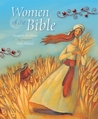
Children's Books: Women of the Bible by Margaret McAllister

Women of the BibleWomen of the Bible by Margaret McAllister

My rating: 5 of 5 stars

"Rescuing animals is only the start of it," said Mother Noah. She scooped up a handful of seeds and placed them carefully in her pocket. "If God wants to send a flood, it's very good of him to ask Noah to put the animals in a boat. But then what do you do with them?"

[...]

But however hard it [work] was, every day brought something good. On day ten the tigers realized that she was a friend and stopped trying to eat her. On day eleven the parrots learned to say, "Move over!" which saved Mother Noah a lot of shouting. On day fifteen the chimpanzees had a very silly half hour with Ham's hat and Mr. Noah's whistle. ...
I have a real antipathy toward things that are yanked out of perspective and told from some "special" point of view, usually to empower some group. I encounter this a lot in feminist perspectives where predictable and myopic points of view bore me to tears.

So you can imagine the shiver that ran down my spine when I saw the title Women of the Bible. I read the first story, Mother Noah, to see how it fit into that feminist construct. And was pleased to see it did no such thing. Furthermore I was delighted to find it humorous, relatable, true to Genesis, and opened up my mental image of life aboard the ark. I continued, enchanted, through stories of Rachel's worry about Jacob's meeting with Esau, Miriam's following her baby brother Moses floating in the river, Mary's four special things kept in a box to sink in her mind the great turning points in her life, and many more.

Each story is told in a different way and from a different perspective. Each is accompanied by truly enchanting illustrations by Alida Massari which made me go looking for other books she's worked on.

Most importantly, each story would make a wonderful story time with your favorite little ones, whether girls or boys. They encourage questions and wonder and "entering into" familiar Bible stories from an imaginative point of view.

Highly recommended.

Monday, July 14, 2014

Well Said: A Star

"In our world," said Eustace, "a star is a huge ball of flaming gas."

"Even in your world, my son, that is not what a star is but only what it is made of."
C.S. Lewis, The Voyage of the Dawn Treader
Yes. There are facts and there is truth.

A Couple of Movies on My Radar: Calvary and Exodus

CALVARY

CALVARY’s Father James (Brendan Gleeson from In Bruges) is a good priest who is faced with sinister and troubling circumstances brought about by a mysterious member of his parish. Although he continues to comfort his own fragile daughter (Kelly Reilly ) and reach out to help members of his church with their various scurrilous moral - and often comic - problems, he feels sinister and troubling forces closing in, and begins to wonder if he will have the courage to face his own personal Calvary. CALVARY opens in select theaters on FRIDAY, AUGUST 1, 2014 (Rated: R; Running Time: 104)
I have a few questions going into Calvary. The priest has a daughter? That can be a legit thing, but my antennae are up.

On the other hand, I'm a sucker for Brendan Gleeson ever since seeing him in In Bruges, hence my agreeing to go to the movie screening where he will be doing the Q&A. Yep, I'm excited!

I also became interested in seeing this after reading that the director said, "There are probably films in development about priests which involve abuse. My remit is to do the opposite of what other people do, and I wanted to make a film about a good priest." I've gotta love that!

More after the screening in a couple of weeks. The trailer is here though I don't think it is that great. I feel as if the description above works just fine.

EXODUS: GODS AND KINGS

It's been a long time since the Ten Commandments, which was made in 1956. I myself really loved The Prince of Egypt from Dreamworks but that was animated.

And then came Ridley Scott with Exodus: Gods and Kings.

Ooo, and Christian Bale as Moses! Now I'm really interested!

Jeffrey Overstreet has some excellent observations and links if you are interested in this upcoming movie. I was vaguely interested. And then I saw the trailer. Wow.

I'm having a hard time dealing with a Pharaoh who isn't Yul Brynner, but other than that it really looks good.

Also, word is that Ridley Scott is interested in doing a movie about King David. About time. Talk about a story that's got everything in it: faith, devotion, insanity, war, love, betrayal, a no-nonsense prophet and more. Real Old Testament stuff, if you know what I mean.

I think I'll get to see a screening of this also when it is closer to release, which should be around Christmas.

Friday, July 11, 2014

Children's Books: "The gospel according to... dog" by Peter D. Ward

The gospel according to... dog: 'the greatest story ever told'... by a dogThe gospel according to... dog: 'the greatest story ever told'... by a dog by Peter D. Ward

My rating: 4 of 5 stars
'Come Lazarus!' I have never heard the Wisest One shout so loudly.

'Come, Lazarus... come out to me!' again he shouted.

The Great Ones [men] all looked at each other uneasily, the smell of fear coming off them as sharp as any skunk. But my ears were pinched back, and I heard what they could not hear: a wondrous thing, a little sigh as gentle as the breeze, and then a scratching, scruffling noise and something being put to one side — the leftover spices, perhaps in a jar being moved? ...

I watched in wonder and could barely keep myself from shouting and dancing and chasing my tail — for in all my days I have never seen anything like this. Suddenly the woman — I realized at once she was the mother of Lazarus — came rushing up and ran straight into the resting-place. There was a shriek of joy and then such weeping it would tear your heart in two if you didn't know it was tears of you that were being wept. ...
Kal is Peter the Fisherman's dog, rescued when he was just a puppy from a group of tormenting boys. He tells us the Gospel story from a canine point of view, including all the senses the we don't notice! Did you know that lepers are delicious to lick and even have a convenient bell to let Kal know they are coming? When Jesus (the Wisest One) heals them it is is a great disappointment because they taste just like regular men again.

Any kid from about the age of 8 who has a basic understanding of the gospel story would enjoy this different view of it. In fact, I enjoyed it quite a bit myself. Kal's different viewpoint will not only open up the gospel but might prompt children to wonder how their pets understand them and the family events unfolding in daily life.

I really loved the way the book graphically conveyed Kal's sense of smell with "Smellavision" dots of different colors strategically scattered on pages to give an extra layer of information. I wasn't crazy about the illustrations which were done in a very child-like style but, again, that is a matter of personal taste and they don't detract from enjoyment of the story itself.

The story has humor, pathos, drama, and many interesting smells! I can definitely recommend this to imaginative readers, whether young or old.

Thursday, July 10, 2014

In which our band of adventurers face their accusers in a public trial.

Will Juanna, Leonard, Otter, and Francisco escape The People of the Mist? Find out at Forgotten Classics podcast where chapters 28-29 are ready for your enjoyment.

Well Said: Expressing Christ in Our Own Stories

Gandalf and Frodo are not allegorical masks for Christ, as in a strict allegory, nor symbols for some aspect of human condition, as in a loose allegory. They are people in their own right. But because they are almost real people they can, as real people can, express Christ in their own way.

It is part of the Roman Catholic idea of the saints that each mirrors Christ in an individual way, expressing facets of the infinite Personality, which could not all be expressed in one finite life, no matter how great. The historical Christ, for example, was not a philosopher nor a King; but St. Thomas Aquinas and St. Louis of France show us something of what He might have been like if He had been. Thus Gandalf and Frodo, while being very real and very individual, also have something to tell us about Christ.
Richard L. Purtill, Lord of the Elves and Eldils
I like thinking of expressing Christ in my own story. It's a phrase that appeals to me since all our lives are stories. Of course, from our own points of view, each of us is the star of our story. How am I doing at expressing Christ? And how often? All the time or just a little? My answers are my own but they push me for a fuller and better expression.

Wednesday, July 9, 2014

The Caves of Steel by Isaac Asimov

The Caves of Steel (Robot, #1)The Caves of Steel by Isaac Asimov

My rating: 5 of 5 stars

Like most people on the over-populated Earth, New York City police detective Elijah Baley has little love for either the arrogant Spacers or their robotic companions. But when a prominent Spacer is murdered under mysterious circumstances, Baley is ordered to help track down the killer. Then he learned that they had assigned him a partner: R. Daneel Olivaw. Worst of all was that the " R" stood for robot.
I snagged a review audiobook of this from SFFaudio.

I originally read this book when I was a teenager and loved it from the beginning. Isaac Asimov's descriptions of an overpopulated future Earth were de rigueur for science fiction of the time. What gave this story a fresh spin was that it was a bona fide mystery.

Many years later, listening to William Dufris' splendid narration, it still holds up. I still remembered the main points of the mystery and detective Lige Bailey's personality. This left me free to fully appreciate the details of Asimov's imagined future society, complete with spacemen and robots to provide tension and interest.

I'm not sure if I completely forgot or just never registered the points Asimov was making in this book about technology, adaptation, and the human soul. I was quite surprised to see that Lige Bailey knew his Bible so well that he could quote it in either the King James version or the modern version. And that he used religion as a main point of differentiation (along with art, beauty, and other intangibles) between humans and robots. Atheist Isaac Asimov didn't deny that faith can lift people higher and that is something one rarely, if ever, sees these days in science fiction.

I also was really interested in watching the way the germ of an idea took hold and was spread from person to person. It was fascinating to see how many things that idea applied to once it had wormed its way into the person's consciousness.

All in all, this short but satisfying mystery is much richer than I recalled. It was greatly enhanced by the audio where William Dufris became a one man theater company in the way he voiced different characters. There was never any fear of my mistaking who was talking in straight exchanges of dialogue. He was simply masterful whether it was world-weary detective Bailey, slightly robotic Daneel Olivaw, jumpy Jessie, or the nervous Commissioner.

Highly recommended.

INTERESTING SIDE NOTE
Wikipedia notes:
It is a detective story and illustrates an idea Asimov advocated, that science fiction is a flavor that can be applied to any literary genre, rather than a limited genre itself. Specifically, in the book Asimov's Mysteries, he states that he wrote the novel in response to the assertion by editor John W. Campbell that mystery and science fiction were incompatible genres. Campbell had said that the science fiction writer could invent "facts" in his imaginary future that the reader would not know. Asimov countered that there were rules implicit in the art of writing mysteries, and that the clues could be in the plot, even if they were not obvious, or were deliberately obfuscated.
All hail opinionated John Campbell and Isaac Asimov's determination to prove him wrong. Today there are a lot of different mash-ups included in the science fiction genre and Asimov led the way with this book.