Saturday, October 12, 2013
Friday, October 11, 2013
Julie's Take - Christianity in Three Books [UPDATED]
These things used to be called memes ... but whatever they're called, I find them difficult to resist. Basically Rod Dreher has asked his readers, and the internet at large, what three books they would recommend to provide a basic familiarity with Christian theological ideas to someone with little background on the topic. Read all the guidelines here, which is where Jen Fitz found it.
This came to my attention when I saw Jen's answers (and was insanely flattered, by the way, thank you Jen!).
Ahem. Anyway, here is my list. Pick it up, pass it on ... and so forth.
1. The Hiding Place by Corrie Ten Boom.
Same as Jen's #1 but that's because this is such a great book. I recently reread it and made it a goal to reread it annually. It is a great story and, not coincidentally, is Christianity in a nutshell.
Sheltered spinster, Corrie Ten Boom is 50 years old when the Nazis invade Holland. She and her family shelter Jews targeted by the Nazis and when they are caught, they are sent to prison and eventually concentration camps. This sounds gloomy and like a familiar story. It is not. Every Christian should read this book. If you get the audio, it is even better. Simply fantastic.
2. The Captain from Castile by Samuel Shellabarger
The classic story of a young Spanish nobleman, Pedro de Vargas, who goes with Cortes to conquer Mexico. Rereading it, Washington Post critic and Pulitzer Prize-winner Jonathan Yardley says in his introduction he "was astonished at how well it has survived. . . . It is accurate, meticulously researched history, and it is a sympathetic, nuanced account of a young man's moral education..." Precisely. Such is also the same of Shellabarger's other books. A prime example of how an excellent piece of fiction can communicate "Truth." Also a favorite, more than this book to be truthful, is Prince of Foxes by this author.
3. In This House of Brede by Rumer Godden
One of the finest authors of our time, largely forgotten, but who always wrote from a deep background of faith. This is the story of Philipa who at the height of a brilliant career and in her 40s decides to enter a cloistered convent. Yes, this is the story of nuns, but the Christianity they practice should be recognizable to Christians of any sort. Not only is it a fascinating tale of what it is like to live in a convent, but it contains a riveting mystery too.
UPDATE
I didn't notice we weren't allowed to have books about a "flavor" of a particular religion, which knocks out my original third choice, which I leave below for your edification. That's ok, it made room for a book I originally was going to include but had dropped in favor of something more obviously theological. Woohoo!
3. Catholic Christianity by Peter Kreeft
Puts the muscle on the "skeleton" of the Catechism, so to speak. This is the book that I read after converting and which brought my understanding fully into line with the teachings of the Church. Eminently logical.
This came to my attention when I saw Jen's answers (and was insanely flattered, by the way, thank you Jen!).
Ahem. Anyway, here is my list. Pick it up, pass it on ... and so forth.
1. The Hiding Place by Corrie Ten Boom.
Same as Jen's #1 but that's because this is such a great book. I recently reread it and made it a goal to reread it annually. It is a great story and, not coincidentally, is Christianity in a nutshell.
Sheltered spinster, Corrie Ten Boom is 50 years old when the Nazis invade Holland. She and her family shelter Jews targeted by the Nazis and when they are caught, they are sent to prison and eventually concentration camps. This sounds gloomy and like a familiar story. It is not. Every Christian should read this book. If you get the audio, it is even better. Simply fantastic.
2. The Captain from Castile by Samuel Shellabarger
The classic story of a young Spanish nobleman, Pedro de Vargas, who goes with Cortes to conquer Mexico. Rereading it, Washington Post critic and Pulitzer Prize-winner Jonathan Yardley says in his introduction he "was astonished at how well it has survived. . . . It is accurate, meticulously researched history, and it is a sympathetic, nuanced account of a young man's moral education..." Precisely. Such is also the same of Shellabarger's other books. A prime example of how an excellent piece of fiction can communicate "Truth." Also a favorite, more than this book to be truthful, is Prince of Foxes by this author.
3. In This House of Brede by Rumer Godden
One of the finest authors of our time, largely forgotten, but who always wrote from a deep background of faith. This is the story of Philipa who at the height of a brilliant career and in her 40s decides to enter a cloistered convent. Yes, this is the story of nuns, but the Christianity they practice should be recognizable to Christians of any sort. Not only is it a fascinating tale of what it is like to live in a convent, but it contains a riveting mystery too.
UPDATE
I didn't notice we weren't allowed to have books about a "flavor" of a particular religion, which knocks out my original third choice, which I leave below for your edification. That's ok, it made room for a book I originally was going to include but had dropped in favor of something more obviously theological. Woohoo!
3. Catholic Christianity by Peter Kreeft
Puts the muscle on the "skeleton" of the Catechism, so to speak. This is the book that I read after converting and which brought my understanding fully into line with the teachings of the Church. Eminently logical.
Notes on Mark: The Cost of Discipleship
MARK 8:34-35
This is the famous "take up your cross and follow me" instruction which is followed immediately by "whoever loses his life for my sake and that of the gospel will save it."
How often do I really ponder these words and think about what they meant when Christ said them versus how I translate them into my own everyday life? Not often enough, I fear. Christ never lied to anyone about the cost of discipleship, as Mary Healy points out here.
Jesus does not call his disciples to read this path alone, but following him. Discipleship is a continuous contact with the Master who leads the way at every step.
With the phrase for my sake, the absoluteness of Jesus' claim appears for the first time. Jesus is asking more than any general ever asked of his soldiers or any religious leader ever asked of his adherents. He is not merely demanding a willingness to die for a great cause; he is calling for an unconditional personal allegiance to himself. Whoever loses his life is to do so for the sake of Jesus and his good news. No greater motive is necessary or possible. But this is the very thing that Jesus will do for us: he will give his life (psyche) as a ransom for many (10:45).
Monday, October 7, 2013
The Spirit of Food: Thirty-Four Writers on Feasting and Fasting Toward God
The Spirit of Food: Thirty-Four Writers on Feasting and Fasting Toward God edited by Leslie Leyland FieldsMy rating: 4 of 5 stars
Even as I ask these questions, I know something is missing. Something our grandmothers and mothers knew at their church potlucks, as they carried to the communal tables Velveeta broccoli casseroles and Jell-O salads greener than any fruit dared to grow. In our zeal for purity and right living, we may have forgotten something other generations and cultures knew. That food is more than politics; food is more than economics; food is more than culture, entertainment, nutrition, even justice. As important as each of these is, none of them singly identifies or describes all that food is and does and is meant to be.As can often be the case with anthologies, even those for whom the essays are specifically written, one gets a mixed bag. Some of these 34 essays relating food to spiritual search were very moving and hit the mark for me. In particular, the introduction by the editor, the pig farmer's meditations, and the bread baker all had points that moved me and have come back to me frequently in daily life.
Food is nothing less than sacrament. All food is given by God and is given as a means to sustain not just our bodies, but also our minds and our spirits. In all of its aspects--growth, harvest, preparation, and presentation--food is given as a primary means of drawing us into right relationship toward God, toward his creation and his people. Even its intentional absence, through fasting, pulls us toward a deeper dependence on God and one another.
As I turn to the Scriptures now, I am amazed at the centrality of food in its pages ...
From the introduction
Several of the pieces take Father Capon's seminal The Supper of the Lamb as a jumping off point. There is a key chapter of Capon's book included and you can see why it is probably his most reprinted excerpt. Indeed, if you haven't read his book, then save this one for later and read that first. Capon pulls off conveying how the world around us, beginning in our own kitchens, reflects God ... all the while also giving us a functional cookbook. In fact, it is on my Desert Island book list and I probably should read it once a year.
If I could give half stars, this would probably be a 3-1/2 but I am going to give it the benefit of the doubt. Some of the essays struck me as covering very familiar food-writing ground in using their pieces as platforms for complaining, condescending, or posturing. However, these may very well strike others in a different way, especially since few of us are ever in the exact same place in our spiritual journeys, not to mention our levels of exposure to food writing.
Each of the essays has a recipe at the end but, of course, finding new recipes is actually not the point, even if I did find a few I'm going to try out. It is to feed both body and soul that this collection exists and it does a good job.
The Dallas versus Denver game: It's how football was meant to be played
That game was like the Cowboys I remember from times of old, willing to take risks and make the big plays. When you've been refusing to give up and fighting until the end, there's no shame in losing. As Steve Martin said, a game like that was why football was invented. Well done, Cowboys!
Friday, October 4, 2013
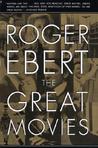
Thumbs Up for The Great Movies by Roger Ebert
The Great Movies by Roger EbertMy rating: 5 of 5 stars
I miss Roger Ebert. Even when I disagreed with his online personal journal entries, which happened fairly frequently, I still loved reading him.
Most importantly, of course, I miss reading his movie reviews every Friday. They were the anchor against which I measured all other critical opinions of a film. Again, I might disagree with him because his range and experience and desires when watching a film were often different from mine. Again, it didn't matter. I loved his way with words, the way he made you understand that his point of view was very valid even if you did disagree, and the way he was unafraid to champion movies others despised. He began this with early support of 2001: A Space Odyssey and later won my heart with his embrace of Abraham Lincoln Vampire Hunter. This is something few movie critics achieve.
The Great Movies collects a series of Ebert's of critical appreciations of movies which deserved a deeper look than a simple review. It ranges across time and genres to choose the best of the best, movies which make you want to grab your friends and force them to watch.
This is one of those books not to read from beginning to end but to flip open and see what catches your eye. Or to pick and choose from the table of contents, either the films you love or the films you never heard of. No matter your method, you will come away both missing Roger Ebert and grateful that his "voice" is still with us in print.
This book makes me appreciate the movies I love even more, makes me realize some movies that I never want to watch, and ... yet ... also makes me appreciate that both sorts can be connected in a way that makes my own viewing richer. This just happened in reading Ebert's comparison between the noir masterpiece Sunset Boulevard (much loved by me) and the Japanese existentialist film The Woman in the Dune (in which simply reading the description was enough, thank you very much).
There are some reviews which I won't read now because those movies, such as Jean Renoir's The Grand Illusion, are on my list to watch. Ebert can't fully discuss these as "great movies" without giving spoilers, so I will deny myself the pleasure of knowing his reasons for recommendation. It is enough to know that I can come back to his discussion when I am ready.
Above all it makes me want to watch some of these great movies again ... or for the first time. Surely that was Ebert's goal and he hits the target with sureness and grace. If you love movies, if you love intelligent and insightful writing, and, above all, if you miss Roger Ebert, then you owe it to yourself to read this collection.
Worth a Thousand Words: Fight
![]() |
| Fight |
Thursday, October 3, 2013
A Good Story is Hard to Find ... now with more zombies!
Scott and I discuss World War Z, both the book and the movie, at A Good Story is Hard to Find.
Wednesday, October 2, 2013
Well Said: Love Drama or Power Drama
We tend to think of Shakespeare's plays as being tragedies or comedies but this opens things up a bit.
If the distinction is not held too rigidly nor pressed too far, it is interesting to think of Shakespeare's chief works as either love dramas or power dramas, or a combination of the two. In his Histories, the poet handles the power problem primarily, the love interest being decidedly incidental. In the Comedies, it is the other way around, overwhelmingly in the lighter ones, distinctly in the graver ones, except in Troilus and Cressida--hardly comedy at all--where without full integration something like a balance is maintained. In the Tragedies both interests are important, but Othello is decidedly a love drama and Macbeth as clearly a power drama, while in Hamlet and King Lear the two interests often alternate rather than blend.”I never thought of it this way but Goddard is right. This is a very interesting way to look at the Bard's work. I just can't praise Goddard's books highly enough, by the way, for anyone who is interested in digging deeper into Shakespeare.Insightful, illuminating, and stimulating literary criticism which always respects Shakespeare's text.
Harold Clarke Goddard, The Meaning of Shakespeare, Volume 2
Tuesday, October 1, 2013
Fast, Furious, and Stupid: World War Z (the movie)
If I were to give this movie a subtitle it would be "Fast, Furious, and Stupid."
It is already generally accepted that the only things the excellent and intelligently written book and this movie have in common are the title. I'm actually ok with that. I just hope that author Max Brooks is making a ton of cash off of this movie.
If watched solely as a big summer Hollywood thriller, WWZ works overall. It is a roller coaster of jumps and adrenaline thrill rides, strung together by the thinnest of logic. Don't turn your brain on and you'll have a wonderful ride.
And, I must admit, viewing it at home, where we could laugh at the dumb stuff, probably compensated for not seeing the visually impressive scenes on the big screen where they must have been truly spectacular.
The biggest problem with the film was that we only had one character to care about: Garry (Brad Pitt). He seemed in peril numerous times, but let's face it, we never too worried because he is the star of the movie. If anyone is going to make it to the end, it is the star and executive producer.
Some people live, many people die, but we weren't emotionally invested in any of them. Garry's wife and children, the fellow soldiers, the other experts ... none of them had enough character development or even camera time to allow us to see inside and care. I think of other thrill-ride movies with solo heroes: Die Hard, The Hunt for Red October (though I suppose we could argue for a dual hero motif in that one), Clear and Present Danger, and Aliens all come immediately to mind. Each of these had likable supporting characters whose deaths would have caused me emotional turmoil, not to mention how the movies' heroes would have felt. We got none of that from World War Z and that's the biggest crime a movie can commit ... robbing you of suspense and just taking you along for the ride.
What I liked:
It is already generally accepted that the only things the excellent and intelligently written book and this movie have in common are the title. I'm actually ok with that. I just hope that author Max Brooks is making a ton of cash off of this movie.
If watched solely as a big summer Hollywood thriller, WWZ works overall. It is a roller coaster of jumps and adrenaline thrill rides, strung together by the thinnest of logic. Don't turn your brain on and you'll have a wonderful ride.
And, I must admit, viewing it at home, where we could laugh at the dumb stuff, probably compensated for not seeing the visually impressive scenes on the big screen where they must have been truly spectacular.
The biggest problem with the film was that we only had one character to care about: Garry (Brad Pitt). He seemed in peril numerous times, but let's face it, we never too worried because he is the star of the movie. If anyone is going to make it to the end, it is the star and executive producer.
Some people live, many people die, but we weren't emotionally invested in any of them. Garry's wife and children, the fellow soldiers, the other experts ... none of them had enough character development or even camera time to allow us to see inside and care. I think of other thrill-ride movies with solo heroes: Die Hard, The Hunt for Red October (though I suppose we could argue for a dual hero motif in that one), Clear and Present Danger, and Aliens all come immediately to mind. Each of these had likable supporting characters whose deaths would have caused me emotional turmoil, not to mention how the movies' heroes would have felt. We got none of that from World War Z and that's the biggest crime a movie can commit ... robbing you of suspense and just taking you along for the ride.
What I liked:
- The way Gerry was so interested, fascinated, and curious that he would continue observing behavior even when he was on the run. That was well shown and, of course, came in handy when he had a chance to slow down and put clues together.
- The big action sequences. Those zombies spilling over the huge wall around Jerusalem made an arresting visual for the trailers and they were even more effective as one could see them spilling through the city which went in 10 seconds from zombie impact from being a safe zone to being a plague ridden place of terror.
- Some of the little effects ... especially the zombies teeth snapping reflexively if they were kept from biting someone. When Gerry is on one side of a glass door and a zombie is on the other, there was something about that those teeth snapping that was kind of ... perfect.
- Israeli soldiers ... tougher than nails and this movie takes full advantage of that fact.
- The Captain Kirk investigation technique. So you have the world's one hope in a young brainiac who can analyze the date to find a cure for this zombie plague. What do you do? Send him to South Korea where you've lost contact with your military base and have no idea what's going on. And only send Brad Pitt and about five other guys to protect him. (What can I say. The U.N. is running this operation.)
- The insistence on finding Patient Zero. Look, these aren't vampires. You don't have to find the Master Vampire and kill him so that all the others die (granted that is a Simpsons' Halloween episode, but still ... that's the sort of logic they're using). Do what anyone does fighting a disease. Catch a few zombies (just stick your arm out the door, that'll work) and start studying them. Sheez. (What can I say. The U.N. is running this operation.)
- The logic behind the "cure." Both the "scientific precedent" cited and the cure were just about the most ridiculous things we ever heard. I know, I know, the U.N. is running this operation but even I can't blame them for this shoddy storytelling.
- Can these zombies run faster than they did in real life? That's a heckuva virus. They're dead and decomposing but they can do a 10 second mile apparently.
- Brad Pitt ... what will it take to make him cut his hair? Did his wife cut it with dull scissors? Please, man, give us a break already.
Monday, September 30, 2013
Worth a Thousand Words: How to Cook a Hare
![]() |
| How to Cook a Hare taken by EatingAsia's David Hagerman |
Friday, September 27, 2013
Well Said: Loving the Blessed Virgin
From my quote journal.
Never be afraid of loving the Blessed Virgin too much. You can never love her more than Jesus did.You know, I never thought of it like that. Though my own inclination tends to be to forget all about the Blessed Virgin altogether. Not in the importance of the big picture, of course, but just in my every day life. Which is probably a bit less than Jesus would like ... I mean, she is the first of all disciples and definitely worthy of me keeping her example and help in mind.
Maximilian Kolbe
My Inadvertent Participation in Banned Books Week
Not that I wouldn't gladly plan to defiantly read a banned book. "Take that, small-minded censors! Ha!" (And I'd flourish the book and toss my head and so forth.)
It's just that I didn't realize it was Banned Books Week until Dappled Things mentioned it. (They also hadn't realized it.)
Imagine my gratification at discovering I already was reading a Banned Book.
And then my consternation at discovering I was reading a Banned Book.
Someone banned or challenged The Lord of the Rings?
Oh, J.R.R. Tolkien, what have you wrought in The Lord of the Rings, to be thus summarily dismissed (or at least to have such a dismissal attempted)? Is it the elves? Is it the magic? Is it the hobbits? Is it the triumph of good over evil ... the use of seemingly unimportant people to do tremendous works of salvation? I'm stumped.
Though on a completely different tack than banned books, it's the first time I've read the whole thing this deliberately and slowly. Just taking in all the scenery on the way instead of dashing to the finish line of the great adventure. I'm enjoying the heck out of it.
It's just that I didn't realize it was Banned Books Week until Dappled Things mentioned it. (They also hadn't realized it.)
Imagine my gratification at discovering I already was reading a Banned Book.
And then my consternation at discovering I was reading a Banned Book.
Someone banned or challenged The Lord of the Rings?
Oh, J.R.R. Tolkien, what have you wrought in The Lord of the Rings, to be thus summarily dismissed (or at least to have such a dismissal attempted)? Is it the elves? Is it the magic? Is it the hobbits? Is it the triumph of good over evil ... the use of seemingly unimportant people to do tremendous works of salvation? I'm stumped.
Though on a completely different tack than banned books, it's the first time I've read the whole thing this deliberately and slowly. Just taking in all the scenery on the way instead of dashing to the finish line of the great adventure. I'm enjoying the heck out of it.
Thursday, September 26, 2013
A Lift for My Day: Forgotten Classics in the "What's Hot" iTunes podcasts
Granted, it is featured in the Literature category, a sub-set of the Arts category in podcasts.
Still, it was a decidedly wonderful surprise when I was skimming podcasts to see if some new interesting podcast has begun ... and I saw Forgotten Classics featured. Right in the same special spot as Scott Sigler, Grammar Girl, CraftLit, and The Classic Tales Podcast!
It's funny how little it takes sometimes to put a bright new gloss on the day. Right? A nice little treat along with the fun I've been having looking for a 1930's style science fiction / adventure type story which one of my regular listeners requested, "Something like The Green Girl."
It does keep it all fun, and that is the point after all ... along with doing all I can to tempt people to try some of these forgotten classics which I love.
Still, it was a decidedly wonderful surprise when I was skimming podcasts to see if some new interesting podcast has begun ... and I saw Forgotten Classics featured. Right in the same special spot as Scott Sigler, Grammar Girl, CraftLit, and The Classic Tales Podcast!
It's funny how little it takes sometimes to put a bright new gloss on the day. Right? A nice little treat along with the fun I've been having looking for a 1930's style science fiction / adventure type story which one of my regular listeners requested, "Something like The Green Girl."
It does keep it all fun, and that is the point after all ... along with doing all I can to tempt people to try some of these forgotten classics which I love.
Well Said: Jesus complicates our life ...
From the Sunday, year B, reflection. Yeah, I know it's year C. Who sez it isn't a good idea to mark up your books? Sometimes you pull out the next devotional volume, flip to the front, and have your eye caught by that bracket in the margin, which yields this gem ... one I need to write on an index card and take everywhere with me.
Jesus Christ complicates our life in a way no other person can. He asks us to follow him through a complete identification of our will with his own.
Francis Fernandez, In Conversation With God, vol. 5
Wednesday, September 25, 2013
It's All Downhill From Here: Church of Trek
![]() |
| From Futurama, via Wikipedia |
A little humor to get us through the rest of the week.
This is particularly appropriate considering my conversation about Galaxy Quest with Scott at A Good Story is Hard to Find, where Star Trek as religion was a topic. Indeed, Scott's the one who popped this into a Twitter feed.
Tuesday, September 24, 2013
Worth a Thousand Words: Alcock Nelson Jug
![]() |
| By VAwebteam at en.wikipedia [GFDL or CC-BY-SA-3.0 , from Wikimedia Commons |
Look at the intricacy of this jug. Simply amazing and just in case you, like me, didn't realize just how much is conveyed visually, here is a brief description.
Subjects Depicted - The jug bears copies of the reliefs sculpted on the base of Nelson's Column, in Trafalgar Square, which was only about 10 years old in 1852. Admiral Horatio, Viscount Nelson (1758-1805) defeated the French at the Battle of Trafalgar where he died in 1805. The Neptune figure on the handle and other marine motifs emphasise Nelson's maritime prowess.
People - Alfred Henry Forrester (1804-1872) (under the pseudonym of Alfred Crowquill) with his brother Charles Robert (under the pseudonym of Hal Willis) contributed pen-and-ink sketches to periodicals, and exhibited works at the Royal Academy. He wrote and illustrated over 20 humorous works including the Tour of Dr Syntax (1838) and also illustrated his brother's works. He designed 19 objects for Alcock's stand at the Great Exhibition, including a Plate of All Nations, fairy and nautilus cups, a snail ring holder, a butterfly pen holder, and a lily cup and saucer.
Monday, September 23, 2013
Well Said: Talk sense to a fool ...
Talk sense to a fool and he calls you foolish.
Euripides, from Bacchae
This was today's Goodreads quote and it hit a chord with me immediately, making me think also of Jesus' comment about not casting pearls before swine.
This whole area can seem as clear as mud sometimes. It is something that I have been reflecting upon lately, along with Christ's counsel, "... be wise as serpents and innocent as doves." (Matthew 10:16)
At any rate, Euripides hits the nail on the head from a practical angle and this is going into my quote journal.
UPDATED: A Big Heart Open to God - Pope Francis's Exclusive Interview
UPDATE
I finished reading the Pope's interview over the weekend and was very happy I did so. Above all the other reasons which most news medias reported (which way will he lead the Church, what does he think about this or that issue, etc.) ... was that I got a look into this priest myself based on his answers.
Since Pope Francis's election I have not felt that I "connected" very well with our new pontiff. I know there have been some hastily written books about him, but I wanted to hear from him in his own words. This interview solves that desire.
I really like the person I "met" because he is thoughtful, smart, willing to take time for discernment, willing to listen to others (but not afraid to make up his own mind), and in many ways makes me think of our pastor. I think out pastor would be very surprised to hear that, but the things which Pope Francis urges us to do (slow down, discern, be slow to anger, think of the whole person, and so forth) are the very things I have heard spoken of so many times, both in homilies or private conversation.
Tom is reading it now and is struck the same way so far. It has led to some fascinating conversations around the house.
I very highly recommend reading this interview (link to pdf below).
=================
Whispers in the Loggia tells us that early in his pontificate Pope Francis sought out the editor of Civiltà Cattolica – the authoritative Italian Jesuit journal vetted by the Holy See before it goes to press and gave an extensive interview.
I finished reading the Pope's interview over the weekend and was very happy I did so. Above all the other reasons which most news medias reported (which way will he lead the Church, what does he think about this or that issue, etc.) ... was that I got a look into this priest myself based on his answers.
Since Pope Francis's election I have not felt that I "connected" very well with our new pontiff. I know there have been some hastily written books about him, but I wanted to hear from him in his own words. This interview solves that desire.
I really like the person I "met" because he is thoughtful, smart, willing to take time for discernment, willing to listen to others (but not afraid to make up his own mind), and in many ways makes me think of our pastor. I think out pastor would be very surprised to hear that, but the things which Pope Francis urges us to do (slow down, discern, be slow to anger, think of the whole person, and so forth) are the very things I have heard spoken of so many times, both in homilies or private conversation.
Tom is reading it now and is struck the same way so far. It has led to some fascinating conversations around the house.
I very highly recommend reading this interview (link to pdf below).
=================
Whispers in the Loggia tells us that early in his pontificate Pope Francis sought out the editor of Civiltà Cattolica – the authoritative Italian Jesuit journal vetted by the Holy See before it goes to press and gave an extensive interview.
In English, the result of the conversation – touching on issues ranging from sin, sexuality, the Curia and the pre-Conciliar liturgy to family, politics, books and film – is available via the UK's Thinking Faith and the US' America magazine. On its release today, Spadaro called the encounter "one of the most beautiful spiritual experiences of my life."So the interview is out and we all want to read it. Don't we? Of course we do!
Francis approved the original Italian text of the interview before its translation in the relevant languages.
As the story begins to blow up the news-cycle, you will want to read the full text. Repeat: you will want to read the full text, so have at it.
Subscribe to:
Comments (Atom)


