 |
| At Ease, Karin Jurick |
Wednesday, June 22, 2016

Speak Lord. Your Servant Is Listening.
 |
| Breton Girls at Prayer William-Adolphe Bouguereau, 1904 via French Painters |
Before the Lord the whole universe is as a grain from a balance
or a drop of morning dew come down upon the earth.
But you have mercy on all, because you can do all things;
and you overlook people’s sins that they may repent.
For you love all things that are
and loathe nothing that you have made;
for what you hated, you would not have fashioned.
And how could a thing remain, unless you willed it;
or be preserved, had it not been called forth by you?
But you spare all things, because they are yours,
O Lord and lover of souls,
for your imperishable spirit is in all things!
Therefore you rebuke offenders little by little,
warn them and remind them of the sins they are committing,
that they may abandon their wickedness and believe in you, O Lord!
The Book of Wisdom 11:22-12:2
Thanks and gratitude for:
or a drop of morning dew come down upon the earth.
But you have mercy on all, because you can do all things;
and you overlook people’s sins that they may repent.
For you love all things that are
and loathe nothing that you have made;
for what you hated, you would not have fashioned.
And how could a thing remain, unless you willed it;
or be preserved, had it not been called forth by you?
But you spare all things, because they are yours,
O Lord and lover of souls,
for your imperishable spirit is in all things!
Therefore you rebuke offenders little by little,
warn them and remind them of the sins they are committing,
that they may abandon their wickedness and believe in you, O Lord!
The Book of Wisdom 11:22-12:2
I present one of my favorite Old Testament passages for our prayerful reflection. It's a wonderful image of love, understanding, and mercy. It also reminds me that Jesus said, "Anyone who has seen me has seen the Father" (John 14:9). Amen.
- Rose's job opportunity
- Deb's father's amazing healing progress
Lord, hear our prayers for:
- Upcoming Beyond Cana marriage enrichment retreat — for couples attending, for more to sign up, for those presenting the retreat
- Danusha's healing
- Zoe's eye to heal
- Tammy's request
Continual prayer intentions ...
- For our government officials to uphold our right to religious liberty
- An end to abortion and a reverence for life in all stages of age and health.
- Our priests and for vocations
- Abortion providers, Lord open their eyes and hearts
- Strength, joy and peace for oppressed Christians in China, Asia, and the Middle East. Also that their oppressors may have their eyes opened to the truth. And for all those oppressed, actually.
Tuesday, June 21, 2016
Well Said: Understanding Life ... and Living It
It is perfectly true, as the philosophers say, that life must be understood backwards. But they forget the other proposition, that it must be lived forwards.
Soren Kierkegaard
Monday, June 20, 2016
Well Said: A Great Love Constrains Us
Do not see us as coming to force upon an unknown people benefits against their will. Be assured that only a great love constrains us to do this. For we long, beyond all the desires and glory of the world, to have as many follow citizens with us as we can in the Kingdom of God.I like this way of putting it. I'm so accustomed to seeing Christianity attacked that I can become diffident about wanting others to join me in the faith. When you hear the voices long enough you are in danger of beginning to believe them.
St. Augustine of Canterbury
via The Voices of the Saint by Bert Ghezzi
This is a wonderful reminder that it isn't because I want to force people to something. It's because I want them to join me in my great happiness and freedom!
Genesis Notes: Adam's Resume
 |
| Adam, figure from the Brautpforte (Rathaus Hamburg), Jacob Ungerer |
The Life Application Study Bible has a great feature for major Biblical characters. They do a profile on each one including a summary of their lives, a resume style listing of information, and key verses. It really helps bring the lessons learned from each into focus. I won't reproduce the entire thing here but liked this summary for Adam.
Strengths and accomplishments:This series first ran in 2004 and 2005. I'm refreshing it as I go. For links to the whole study, go to the Genesis Index. For more about the resources used, go here.
Weaknesses and mistakes:
- The first zoologist -- namer of animals
- The first landscape architect, placed in the garden to care for it
- Father of the human race
- The first person made in the image of God, and the first human to share an intimate personal relationship with God
Lessons from his life:
- Avoided responsibility and blamed others; chose to hide rather than to confront; made excuses rather than admitting the truth
- Greatest mistake: teamed up with Eve to bring sin into the world
Vital statistics:
- As Adam's descendants, we all reflect to some degree the image of God.
- God wants people who, though free to do wrong, choose instead to love him
- We should not blame others for our faults
- We cannot hide from God
Key verses:
- Where: Garden of Eden
- Occupation: Caretaker, gardener, farmer
- Relatives: Wife - Eve, Sons - Cain, Abel, Seth, numerous other children. The only man who never had an earthly mother or father
The man said, "The woman you put here with me — she gave me some fruit from the tree, and I ate it. (Genesis 3:12)
Adam's story is told in Genesis 1:26-5:5. He is also mentioned in 1 Chronicles 1:1; Luke 3:38; Romans 5:14; Corinthians 15:22, 45; 1 Timothy 2:13, 14.
Friday, June 17, 2016
Worth a Thousand Words: Girl with a Pomegranate
 |
| Girl with a Pomegranate, by William-Adolphe Bouguereau, 1875 |
Well Said: What gets us into trouble ...
What gets us into trouble is not what we don't know. It's what we know for sure that just ain't so.
Mark Twain
3 Godfathers

3 Godfathers
★★★
This is a sweet Western about three desperados who come across a dying woman and promise to save her newborn baby. The outlaws seem like pretty decent guys, except for their habit of robbing banks, so we aren't ever worried about the child's fate as they immediately bend all their slim resources to getting the baby to civilization. That isn't easy because there's a posse on their trail.
I've been interested in this movie since seeing Tokyo Godfathers which is a family favorite. The idea of the Japanese director being so taken with this film that he created his own version (and an excellent one it is), almost boggles the mind. It certainly makes me take the movie more seriously than I might have otherwise.
The fact that John Ford shot this in Technicolor in 1948 shows how seriously he took it and how much pull he had with the studios at the time. That made it very expensive indeed.
Is it the best movie I've ever seen? No. But there was something about it that I can't quite shake so I thought I'd mention it to y'all. It is worth keeping in mind since it'd make a good Christmas film to break the monotony of the usual candidates, as we often do with Tokyo Godfathers.
Thursday, June 16, 2016
Worth a Thousand Words: Pomegranate
 |
| Pomegranate, late Southern Song dynasty or early Yuan dynasty circa 1200–1340 |
Wednesday, June 15, 2016
Blogging Around: Real Christian Responses to Massacre
Chick-Fil-A's Example of Living the Christian Faith
This is how we show love ... or should. And they did it without seeking any publicity for it. Read it all here at the DC Gazette.Chick Fil A has made national news for its owner’s stance on gay marriage. Anytime they do something even remotely non-PC, their supposed slip up goes viral. ...
In a shocking move the Orlando location, at University and Rouse Road, fired up its grills on Sunday. The chain is notorious for not being open—ever—on the first day of the week. Employees cooked up hundreds of their famous chicken sandwiches. They brewed dozens of gallons of sweet tea.
Then, instead of making a single dime, they crated the product of their labor to the One Blood donation center. The food and drinks were handed out, free of charge, to all the people who had lined up to donate blood.

More on Orlando, and the depths of meaning in this tragedy.
Gerard M Nadal says it well. This is only on Facebook ... be sure to click through and read the whole thing. Here's a bit from the body of his comments.So into a club walked an Islamist extremist who only saw entities who, in his eyes, all commit sexual sin. What he never saw was the beauty, the care, the grace present in these people. In fact, he never saw persons at all. He never contemplated "The Book" his faith reveres, whose Psalm says, "If you should mark our guilt, Lord, who would survive?"

Supremes
Rich walnut-oatmeal bars with a baked-in sweet chocolate filling. And they're super easy and super popular. Pick them up at Meanwhile, Back in the Kitchen.
In which Miss Cornelia gets sneaky.
Episode 309 of Forgotten Classics, The Bat, chapters 13-14. Come join us!
Tuesday, June 14, 2016

Genesis Notes: Pride and Suffering
 |
| Thomas Cole, Expulsion from the Garden of Eden |
GENESIS 3:16-19
The punishment meted out to Adam and Eve seems severe. What about another chance? It turns out that human suffering is that second chance.
All Adam would have had to do was to cry out to God for help from the serpent. Yet he didn't. Genesis Part 1: God and His Creation looks at this using the example of a good parent who must punish their child to get them to save them from a greater ill.
That singular act in the Garden — crying out for God's help — would have altered the course of human history. Why? Because it would have given expression to the life God's grace intended man to live. Man's faith would have prized the unseen God as his greatest good, no matter how intimidating the serpent or how appealing the fruit. His cry for help would have meant humility and obedience. Instead of love for God, man chose self-love. In his pride, there was silence.The Complete Bible Handbook points out that the Jewish understanding of The Fall is about as opposite as you can get from the Christian view.
Is it any wonder, then, that God allows a measure of suffering to overtake the human creatures? When they lost God's grace, and spiritual blindness set in, they would need some strong incentive to choose to do what they were originally designed to do-put themselves into God's hands, no matter what. Suffering, then, means that God has not given up on His human creatures. He wants them to run into His arms, as every good father delights in the love and trust of his children. He will do whatever it takes, even if it means playing the ogre, to provoke His children to cry out to Him. If Adam and Eve have lost the grace of God in their lives, a loss they will pass on to their progeny, then this kind of suffering and misery, still with us in the world today, is the greatest act of love God could bestow on them and us. Anyone who suffers has an opportunity to experience his own frailty, powerlessness, and desperate need for God's help. One cry will change everything.
Judaism does not see in the Genesis story the "Fall of Man." It may be that Adam and Eve disobeyed God, but God stayed in conversation with them. Seeking wisdom and distinguishing between good and evil become essential human attributes. Toiling for food and suffering pain in childbirth are the prices paid for knowledge. For Judaism, if there is a "fall" in Genesis, it is a fall upward into new opportunities of responsibility and achievement. Christians see a radical fault that affects all subsequent humans. The fault of the first Adam has been dealt with by Jesus, who as the second Adam, brings redemption to the world.This series first ran in 2004 and 2005. I'm refreshing it as I go. For links to the whole study, go to the Genesis Index. For more about the resources used, go here.
Monday, June 13, 2016
Worth a Thousand Words: 1930's Modern Publicity
 |
| Via BibliOdyssey |
Well Said: The Rhodora
On being asked, whence is the flower.
In May, when sea-winds pierced our solitudes,
I found the fresh Rhodora in the woods,
Spreading its leafless blooms in a damp nook,
To please the desert and the sluggish brook.
The purple petals fallen in the pool
Made the black water with their beauty gay;
Here might the red-bird come his plumes to cool,
And court the flower that cheapens his array.
Rhodora! if the sages ask thee why
This charm is wasted on the earth and sky,
Tell them, dear, that, if eyes were made for seeing,
Then beauty is its own excuse for Being;
Why thou wert there, O rival of the rose!
I never thought to ask; I never knew;
But in my simple ignorance suppose
The self-same power that brought me there, brought you.
Ralph Waldo Emerson
Friday, June 10, 2016
The Vatican Cookbook by David Geisser
 The Vatican Cookbook: Favorite Recipes, Stories, and Prominent Portraits of the Holy Fathers by David Geisser
My rating: 4 of 5 stars
This is as much about the Swiss Guard as it is a cookbook, but I counted that as a plus. With the brief biographies and history of the Guard, plus the gorgeous photography, I wound up feeling as if I'd gotten an insider's tour of the Vatican and met some of the people who live and work there. One interesting point, which shows just how varied the Swiss Guard's members are, is that the person who wrote the recipes was an accomplished and respected master chef before he left that behind to join up. Originally the Guard had planned to write a little booklet of their history but after he came on board the book took on a new life to become The Vatican Cookbook.
The recipes themselves range from gourmet to such familiar basics as Spaghetti Carbonara. They are drawn from the home country favorites of Pope Francis, Pope Benedict XVI, and Holy Pope John Paul II which is another nice touch that makes you feel a bit of connection with the Vatican. Also included are favorites of major Vatican and Swiss Guard officials, so there is a wider range than you might expect.
This is a lovely coffee table book but I plan on trying out some of the recipes too. It would make a perfect special occasion gift for your favorite Catholic friends.
I did NOT get this as a review book but spent my own hard earned cash on it. It is just the sort of book my beloved mother-in-law would have gotten me for my birthday were she still alive. So I stood in for her.
Thursday, June 9, 2016
Jennifer the Damned by Karen Ullo
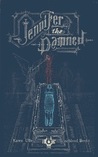
My rating: 5 of 5 stars
I can't recall how this book got on my radar but it immediately piqued my interest. A teenage vampire, adopted by nuns, who goes to Catholic school, and yearns for the chance to take Communion ... with many reviews at Amazon praising it as "literature, rich with vampire lore and intertwined with Catholic doctrine." I was thrilled when the author offered me a review copy.
Sixteen year old Jennifer Carshaw, isn't living in a world where vampires are taken as a matter of fact. The nuns had no idea why their adopted charge would only eat raw meat.
With her unusual background, Jennifer's got full knowledge of good and evil. She also, which is more important, longs for the capacity to experience true love and closeness to God. All of which are impossible for someone without a soul. This provides a rich background for a fast-paced horror novel which is also funny, intelligent, and spiritually deep.
It is a YA novel so when we meet Jennifer she's worrying about the usual high school problems. This is no sparkly vampire tale. When Jennifer matures into a full-fledged vampire the true horror unfolds as she spirals out of control, pinging between good and evil desires.
This is also when the true horror unfolds for the reader. We've learned to like Jennifer by this point and watching her become evil is hard to take. The lack of a soul has real consequences and we see the devastating trail of destruction.
In fact, there was one point where I put the book down, distressed by my inability to reconcile Jennifer's decisions with the character I loved. It took me months to pick it up again. However, I am very glad that I finally did. The author opens the door for the reader to really grapple with evil, deliberate sin, the consequences of lost hope, and redemption. This is all done with full belief in Catholic dogma but without ever hitting the reader over the head with religion, believe it or not.
I didn't love some of the more obvious YA elements such as all the romances and vignettes of high school at the beginning. However, I'm not the book's prime audience and I've ignored much worse in pursuit of a good story. Since this is an excellent story, they are indeed minor quibbles.
To give you a sample, here is the bit where I knew I was really in for a unique ride.
What happens during Mass — more specifically, during Holy Communion — is one of the most contentious issues between Catholics and Protestants. Catholics believe that, during the Eucharist, bread and wine are transformed into the actual Body and Blood of Jesus, in accordance with the words He spoke at the Last Supper. Most Protestants believe Jesus was speaking in metaphor and Communion is merely a symbol. Centuries of holy wars could have been avoided if people had just invited a vampire to Mass. If the Catholics were right — if the Eucharist was really the Blood of the Son of God — then it would send us into a frothing, rabid rage.It is rare to find a book of this calibre. Having just finished rereading Dracula for the umpteenth time before I finished this book, I've had "the blood is the life" resonating in my head for days.
Which, of course, it does.
My mother had discovered this truth for herself nine hundred years ago. She was walking past a tiny, rustic church in France when a scent slammed against her olfactory nerves, so overpowering that she burst through the doors and killed six people just by throwing them out of her way. As she snatched the holy chalice from the altar, one single purple drop still glistened in the golden cup.
"I am only alive today, Jennifer," she said, "because I found the strength not to drink it. That one drop would have satisfied a thousand years of thirst ‚ and that one drop would have killed me."
Worth a Thousand Words: Hunting Flight
 |
| Hunting Flight taken by Remo Savisaar |
This is spectacular when seen full size. Click the link above for a larger view.
Wednesday, June 8, 2016
Genesis Notes: The Consequences
 |
| Gustave Doré, Adam and Eve hiding from God |
This is the scene when God comes calling and Adam and Eve hide from Him. I almost could laugh at the whole "blame game" they play, pointing fingers at everyone but refusing to take any personal responsibility. No one even says they are sorry at all. However, it is too serious to laugh at because this doesn't just affect them but all of us, which is still how it is when we sin today. Also, just as today, is the fact that God already knows what they have done. He is giving them a chance to redeem themselves by confessing their sins. He doesn't need their confession. It is for their benefit. What a shame that they didn't take advantage of that chance. Even today we fall into the same trap. I think that is why Reconciliation is such a wonderful sacrament. There is nothing so wonderful as being able to face up to your sins, confession and being forgiven, as well as being strengthened for future struggles against temptation.
The surprise for me in this segment of study was realizing that when God tells how the devil will be defeated, He is deliberately choosing the most ignominious way to do it. What could be worse than knowing you will be put in the power of those you despise as the devil does humans? This is when we see what is a major theme of Genesis: God does His work through reversals.
... a battle already existed in the rebellion of Satan against God. The difference now is that God is gong to extend the battle to include the human beings. Initially, the humans had been targets of the devil's wrath against God. But now God is going to enlist the humans on His side. Could the serpent have possibly imagined this incredible twist? It is the first great reversal in the story of man. From this point on, reversal will be the underlying theme of our human history. Pause now to think carefully about this. However we come to understand ourselves and our world, we must get this one truth firmly in place — God does His work through reversals.This series first ran in 2004 and 2005. I'm refreshing it as I go. For links to the whole study, go to the Genesis Index. For more about the resources used, go here.
Remember the contempt for the humans that filled the serpent, infusing that deadly conversation he began with Eve? The devil despised Adam and Eve. They must have looked like such dupes to him. He decided he would strike out at God by striking out at them. He made patsies of them in short order. They appeared to be weak links in the chain. So, when God announces that the serpent, as his punishment, will face a battle with human creatures, the woman and her seed, in which he will be defeated, it is a crushing, mortal blow to his pride and arrogance. We need to linger long enough to let it really sink in. Whatever the devil attempted to rob from humanity — our life, our dignity, our exalted position in God's family-is more than made up for in the punishment meted out to him. God will vanquish His enemy through human beings!
Well Said: Fulfillment
Fulfillment does not lie in comfort, ease, and following one's inclinations, but precisely in allowing demands to be made upon you, in taking the harder path. Everything else turns out somehow boring, anyway. Only the person who recognizes an ideal he must satisfy, who takes on real responsibility, will find fulfillment. It is not in taking, not on the path of comfort that we become rich, but only in giving.
Pope Benedict XVI
Worth a Thousand Words: Cypress Trees in Cibolo Creek
 |
| Cypress trees reflected in Cibolo Creek, Cibolo Nature Center - Boerne, Texas by Jason Merlo Photography, used by permission |
Tuesday, June 7, 2016
Well Said: Each and All
Little thinks, in the field, yon red-cloaked clown,
Of thee from the hill-top looking down;
The heifer that lows in the upland farm,
Far-heard, lows not thine ear to charm;
The sexton, tolling his bell at noon,
Deems not that great Napoleon
Stops his horse, and lists with delight,
Whilst his files sweep round yon Alpine height;
Nor knowest thou what argument
Thy life to thy neighbor's creed has lent.
All are needed by each one;
Nothing is fair or good alone.
I thought the sparrow's note from heaven,
Singing at dawn on the alder bough;
I brought him home, in his nest, at even;
He sings the song, but it pleases not now,
For I did not bring home the river and sky; —
He sang to my ear, — they sang to my eye.
The delicate shells lay on the shore;
The bubbles of the latest wave
Fresh pearls to their enamel gave;
And the bellowing of the savage sea
Greeted their safe escape to me.
I wiped away the weeds and foam,
I fetched my sea-born treasures home;
But the poor, unsightly, noisome things
Had left their beauty on the shore,
With the sun, and the sand, and the wild uproar.
The lover watched his graceful maid,
As 'mid the virgin train she stayed,
Nor knew her beauty's best attire
Was woven still by the snow-white choir.
At last she came to his hermitage,
Like the bird from the woodlands to the cage; —
The gay enchantment was undone,
A gentle wife, but fairy none.
Then I said, "I covet truth;
Beauty is unripe childhood's cheat;
I leave it behind with the games of youth:" —
As I spoke, beneath my feet
The ground-pine curled its pretty wreath,
Running over the club-moss burrs;
I inhaled the violet's breath;
Around me stood the oaks and firs;
Pine-cones and acorns lay on the ground;
Over me soared the eternal sky,
Full of light and of deity;
Again I saw, again I heard,
The rolling river, the morning bird; —
Beauty through my senses stole;
I yielded myself to the perfect whole.
Ralph Waldo Emerson
Worth a Thousand Words: A Domestic Interior
 |
| Charles Joseph Grips, A Domestic Interior, 1881 |
Rose on Reading Envy: A Good Era for Communists

I can't wait to hear this! Two of my favorite people, both ambitious readers, finally together!
I see that the "books mentioned" list manages to rival my own. Nicely done ladies!
Monday, June 6, 2016
June 6, 2016 by George Allan England
Jesse came across this story, written a hundred years ago, which predicted what life would be like "in the world of tomorrowwwwww."
I read it aloud and then Jesse, Paul, Maissa and I discuss it at SFFaudio.
I was surprised at what George England got right and interested in some of the inventions he got wrong. I wonder what the author would think of the future? Listen in and find out.

I read it aloud and then Jesse, Paul, Maissa and I discuss it at SFFaudio.
I was surprised at what George England got right and interested in some of the inventions he got wrong. I wonder what the author would think of the future? Listen in and find out.
Well Said
Look around. You can't tell who was conceived with wine and roses and who was conceived on a street corner.
Juda Myers, Conceived in Rape, Living with Purpose
Worth a Thousand Words: Cat Nap
 |
| Cat Nap, public domain from the British Library's Children's Book Illustrations via Lines and Colors |
Friday, June 3, 2016
Worth a Thousand Words: Wry Smile
 |
| Wry Smile taken by Valerie at ucumari photography, some rights reserved |
Well Said: Communication and Conversation
Let us make a special effort to stop communicating with each other, so we can have some conversation.
Miss Manners
Thursday, June 2, 2016
Vikings at Dino's: A Novel of Lunch and Mayhem by Will Duquette
 Vikings at Dino's: A Novel of Lunch and Mayhem by William Duquette
My rating: 5 of 5 stars
When the Viking war party burst through the front entrance of Dino’s Burgers & More, it was second nature for me to slide quietly under my table. When you’re small for your age, it’s often useful not to be noticed. Once on the floor I waited on events, peering out as best I could past the swivel seats, and wondering what was going to happen. Vikings are not a usual sight at Dino’s. I could tell they were Vikings, because they were wearing bear-skins and helmets with horns on them. There were six or seven of them, all heavily armed. I use the word “heavily” with precision—the battle axes they were toting so nonchalantly looked too big for me to lift. I admit to being suspicious of their motives. Most people I see walking into Dino’s, I figure they are there to eat something. Vikings, well, you have to assume Vikings are there for plunder. The big question in my mind was, were they planning to plunder the living or the dead?This book is great fun. It is also a wonderful adventure as Michael tracks down not only the Vikings' origins but other mysteries. And tries, repeatedly, to have lunch.
I don't want to say too much because a lot of the joy is in letting the story sweep you along. I will say that I was greatly impressed by Will Duquette's imagination and the way I could "see" the different, exotic locations. I was put in mind of C.S. Lewis's ability to create "worlds" for Mars and Venus in his science fiction series.
Full disclosure. I am friends with the author and read the book in various stages of development. That's no guarantee I'd like it or say that I liked it. But I really, really did.
Worth a Thousand Words: Persephone and Sisyphus
 |
| Persephone supervising Sisyphus in the Underworld, Attica black-figure amphora (vase), c. 530 BC Photo source |
UPDATED - Blogging Around: Dear Hollywood, Why Do You Want Me Dead?
I hadn't heard of Me Before You, either the book or the movie, but am appalled at the premise. (Sometimes living under a rock is a good thing.)
An 11-year-old wheelchair athlete responds to the upcoming movie, Me Before You, which celebrates choosing suicide as a response to being handicapped or paralyzed.
ALSO: as the other side of how to tell this story, allow me to recommend two movies, both French as it turns out — Intouchables and The Diving Bell and the Butterfly. Unlike Me Before You, both those films are based on real stories.
UPDATED
Sherry at Semicolon wrote a review of the book a few years ago which she has reposted for anyone interested. Short version: she calls the book "poisonous."
Rebecca Frech says Me Before You highlights society's bias against disabled people. As the mother of a wheelchair user, she had supplemental questions to add to the book club discussion questions in the back of the book. See her whole piece at National Catholic Register. Here's are a few of the questions, which I found good as a refresher for regular life.
An 11-year-old wheelchair athlete responds to the upcoming movie, Me Before You, which celebrates choosing suicide as a response to being handicapped or paralyzed.
This could have been a great movie. It could have been the love story of two people and one of them just happens to use a chair. It happens all the time. The people in love don’t think about the chair. It’s the other people who think it’s a big deal.Amen! Read the whole article at Alateia.
The thing about the chair is it’s just a thing. It’s my legs. It’s how I get around. That’s it.
While you’re sitting in your offices crying about the bravery of this guy who kills himself and leaves everyone else to mourn him, which seems pretty selfish to me, I’m going to be out living the amazing life you didn’t even bother to know was possible. I have friends, and go on sleep-overs, and live a regular life. A life that doesn’t make me want to die. It makes me happy that it’s mine.
ALSO: as the other side of how to tell this story, allow me to recommend two movies, both French as it turns out — Intouchables and The Diving Bell and the Butterfly. Unlike Me Before You, both those films are based on real stories.
UPDATED
Sherry at Semicolon wrote a review of the book a few years ago which she has reposted for anyone interested. Short version: she calls the book "poisonous."
Rebecca Frech says Me Before You highlights society's bias against disabled people. As the mother of a wheelchair user, she had supplemental questions to add to the book club discussion questions in the back of the book. See her whole piece at National Catholic Register. Here's are a few of the questions, which I found good as a refresher for regular life.
- Will’s life is portrayed as being valuable only in relation to other people and in what he means to them. Does his life have intrinsic value independent of anyone’s opinion, even his own?
- This book/movie has been applauded by the able-bodied community, but almost universally condemned by those in the disability community. Is that an indication that perhaps there’s a problem with the way his life has been portrayed?
- The only suicides that are shown as acceptable by Hollywood standards, and applauded by audiences, are those of disabled individuals. Can the suicides of healthy, able-bodied people be justified in a similar way?
Wednesday, June 1, 2016
Genesis Notes: Temptation and Response
 |
| The Fall of Adam and Eve as depicted in the Sistine Chapel by Michelangelo |
GENESIS 3:4-5
We also are shown how Satan cleverly twists the truth, putting a "spin" on it to serve his own purposes. He makes his offer in such a way that Adam and Eve must have total trust in God to prevail. This makes it a little easier for me to understand Adam and Eve's behavior. I always wondered how anyone who got to walk with God every day could make such a choice. Well, we've all got weak spots, right? Genesis Part 1: God and His Creation prompts me to have a little more compassion for Adam and Eve who are looking the devil right in the eye and having to think on their feet.
They know what God has revealed to them to be good and evil, although they have not yet experienced it. The serpent suggests not that they shall experience evil (for where is the attraction in that?) but that they will be able to determine for themselves what is good or evil. This temptation strikes at the heart of their relationship with God. Can they trust God to be the only reliable authority about what is good and evil? Don't they want to figure it out for themselves?This is probably one of the most surprising things I read about Genesis ... that Eve wasn't alone when she was tempted. The use of second person plural in Hebrew makes it clear that Adam was there too. Holy Moly! That changes my view of the whole thing. It also is interesting because it shows the two ways we tend to respond to temptation ... taking action as Eve did or passive acceptance as Adam showed.
John tells us that Satan "is a liar and the father of lies." Satan is adept at lying under the cover of partial or twisted truth. When he says "You will not die," there is a grain of truth in it. Adam and Eve do not die physically the moment they eat the fruit. Their death was a spiritual one, and, as we will see, it happened immediately. This characteristic of Satan-mixing a little truth with a lie-is what makes him so cunning and dangerous.
Because Eve turns and gives fruit to her husband, it appears Adam is right there with her in the garden. Some Bible translations are more specific: the NIV says she "gave some to her husband, who was with her." That is perhaps the only way to get across in English what is abundantly clear in the Hebrew. All the verbs the serpent uses are in the second person plural, indicating that he is speaking to more than one person. We are not told why Adam is silent. Given that he is in charge and sees it all happening, he should do something. Quite possibly the snake was intimidating, if not physically, then by the fact that he appears to have superior knowledge and contradicts God. Adam may be wondering where he came from -- why God didn’t warn him -- where God was at the moment -- whether the serpent was right, and whether he should do what it says because right now it looks pretty dangerous. Perhaps Adam perceives a veiled threat from the serpent when he assures Eve that they wouldn’t die if they eat the fruit. "No, eating it won’t make you die, but not eating it might." At the most basic level, the serpent’s challenge causes Adam to wonder whether he can trust God. And-like uncertainty does to us so often-he’s rendered speechless and unwilling to act ...This series first ran in 2004 and 2005. I'm refreshing it as I go. For links to the whole study, go to the Genesis Index. For more about the resources used, go here.
Adam’s status as child of God, husband of Eve, and keeper of the garden requires him to stand up in some way to the serpent, and he does not. He should have stepped in to defend his bride, the garden, and God’s name in whatever way that battle had to be fought. If the thought of that was frightening to him, he could have cried out for help from God: "Oh, Father! What do I do now?" Was he silent because he was calculating the cost of opposing the serpent? Did he think it might cost him his life, or, if not his life, at least some pain? Did he find no encouragement in the presence of the Tree of Life? God had said the only way he would die would be to eat of the forbidden fruit. Does he not trust God?
No, he does not. His trust in God dies when he encounters the serpent. He does not trust God enough to face down the challenger, whatever it might cost. Adam’s unwillingness to act, even if it meant suffering, left Eve vulnerable to the serpent. She is left to manage all on her own. She valiantly tries to make the best of it, but what effect does Adam’s silence and inaction have on her? Adam’s self-donation would have confirmed her in what she knew to be true about God. His living example of putting complete trust in God’s Word would have led her to do the same.
Tuesday, May 31, 2016
Well Said: Dickens, A Friend
No one thinks first of Mr. Dickens as a writer. He is at once, through his books, a friend.I like to think of George Orwell feeling that way about Charles Dickens. Orwell wrote a long essay about Dickens which I just discovered. I haven't read it yet, but feel that with a quote like that above, I will like it.
George Orwell
Friday, May 27, 2016
Blogging Around: Vans and Voices
The Lady in the Van
While she struggles with her own demons, her presence forces the whole neighborhood to examine just how much they're willing to help their fellow man, especially when their fellow man is so cantankerous and ungrateful.Ah yes, it's one thing to give. Quite another to be charitable face-to-face. I was already interested in the movie but Rose's Double Exposure's review made me REALLY want to see it.
VocaliD
Worst logo spelling ever if you haven't heard of the company or concept. Think "Vocal ID" as you read over their worthy goal.Over ten million people live with voicelessness. Much like Stephen Hawking, they rely on text-to-speech devices to express themselves. Yet, young or old, male or female, shy or outgoing — they all speak with similar voices.You don't need special equipment and you can do it from your home in your spare time. Find out more at VocaliD.
Add to that the hundreds of millions who use generic sounding virtual assistants, GPS navigation, and screen readers, it becomes increasingly clear that digital voices must evolve.
VocaliD is the voice company that is bringing speaking machines to life. We leverage our voicebank and proprietary voice blending technology to create unique vocal persona for any device that turns text into speech.
Well Said: Joseph Waits for God and God Waits for Joseph
This is part of a commentary about Matthew 2:13 and the way that God communicates with Joseph in dreams.
Why is it that God cannot reveal his designs once and for all? Why must Joseph be continually dependent on God's next word, wherever and whenever it might come? ... Marvel of marvels, God conforms himself to the requirements of human psychology and history. God patiently shapes the fibers of a man's heart, that human love for God might be all the more genuine and lasting. The salvation Christ brings is for man, tailored to man's measure. It is no mere exhibition of what God can do. His sole purpose is the raising up of man from death to life, where man is and as he is. Therefore, Joseph ceaselessly waits for God and God for Joseph, and their ongoing dialogue is punctuated by the events going on in the world around God's Son and his Mother.
Erasmo Leiva-Merikakis,
Fire of Mercy, Heart of the Word
Worth a Thousand Words: Ella Fitzgerald
 |
| Ella Fitzgerald, Down Beat, William P. Gottlieb photographer Forms part of: William P. Gottlieb Collection (Library of Congress) |
Caption from Down Beat: A cliché worth repeating is that Ella is the greatest natural singer in the world. It's a thought that hits you anew every time you hear the gal rock. Believe me, that diamond studded queen's crown she wears on her bosom is no uncalled-for affectation.Agreed!
Genesis Notes: Intimidation
GENESIS 3:1-3
To me a serpent is a serpent is a snake. But that is not the case in Genesis. I knew the serpent had a way with words but I never considered that part of his power of persuasion might have been a fearsome appearance or the fact that he directly bypassed the chain of command to strike at a weak link.
To me a serpent is a serpent is a snake. But that is not the case in Genesis. I knew the serpent had a way with words but I never considered that part of his power of persuasion might have been a fearsome appearance or the fact that he directly bypassed the chain of command to strike at a weak link.
 |
| A 17th-century carved depiction of the serpent in the Book of Genesis, Stokesay Castle, taken by Nick Hubbard |
The serpent is "that ancient serpent, who is called the Devil and Satan, the deceiver of the whole world." He is described as a great red dragon, with seven crowned heads and ten horns. In the heavenly vision from Revelation, the crowns and horns represent his tremendous power-he is a creature that strikes fear and dread into the souls of mere men. There are several treacherous or intimidating elements in this scene. To begin with, the serpent’s appearance is frightening. Even if he did not appear as the dragon of Revelation, it was certainly not as a common snake. In Hebrew the same word is used for serpent and dragon. It was a frightening figure in Hebrew thought. If you can’t imagine a dragon, picture a coiled rattlesnake, ready to strike.This series first ran in 2004 and 2005. I'm refreshing it as I go. For links to the whole study, go to the Genesis Index. For more about the resources used, go here.
Apart from his appearance, the serpent’s presence is intimidating: where did this creature come from? He also is treacherous in his words: he contradicts the only source of knowledge Adam and Eve have, the Creator they know as Father who has been nothing but good to them. And he is intimidating in his method: the snake, as one of the beasts, is presumably under Adam’s dominion. Yet here he is presenting himself as a creature with superior knowledge and information. Not only that, he completely by-passes Adam, who was in charge of the garden, speaking instead to Eve. He appears to be no respecter of authority-a usurper, in fact. Suddenly, things are not as they had seemed.
Thursday, May 26, 2016
Look What Mom Made Me!

A good mother knows what her child loves. In this case favorite books and my beloved podcast. And I've got a good mother! Of course!
Well Said: God's Perfect Vision of the Heart of a Man
God does not choose the way of open confrontation or aggressive polemics: his ultimate triumph springs from his wisdom, from his intimate knowledge of what lies at the bottom of things, from his perfect vision of what is contained in the heart of a man, which is what will determine the end of that man. And we ourselves, who are that man, will be saved only insofar as we begin to participate little by little, thanks to grace, in the vision of love and justice that God has of things. This is the only way of making our heart, sinful like Herod's, and our existence, destined for death like Herod's, migrate to that dimension where the life of God becomes our own sanctity and where the eternity of God becomes our own immortality.
Erasmo Leiva-MerikakisFire of Mercy, Heart of the Word
Worth a Thousand Words: Portrait of the Artist's Mother
 |
| Portrait of the Artist's Mother (Rose Paxton), 1902, William McGregor Paxton |
Wednesday, May 25, 2016
Well Said: What Am I in Search Of?
What am I in search of? The only worthwhile search is one that opens us out to realities not produced by the self. Why search at all if all one seeks is a confirmation of age-old internal prejudices? If one searches for Christ—the Truth, the Light, the Beauty—in the world or in heaven "in order to destroy him", not to adore him and love him, but manipulate and conform him to our desires, it would have been better to have remained at the level of an idiocy that does not search at all. Not every search is laudable.
Erasmo Leiva-Merikakis,
Fire of Mercy, Heart of the Word
The Third Most Important Day of the Year! My Birthday!

I say this every year, but that's just because it is always true. First is Easter, then is Christmas, then is ... my birthday!
Some people ignore their birthdays or don't want much fuss made. Not me. Everyone in the household knows it too. (To be fair, they all regard their birthdays to be the third most important day of the year.)
You notice that only Jesus trumps this day for me ... so then imagine the place He holds to overcome a lifetime of "most important day of the year" before I became Christian.
Hannah showed the proper spirit years ago when she was filling out a job application on Sunday and asked me what the date was. Then she answered her own question with, "Oh, wait. It must be the 22nd because I know Wednesday is the 25th." Yep, just like Christmas. All other dates are figured around this one.
Tom and I tried a French bistro last week for our anniversary. I liked it so much that we're going back again for this celebration. No birthday cake this year. I'd been thinking of making a Chocolate Mint Cake but there it would be just too heavy after French food. So we'll enjoy the restaurant's offerings which are, of course, perfect followups to French cuisine. Dark Chocolate Mousse, Profiteroles, Creme Brulee... mmmmm.
======

Also, just last week I picked up a tip from him which has proven invaluable to get me to follow through on the Daily Examen every night. "Prayer is a discipline." Oh, yeah. I always feel as if it should just flow naturally and if I'm not in the mood, well, you know ... God will forgive me. No — this is like exercise. Do it whether you feel like it or not.
You will never read a better death than that of the Venerable Bede.
On the Tuesday before Ascension Day he was decidedly worse : a swelling appeared in his feet. Nevertheless he continued to dictate cheerfully, begging his scribe to write quickly, for he did not know how long he might last, or when it might please his Maker to take him. That night he lay awake, giving thanks alway. The next morning he urged the brethren to finish writing what they had begun, and when that was done, at nine o'clock, they walked in procession with the relics of the Saints the origin of our "perambulation day," according to the custom of the time. One stayed with him while the others were thus engaged, and after a time reminded him that there was still a chapter to finish, would it weary him to be consulted about it?" Get out your pen and ink," was Bede's reply, " and write fast, it is no trouble to me."
[...]
Even on the day of his death (the vigil of the Ascension, 735) the saint was still busy dictating a translation of the Gospel of St. John. In the evening the boy Wilbert, who was writing it, said to him: "There is still one sentence, dear master, which is not written down." And when this had been supplied, and the boy had told him it was finished, "Thou hast spoken truth," Bede answered, "it is finished. Take my head in thy hands for it much delights me to sit opposite any holy place where I used to pray, that so sitting I may call upon my Father." And thus upon the floor of his cell singing, "Glory be to the Father and to the Son and to the Holy Ghost" and the rest, he peacefully breathed his last breath.
======
Also I love the fact that this is also St. (Padre) Pio's birthday. I still remember the sense of joy and light-heartedness that I received while reading a biography of him. It was a photo of him with his head thrown back laughing that first made me notice him. I thought, "Now there is someone I could talk to..."
Also I love the fact that this is also St. (Padre) Pio's birthday. I still remember the sense of joy and light-heartedness that I received while reading a biography of him. It was a photo of him with his head thrown back laughing that first made me notice him. I thought, "Now there is someone I could talk to..."

While praying before a cross, he received the stigmata on 20 September 1918, the first priest ever to be so blessed. As word spread, especially after American soldiers brought home stories of Padre Pio following WWII, the priest himself became a point of pilgrimage for both the pious and the curious. He would hear confessions by the hour, reportedly able to read the consciences of those who held back. Reportedly able to bilocate, levitate, and heal by touch. Founded the House for the Relief of Suffering in 1956, a hospital that serves 60,000 a year. In the 1920's he started a series of prayer groups that continue today with over 400,000 members worldwide.
Tuesday, May 24, 2016
Well Said: Making Progress by Love
Faith is love that believes. Hope is love that expects. Adoration is love that worships. Prayer is love that petitions. Mercy is love that pardons. Charity is love that sacrifices itself. Mortification is love that immolates self. We can make more progress in one year by love than we could in ten through fear.
Saint Mary Euphrasia Pelletiervia A Year with Voices of the Saints by Bert Ghezzi

Genesis Notes: The Creation of the Garden
 |
| Marie Beloux-Hodieux, Still Life with Basket of Flowers via French Painters |
Again, reading the information imparted by details makes me understand that I have not slowed down or given enough thought in the past to exactly what was being communicated. Did I notice that Adam was to till the land? Yes. Did I ever think about the implications of that statement? Of course not but perhaps this is my wake-up call to do a little more thinking when reading the Bible. There is a connection between this ancient story and the details of our every day lives that is undeniable. Except where noted otherwise, all excerpts come from Genesis Part 1: God and His Creation.
SENSUOUS BEAUTY
The garden was full of trees pleasing to the sight and taste. In other words, not only was man provided with what he needed, but he was also surrounded by sensuous beauty. The presence of unutterable beauty in the place where God meets man continued in the worship of Israel. The Holy of Holies contained the Ark of the Covenant, which was covered in gold and heavenly sculptures (see Ex. 25:10-22). The vestments of the High Priest were studded with gems so that when he went into the Holy of Holies on behalf of the people, he was arrayed in "beauty and glory" (see Ex. 28:40). The Church's tradition of exquisite beauty in her architecture and art continue what we see here in Genesis. God intends for man to experience beauty in His presence. As St. Thomas Aquinas taught, man's senses are ordered to beauty.
TREE OF LIFE
The "tree of life" grew fruit that imparted life. Something man ate would enable him to live forever (see Gen. 3:22). It is the first occasion of a natural element signifying and making present a grace from God, immortality. We call these "sacraments." Understanding this scene prepares us to understand what Jesus said to His disciples in John 6:51: "I am the living bread which came down from heaven; if any one eats of this bread, he will live for ever."
The Complete Bible Handbook gives a fascinating overview of the symbolism of the Tree of Life.
The Tree of Life, or the Cosmic Tree, is a symbol common in many ancient religions. In Judaism it is associated with the almond tree; the almond was used as the pattern for the cups, capitals, and flowers of the menorah. In the Bible it appears not only in the Adam and Eve story, but in the New Testament. The cross is associated with the tree of Life, mentioned again in Revelation (22:2). The Tree of Life stood at the center of the world (the Garden of Eden), and Christ's Crucifixion is said to have happened at the center of the world. The two trees of Eden (Life and Knowledge) are also reflected in ancient Babylonian religion -- the Tree of Truth and the Tree of Life, which stood at the eastern entry to the Babylonian heaven.This series first ran in 2004 and 2005. I'm refreshing it as I go. For links to the whole study, go to the Genesis Index. For more about the resources used, go here.
WORK
Mankind was not created simply to enjoy creation but to take care of it and work it, to make it productive. In the Garden, work was not a curse before the Fall. Sharing in God's work is one way in which we live in His image. At this point in Genesis, according to the Catechism, "work is not yet a burden, but rather the collaboration [co-labor-ation] of man and woman with God in perfecting the visible creation." (378)
FORESHADOWING
The need to keep or "guard" the garden makes one ask, "against what?" After all, this is Paradise, is it not? And haven't we just seen that God called all creation "very good?" This is a detail that should leave us on alert.
LEARNING THROUGH EXPERIENCE
Adam's not finding a suitable helper among the animals is for his own benefit. He will know from his own experience that while he is like the beasts of the field in many ways, he is different and set apart from them. What he needs in his helper is one equal to himself. Notice here that this kind of knowledge is something Adam reaches through his own experience. It is different from the knowledge that is revealed to him by God. God told him what to eat and what not to eat in the garden. It wasn't left up to him. Man's knowledge in the Garden was of two types: one was revealed knowledge and the other was knowledge obtained through experience and reason.
Monday, May 23, 2016
Church of Spies: The Pope's Secret War Against Hitler by Mark Riebling

Church of Spies: The Pope's Secret War Against Hitler
by Mark Riebling
My rating: 5 of 5 stars
When the pope arose the next morning, he had made up his mind. He would engage the German military resistance and encourage a conservative counterrevolution. He would serve as secret foreign agent for the resistance—presenting and guaranteeing its plans to the British. He would partner with the generals not just to stop the war, but to eliminate Nazism by removing Hitler.Right after WWII, the Soviets began a misinformation campaign claiming Pope Pius XII supported the Nazi regime. Jewish praise and testimony squashed that early effort, but it has been popping up ever since, from various anti-Catholic sources. Many historians have defended the pope but somehow what grabs the headlines is always the sensational anti-Catholicism which keeps rearing its head.
Church of Spies ably defends Pope Pius with an action-packed story and over 100 pages of footnotes and sources from recently uncovered documents. Let's say right up front that author Mark Riebling is not a Catholic, in fact is a fallen-away Catholic, so he's speaking from a purely historical standpoint which I appreciate. He's got no axe to grind other than reporting history properly.
We learn that Pope Pius provided an incomparable network for passing information from deep within the German government to Britain and America. Simultaneously, the information gatherers became conspirators who vowed to take action themselves. With the pope's approval.
As a reader, the best part is that this reads like a spy thriller, from the beginning where the pope has the Papal Library wired with the best surveillance technology of the time to the end where we see conspirators stage a daring prison break in the Alps. In between, there were Jesuits with guns, double agents, incriminating notes swallowed, escapes across rooftops, notes passed through prison laundries, and much more. This is all intercut with Hitler's real time actions which lends context and immediacy to the story.
I also found it very uplifting. Whether Catholic or not (Dietrich Bonhoeffer was among their number), these men were willing to sacrifice themselves to save others and stop evil. Some of the examples in the personal stories have inspired me since I read them. Church of Spies is a story that resonates in our own time as well as providing us with heroes for WWII.
They had found many compromising documents in the army safe at Zossen. Müller might as well consider himself a dead man.This book should lay to rest any questions of Pius XXII being "Hitler's Pope." Hitler knew to fear the Church's opposition. Now the story has been thoroughly and thrillingly told. The record is finally set straight.
Müller said evenly that he could accept that. Death meant "just a passage from this life to the next," Sonderegger later quoted him as saying. Sonderegger asked Müller whether he prayed. Müller said he did. Did he pray for the SS, too? Sonderegger asked. Müller said yes, he prayed for his enemies most of all.
Sonderegger fell quiet for a moment. Then, saying he would return "in three minutes," he put a sheet of paper on the table. ...
It would make an exhilarating mini-series! C'mon Amazon ... Netflix ... HBO ... even regular network TV!
Well Said: Always and Instinctively Turning to God
Here [Robert Bellarmine] inspires readers with a reflection on verse one of Psalm 91, "He who dwells in the shelter of the Most High":
Notice that what is said is not "he who trusts" ... but "he who dwells." This is to convince us that we are not to fly to the divine protection as men do to a tree or a doorway when it rains, but rather as little boys who run to their father's arms when anything frightens them. They know that they have mother and father there who would gladly give their hearts' blood to protect them.
But people who seek refuge from rain under a tree, have a good look round first. It is only when no better shelter is available that they run willy-nilly to the tree. Why is it that some men implore divine assistance without receiving it, and seem to put their trust in God without being protected by him? The reason is that they do not really dwell in the aid of the Most High, or take shelter under the providence of God as in their Father's house. They rather make sporadic dashes to it in time of trouble, as they do to a tree when there is a sudden shower. It is therefore very necessary for us to get into the way of always and instinctively turning to God.
Saint Robert Bellarminevia Voices of the Saints by Bert Ghezzi
Friday, May 20, 2016


.jpg)
,_1902.jpg)

Genesis Notes: Covenant and Being Human
 |
| The Garden of Eden, Thomas Cole (c. 1828) |

The second chapter of Genesis focuses on humans. We get to see that they are not simply another kind of animal but have a special relationship with God. Catholic Scripture Study shows how economically this is revealed to those who know the "code".
His intention for His creation was always that it would exist with Him as His family. How do we know this? One clue appears right away in Genesis 2, but in order to recognize it, we have to understand a feature of a Hebrew word. The word translated as "seven" in our English text is the Hebrew word (sheba) for "oath-sharing." When men in ancient times came together to form a relationship in which they would treat each other as family, they swore an oath to seal the agreement. In Hebrew, "to swear an oath" means literally "to seven oneself." This kind of agreement is called a "covenant." In contrast to a contract, in which there is an exchange of property, in a covenant there is an exchange of persons: "I am yours, you are mine." ...This series first ran in 2004 and 2005. I'm refreshing it as I go. For links to the whole study, go to the Genesis Index. For more about the resources used, go here.
In Hebrew, ... would almost sound like God finished His work and rested on the "oath" day, and blessed the "oath" day and hallowed it. Perhaps a play on words, perhaps coincidence. But it is probable that to the ancient Hebrews who read this, the number seven would suggest God forming a covenant, or swearing an oath that established a family relationship with all the elements of creation. In blessing and hallowing it, He is setting apart or sanctifying creation. This bestows a kind of animation on what is inanimate. For example, in Gen. 2:4, the text reads, "These are the generations of the heavens and the earth when they were created." The word "generations" usually refers to living things. Likewise, this idea should prepare us for passages like Ps. 148, in which the heavens and the deep, sun and stars, snow and hills, sea monsters and cattle-ALL creation sings out in praise to the Lord Who created them. All creation is filled with God's life and is part of His household.
Well Said: Public Silence and Secret Action
Though Pius acted discreetly, he did not hide Hitler's attack plan under the proverbial bushel basket. During the second week of January 1940, a general fear gripped Western diplomats in rome as the pope's aides warned them of the German offensive, which Hitler had just rescheduled for the 14th. On the 10th, a Vatican prelate warned the Belgian ambassador at the Holy See, Adrien Nieuwenhuys, that the Germans would soon attack in the West. ...This isn't making great bedtime reading because it is complex enough to require more attention than I can give in a sleepy state. However, it is endlessly fascinating watching the interwoven strands of this previously unknown story of attempts to stop Hitler.
Pius had in fact already shared the warning, while shielding the source. On 9 January, Cardinal Maglione directed the papal agent in Brussels, Monsignor Clemente Micara, to warn the Belgians about a coming German attack. Six days later, Maglione sent a similar message to his agent in The Hague, Monsignor Paolo Giobbe, asking him to warn the Dutch.
That same month, Pius made a veiled feint toward public protest. He wrote new details on Polish atrocities into Radio Vatican bulletins. But when Polish clergy protested that the broadcasts worsened the persecutions, Pius recommitted to public silence and secret action.
Mark Riebling, Church of Spies
Subscribe to:
Posts (Atom)