Thursday, April 21, 2016

Well Said: "I am the resurrection and the life" from a Tale of Two Cities

These solemn words, which had been read at his father's grave, arose in his mind as he went down the dark streets, among the heavy shadows, with the moon and the clouds sailing on high above him. "I am the resurrection and the life, saith the Lord: he that believeth in me, though he were dead, yet shall he live: and whosoever liveth and believeth in me, shall never die."

In a city dominated by the axe, alone at night, with natural sorrow rising in him for the sixty-three who had been that day put to death, and for to-morrow's victims then awaiting their doom in the prisons, and still of to-morrow's and to-morrow's, the chain of association that brought the words home, like a rusty old ship's anchor from the deep, might have been easily found. He did not seek it, but repeated them and went on.

[...]

"I am the resurrection and the life, saith the Lord: he that believeth in me, though he were dead, yet shall he live: and whosoever liveth and believeth in me, shall never die."

Now, that the streets were quiet, and the night wore on, the words were in the echoes of his feet, and were in the air. Perfectly calm and steady, he sometimes repeated them to himself as he walked; but, he heard them always.

The night wore out, and, as he stood upon the bridge listening to the water as it splashed the river-walls of the Island of Paris, where the picturesque confusion of houses and cathedral shone bright in the light of the moon, the day came coldly, looking like a dead face out of the sky. Then, the night, with the moon and the stars, turned pale and died, and for a little while it seemed as if Creation were delivered over to Death's dominion.

But, the glorious sun, rising, seemed to strike those words, that burden of the night, straight and warm to his heart in its long bright rays. And looking along them, with reverently shaded eyes, a bridge of light appeared to span the air between him and the sun, while the river sparkled under it.

The strong tide, so swift, so deep, and certain, was like a congenial friend, in the morning stillness. He walked by the stream, far from the houses, and in the light and warmth of the sun fell asleep on the bank. When he awoke and was afoot again, he lingered there yet a little longer, watching an eddy that turned and turned purposeless, until the stream absorbed it, and carried it on to the sea. — "Like me."

A trading-boat, with a sail of the softened colour of a dead leaf, then glided into his view, floated by him, and died away. As its silent track in the water disappeared, the prayer that had broken up out of his heart for a merciful consideration of all his poor blindnesses and errors, ended in the words, "I am the resurrection and the life."
Charles Dickens, A Tale of Two Cities

Worth a Thousand Words: Wapping on the Thames

Wapping on Thames by James McNeill Whistler
I've been thinking about "wapping." Is it the inn? Is it the way they are talking or does it mean a late afternoon party. Did someone forget the "r" and they were "wrapping" ... gifts just out of sight?

Of course, none of the above:
Wapping (/ˈwɒpɪŋ/ wop-ing) is a district in East London, England, in the London Borough of Tower Hamlets. It is situated between the north bank of the River Thames and the ancient thoroughfare simply called The Highway. Wapping's proximity to the river has given it a strong maritime character, which it retains through its riverside public houses and steps, such as the Prospect of Whitby and Wapping Stairs.
What would I do without Wikipedia and the internet?

Running on Red Dog Road by Drema Hall Berkheimer

Running on Red Dog Road: And Other Perils of an Appalachian ChildhoodRunning on Red Dog Road: And Other Perils of an Appalachian Childhood by Drema Hall Berkheimer

My rating: 5 of 5 stars

Gypsies, faith-healers, moonshiners, and snake handlers weave through Drema’s childhood in 1940s Appalachia after her father is killed in the coal mines, her mother goes off to work as a Rosie the Riveter, and she is left in the care of devout Pentecostal grandparents. Drema’s coming of age is colored by tent revivals with Grandpa, poetry-writing hobos, and traveling carnivals, and through it all, she serves witness to a multi-generational family of saints and sinners whose lives defy the stereotypes. 
This book makes me think of To Kill a Mockingbird. Or maybe I'm thinking of Tom Sawyer. Although these are vignettes of Appalachian life instead of a novel, the reader is carried into West Virginia life through a mischievous child's vivid memories of what was then "everyday" life. Drema's stories pull us into her world with turns of humor, poignancy, love and discovery.

Above all, I came away loving Grandma and Grandpa. Their common sense, resilience, ingenuity, and steadfast faith were the anchors of the Drema's life. They provide the anchors for the book too, and the underlying themes which make the book much more than simply the sum of its parts. One of my favorite chapters was when the gypsies came to town and Grandpa caught two of their children who'd been raiding the vegetable garden and henhouse.
The big boy said he was ten but his brother was only seven and wasn't allowed to be out at night. Grandpa took both boys by the hand and walked through the garden, the little one dragging a burlap bag behind.

"You tell me what you want, and I'll show you how to harvest so it won't damage the crop," Grandpa said.

Soon the boys filled the bag with potatoes and onions and carrots and ears of corn. Grandpa showed them how to tie their sack in the middle of a long pole so they could share the heavy load on the way home.

"A load is always lighter if it's shared. I want you to remember that. You want more, you knock and I'll give you what can be spared. I want to show you something else before you leave," he said, leading the boys over to where Queenie was tied.

He unhooked the leash, and Queenie, grateful for freedom, ran to the boys and started jumping up. Grandpa gave a hand signal and the dog sat down, watching Grandpa and waiting.

"This dog is part of our family, and I won't stand for her being tormented. She wants to be your friend. Go on over there now and get acquainted with her." ...

Every week or so after, always just before dawn, we heard a tapping at the front door, getting a little louder if Grandpa didn't hurry down. He pulled pants and suspenders over his long johns and went out to help his new friends fill their bag. Grandma followed him downstairs and put a pot of coffee on the stove. Sometimes she gave the boys a sack of oatmeal cookies or a pint of damson preserves, and a time or two she gave them a basket of eggs.

We never had another chicken disappear.
Running on Red Dog Road shows us a slice of life that doesn't exist any more, while reminding us that such a life is still right here to be grasped — in our families, friends, and the things we share along the way.

I received a Kindle version of this book from NetGalley. My opinion is my own. I'll be buying this in print for myself and as gifts. I know I'll be rereading this one.

Wednesday, April 20, 2016

You Can Share the Faith by Karen Edmisten

I lived for a long time without knowing why I was living. Now that I have claimed Christ as my core, I want what Thoreau sought: a deliberate life. I want to live with conviction, love, and purpose, the knowledge of who I am and what I believe. Since becoming a Catholic, my life is still unquestionably full of twists and turns, alarming developments, chaotic days and sometimes anguished nights, but I can say with certainty: I know who I am. I live deliberately and with mystery.
This book resonated with me from page one. I don't know how Karen Edmisten managed to write a book that sounds as if I gave her notes on what I'd write myself, but she did. Her life story is different from mine, but her Catholic way of life is precisely what I answer when people ask me "how to" be a Happy Catholic. Easy to read, accessible, and thoroughly Catholic,  this is a perfect book to begin during the Easter season and carry into ordinary time. (It's still Easter until May 16!)

The chapter titles themselves are good bits of advice that I often bring up when deep in conversations with people who feel overwhelmed about how to live the Catholic life, reach out to friends, change the world ... in short, how to tell the Good News. We've got to think about it in small pieces, not as one gigantic project, and those chapters point the way. Here are a few:
  • Do Hang Out With All Kinds of People
  • Do Be Honest About Your Own Struggles
  • Do Engage the Culture
  • Don't Forget That Words Matter
  • Don't Limit the Definition of a Personal Relationship
  • Don't Pretend the Pilgrim Church is Perfect
I could go on, but you get the point. These are straight forward, practical tips for how to share your spiritual life with those around you. It's also loaded with lots of quotes (I told you this is my kind of book) that help make the point. I'm making it sound like a "how to" book but it is much more since Edmisten tells us about her life and conversion. These serve as examples  of both "how to" and "how not to" (I love an honest author) as well as providing thought provoking points for our own lives.
When I first became a Christian and abandoned my old pro-choice views, Tom and I initially engaged in screaming matches over my newly adopted opinions. When I finally realized my screaming was fruitless (imagine that!), I switched to quiet discussion and witnessing. I prayed the Lord would lead Tom to the truth in another way. I wasn't surprised that, in having our own children, his heart softened. But I was surprised by his reaction to a rereading of the classic novel Brave New World. [...]

When Tom reread Brave New World for the first time since becoming the father of two beloved little girls, he was stunned by his reaction. He was stopped cold at a passage he'd read many times but that had never affected him so chillingly. He read the description of babies, mass-produced in bottles, and reduced to nothing more than utilitarian objects. [...]

Tom felt a creeping sense of horror as he saw the brave new world of reproductive freedom very differently than he ever had before.
I especially love the overarching points about fully engaging the culture and making friends everywhere. We can't hunker down and keep this goodness to ourselves. We've gotta live our normal lives out there in the world, showing through our actions that our lives now are lived deliberately.

This book will help you do that. And help you to embrace your own faith more deeply. Get it. Read it.

Well Said: I wait by the phone hoping you'll call

At some point, I started getting nudges that God loved me.

But not in that intellectual, "God loves me, all is good" kind of way, but rather, "I would run through fire to be with you. I wait by the phone hoping you'll call. When the mail comes, I'm disappointed if there isn't a letter from you. I stalk your Twitter account to see what you've been up to. When I'm at the grocery store, I see the Ritter Sport marzipan in the candy aisle and I buy a package to leave on your desk so you'll find them in the morning."
Jane Lebak, sometime in the misty past on her first blog

Worth a Thousand Words: Emir of Bukhara

Alim Khan, Emir of Bukhara, seated holding sword, 1905.
From the Russian Empire in Color collection (Library of Congress).

Tuesday, April 19, 2016

Studying Genesis - Resources

Now that I've begun my chronological Bible reading, it reminded me of this Genesis Bible study from 2004. This isn't a complete "study" but simply sharing some of the things that brought Genesis alive for me.

Gustave Doré, The Creation of Light
So many things have changed since 2004. For one thing, I read Robert Alter's translation on my Forgotten Classics podcast. I'd fallen in love with his authentic, vivid rendering and reading it aloud turned Genesis into my favorite Old Testament book.

I've also come across some other good references in the last 12 years, some new and some old. I've got asterisks by the references that are new since then.
I'm going to refresh and republish the study as I work my way through Genesis again.

*Genesis: Translation and Commentary by Robert Alter. I read this a bit every day and was blown away by Alter's translation and notes. Reading both for morning reflection and prayer AND as prep for eventually reading Genesis on my podcast, with commentary from various sources, one of which will be this book. No translation and commentary I have read has so vividly brought alive this scripture. The commentary is cultural and literary rather than religious, just fyi, but that simply enhances it for the reader who already has a religious grounding. The introductory article about scripture from a literary standpoint as well as how modern translation tends to explain rather than accurately translate is almost worth the price of admission alone.

Genesis, Part I: God and His Creation and Genesis, Part II: God and His Family.  I originally read this online and it is no longer available free or to individuals, so we're lucky that it has been published. This is the first study I ever read which really made Genesis seem personal instead of a lot of old religious myths. It offers spiritual insights to specific sections being studied, connection with the Catechism of the Catholic Church, and revealing connections with the deeper layers of mean in Scripture throughout the Bible such as typology.

*The Navarre Bible: Pentateuch. The Navarre commentaries are consistently excellent and have a lot of thoughts from Church Fathers, Popes, saints, and the Catechism. They add wisdom from the 2,000 years of Church contemplation on scripture since Jesus.

*St. Irenaeus Ministries Genesis Study - Scripture study that is practical and I've listened to this for years. The teacher is extremely insightful in giving connections between scripture and daily life. He keeps it real and although he has an orthodox Catholic point of view, this is the podcast I recommend to non-Catholics. You'll find his Genesis study on iTunes or in the archive (linked above) in the 2013 listings.

Life Application Study Bible: New International Version. This Protestant Bible is an interesting resource. The footnotes are fresh, interesting, and a good resource for historical questions such as how threshing was done when Ruth met Boaz for example. They also have maps and occasional one page essays about main figures of the Bible. There is a tendency to ask questions at the end of commentary such as, "Do you listen to God like this person, etc.?" which I find rather annoying but they may not strike everyone that way. I would advise the NIV version as I have been told that translation is more accurate than the New Living Translation.

*Nelson's New Illustrated Bible Manners and Customs: How the People of the Bible Really Lived. This puts different Biblical epochs into context by looking at everything from what people wore and ate to how they traveled, fought, and dressed. It really puts everything into context for the modern person. I've never forgotten reading about Ur where Abram lived (before he set out for parts unknown at God's behest and became Abraham) and how everyone lived. It really set my imagination alight. Suddenly those Old Testament figures are all quite a bit more human and three-dimensional.

The Complete Bible Handbook: An Illustrated Companion by John Bowker. This is a DK book which means first and foremost that it is beautifully illustrated. Luckily, it also is very approachable, scholarly, and reverent in covering the history and cultural context of the Bible. Each book of the Bible is covered by five types of double-page spreads: "Book" (origin, significance and key themes), "Story" (significance of specific passages, characters, and events), "Background" and "History" (cultural contexts, historical facts), and "Theology" (interpretation, theory).

*Archaeological Study Bible (which has an adamant "WOOHOO Protestant Biblical books choice, BOO Catholic books choice!" section of the introduction). Their practically pure archaeological take on things is eye opening. One must just keep in mind that they may fall short when it comes to Catholic teachings if they happen to comment on those things (which I haven't seen happen yet other than in their stern comments about which books should be in the Bible).

*Ignatius Genesis Study Bible. I like the commentary and essays but find the large format to be clunky and hard to handle, so much so that I actively avoid using it.  Be that as it may, the commentary is excellent and that is what counts.

For all the Genesis lessons, go to the Genesis study page.

Worth A Thousand Words: Singing

Singing
taken by Remo Savisaar

Monday, April 18, 2016

Well Said: Rewriting History

It has been said that each generation must rewrite history in order to understand it. The opposite is true. Moderns rewrite history to make it palatable, not to understand it. Those who edit "history" to popular taste each decade will never understand the past — neither the horrors nor glories of which the human race is equally capable — and for that reason, they will fail to understand themselves.
T.R. Fehrenbach, Lone Star

Worth a Thousand Words: Bluebonnets in the Sunset

Bluebonnets in the Sunset, San Sabe County, Texas
taken by Jason Merlo, Jason Merlo Photography
Jason's words are as evocative as his photography:
There's nothing like ending the day in silence surrounded by the fragrance of bluebonnets as the warm sunset light slowly fades away.

Friday, April 15, 2016

Worth a Thousand Words: Loners

Loners
by Karin Jurick

Well Said: In His Great Love, God Challenges All of Us

Maybe some of you will say to me, Saint Paul is often severe in his writings. How can I say he was spreading a message of love? My answer is this. God loves every one of us with a depth and intensity that we can hardly begin to imagine. And he knows us intimately, he knows all our strengths and our faults. Because he loves us so much, he wants to purify us of our faults and build up our virtues so that we can have life in abundance. When he challenges us because something in our lives is displeasing to him, he is not rejecting us, but he is asking us to change and become more perfect. That is what he asked of St. Paul on the road to Damascus. God rejects no one. And the Church rejects no one. Yet in his great love, God challenges all of us to change and become more perfect.
Pope Benedict XVI

Thursday, April 14, 2016

Worth a Thousand Words: New Life

New Life
by Edward B. Gordon

Well Said: True Community is a Fellowship of the Weak

When we dismiss people out of hand because of their apparent woundedness, we stunt their lives by ignoring their gifts, which are often buried in their wounds.

We all are bruised reeds, whether our bruises are visible or not. The compassionate life is the life in which we believe that strength is hidden in weakness and that true community is a fellowship of the weak.
Henri Nouwen
Ain't that the truth!

Wednesday, April 13, 2016

Must See TV: Papal Pilgrimage in the Holy Land


My friend Diana von Glahn, The Faithful Traveler, needs no introduction to the many who have enjoyed her DVDs and series: The Faithful Traveler in the Holy Land. For those who haven't seen her videos on U.S. shrines or the Holy Land, you're missing a real treat. Diana is personable, joyful, and devout (without being corny ... ok, sometimes she's corny but it works!). You get a full dose of the faith in the actual place it happened plus a way to relate to it wherever you are.

(Some day I am going to get to meet her in person and that is going to be a very joyful day. We almost got to go the Holy Land together and I rue the day I discovered that little dream was not going to happen. However, I have talked to her on the phone and she is just as genuine in person as on TV.)

Now we've got a real treat in store during May. The Faithful Traveler looks at Papal Pilgrimage in the Holy Land, in a 3-part series.
This 3-episode special explores the important history behind Papal pilgrimages to the Holy Land, including the background behind Pope Paul VI’s meeting with Patriarch Athenagoras in 1964, and the significance of the meeting of Pope Francis and Patriarch Bartholomew in 2014.
It will show on CatholicTV, EWTN, Salt + Light, and a few other networks. Check the schedule here.

Worth a Thousand Words: Spin

Spin
by Belinda DelPesco

Well Said: After reading a new book ...

It is a good rule, after reading a new book, never to allow yourself another new one till you have read an old one in between. If that is too much for you, you should at least read one old one to every three new ones. Every age has its own outlook. It is especially good at seeing certain truths and specially liable to make certain mistakes. We all, therefore, need the books that will correct the characteristic mistakes of our own period. And that means the old books ... Not, of course, that there is any magic about the past. People were no cleverer then than they are now; they made as many mistakes as we. But not the same mistakes. They will not flatter us in the errors we are already committing; and their own errors, being now open and palpable, will not endanger us.
C.S. Lewis, “On the reading of old books,” God in the Dock
via Semicolon

Reading the Bible in Chronological Order

How sweet are your words to my taste! Yes, sweeter than honey to my mouth!
Psalm 119:103
I've come across several people lately who have been doing one of those "read the Bible in a year" plans. I'm intrigued by a plan to read the entire Bible, though having a time limit leaves me cold. Why rush, after all? Also, what with one thing and another, I've read practically the entire Bible in fits and starts over the years, with the notable exception of Isaiah.

However, what I did begin thinking about was the idea of reading the Bible chronologically. I'd like to read salvation history as it unrolls through time — not in the order it was written, but in the order it happened. And it would definitely be interesting to read Isaiah, Jeremiah and the other prophets within the historical timeline.

There are a variety of plans out there, but the one that fit the bill for me was from the Catholic Commentary on Sacred Scripture. You may recall I love their commentaries and when I saw how their plan interspersed parts of Isaiah throughout the historical books, I could see we were on the same page.

They have a 3-column, 365-day Bible reading plan formatted in legal and letter sized pdfs. Perfect! Here's a bit of their thinking, but they lay out all their rationale at the reading plan link.
For the most part, the Old Testament narrative and prophecy readings present the biblical books in the order of the story they tell (not the same as the order in which they were written). This chronological order is particularly helpful in understanding where the prophets and various narrative works fit in the history of Israel. A significant exception to this chronological presentation is the placement of 1-2 Chronicles (which cover the same period as the books of Samuel and Kings) near to when they were written near the end of the OT period, in order to lessen the experience of repetition.

A similar approach is taken to the third column that contains the books of the NT. These readings begin with the Gospel of Luke and Acts to provide a narrative framework for the whole. The other three Gospels are interspersed among the remaining New Testament books to allow readers to return to reflect on the life of Christ throughout the year. Then come the letters of Paul arranged in approximate chronological order, Hebrews, the epistles of James, Peter, John, and Jude, concluding with the book of Revelation.
I'm going to read from beginning to end, as I said, placing the gospels in their chronological order for when they were written. (Hey it wouldn't be me if I didn't inject my own thinking, would it?)

I'm interested to read the New Testament, when I get to it, in the order that the first Christians did, as letters circulating through churches with gospels popping up later on. Anyway, I have the Church's daily Mass readings for a daily dose of gospel.

So I've begun with Genesis and the Psalms. A couple of chapters of Genesis start my day, while I'm feeding the dogs, and a psalm is the midday punctuation.

I like the idea of the wisdom books accompanying the historical books. In my particular case, Genesis is one of my all-time favorite books and I've always struggled with the Psalms, though wanting to read them has been a goal for a long time. So this is the perfect pairing to begin.

Tuesday, April 12, 2016

If the moon were replaced with some of our planets ...


Here's the thing I never thought about — rotation. How many science fiction movie directors have missed a big visual by having interesting moons hang in alien skies, but not having them rotate?

(via Cat Hodge's Facebook page)

Worth a Thousand Words: View from a Window

Arts Everyday Living

Poetry: Old Books

OLD BOOKS
by Margaret Widdemer
(via Semicolon)

The people up and down the world that talk and laugh and cry,
They’re pleasant when you’re young and gay, and life is all to try,
But when your heart is tired and dumb, your soul has need of ease,
There’s none like the quiet folk who wait in libraries–
The counselors who never change, the friends who never go,
The old books, the dear books that understand and know!

‘Why, this thing was over, child, and that deed was done,’
They say, ‘When Cleopatra died, two thousand years agone,
And this tale was spun for men and that jest was told
When Sappho was a singing-lass and Greece was very old,
And this thought you hide so close was sung along the wind
The day that young Orlando came a-courting Rosalind!’

The foolish thing that hurt you so your lips could never tell,
Your sister out of Babylon she knows its secret well,
The merriment you could not share with any on the earth
Your brother from King Francis’ court he leans to share your mirth,
For all the ways your feet must fare, the roads your heart must go,
The old books, the dear books, they understand and know!

You read your lover’s hid heart plain beneath some dead lad’s lace,
And in a glass from some Greek tomb you see your own wet face,
For they have stripped from out their souls the thing they could not speak
And strung it to a written song that you might come to seek,
And they have lifted out their hearts when they were beating new
And pinned them on a printed page and given them to you.

The people close behind you, all their hearts are dumb and young,
The kindest word they try to say it stumbles on the tongue,
Their hearts are only questing hearts, and though they strive and try,
Their softest touch may hurt you sore, their best word make you cry.
But still through all the years that come and all the dreams that go
The old books, the dear books, they understand and know!

In which we see how to fight like a space pirate.

And how a Talent gets you where you want to go — faster. Episode 300 of Forgotten Classics: Talents Incorporated, chapters 7-8

Monday, April 11, 2016

Lagniappe: Everyone She Didn't Trust

She started drawing up a mental list of everyone she didn't trust, and had to stop immediately. She didn't have all day.
Mick Herron, Dead Lions

Friday, April 8, 2016

Worth a Thousand Words: St. Christopher

St. Christopher by Daniel Mitsui
I've mentioned before how much I love Daniel Mitsui's art, especially when he does an Asian take on Catholic saints and topics. I especially appreciate his explanations of the creative process for the symbolism. You can see that care and thought that go into his art from this excerpt of the St. Christopher page, which I encourage you to read in its entirety at the link.
I wanted the image to convey this weight bearing down upon the saint, and this determined much of the surrounding imagery, which represents all of Creation, according to day.

I have for some time been fascinated by the account of the six days of Creation given in Genesis, especially the way that God on successive days distinguished and then populated different dimensions. On the first day, by separating day from night, He created a difference of time. On the second, by placing the sky between heaven and earth, He created a vertical order. On the third, by moving the land and the water apart, He created a horizontal order. Over the next three days, this succession (temporal, vertical, horizontal) was repeated, as each dimension was filled with moving things: first, the celestial bodies that mark the days and seasons and years; second, the animals that move vertically (by flying or diving); third, the animals that mover horizontally upon the earth, including Man.

I made sure to include in the picture both day and night, sky and earth, water and land. The sun, moon and stars appear in the sky. Three small birds in the background and three aquatic creatures in the foreground (two eels and one frog) represent the fifth-day animals. The sixth day is represented by Christopher himself, and the seventh (that of God’s rest) by the Christ Child resting on the saint’s shoulders.
Each piece of art is like a visual feast.

Well Said: Why Such Fury Against Religion?

Why is there such a fury against religion now? Because religion is the one reliable force that stands in the way of the power of the strong over the weak.
Peter Hitchins

Pope Francis on Love in the Family

[Cardinal Francis George] said that it is insufficient simply to drop the truth on people and then smugly walk away. Rather, he insisted, you must accompany those you have instructed, committing yourself to helping them integrate the truth that you have shared. I thought of this ... often as I was reading Pope Francis’s apostolic exhortation Amoris Laetitia. If I might make bold to summarize a complex 264-page document, I would say that Pope Francis wants the truths regarding marriage, sexuality, and family to be unambiguously declared, but that he also wants the Church’s ministers to reach out in mercy and compassion to those who struggle to incarnate those truths in their lives.
Bishop Robert Barron has a great overview of the Pope's exhortation "The Joy of Love" about love in the family ... which brings together the results of the two Synods on the family convoked by Pope Francis in 2014 and 2015.

Quicker summary, based on reading Bishop Barron's piece — the Pope is Catholic and the Truth, it ain't a-changin'. However, being Pope Francis, which is to say a good Catholic, he also counsels gentle methods to help people come to a knowledge of that truth in a disordered world or relationship.

Will I be reading this? Yes, indeed. Though it's long so it may be a bit before I do.

Here's where you can read or download the pdf.

If you don't want to wade through the pdf, Crux has the document chapter by chapter.

Thursday, April 7, 2016

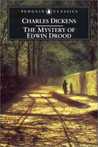
My Last Dickens' Novel: The Mystery of Edwin Drood

The Mystery of Edwin DroodThe Mystery of Edwin Drood by Charles Dickens

My rating: 4 of 5 stars


In pursuing my goal of reading all of Dickens' novels, I saved his last book for the very end, mostly because I knew he died when it was half finished. I was afraid it would break my heart not to know what happens. I combined actual reading with listening to the fantastic David Timson narration.

It was interesting that Dickens was telling a single-strand tale. This was probably because he planned to make it half the length of his usual novels. So it was much more like A Christmas Carol than Bleak House.

It was also interesting that we can see who the murderer is but we are left uncertain as to whether the murder was really committed. Is Edwin missing because he's dead or because the murderer was suffering from an opium dream and incompletely carried out the crime? Perhaps Edwin was left unconscious and something else happened.

The one thing we could tell was that the engagement ring would be a key identifier whenever Edwin turned up, whether dead or alive.

Having read the book I then turned to Wikipedia where I found John Foster's account of what Dickens had told him in two letters. Foster was Dickens' lifelong friend and his biographer after he died. I won't spoil it for anyone wanting to read the book fresh but it did make sense and it also made me bitterly regret not having that second half of the book which was to be "a very curious and new idea for my new story. Not a communicable idea (or the interest of the book would be gone), but a very strong one, though difficult to work."

You can also read an account there of the mock trial that was put on to solve the mystery by G.K. Chesterton, George Bernard Shaw and similar literary luminaries. It sounds as if t'was all good fun.
The jury returned a verdict of manslaughter, Shaw stating that it was a compromise on the grounds that there was not enough evidence to convict Jasper but that they did not want to run the risk of being murdered in their beds. Both sides protested and demanded that the jury be discharged. Shaw claimed that the jury would be only too pleased to be discharged. Chesterton ruled that the mystery of Edwin Drood was insoluble and fined everyone, except himself, for contempt of court.

Tuesday, April 5, 2016

Well Said: Crushing Someone

If you do not understand a man you cannot crush him. And if you do understand him, very probably you will not.
G.K. Chesterton

Worth a Thousand Words: Alexandra and Elena Pavlovna

Alexandra and Elena Pavlovna, painted by Louise Élisabeth Vigée Le Brun.
I love these two sweet sisters, painted by one of my favorite artists. It makes me think of when Hannah and Rose were little. They were such loving sisters.

On behalf of the former sinners of the future ...


... Julie and Scott are going to keep right on running this podcast, even though they have been running it since they were juvenile delinquents ... and they are tired from weariness! Brando. Sinatra. Guys and Dolls. Get Episode 130 at A Good Story is Hard to Find.

Friday, April 1, 2016

What We've Been Watching: Hits and Misses

HITS

Steve Jobs

Set backstage at three iconic product launches and ending in 1998 with the unveiling of the iMac, Steve Jobs takes us behind the scenes of the digital revolution to paint an intimate portrait of the brilliant man at its epicenter.
Wow. Brilliant.

All the performances were wonderful, especially those of Michael Fassbender and Kate Winslet. I saw some critics complaining because they felt there was too much talking, though I'm not sure how you have a movie about ideas without, you know, talking. Kudos to both director Danny Boyle and screenwriter Aaron Sorkin for making the movie feel dynamic and exciting despite the fact that it is set backstage before three different product launches. The most fascinating thing, though, was that the revelation of Steve Jobs' personality and growth was so wonderfully revealed as we watched the progress of his products.

Tom and I knew so much about Steve Jobs already (for reasons I won't go into here - suffice it to say that we were amused when Jobs began being treated like a rock star by friends who "discovered" Apple because of iPods and iPhones) ... and about those launches in particular that it was fascinating to see how they were used as springboards for a character study.

It's also interesting thinking about how the stories of Mark Zuckerberg and Steve Jobs are told, considering Aaron Sorkin wrote both but David Fincher directed one and Danny Boyle the other.

My Italian Secret (doc.)

A heroic story that was all but lost to history, until now. The film recounts how WWII bicycling idol Gino Bartali, physician Giovanni Borromeo and other Italians worked with Jewish leaders and high-ranking officials of the Catholic Church, risking their lives by defying the Nazis to save thousands of Italy’s Jews.
It never occurred to me before that the Italian Jewish experience during WWII would have been so different from what we've heard about so much of Germany or France. Fascinating.


MISSES


A Girl Walks Home Alone at Night

In the Iranian ghost-town Bad City, a place that reeks of death and loneliness, the townspeople are unaware they are being stalked by a lonesome vampire.
If Fellini made a vampire movie, this would be the movie he made.

So much atmosphere, so little story.

The Verdict

Frank Galvin is a down-on-his luck lawyer, reduced to drinking and ambulance chasing. Former associate Mickey Morrissey reminds him of his obligations in a medical malpractice suit that he himself served to Galvin on a silver platter: all parties willing to settle out of court. Blundering his way through the preliminaries, he suddenly realizes that perhaps after all the case should go to court; to punish the guilty, to get a decent settlement for his clients, and to restore his standing as a lawyer.
And to restore his self respect. Let's not forget his self respect.

I was looking for legal thrillers for my movie discussion groups and The Verdict kept popping up on every "law film" or "legal thriller" list I found.

Paul Newman is, needless to say, terrific. The rest of the movie felt more like a slow character study than either a legal or thriller story. It was a good character study but not good enough to carry the entire film.

The Intern

70-year-old widower Ben Whittaker has discovered that retirement isn't all it's cracked up to be. Seizing an opportunity to get back in the game, he becomes a senior intern at an online fashion site, founded and run by Jules Ostin.
Another movie I tried to see if it would be good for movie discussion groups. Short answer: no.

There is much to like in this movie but the slow pacing removes any punch, whether for humor or angst. If they'd have cut 20-30 minutes out (and there were plenty of places to do it) it would have been a much improved film.

That wasn't the only problem. For example, there were a couple of speeches by Robert DeNiro's character which sounded as if they should've been coming from a best girlfriend instead of a 70 year old man who'd been married 42 years.

However, as I said most of it works adequately enough, or would if the editing had been tighter.

Tuesday, March 29, 2016

Too Late for an Autopsy - I talk about books with Jenny at Reading Envy

I haven't talked books with Jenny at her Reading Envy podcast since episode 3. This week I was again her guest, on episode 55! Yes, it has been several years since the last time.

Maybe that's why the list of extra books mentioned is so long. Or it could simply be that I can't help peppering people with lots and lots of book ideas.

Join us to see what we've both been reading lately. Reading Envy, episode 55.

Tom Hiddleston and Stephen Colbert See the Light

I was already interested in seeing I Saw the Light, the Hank Williams biopic, though I did wonder how Tom Hiddleston could possibly pull off the role. I liked both the insights and the brief music sample from this clip.

Monday, March 28, 2016

An Easter Weekend Story American Media Isn't Mentioning

I was shocked and saddened to see the story of terrorists bombing a park and playground in Pakistan because Christians are known to gather there on Easter. I know this might seem like a stupid reaction but I can't help thinking, "what is wrong with these people?"

I was equally shocked to read reports that the Indian priest kidnapped by ISIS linked terrorists was crucified on Good Friday. (Though those reports are currently unsubstantiated.) I've been praying for him and the report unexpectedly brought tears to my eyes.

Mother Angelica died on Easter and that news seems so appropriate. I've never paid much attention to EWTN but I know the huge contribution it made and the big impact that Mother Angelica has had on so many lives.

These are all stories you see floating around news aggregators and social media.
Here's one, though, that American media has all but ignored. As reported by GetReligion,
Coverage in British newspapers [as opposed to BBC broadcast] has been much more blunt. Consider the top paragraphs in The Telegraph, which jump straight to the religious details that make this crime so dramatic.
A popular shopkeeper was stabbed to death by another Muslim in a "religiously prejudiced" attack hours after posting an Easter message on Facebook to "my beloved Christian nation".

Asad Shah, 40, a devout Muslim originally from the Pakistani city of Rabwah, had his head stamped on during a savage attack, according to one eyewitness.

Around four hours earlier the victim wrote online: "Good Friday and a very Happy Easter, especially to my beloved Christian nation. "Let's follow the real footstep of beloved holy Jesus Christ and get the real success in both worlds."

On Friday afternoon, police confirmed that a 32-year-old Muslim man had been arrested in connection with Mr Shah's death.
The victim had a history – in social media – of rejecting violence by radicalized Muslims and calling for peace and understanding between people of different faiths. His neighbors, of all faiths, immediately began raising funds to try to help his family.
My husband and I were just discussing this morning why more moderate Muslims weren't speaking up or otherwise helping to stop the radicalized terrorists. Of course, one answer was just the sad response that we see from the story above.

But I love that Mr. Shah didn't let that stop him, though the danger would be obvious. He is a real life hero. His courage deserves to be celebrated. Shame on American media for not even reporting the story.

Monday, March 21, 2016

Thursday, March 17, 2016

Well Said: Christ and the Interesting Life

There is no need to fear that living in Christ and working for him would be consigning ourselves to a drab, colorless life. The life stories of the saints are a refutation of that worry. As a general rule, the saints who lived and worked for God are seen to have highly interesting lives. There is an ancient Latin phrase that runs: cui servire regnare est — to serve him is perfect freedom — a freedom, one might add, that is not devoid of joy.
Monsignor James Turro

Worth a Thousand Words: Fin

Fin
painted by James Neil Hollingsworth

Tuesday, March 15, 2016

Mother Teresa to be Canonized on Sept. 4

This was announced with the upcoming canonization of four other saints. Having just finished Dante's Paradiso, I can't help thinking of all of them using that imagery: as part of the Empyrean (the celestial rose formed by Mary and the saints as they gaze on the face of God in the center, with angels fluttering back and forth like bees).
...  the Holy Father announced the upcoming canonization of five new saints, including Blessed Mother Teresa of Kolkata (née Anjezë Gonxhe Bojaxhiu), whose work among the “poorest of the poor” won her worldwide acclaim. Hundreds of Missionaries of Charity, members of the religious order founded by Mother Teresa, are expected to be in Rome for her canonization, set for 4 September 2016.

From Poland, Blessed Stanisłaus of Jesus and Mary (né Jan Papczynski) was a member of the Piarist Order. After leaving the Piarists, Bd Stanisłaus founded the Marians of the Immaculate Conception.

Blessed Maria Elizabeth Hesselblad of Sweden, a convert from Lutheranism, founded a new branch of Bridgettine sisters, dedicated to working and praying for the unity of Scandinavian Christians with the Church. She will be the first Swedish saint in more than 600 years.

The two northern Europeans will be canonized together on Sunday, 5 June, of this year.

The Holy Father also announced the canonization of Blessed José Gabriel del Rosario, from Pope Francis’ native Argentina, known as the “gaucho priest.” Like the famous Argentinian cattlemen, he travelled on a mule throughout the vast territory of his parish in order to be close to the members of his flock.

He will be canonized on 16 October 2016, along with Blessed José Luis Sánchez del Río of Mexico. Blessed José was just fourteen-years-old when he was martyred by the Mexican government during the Cristeros War, after refusing to deny his Faith.

Worth a Thousand Words: October and November once more

October and November series
by Brian at the blue hour

The Holly is Alive with Bees!

Stock photography

Idly looking out the window on Sunday I saw a lot of gnats flitting around our holly bushes. When I got out there it turns out they were actually bees. So many bees, all busily going from blossom to blossom. Even the occasional wasp was in the crowd. They had a very different style though. Instead of quick canvassing, the wasps were slowly and methodically covering each blossom thoroughly before moving to another.

Now I'd never even noticed the holly bushes had blossoms. They are tiny and nondescript to our eyes. But they have a heavenly scent. I'd wondered for years what was giving off  that scent as I'd go into our office or front yard. As I said, the blossoms are so nondescript that I never noticed them before.

When I walked onto our porch after bee watching I was hit with the scent which had accumulated under our eaves. Directly sniffing the blossoms (at my own risk from busy bees) yielded nothing. The scent had to gather, it seemed.

These holly bushes suddenly took on extra value. I'd always liked that they provided berries for sparrows, cardinals, and robins in late winter. I also appreciated that squirrels and small birds liked hiding in them. Now I could see they perfume the air and feed the bees!

It makes me look at those prickly leaves much more forgivingly. Once again, there is so much that we think we know all about but which has hidden dimensions, if only we open our eyes and see. (Or noses and sniff. Take your pick!)

Ours are Burford Holly bushes which you may read about here.

Monday, March 14, 2016

Worth a Thousand Words: Margin O

A face drawn inside the O on the title page
of Rye House Plot Trials, 1683-4.
Via Letterology

Well Said: Because of a Presence ...

"But a very little while" and a change we could never imagine will happen. The lowly will find joy and the poor will rejoice. Why? Because of a Presence that even a blind man can sense. "Have pity on us!" The Lord Jesus took compassion on us in order that he might call us to himself and not scare us away. He comes as someone gentle, someone humble.
Saint Ambrose

Beginning on Forgotten Classics: Talents Incorporated by Murray Leinster

Now beginning on Forgotten Classics: Talents Incorporated by Murray Leinster.

This is a light-hearted story about planetary invasion and misfits with oddball paranormal talents. Can Talents Incorporated information save Kandar from bloodthirsty conquest? You can depend on it!

When Watson Met Mary: The Sign of the Four by Arthur Conan Doyle

Jesse, Maissa, and I discuss the second of the Sherlock Holmes novels, one with unexpectedly exotic story lines, on SFFaudio.

Friday, March 11, 2016

Worth a Thousand Words: Let Sleeping Swine Lie

James Ward, The head and front leg of a sleeping swine

Slow Horses by Mick Herron

Slow Horses (Slough House, #1)Slow Horses by Mick Herron

My rating: 5 of 5 stars


Slow Horses builds from the idea that the punishment for spies who have failed at their jobs is to send them to Slough House where they do paperwork. The idea is logical but humorous at the same time. They spend all their time longing to get back in the field.

When a young man is abducted and his kidnappers threaten to broadcast his beheading live on the Internet, everyone from Slough House is intensely interested. Then they realize that they will simply be part of the viewing public since they aren't really spies anymore. Except, of course, that wouldn't make much of a story. River Cartwright sees this as an opportunity to redeem himself and soon the rest of the Slow Horses are pulled into the effort.

My favorite character was the Slough House boss, Jackson Lamb, who makes sure his crew knows they are mediocre, doesn't care a flip for them, and yet commands their respect because they all know he was a big field agent back in the day. His sardonic comments never failed to crack me up.

This was simply terrific. The humor is understated, the writing evokes London wonderfully, the plot twists like a pretzel but never loses you, and the suspense ratchets up so that by the end I was simply longing to see villains get their comeuppance.

I listened to Sean Barrett's reading, which was simply wonderful.

Well Said: Fighting error

Fight all error, but do it with good humor, patience, kindness and love. Harshness will damage your own soul and spoil the best cause.
St. John Cantius

Thursday, March 10, 2016

Worth a Thousand Words: October and November

October and November series
by Brian at the blue hour

Well Said: Criticism and Authors

In a recent criticism on this position I saw it remarked that all this is reading into Dickens something that he did not mean; and I have been told that it would have greatly surprised Dickens to be informed that he "went down the broad road of the Revolution." Of course it would. Criticism does not exist to say about authors the things that they knew themselves. It exists to say the things about them which they did not know themselves.

G.K. Chesterton, Appreciations and Criticisms

of the Works of Charles Dickens

This Just In: When You Suffer by Jeff Cavins

When You Suffer: Biblical Keys for Hope and UnderstandingWhen You Suffer: Biblical Keys for Hope and Understanding by Jeff Cavins
When You Suffer is a refreshing look at the mystery of pain and suffering and how to find meaning and even joy in the midst of it. Jeff Cavins discusses why we suffer and how our suffering can draw us closer to God. He explains that suffering is the greatest opportunity to love as Christ loves and how, by “offering up” our suffering, we join in Christ’s mission to redeem the world.
Lent does seem like the perfect time to read this book, especially as we draw closer to Holy Week. Reading a book about suffering, though, isn't normally my cup of tea. But all it took was the first chapter for me to change my mind.

By comparing an ideal day to a real day, Cavins reminded me that suffering often isn't on the grand scale of experiencing an earthquake. Plenty of small things add up to suffering in everyday life. None of us escape it. He uses that as a springboard to compare the classical idea of happiness (living as a good person) to the modern idea (feeling good). From there he examines the different types of suffering (physical, moral, etc.)

Our "ideal day" isn't ever going to happen because real life is messier than our dreams. So how do we live real life with meaning and even joy?

That's just the first chapter but the stage is set for us to discover more. It's all written in a personable, practical way that is easy to understand.

I can't wait for the rest of the book but since I've got a tall "to read" stack ahead of this, I wanted to give you a heads up on this one.

Wednesday, March 9, 2016

Worth a Thousand Words: In the Artist's Studio

In the Artist’s Studio (1892). Frederik Vermehren (Danish, 1823-1910)
via Books and Art
What are they discussing? Is it a portrait of one of them? Of a loved one? Is the artist a protogé, despite his age?

Well Said: Jokes and Government

I don't make jokes. I just watch the government and report the facts.
Will Rogers
I don't have to say why this never gets old, do I?

I Can't Wait to Read ...

These are far enough in the future that I can't get a Kindle sample, but I've been waiting and waiting and waiting ...

City of Strangers (Luis Chavez #2)
by Mark Wheaton

This one's so far in the future that they don't have a cover for it yet. Or a description. I'm not surprised since the first book, Fields of Wrath, just came out in January.

You might remember I loved that book for the tough, gritty mystery and the nuanced look at priests. I especially loved Father Chavez. I'm really hoping this book upholds the promise of the first!


Poisonfeather (The Gibson Vaughn Series Book 2)
by Matthew FitzSimmons

Another one so far in the future that there's no cover. Since I wrote last week about new, fun books I had on tap, I actually read one - The Short Drop, which was FitzSimmons' first book. I found it a tightly written, suspenseful book and really enjoyed it. So naturally I want more!

From behind bars, a disgraced Wall Street financier has arrogantly hinted at the existence of a stolen fortune that by all rights should not exist. But if it does, Gibson Vaughn has vowed to return the money to its rightful owners. He’ll have to stay one step ahead of a horde of ruthless rivals who also have claims on the fortune. And behind it all lies Poisonfeather, a secret that just might get Gibson killed—or worse.


Sixth Watch (Night Watch)
by Sergei Lukyanenko

I thought we were done! New Watch was supposed to be the end of the series. Not that I'm complaining, of course.

"the Prophets have all reached the same chilling conclusion: The world will end in five days’ time. To ward off the apocalypse, an ancient council called the Sixth Watch must be assembled. After both Light and Darkness select their emissaries, Anton must enlist the unwilling aid of the four other Great Parties: the Vampires, the Witches, the Form-Takers, and the enigmatic Foundation. "


Tried by Fire: The Story of Christianity's First Thousand Years
by William J. Bennett

I loved Bennett's "American: The Last Best Hope" so much. It was rare to find an even-handed history, praised by conservatives and liberals alike, which was thorough but didn't bog me down with so many facts I couldn't keep track of the story. Fingers crossed, this history of Christianity does the same!

"the riveting lives of saints and sinners, paupers and kings, merchants and monks who together—and against all odds—changed the world forever. ... Challenged by official persecution, heresy, and schism, they held steadfast to the truth of Christ. Strengthened by poets, preachers, and theologians, they advanced in devotion and love."


Bright Smoke, Cold Fire
by Rosamund Hodge

You know how much I loved Hodge's first two books, Cruel Beauty and Crimson Bound. She's got a real talent for evoking a familiar story but telling us something completely original. This one uses Romeo and Juliet as a springboard and I really can't wait to see where it takes us!

"When the mysterious fog of the Ruining crept over the world, the living died and the dead rose. Only the walled city of Viyara was left untouched.

The heirs of the city’s most powerful—and warring—families, Mahyanai Romeo and Juliet Catresou share a love deeper than duty, honor, even life itself. But the magic laid on Juliet at birth compels her to punish the enemies of her clan—and Romeo has just killed her cousin Tybalt. Which means he must die."


The Hanging Tree
by Ben Aaronovitch

I discovered this series last year which pulled me back into urban fantasy, something I thought was impossible. Peter Grant is a young constable who doubles as apprentice to Inspector Nightingale, England's last wizard. I know, it sounds quite typical. It isn't though. Aaronovitch gives us a fresh look at London as well as urban fantasy.

"The Hanging Tree was the Tyburn gallows which stood where Marble Arch stands today. Oxford Street was the last trip of the condemned. Somethings don't change. The place has a bloody and haunted legacy and now blood has returned to the empty Mayfair mansions of the world's super-rich.