Friday, July 18, 2014

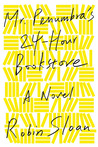
Mr. Penumbra's 24-Hour Bookstore by Robin Sloan

Mr. Penumbra's 24-Hour BookstoreMr. Penumbra's 24-Hour Bookstore by Robin Sloan

My rating: 3 of 5 stars

“[...] We keep a record for every member, and for every customer who might yet become a member, in order to track their work." He paused, then added, "Some of them are working very hard indeed."

"What are they doing?"

"My boy," he said, eyebrows raised. As if nothing could be more obvious: "They are reading.”
Clay Jannon was lucky to find a job at Mr. Penumbra's 24-Hour Bookstore. Times are hard and jobs are scarce. However, the bookstore sells very few books and the few regular patrons seem to have a strange mission that no one will talk about. Then there's the fact that most of the books can't be found in any index of published books. Naturally Clay begins investigating and winds up on a fascinating quest that includes secret societies, museums, ancient artifacts ... and e-books, virtual reality, and Google.

This book feels like a nerd's dream come true. Not only is there the high tech point of view but also the typographer's inside details. Ok, key figure Griffo Gerritszoon is made up, but Francesco Griffo was actually Aldus Manutius' employee. Who was Aldus Minutius? Every time you read something in italics, you can thank him for inventing them.

There is an interesting tension between the old ways and the new: old knowledge in books versus Google, bookstores versus e-books, tradition and innovation. These are things that all of us cope with in our own ways but it's kind of fun to see it all linked together and hanging off of bits of real history, a la DaVinci Code, but with less of a mean spirit than in Dan Brown's book.

If you ever played Zork or Baldur's Gate, if you ever thrilled to a quest in a fantasy book, if you ever played a scavenger hunt or lost hours to solving mysteries, then this book is going to push your buttons. Mix that in with the idea of a "fellowship" and you've got a sense of where this book excels.

It doesn't have deep character development, but that's not the point of this book. It is skimming the surface of some themes but it still manages to present them and give you food for thought while having a good time. In that it is very much like The Haunted Bookshop or Agent to the Stars or The Rosie Project, just to mention a few light books that I love.

It's a light, fun read with a sense of being an adult Harry Potter-ish book. Perfect summer reading.

Worth a Thousand Words: Superdame Gale Allen!

—”Gale Allen” in Planet Comics #12 (1941), writer & artist uncredited
via Not Pulp Covers
Gale Allen, outer-space adventurer and leader of the “Girl Squadron!

We all want to be a superdame like Gale Allen, don't we ladies?

Thursday, July 17, 2014

Worth a Thousand Words: Sleeping Time

Sleeping Time
taken by the incomparable Remo Savisaar
Is it a dream? Is it an artist's fabrication? It is a rare moment in nature. I can almost hear the minute rustling of grass, the silence except for small night creatures' movement.

Well Said: A special kind of serenity

Complete trust in God, using whatever human means are necessary in each situation, gives an incomparable fortitude and a special kind of serenity to the Christian, whatever may happen to him and whatever the tribulations he may have to face up to.
Francis Fernandez, In Conversation With God, vol. 4
So there are two things to think about here, for me anyway.

First, how complete is my trust in God? Do I have that special kind of serenity?

Second, am I using whatever human means are necessary in each situation? I know people who will say they have complete trust in God and then laze around waiting for whatever they've been praying for to drop into their lap.

It takes a fine balance to encompass these two things well.

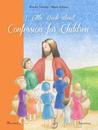
Children's Books: A Little Book About Confession for Children by Kendra Tierney

A Little Book about Confession for ChildrenA Little Book about Confession for Children by Kendra Tierney

My rating: 5 of 5 stars


11. What does going to confession do?

The Sacrament of Penance heals our souls when we hurt it by sinning. When we confess our sins to a priest, it is God who hears us and forgives our sins.18 God always forgives us if we are sorry, no matter how big or how many our sins are.

The Bible tells us the story of how Jesus treated a woman who had committed a big sin.19 She had been arrested, and the people were going to throw rocks at her.

Jesus came and told the people, "Let him who is without sin among you be the first to throw a stone at her." One by one the people put down their rocks and left.

When only Jesus and the woman were left he told her, "Go, and do not sin again."

God always forgives us when we ask, but he also asks us to change our behavior. The Sacrament of Penance helps us with this.20

18. CCC. 1461
19. John 8:3-11
20. CCC 1468
This is a really terrific little book that I think might help parents as much as the children they read it with. For one thing, Kendra Tierney strips matters down to basics, as you can see from the excerpt above, to help everyone see the basis for all the ins and outs of the sacrament.

It begins with a brief glossary and then moves through a series of simple questions and answers. This is followed up with a brief look at a few saints who have links to confession, a simple examination of conscience, and a quick review of what actually happens during the sacrament. A really nice feature is that the cover has a quick reference on the front and back flaps containing the steps of the sacrament, the Act of Contrition, and an extremely brief examination of conscience. Personally, I found the examination of conscience really nice as a way to get back to basics in my own life. That may say more about me than it does about the book but, again, I think adults will find this touches them when they are reading through it.

I'm not crazy about the illustrations since they all look as if children drew them. Skilled children, to be sure, but children nonetheless. Maybe some children enjoy looking at pictures their peers could have drawn. I never found them appealing no matter what age I was. Of course, this is purely a matter of personal taste so don't let that stop you from picking up this gem of a book.

Wednesday, July 16, 2014

Looks wonderful, tastes delicious, and is much easier than you'd think.

Get the recipe for a Pavlova With Strawberries at Meanwhile, Back in the Kitchen.

Children's Books: Angels for Kids by Donna-Marie O'Boyle

Angels for KidsAngels for Kids by Donna-Marie Cooper O'Boyle

My rating: 5 of 5 stars

Artists have painted, drawn, and sculpted Angels in a variety of styles. Angels are many times portrayed as children. This is most likely to convey innocence.

Beginning in about the fourth century, Angels were usually illustrated with wings. That's how we usually see them in books, paintings, on the walls of churches, in icons, or in the art of stained-glass windows. The wings might even be the artist's interpretation of their swiftness. An Angel is able to quickly come to our aid. However, this also has roots in Holy Scripture, since some of the people in both the Old and New Testaments of the Bible describe the angels who appeared to them as having wings.

For instance, we know that Isaiah saw a winged Angel. Ezekiel, too, saw visions of winged Angels. Most times when Angels appear, they look like normal people, always men. Sometimes Angels appear all aglow in awesome splendor. Warrior Angels—like the Archangels—are tremendously tall and powerful.
As you can see from the excerpt, this is a book for older children and might even be good as a quick primer for adults. Donna-Marie O'Boyle has a true talent for explaining the basics about angels, which are a more complex subject than most people might think.

She includes scriptural references, real life stories such as the children at Fatima, and has ways to relate personally to the fact that angels are all around us. The book cover angels in the Bible, their work, what they look like, archangels, fallen angels, a variety of prayers and much more. I also really liked the book design which was simple but beautiful.

I have a special interest in angels myself and consequently have read a number of books about them. This is a really great book that I'm not sure I'll be able to make myself give to the children I know. I might have to buy them their own copy.

Tuesday, July 15, 2014

Well Said: Folk call the road lonely

For myself, the Creek satisfies a thing that had gone hungry and unfed since childhood days. I am often lonely. Who is not? But I should be lonelier in the heart of a city. ... I walk at sunset, east along the road. There are no houses in that direction, except the abandoned one where the wild plums grow, white with bloom in springtime. ...

Folk call the road lonely, because there is not human traffic and human stirring. Because I have walked it so many times and seen such a tumult of life there, it seems to me one of the most populous highways of my acquaintance. I have walked it in ecstasy, and in joy it is beloved. Every pint tree, every gallberry bush, every passion vine, every joree rustling in the underbrush, is vibrant. I have walked it in trouble, and the wind in the trees beside me is easing. I have walked it in despair, and the red of sunset is my own blood dissolving into the night's darkness. For all such things were on earth before us, and will survive after us, and it is given to us to join ourselves with them and to be comforted.
Marjorie Kinnan Rawlings, Cross Creek
Amen.

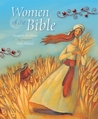
Children's Books: Women of the Bible by Margaret McAllister

Women of the BibleWomen of the Bible by Margaret McAllister

My rating: 5 of 5 stars

"Rescuing animals is only the start of it," said Mother Noah. She scooped up a handful of seeds and placed them carefully in her pocket. "If God wants to send a flood, it's very good of him to ask Noah to put the animals in a boat. But then what do you do with them?"

[...]

But however hard it [work] was, every day brought something good. On day ten the tigers realized that she was a friend and stopped trying to eat her. On day eleven the parrots learned to say, "Move over!" which saved Mother Noah a lot of shouting. On day fifteen the chimpanzees had a very silly half hour with Ham's hat and Mr. Noah's whistle. ...
I have a real antipathy toward things that are yanked out of perspective and told from some "special" point of view, usually to empower some group. I encounter this a lot in feminist perspectives where predictable and myopic points of view bore me to tears.

So you can imagine the shiver that ran down my spine when I saw the title Women of the Bible. I read the first story, Mother Noah, to see how it fit into that feminist construct. And was pleased to see it did no such thing. Furthermore I was delighted to find it humorous, relatable, true to Genesis, and opened up my mental image of life aboard the ark. I continued, enchanted, through stories of Rachel's worry about Jacob's meeting with Esau, Miriam's following her baby brother Moses floating in the river, Mary's four special things kept in a box to sink in her mind the great turning points in her life, and many more.

Each story is told in a different way and from a different perspective. Each is accompanied by truly enchanting illustrations by Alida Massari which made me go looking for other books she's worked on.

Most importantly, each story would make a wonderful story time with your favorite little ones, whether girls or boys. They encourage questions and wonder and "entering into" familiar Bible stories from an imaginative point of view.

Highly recommended.

Monday, July 14, 2014

Well Said: A Star

"In our world," said Eustace, "a star is a huge ball of flaming gas."

"Even in your world, my son, that is not what a star is but only what it is made of."
C.S. Lewis, The Voyage of the Dawn Treader
Yes. There are facts and there is truth.

A Couple of Movies on My Radar: Calvary and Exodus

CALVARY

CALVARY’s Father James (Brendan Gleeson from In Bruges) is a good priest who is faced with sinister and troubling circumstances brought about by a mysterious member of his parish. Although he continues to comfort his own fragile daughter (Kelly Reilly ) and reach out to help members of his church with their various scurrilous moral - and often comic - problems, he feels sinister and troubling forces closing in, and begins to wonder if he will have the courage to face his own personal Calvary. CALVARY opens in select theaters on FRIDAY, AUGUST 1, 2014 (Rated: R; Running Time: 104)
I have a few questions going into Calvary. The priest has a daughter? That can be a legit thing, but my antennae are up.

On the other hand, I'm a sucker for Brendan Gleeson ever since seeing him in In Bruges, hence my agreeing to go to the movie screening where he will be doing the Q&A. Yep, I'm excited!

I also became interested in seeing this after reading that the director said, "There are probably films in development about priests which involve abuse. My remit is to do the opposite of what other people do, and I wanted to make a film about a good priest." I've gotta love that!

More after the screening in a couple of weeks. The trailer is here though I don't think it is that great. I feel as if the description above works just fine.

EXODUS: GODS AND KINGS

It's been a long time since the Ten Commandments, which was made in 1956. I myself really loved The Prince of Egypt from Dreamworks but that was animated.

And then came Ridley Scott with Exodus: Gods and Kings.

Ooo, and Christian Bale as Moses! Now I'm really interested!

Jeffrey Overstreet has some excellent observations and links if you are interested in this upcoming movie. I was vaguely interested. And then I saw the trailer. Wow.

I'm having a hard time dealing with a Pharaoh who isn't Yul Brynner, but other than that it really looks good.

Also, word is that Ridley Scott is interested in doing a movie about King David. About time. Talk about a story that's got everything in it: faith, devotion, insanity, war, love, betrayal, a no-nonsense prophet and more. Real Old Testament stuff, if you know what I mean.

I think I'll get to see a screening of this also when it is closer to release, which should be around Christmas.

Friday, July 11, 2014

Children's Books: "The gospel according to... dog" by Peter D. Ward

The gospel according to... dog: 'the greatest story ever told'... by a dogThe gospel according to... dog: 'the greatest story ever told'... by a dog by Peter D. Ward

My rating: 4 of 5 stars
'Come Lazarus!' I have never heard the Wisest One shout so loudly.

'Come, Lazarus... come out to me!' again he shouted.

The Great Ones [men] all looked at each other uneasily, the smell of fear coming off them as sharp as any skunk. But my ears were pinched back, and I heard what they could not hear: a wondrous thing, a little sigh as gentle as the breeze, and then a scratching, scruffling noise and something being put to one side — the leftover spices, perhaps in a jar being moved? ...

I watched in wonder and could barely keep myself from shouting and dancing and chasing my tail — for in all my days I have never seen anything like this. Suddenly the woman — I realized at once she was the mother of Lazarus — came rushing up and ran straight into the resting-place. There was a shriek of joy and then such weeping it would tear your heart in two if you didn't know it was tears of you that were being wept. ...
Kal is Peter the Fisherman's dog, rescued when he was just a puppy from a group of tormenting boys. He tells us the Gospel story from a canine point of view, including all the senses the we don't notice! Did you know that lepers are delicious to lick and even have a convenient bell to let Kal know they are coming? When Jesus (the Wisest One) heals them it is is a great disappointment because they taste just like regular men again.

Any kid from about the age of 8 who has a basic understanding of the gospel story would enjoy this different view of it. In fact, I enjoyed it quite a bit myself. Kal's different viewpoint will not only open up the gospel but might prompt children to wonder how their pets understand them and the family events unfolding in daily life.

I really loved the way the book graphically conveyed Kal's sense of smell with "Smellavision" dots of different colors strategically scattered on pages to give an extra layer of information. I wasn't crazy about the illustrations which were done in a very child-like style but, again, that is a matter of personal taste and they don't detract from enjoyment of the story itself.

The story has humor, pathos, drama, and many interesting smells! I can definitely recommend this to imaginative readers, whether young or old.

Thursday, July 10, 2014

In which our band of adventurers face their accusers in a public trial.

Will Juanna, Leonard, Otter, and Francisco escape The People of the Mist? Find out at Forgotten Classics podcast where chapters 28-29 are ready for your enjoyment.

Well Said: Expressing Christ in Our Own Stories

Gandalf and Frodo are not allegorical masks for Christ, as in a strict allegory, nor symbols for some aspect of human condition, as in a loose allegory. They are people in their own right. But because they are almost real people they can, as real people can, express Christ in their own way.

It is part of the Roman Catholic idea of the saints that each mirrors Christ in an individual way, expressing facets of the infinite Personality, which could not all be expressed in one finite life, no matter how great. The historical Christ, for example, was not a philosopher nor a King; but St. Thomas Aquinas and St. Louis of France show us something of what He might have been like if He had been. Thus Gandalf and Frodo, while being very real and very individual, also have something to tell us about Christ.
Richard L. Purtill, Lord of the Elves and Eldils
I like thinking of expressing Christ in my own story. It's a phrase that appeals to me since all our lives are stories. Of course, from our own points of view, each of us is the star of our story. How am I doing at expressing Christ? And how often? All the time or just a little? My answers are my own but they push me for a fuller and better expression.

Wednesday, July 9, 2014

The Caves of Steel by Isaac Asimov

The Caves of Steel (Robot, #1)The Caves of Steel by Isaac Asimov

My rating: 5 of 5 stars

Like most people on the over-populated Earth, New York City police detective Elijah Baley has little love for either the arrogant Spacers or their robotic companions. But when a prominent Spacer is murdered under mysterious circumstances, Baley is ordered to help track down the killer. Then he learned that they had assigned him a partner: R. Daneel Olivaw. Worst of all was that the " R" stood for robot.
I snagged a review audiobook of this from SFFaudio.

I originally read this book when I was a teenager and loved it from the beginning. Isaac Asimov's descriptions of an overpopulated future Earth were de rigueur for science fiction of the time. What gave this story a fresh spin was that it was a bona fide mystery.

Many years later, listening to William Dufris' splendid narration, it still holds up. I still remembered the main points of the mystery and detective Lige Bailey's personality. This left me free to fully appreciate the details of Asimov's imagined future society, complete with spacemen and robots to provide tension and interest.

I'm not sure if I completely forgot or just never registered the points Asimov was making in this book about technology, adaptation, and the human soul. I was quite surprised to see that Lige Bailey knew his Bible so well that he could quote it in either the King James version or the modern version. And that he used religion as a main point of differentiation (along with art, beauty, and other intangibles) between humans and robots. Atheist Isaac Asimov didn't deny that faith can lift people higher and that is something one rarely, if ever, sees these days in science fiction.

I also was really interested in watching the way the germ of an idea took hold and was spread from person to person. It was fascinating to see how many things that idea applied to once it had wormed its way into the person's consciousness.

All in all, this short but satisfying mystery is much richer than I recalled. It was greatly enhanced by the audio where William Dufris became a one man theater company in the way he voiced different characters. There was never any fear of my mistaking who was talking in straight exchanges of dialogue. He was simply masterful whether it was world-weary detective Bailey, slightly robotic Daneel Olivaw, jumpy Jessie, or the nervous Commissioner.

Highly recommended.

INTERESTING SIDE NOTE
Wikipedia notes:
It is a detective story and illustrates an idea Asimov advocated, that science fiction is a flavor that can be applied to any literary genre, rather than a limited genre itself. Specifically, in the book Asimov's Mysteries, he states that he wrote the novel in response to the assertion by editor John W. Campbell that mystery and science fiction were incompatible genres. Campbell had said that the science fiction writer could invent "facts" in his imaginary future that the reader would not know. Asimov countered that there were rules implicit in the art of writing mysteries, and that the clues could be in the plot, even if they were not obvious, or were deliberately obfuscated.
All hail opinionated John Campbell and Isaac Asimov's determination to prove him wrong. Today there are a lot of different mash-ups included in the science fiction genre and Asimov led the way with this book.

Tuesday, July 8, 2014

On the Shoulders of Hobbits: The Road to Virtue with Tolkien and Lewis by Louis Markos

On the Shoulders of Hobbits: The Road to Virtue with Tolkien and LewisOn the Shoulders of Hobbits: The Road to Virtue with Tolkien and Lewis by Louis Markos

My rating: 5 of 5 stars


We need the truth, but we also need to know how to live in and through and by that truth.

What we need, in short, are stories.
Louis Markos begins with the idea that in the past stories weren't only told for children's entertainment and instruction, but for that of adults as well. We've lost not only that idea but a lot of the time-honored values that we used to teach and cherish in such stories. The author "mines" two of the most honored stories in modern times, the Lord of the Rings and, to a lesser extent, The Chronicles of Narnia, to show how they can help us return to classic virtues these days.

Ancient literature, modern culture, and scripture are all woven into Markos' book. The main emphasis is on Tolkien and Lewis, but the depth of material means that it hits you where you live.  Before delving into the virtues, Markos begins with the idea of the hero's journey and the road. These are the heart of good story telling, after all, and so are themes that are returned to repeatedly throughout the book.
In the greater tales, the ones that matter—the ones that change both us and our world—the heroes do not so much choose the Road, as the Road chooses them. For our part, we must be ready, prepared in season and out, to answer the call, whenever and however it comes. And we must be prepared to press on, trusting to an end that we often do not, perhaps cannot, see. It is easy to claim that we would have done what Abraham did, but that is only because we stand outside the story. We see the good end, the fulfillment that Abraham could not see from within the story.
Markos is not detached with his subject at arm's length. He loves these stories and the themes they embrace and his enthusiasm comes through to make a warm, lively reading experience.

I've read several other books looking deeper into The Lord of the Rings, in particular, and this book still managed to provide new ideas for reflection. Markos really does a fantastic job of revealing the characteristics of various characters in Middle-Earth and Narnia and the virtues we can see in them. This is a thoughtful and thought provoking book which I can't recommend highly enough.

I'll be looking for more of Markos' books in the future.

NOTE
I received this review copy from Aquinas and More, the largest on-line Catholic bookstore. They've got a lot more than books. Check them out for all your Catholic needs ... rosaries, communion gifts, and so forth.

I originally wrote this review of On the Shoulders of Hobbits for the free Catholic Book review program, created by Aquinas and More Catholic Goods. I receive free product samples as compensation for writing reviews for Tiber River.

Well Said: Two views about everything

"I suppose there are two views about everything," said Mark.

"Eh? Two views? There are a dozen views about everything until you know the answer. Then there's never ore than one. But it's no affair of mine. Good night."
C.S. Lewis, That Hideous Strength
Ain't that the truth!

What makes this all the more poignant is that this book clearly shows us just how well the enemy is keeping everyone distracted from clear thought, whether by turning them against each other or putting their focus solely on themselves. A tactic that is still used today, from what I observe and what I struggle with myself.

Monday, July 7, 2014

Worth a Thousand Words: Peach-leaved Bellflowers

Peach-leaved Bellflowers
taken by Remo Savisaar
Is this not simply gorgeous? Click through to see it fill the screen in glorious purple.

The Last Policeman at SFFaudio

You may recall that I really loved The Last Policeman by Ben H. Winters. Here I discuss it with the others from the SFFaudio podcast gang.

Yes. I annoy everyone until they read the books I love. Not just you guys. Everyone.

Bibliotheca


You know that I care, very much, about book design.

This project to rethink Bible design in terms of typeface, binding, proportions, and more so that the Bible is an enjoyable reading experience is very exciting.

Well Said: Mostly true

Both the stolen apple [The Magician's Nephew, C.S. Lewis] and the Ring [Lord of the Rings, J.R.R. Tolkien] work: they do give the immortality and power that they promise, just as the forbidden fruit in Genesis 3 does open the eyes of Adam and Eve to the knowledge of good and evil. The lie does not lurk in the primary promise of life-strength-wisdom, but in the accompanying, deceptive promise that these things, once achieved, will make one into a god: eternal, omnipotent, omniscient. The lie rests in the false promise that the life it gives will be a life worth living, the strength a strength worth wielding, the wisdom a wisdom worth possessing.
Louis Markos
On the Shoulders of Hobbits
It's always just that little twist when evil tells us lies. Mostly true is the key to a good lie, after all. Unfortunately that "mostly" is a long way to fall from real truth. And we are always sorry.

Pilgrimage Reading: Grandma's on the Camino by Mary Wyman

Grandma's on the Camino: Reflections on a 48-Day Walking Pilgrimage to SantiagoGrandma's on the Camino: Reflections on a 48-Day Walking Pilgrimage to Santiago by Mary O'Hara Wyman

My rating: 3 of 5 stars

Mary Wyman has an entry for each day of her solo walk to Santiago. Each includes the daily postcard she sent to 4-year-old granddaughter Elena, a journal entry from that day, and a longer reflection from after the pilgrimage was completed. I really enjoyed the format, especially the ways that Wyman connected with her granddaughter in the cards by asking questions or suggesting little activities like "count to 36 out loud with Mama to see how many days Grandma has left to walk the Camino (paraphrased)."

I found a lot of the book fascinating and almost feel as if I'd been along for the trip. Certainly I was just about as concerned as Mary that she get to lodgings in time for a lower bunk and that her feet would hold out. Mary's vivid descriptions of the people and nature all around her, as well as her inclusion of insights and spiritual experiences all combined to make this a very good book.

It isn't a perfect book though. As a 70-year old woman from San Francisco, Mary has all the stereotypical attitudes of that demographic. Push the right button and the standard liberal attitude comes popping right up. Luckily it was rare enough to avoid ruining the book for those of us who don't share those attitudes. In fact, it often provided humorous moments such as one day's reflections on the huge list of women who have influenced her life, when contrasted with a later day when she struggled to make a list of 15 influential men in her life because it never occurred to her to think of such a thing. She later added to that list but with so many qualifications that she may as well not have bothered. I actually laughed out loud.

More problematic were the two or three times she recorded long conversations about topics dear to her heart and went into so much detail that the book essentially ground to a halt. I realize that this book is to provide a legacy for Wyman's granddaughter, so it made sense from her point of view to write so many pages about such things as Centering Prayer and the Jobs Corps. However, the tone completely changed to a preachy-teachy style that is deadly unless one also is passionate about those topics. I ain't.

I mention the imperfections to explain my 3-star rating. As a whole, they are relatively slight as witnessed by the fact that I read this book in a couple of days, riveted to the pilgrimage.

Thursday, July 3, 2014

Worth a Thousand Words: At the Bar

At the Bar
by Edward B. Gordon
Another wonderful slice of life from one of my favorite artists.

Julie loves 1920's Paris, especially at midnight. But she's not sure she can give up air conditioning. Scott wonders if Hemingway will still read his rough draft if he refuses to fight him.

It's midnight and we're in Paris at A Good Story is Hard to Find podcast. I'm really surprised that it has taken us this long to discuss a Woody Allen movie. Join us for Midnight in Paris.

Respecting Conscience: The Right to Be Wrong by Kevin Seamus Hasson

I'm rereading this as a palliative to the brouhaha over the Supreme Court's decision to uphold religious conscience for the Hobby Lobby case. Pilgrims. Park Rangers. Both drive me nuts. This book is a good reminder that there is another way than always screaming at each other about extreme opposites.

Speaking of the Hobby Lobby case, you can get the straight scoop on what's true and what's false in news coverage from GetReligion. I hadn't realized they were represented by The Becket Fund for Religious Liberty but that makes this book even more appropriate since the author founded that organization.

This review originally ran in 2005 at Spero News.


It seems as if our country is caught up in an endless religious war that is being fought with grim determination. No, this isn’t about the war on terror. It is about the annual battle over public nativity scenes at Christmas, the skirmishes over allowing school Halloween parties, whether Jews for Jesus are allowed to preach at the Los Angeles Airport, and much more. In short, it is about how much and what sort of religious freedom is granted in this country.

One side (dubbed “Pilgrims” in the book) wants to legally coerce any religious conscience with which they disagree while the other side (called “Park Rangers”) thinks that all religion must be purely private. Both seem prepared to battle to the death over these issues. The rest of us, that vast majority in the middle, duck and cover as best we can while wondering why we must always fight every detail of anything to do with religion. After all, it didn’t used to be this way. Did it?

Actually, it used to be much worse, as Kevin Hasson tells us in The Right to Be Wrong. He is a constitutional lawyer who now heads up a non-partisan, public-interest law firm that specializes in defending free religious expression for all faiths. Hasson asserts, “We defend all faiths but we are not relativists. On any given day, I think most of my clients are wrong. But I firmly believe that, in an important sense, they have the right to be wrong.” This is not a very long book and it is written in a conversational and easy style, but it packs a heavy punch.

Hasson cuts to the heart of the issue by turning our focus to conscience, that interior voice that won’t be still until we do the right thing. The core of any discussion about religion, according to Hasson, is that we recognize the inherent right of each person to follow his or her conscience just as we would wish them to allow us to follow ours.
Conscience won’t let us be satisfied with resting on the truth we already know, the good we already embrace. There is an unease we experience, an unease that pushes us on to seek ever-deeper truths and choose ever-better goods. Sometimes we ignore it; sometimes we try to suppress it. Conscience, however, demands that we attend to it and miss no opportunity to try to satisfy it. Conscience is forever insisting that we look here, or search there, or try this or that in our quest for the true and the good.

And then conscience still isn’t content. It won’t stand for the argument that searching alone should suffice. Conscience demands not only that we seek but that we embrace the truth we believe we’ve found. It insists that, at whatever cost, our convictions follow through into action. And it’s famously stubborn about this, sending generation after generation of dissidents to all sorts of deprivations in the name of integrity...
In the process of proving this point, Hasson takes the reader on a journey through the history of American religious liberty. We soon discover that there was precious little to be had before modern times. The Pilgrims, whose vaunted quest for tolerance landed them on American shores, quite knowingly practiced a double standard and forcefully suppressed any opposing opinions. We are shown why Roger Williams founded Maryland in order to practice true religious tolerance only to have the laws changed after he died. Similarly William Penn’s vision of religious liberty was soon practiced in quite a different way after his influence waned. James Madison emerges as a man who had a surprisingly accurate vision of religious liberty and, possibly, the influence to get the proper laws passed. It is all the more disappointing, then, to learn that he let Thomas Jefferson influence him to weaken them. As a result, Quakers, Catholics, and Jews were routinely discriminated against by one state after another. It is safe to say that for most of American history, you were free to practice any religion you liked, as long as you wanted to be Protestant.

This is the legacy that has put us in the position in which we find ourselves today. Without that history of intolerance, there would not be the backlash that insists there is no place at all for religion in public life. One could hardly blame the Park Rangers for insisting on suppressing public displays of religion except that, in their turn, they are so very extreme. Under the guise of religious freedom the Park Rangers have exercised their own form of oppression so effectively that ludicrous displays of celebration can be found everywhere: a public school system in Michigan offers “Breakfast with a Special Bunny” to avoid using the word Easter, another school system requires that the children exchange “special person cards” in lieu of valentines, and an Ohio bureaucrat explained a decorated tree in December by saying it was to celebrate Pearl Harbor Day. This in turn alarms the Pilgrims who push back even harder. Although it is clear to all bystanders that this is really about one side or the other getting their own way, both sides insist they are advocating universal religious freedom. No one on either side is practicing any true tolerance at all, just like the good old days, in fact.
... Ask either faction whether it believes religious liberty is a human right and you’ll get a passionate, tub-thumping — mostly hypocritical — speech in favor of the idea. That’s because religious freedom is so familiar, so American a concept that nobody can really admit to opposing it. That would be like opposing apple pie. So even those who are at each other’s throats over religious liberty have to insist they all absolutely love the stuff. Instead of confessing that they’re actually opposed to religious freedom for all, the Pilgrims and the Park Rangers among us equivocate. When they say they support “religious freedom,” the Pilgrims mean the freedom of their religion, while the Park Rangers mean freedom from others’ religions. That way, they can all sound so very American — they can say they’re in favor of something called religious freedom — and still be as oppressive as they want to be.
However, that is where Hasson’s insistence on the value of conscience is so valuable. By reminding us that conscience is the core of religious conviction, he takes us to the true turning point of religious liberty. This in turn frees us to totally disagree with another’s religious convictions while, with complete integrity, conceding that they do, indeed, have the right to be wrong. It is this attitude that allows Hasson to be in the position of being both invited to Hasidic Jewish weddings and also to be a guest speaker on the Arab network Al-Jazeera. His respect of the integrity of others’ consciences has earned him their respect in turn. That is the attitude that will help dig America out of our internal religious wars and just possibly bring us, at long last, true religious liberty.

God's own admiration

From my quote journal.
One cannot help noting God's own admiration for the beauty of the craftsman, the farmer, the fisherman, because in a most fitting way those occupations reflect God's own being and manner of acting. After all, Jesus himself, by this call and election of Peter and Andrew, exhibits himself to be the primordial "Fisher of Men." This act of Christ's, like all his acts, manifests something essential of the being of God. God is fisherman by nature, we might say, and entrapping fish out of a lake is a visible reflection of the manner in which God eternally attracts beings to himself...

... The strategy of "entrapment" is given to us where we least expect it: we may be looking at the fish in the lake, but Jesus is looking at Peter and Andrew by the lake. The immediacy with which they are "caught" reveals the simplicity and awesomeness of the ruse. Beaming from the face of Christ, the voice and the glance of God have made themselves perceptible to human eyes and ears. Just as surely as these can see and hear the splashing of the water on the shore can they behold the glory of God in the man addressing them. And they are magnetized. Their own strategy in "catching" man will simply be an extension through the person of their own encounter with Jesus.
Erasmo Leiva-Merikakis, Fire of Mercy, Heart of the Word, vol. 1

Wednesday, July 2, 2014

Worth a Thousand Words: A Freshly "Hatched" Cicada

Via Hannah
From my daughter Hannah whose arborist job takes her among trees daily. She says, "I've never seen a cicada right out of its old skin, waiting for its shell to dry."

Beautiful isn't it?

The 13 Clocks by James Thurber

The 13 ClocksThe 13 Clocks by James Thurber

My rating: 5 of 5 stars
Once upon a time, in a gloomy castle on a lonely hill, where there were thirteen clocks that wouldn’t go, there lived a cold, aggressive Duke, and his niece, the Princess Saralinda. She was warm in every wind and weather, but he was always cold. His hands were as cold as his smile, and almost as cold as his heart. He wore gloves when he was asleep, and he wore gloves when he was awake, which made it difficult for him to pick up pins or coins or the kernels of nuts, or to tear the wings from nightingales.
I never heard of this until Neil Gaiman chose it for his Wall Street Journal book club selection. He has called it possibly the best book in the world and said that he grew up loving this book and thinking it was as well known in the U.S. as Alice in Wonderland.

Naturally I raced online to the library and requested it. Anyone who reads Neil Gaiman, especially his children's books, will instantly see that he and Thurber are kindred souls.

Naturally a prince comes to rescue the princess from the land where time lies frozen so "It's always Then. It's never Now."  Replete with the wordplay and humor one would expect from James Thurber, this is a charming and slightly insane book with large dark elements. Like Alice in Wonderland it has a lot of bits that are just wonderful for their own sakes without having any deeper meaning. And yet, everything comes together to move the story along in a most satisfactory way.

Here's a bit that went into my quote journal.
"The task is hard," said Zorn, "and can't be done."

"I can do a score of things that can't be done," the Golux said. "I can find a thing I cannot see and see a thing I cannot find. The first is time, the second is a spot before my eyes. I can feel a thing I cannot touch and touch a thing I cannot feel. The first is sad and sorry, the second is your heart. What would you do without me? Say 'nothing.'"

"Nothing," said the Prince.

"Good. Then you're helpless and I'll help you."

Tuesday, July 1, 2014

From the In-Box: Rugged Rosaries

Hey these Rugged Rosaries look interesting!
I make military inspired paracord rosaries for men, and I have been in this business for 2 years. Although I give away about half the rosaries I make, the other half which I sell keeps me funded for the supplies of making all the rosaries.

We're Back!

Brown Pelican
via Wikipedia
A wonderful bird is the pelican,
His bill will hold more than his belican,
He can take in his beak
Enough food for a week
But I'm damned if I see how the helican!

Dixon Lanier Merrit
(as quoted by both Tom and Mom)

We had a really fantastic trip, beginning with two days each way driving to see my Mom. Not only were those great hours of talking with Tom but we also listened to three audiobooks: David and Goliath by Malcolm Gladwell (I may have to write him a fan letter), The Martian by Andy Weir, and The Rosie Project. The last two were repeats for me but I enjoyed them greatly and Tom did too. He doesn't listen to fiction much but those two grabbed our attention so much that we were pausing so we could talk about them.

The pelicans marked our entry to Melbourne Beach and it was really terrific sitting on our 15th floor balcony to see them flying by at eye level sometimes. The Radisson was quite clever and built the hotel one-suite deep so that every suite has a beach view. (And for $95 per night! A steal!)

We saw a heron begging bait from a fisherman, dolphins rolling and fishing, and many pelicans diving and then bobbing on waves while swallowing. Best of all, we brought my mother back to the hotel one afternoon and sat under an umbrella outside enjoying the ocean, the wildlife, and the parade of bathers coming and going.

I'll try to get more photos up later with a bit more travel talk, but this is my first day back at work so I'm a bit crazy. Just a bit!

Friday, June 20, 2014

The Narnia Code by Michael Ward

The Narnia Code: C. S. Lewis and the Secret of the Seven HeavensThe Narnia Code: C. S. Lewis and the Secret of the Seven Heavens by Michael Ward

My rating: 4 of 5 stars

In "The Narnia Code," Michael Ward takes the reader through each of the seven Narnia books and reveals how each story embodies and expresses the characteristics of one of the seven planets of medieval cosmology--Jupiter, Mars, Sol, Luna, Mercury, Venus and Saturn--planets which Lewis described as "spiritual symbols of permanent value." How does medieval cosmology relate to the Christian underpinnings of the series? How did it impact Lewis's depiction of Aslan, the Christlike character at the heart of the books?
This was free to borrow on my Kindle, so I gave it a shot.

And I was really intrigued with the idea that Lewis was using medieval cosmology as themes for each of the Narnia books. After reading That Hideous Strength in which eldils from different planets are significant, Ward's idea made sense.

The whole explanation of medieval cosmology as seen in the Narnia books is riveting and, if for no other reason, I am very glad to be introduced to the subject.

I am 50% done and am really enthralled by this idea. I actually will pick up the Narnia series with book 4 after I'm done with this one.

I've requested Ward's earlier, more scholarly, book on this subject and also C.S. Lewis's "The Discarded Image" for his explanation of medieval mindsets (it's supposed to be pretty amazing).

Thursday, June 19, 2014

Julie trudges through the desert with no water. Scott knows where to find a good well ...

... and also fascinating history about the Holy Land. A lot of history. They both enjoy a tall glass of ice water while discussing The Source by James Michener at a Good Story is Hard to Find.

In which there is a father-daughter reunion. And things go from bad to worse. Again.

More H. Rider Haggard adventure in The People of the Mist at Forgotten Classics.

Well Said: Pilgrimage and willingness to be profoundly changed

Although the taking of pilgrimages to holy shrines and sacred places has played a major role in most world religions (especially medieval Catholicism), today only Islam maintains a strong and visible commitment to this ancient discipline. True, many modern Americans will take secular, consumer-driven pilgrimages to such places as Disney world or Graceland or Manhattan, while others will take more intellectual and aesthetic pilgrimages to Rome or to Athens or to Stratford-upon-Avon. A number of Jews and Christians will even make their way to the Holy Land. Still something, I fear, has been lost. Perhaps it is that sense of messianic anticipation that coverts the journey into a longing for higher purpose. Perhaps it is that willingness to be profoundly changed that transforms it into a voyage of self-discovery. Perhaps we simply insulate ourselves too much.

First off, this is an excellent book and I will be reviewing it very soon.

Now then, I have been musing on this idea of pilgrimage. And I've been doing it for long before this Holy Land Pilgrimage came up.

I'm perfectly open to change and self-discovery if they happen to find me where I am. I don't have to be at home. I can be on vacation.

However, the idea of traveling with that as a goal is not one I have ever cared about. To be perfectly honest, I was actively disinterested in visiting the Holy Land, until a few years ago when a friend brought me an undeniable "message from God." He wants me to go to the Holy Land.

Not a message I was dying to hear, actually.

It has taken several years to get myself used to the idea. I've always been of a mind that the wide world is one of the reasons we were sent the Holy Spirit. We don't have to go to one place to get holy, God does it within us where we are. I am willing to be profoundly changed (obviously or we wouldn't have this blog as evidence). However, given the opportunity, I do like to dictate terms while we do it. And evidently location.

That said, the years of wrestling with this idea, while trying to figure out how to afford it, have given me a peace about pilgrimage. In fact, I've come to identify with Abraham's journey to Canaan more and more.

Musing about Abraham and this book and also some of Diana's comments have made me also consider a pilgrimage as a tribute, a sacrifice, an acknowledgement to the physical ... to Christ's Incarnation. There are things we experience physically that affect us in ways we can't predict. Pilgrimage may indeed be one of the most profound ways to pay tribute and give thanks for Christ's Incarnation.

And I like thinking about it that way. As an offering of thanks and of myself.


Wednesday, June 18, 2014

Worth a Thousand Words: Poppies

Poppies
by Edward B. Gordon
This is such a fresh, spring-like scene. Who could resist it? Let's take a walk ...

Lagniappe: Harold's watch

In fact, Harold had never once paid attention to his watch other than to find out the time. And, honestly, it drove his watch crazy.
Stranger Than Fiction movie

Live in Dallas? Want to Make Your Good Marriage Better?

Long-time readers know that I have been involved with the Beyond Cana marriage enrichment retreat since our parish began offering it.

I can't begin to say how many ways our involvement has made my own marriage better except by recommending it to you. It isn't sappy. It is practical. And yet you come away more in love than ever.

No one will observe or interfere in any way with each couple's time alone. Nor will you be required to share any of your discussions. (Just wanted to address those with the same qualms I had before attending!)

If you are Catholic married couple and live in the DFW area, you might want to consider spending a weekend (July 25-27) making your good marriage better. Details are here.

Tuesday, June 17, 2014

Worth a Thousand Words: Waiting

Waiting (c.1879-1882). Edgar Degas
via Books and Art
I look at this and think, "I've had days like that."

Fortunately, not lately. They don't look as if they were merely waiting but tired, beat-down, worn out. Of course, this is simply my interpretation which is the great thing about art. It can speak to us all differently. You may not see that same feeling there. Maybe I get it from the leaning forward. It could just be a very uncomfortable bench.

I also wonder what they are thinking. These days both of them would be very busy with cell phones, music, and whatnot. I myself would probably be reading a book instead of tracing lines with the end of my umbrella. (Hey, that's what she's doing. If you don't see it, then ... well, I said it above. Degas put something else there for you. Isn't it great?)

Monday, June 16, 2014

Well Said: What Influences You

It is always hard to tell what your influences are. Everything you've seen, experienced, read, or heard gets broken down like compost in your head and then your own ideas grow out of that compost.
J.K. Rowling, 1999 interview
Of course, she was speaking about writing but I think that applies to life in a lot of ways too.

Friday, June 13, 2014

Echoes of heaven: It's really hard to have a better day than this

For the last few weeks I have been praying the "Only for today" prayer, St. John XXIII's "decalogue." It's really amazing how often during a day one of the "only for today" lines will float to the top of my mind just when in need reinforcement in not mentioning getting my feelings hurt or not trying to "improve" anyone but myself, and so forth.

This morning I realized my thoughts had wandered and I firmly applied myself to the line I'd just read unthinkingly:
9) Only for today, I will firmly believe, despite appearances, that the good Providence of God cares for me as no one else who exists in this world.
And as it penetrated, I was suddenly seized with the joy of an ineffable moment of knowing just how well God knows me, really knows me, and loves me and ... well, it's ineffable.

I'll just say that I had, at that moment, a capacity to receive and what I received was joy.

Then on GoodReads I got an email from Manny, who swims in the same parts of the internet I do and also comments here (we're pals is what that all means). He pointed me to the Our Sunday Visitor piece Untangling the Catholic Web.
I can’t help but think that if you can only read five blogs, these are among the best.
Happy Catholic was listed among a lot of luminaries and international spots (like the Vatican or Cardinal Dolan - I'm getting giddy just thinking of it). I knew something was coming because I'd supplied a photo, but I'd completely forgotten all about it. By the way, this piece has tons of good places for you to find solid Catholic info online, so go read it.

That was like a bouquet of flowers to begin the day.

Then I swung by Manny's place Ashes From Burnt Roses and got a shocker that stopped me in my tracks. Manny had just reviewed my book Happy Catholic. He read it for Lent, for heavens' sakes which is about the biggest compliment there is.

His review included not one but four excerpts. So I know he wasn't kidding around when he said he liked it. Prefacing all this was the nicest set of compliments for this blog that I've ever read. (I mean, Manny and I are pals, but I had no idea ... Manny, you sweetheart!)
It’s hip, fresh, and on contemporary culture from a Roman Catholic perspective. Her motto which is right at the top of the blog and reflects her upbeat personality is, “Not always happy, but always happy to be Catholic.”
It was like closing the door with one set of flowers only to have the doorbell instantly ring to find another set waiting for me.

Just in case I didn't get the point, right? The "good providence of God" - that timing - sometimes I have to remind myself that there is no such thing as coincidence. This is the sort of thing that helps with that.

As today's "well said" points out:
And we must remember that all these things, the nuances, the anomalies, the subtleties, which we assume only accessorize our days, are effective for a much larger and nobler cause. They are here to save our lives. I know the idea seems strange, but I also know that it just so happens to be true.
And brings joy.

Thursday, June 12, 2014

Well Said: Of course, in a novel people's hearts break ...

Of course, in a novel, people's hearts break, and they die, and that is the end of it; and in a story this is very convenient. But in real life we do not die when all that makes life bright dies to us. There is a most busy and important round of eating, drinking, dressing, walking, visiting, buying, selling, talking, reading, and all that makes up what is commonly called living, yet to be gone through; and this yet remained to Augustine. Had his wife been a whole woman, she might yet have done something—as woman can—to mend the broken threads of life, and weave again into a tissue of brightness. But Marie St. Clare could not even see that they had been broken. As before stated, she consisted of a fine figure, a pair of splendid eyes, and a hundred thousand dollars; and none of these items were precisely the ones to minister to a mind diseased.
Harriet Beecher Stowe, Uncle Tom's Cabin
I am reading this for the third time, which allows me to pursue it at a very leisurely pace and simply enjoy it. Stowe was such a great writer in the Dickensian style I love. I like even more that she and Charles Dickens were great admirers of each others' writing. This book does contain a great deal of heartbreak, suffering, and hypocrisy. However, it is interwoven with a great deal of humor and insight that leavens the whole, makes it timeless, and a real pleasure to read.

Marie St. Clare was spoiled in the true sense of the word through complete indulgence. Stowe's comments and examples find vivid echoes in the behavior of heedless parents and spoiled children today. Entitlement is no new thing and it is shown in all possible ways here, including those which make the reader laugh. I mean to say, the mind that conceived of putting Marie St. Clare up against Miss Ophelia, a no-nonsense Vermonter, is a mind that understands humor.

Also, I think of the conversation about books to take on a long trip (yes, for a Holy Land Pilgrimage ... it's on my mind!) and I look at this little, light version and smile. It is a Collector's Library edition. I love little books and this series fills the bill. They are generally inexpensive, between $5-$10, hardback with a ribbon marker and gilt edges, and 4" x 6". This 644 page book weights only around 11 ounces, making it a perfect bedtime book and easy to slip into my bag during the day in case I am stuck in line somewhere.

Wednesday, June 11, 2014

Well Said: Critics who treat adult as a term of approval

Critics who treat adult as a term of approval, instead of as a merely descriptive term, cannot be adult themselves. To be concerned about being grown up, to admire the grown up because it is grown up, to blush at the suspicion of being childish; these things are the marks of childhood and adolescence. And in childhood and adolescence they are, in moderation, healthy symptoms. Young things ought to want to grow. But to carry on into middle life or even into early manhood this concern about being adult is a mark of really arrested development. When I was ten, I read fairy tales in secret and would have been ashamed if I had been found doing so. Now that I am fifty I read them openly. When I became a man I put away childish things, including the fear of childishness and the desire to be very grown up.
C.S. Lewis, On Three Ways of Writing for Children
Some self important ninny wrote a piece over at Slate advising everyone that we should read what we like but if we're reading books written for children then we should be embarrassed. I can just see her now, looking over her glasses at us in severe, professorial mode.

Two actual professors, J.R.R. Tolkien and C.S. Lewis, loved children's literature and I thank heavens they did since they wrote for us what they themselves enjoyed reading.

A life without The Hobbit. Or even without The Little Princess or Little House on the Prairie, which I occasionally reread. What sort of life is that anyway? It sounds pretty joyless to me.

Or do you think she secretly reads The Hobbit under her bedcovers with a flashlight so no one sees her?

Either way, I feel sorry for her. What a lot she's cutting out of her life by putting such broad restrictions on what she allows into her reading pile.

I've seen this mentioned all over but the most recent place is Redecorating Middle-earth in Early Lovecraft, where Amy H. Sturgis has a link to a wicked, tongue-in-cheek response.

Pray for the Inhabitants of Mosul

First Things has a post Father Najeeb's request for prayers.
As you will have read by now, Sunni militants have driven the Iraqi government from the city of Mosul in a sudden and violent offensive. The non-combatant civilian population has been imperiled as a result, among whom are some Dominican friars. One friar living in Mosul, Fr. Najeeb Michaeel, O.P. composed the following request, which I pass along as relayed and translated for me by a confrere:
Bad news. I write you in a situation of violence in Mosul that is very critical and even apocalyptic. Most of the inhabitants of the city have already abandoned their houses and fled into the villages and are sleeping in the open without anything to eat or drink. Many thousands of armed men from the Islamic Groups of Da’ash have attacked the city of Mosul for the last two days. They have assassinated adults and children. The bodies have been left in the streets and in the houses by the hundreds, without pity. The regular forces and the army have also fled the city, along with the governor. In the mosques, they cry “Allah Akbar, long live the Islamic State.” Qaraqosh is overflowing with refugees of all kinds, without food or lodging. The check points and the Kurdish forces are blocking innumerable refugees from entering Kurdistan. What we are living and what we have seen over the last two days is horrible and catastrophic. The priory of Mar Behnam and other churches fell into the hands of the rebels this morning. . . . and now they have come here and entered Qaraqosh five minutes ago, and we are now surrounded and threatened with death. . . . pray for us. I’m sorry that I can’t continue . . . They are not far from our convent. . . . Don’t reply. . . .
Dominicans have been ministering in Iraq (sponsored by the French Provinces) since 1750. The Order’s presence includes both Dominican friars and sisters (Sisters of St. Catherine of Siena).
There is more to the post and I encourage you to go read. But first pray. Above all pray for these victims of terrorism.

In which the People of the Mist do not embrace a religion of love. And things go from bad to worse.

More of The People of the Mist by H. Rider Haggard at Forgotten Classics podcast. Enjoy!

Tuscany Prize for Catholic Fiction — Deadline June 30

Are you the next great writer of Catholic fiction? The Tuscany Prize is your chance to find out.
The Tuscany Prize for Catholic Fiction is a literary prize to promote writers and great undiscovered stories of Catholic fiction.

What is Catholic fiction? Stories that capture the imagination of the reader and are infused with the presence of God and faith — subtly, symbolically or deliberately.

Think of Flannery O’Connor, Graham Greene, J.R.R. Tolkien and G.K. Chesterton and many others whose writings reflected the thoughts of the great writer Gerard Manley Hopkins: “The world is charged with the grandeur of God.”

This is the “stuff” of literature that wins the Tuscany Prize.

Do you have a manuscript? A Novel? A Young Adult Novel? A short story?

Would you like it published?

Does your story have themes of faith and struggle, of grace and nature, atonement, courage, redemption and hope? Whether it is fiction, historical fiction, mystery, fantasy or humor, the Tuscany Press is open to all genres.

We seek original great stories of unpublished/self-published works of fiction.

Are you the next great writer of Catholic fiction? We invite you to send in your manuscript.

Submission Deadline: June 30, 2014
Click through the link to find where to submit manuscripts.

If you want to see the 2013 winners, What World Is This? And Other Stories is available on Kindle today for just 99 cents. The collection of 2013 Tuscany Prize winners features National Book Award Winner Gloria Whelan.

Tuesday, June 10, 2014

Well Said: Being a Christian...

Being a Christian is less about cautiously avoiding sin than about courageously and actively doing God’s will.
Eric Metaxas, Bonhoeffer
Yes. Yes. Yes.

Worth a Thousand Words: Wrought Iron Door

Wrought Iron Door
taken by Barcelona Photoblog
This a detail of the ironwork at the entrance of Palau del Baro de Quadras in Barcelona. There is more information about the artist and links to other wonderful art that you can see on the streets of Barcelona. It must be nice to live somewhere like that. Dallas has a few dribs and drabs of art around, but not on the scale of doors and lamp posts. That would be nice.

At the Movies and Related News: Philomena

Philomena (2013, Stephen Frears dir.)
★★★

I'm not a fan of movies where the theme is "bash the bad guys" especially when the "bad guys" have been bashed by many a moviemaker already. You know what I mean: Slavetraders, Nazis, heartless mine owners, and so forth. I don't deny the bad guys need bashing much of the time, I just don't care to get my "facts" via a one-sided, often manipulative film. And I often find the subject matter too sad to want to watch. I can read articles or a book if need be, where I will often find more nuanced, complete information.

Therefore, I'd managed to avoid Philomena until forced to watch it for a movie discussion group. If you have to watch a "bash the bad Irish Catholic nuns" film, this is probably the one you want. In this case they preach shame to unwed mothers while allowing rich American Catholics to adopt the babies without the mothers' permission. The mothers have to work in a horrible, prison-like laundry. It's definitely not Christian by any stretch of the imagination. So - very bad nuns.

Philomena (Judi Dench) is a woman who alongside reporter Martin Sixsmith (Steve Coogan) journeys to America to find the illegitimate son who was adopted 50 years ago. Philomena is still a Catholic, something that atheist Sixsmith just can't fathom after what was done to her.

So far, all is according to what we'd expect. The nuns are bad, the reporter is angry, and the film is fairly predictable and manipulative. So why do I say it is worth watching?

Judi Dench, as we'd expect, turns in a stellar performance as a little, old Irish lady who loves romances and salad bars. She also shows the fruit of fortitude in living with life's hard knocks, deep empathy, and keen insight. In some ways it made me think of my mother-in-law who had a gift for delivering simple but penetrating insights while we were doing something mundane like making potato salad. You never expected it but you always remembered it.

Philomena's, set between the two judgmental, unyielding, self-righteous forces of Mother Hildegarde and Martin Sixsmith, who delivers the takeaway message of the movie. This is reinforced by the view of her son's life, which points up the fact that life is often not easy no matter what one's circumstances. Viewers are left to ponder what actions they themselves take when life delivers a brutal blow.

RELATED NEWS
It hadn't escaped my attention that this movie was in my life at just the time to make me pay attention to more terrible news about the Irish Catholic Church. We were specifically watching the movie as a contrast piece to I Confess featuring Montgomery Clift as a very holy priest from around the same time period. Obviously I needed to do my homework.

And I'm glad I did. It solidified one thing I already knew.

It doesn't matter who is committing evil, under what "trustworthy" banner whether religious, teacher, coach, or friend. Evil is evil. Vision is skewed.
Woe to you, scribes and Pharisees, hypocrites! For you are like whitewashed tombs which on the outside appear beautiful, but inside they are full of dead men's bones and all uncleanness. So you, too, outwardly appear righteous to men, but inwardly you are full of hypocrisy and lawlessness... — Matthew 23:27-28
Jennifer Fitz has an excellent piece on the Irish news, Evil is Easy, which only served to cement the reading I above, which I'd heard on a podcast while mulling this over. Jennifer pointed out that we need not only point fingers at the past. (Don't stop at this bit ... go read it all.)
What you and I need to fear, then, is not our tolerance of cruelty towards Irish unwed mothers of the mid-20th century, but our tolerance of some other horror that perhaps we can’t even see.
This formed an excellent talking point for the movie group, as a matter of fact. We also wound up discussing Irish culture as a whole which led to some of the points I read in Pia de Solenni's excellent coverage. I'll let you discover them for yourself in these pieces:
The best overall media analysis, as is so often the case in anything about religion, comes from GetReligion. Read In Irish children's deaths, clarity doesn't thrive in a septic tank to see who is reporting honestly and who is spinning without complete information.

For me the best commentary was that of Irish Independent columnist David Quinn. It is a thoughtful and thorough piece which leaves us with a truth that cannot be denied.
Why didn't the children and adults encounter a proper Christian witness, real love, when they walked through their doors? Why was it impersonal rules and regulations on a good day and cruelty of a sometimes very extreme kind on other days?

I think it was because Christianity in Ireland had by then hardened into something that was all too often more about punishment than mercy and forgiveness. To that extent Christianity in Ireland had become, in the strict meaning of the term, anti-Christ, and the church is still living this down.
With all that said, these are the sorts of things I read to get a real grip on a situation. You can't turn to a movie like Philomena expecting more than one view. We're just lucky that Philomena herself had the one view we really needed.
Monday, June 9, 2014

Worth a Thousand Words: Sir Ian Reads

via Awesome People Reading
This resonated because I'm already thinking about what books to take to the Holy Land. Not for research! Pfft! NO, for my own personal reading. And not on the Kindle. I'll take my Kindle, but not for main reading.

Right now, front runners are my paperbacks of the Lord of the Rings trilogy. I have resigned myself to the fact that the big, one-volume book would be too heavy.

What books would you take on a long journey? Kindle or real?

(Want to know more about my Holy Land journey? Or come along? Check it out.)

What We've Been Watching: Encounters at the End of the World

Encounters at the End of the World (dir. Werner Herzog, 2007)
★★★

I know I'll never make it to Antarctica and when a friend recommended this documentary it seemed like a good way to see what it is like. I had no idea so many different kinds of research were underway in that icy environment.

And there is Warner Herzog too. I admit it took me several visits to the video store, weighing the Herzog-factor, before I gave in and rented this. His involvement was much as I recall it from Cave of Forgotten Dreams. The dreamy German voiceover, with the (evidently) requisite 10 minutes of insane pondering over some very strange question (in this case about what aliens 1,000 years in the future would think of some of the goofy things people have sitting around). Oh Werner, you dreamer!

Other than that, though it was interesting. Not ground breaking but good enough.

Tuesday, June 3, 2014

Well Said: More to life than living ...

"There's got to be more to life than just living," Foyle said to the robot.

"Then find it for yourself, sir. Don't ask the world to stop moving just because you have doubts."
Alfred Bester, The Stars My Destination
We all like to think that we are the center of everything (and, indeed, to ourselves we are). Not only did I like the inherent truth of this passage but it made me laugh that it took a robot to focus the question properly.