| My Peculiar Aristocratic Title is: Her Exalted Highness Duchess Julianne the Complex of Longer Interval Get your Peculiar Aristocratic Title |
Via Her Most Noble Lady Christine the Surprised of Under Yockenthwaite.
| My Peculiar Aristocratic Title is: Her Exalted Highness Duchess Julianne the Complex of Longer Interval Get your Peculiar Aristocratic Title |
The Journey of the Magi
'A cold coming we had of it,
Just the worst time of the year
For the journey, and such a long journey:
The ways deep and the weather sharp,
The very dead of winter.'
And the camels galled, sore-footed, refractory,
Lying down in the melting snow.
There were times we regretted
The summer palaces on slopes, the terraces,
And the silken girls bringing sherbet.
Then the camel men cursing and grumbling
And running away, and wanting their liquor and women,
And the night-fires going out, and the lack of shelters,
And the cities hostile and the towns unfriendly
And the villages dirty and charging high prices:
A hard time we had of it.
At the end we preferred to travel all night,
Sleeping in snatches,
With the voices singing in our ears, saying
That this was all folly.
Then at dawn we came down to a temperate valley,
Wet, below the snow line, smelling of vegetation;
With a running stream and a water-mill beating the darkness,
And three trees on the low sky,
And an old white horse galloped away in the meadow.
Then we came to a tavern with vine-leaves over the lintel,
Six hands at an open door dicing for pieces of silver,
And feet kicking the empty wine-skins,
But there was no information, and so we continued
And arrived at evening, not a moment too soon
Finding the place; it was (you may say) satisfactory
All this was a long time ago, I remember,
And I would do it again, but set down
This set down
This: were we led all that way for
Birth or Death? There was a Birth, certainly,
We had evidence and no doubt. I had seen birth and death,
But had thought they were different; this Birth was
Hard and bitter agony for us, like Death, our death,
We returned to our places, these Kingdoms,
But no longer at ease here, in the old dispensation,
With an alien people clutching their gods.
I should be glad of another death.-- T. S. Eliot
Sandra felt as low as the heels of her shoes as she pushed against a November gust and the florist shop door.
Her life had been easy, like a spring breeze. Then in the fourth month of her second pregnancy, a minor automobile accident stole that from her.
During this Thanksgiving week she would have delivered a son. She grieved over her loss. As if that weren’t enough, her husband’s company threatened a transfer. Then her sister, whose holiday visit she coveted, called saying she could not come for the holiday.
Then Sandra’s friend infuriated her by suggesting her grief was a God-given path to maturity that would allow her to empathize with others who suffer. She has no idea what I’m feeling, thought Sandra with a shudder.
Thanksgiving? Thankful for what? She wondered. For a careless driver whose truck was hardly scratched when he rear-ended her? For an airbag that saved her life but took that of her child?
“Good afternoon, can I help you?” The shop clerk’s approach startled her.
“I....I need an arrangement, “ stammered Sandra.
“For Thanksgiving? Do you want beautiful but ordinary, or would you like to challenge the day with a customer favorite I call the Thanksgiving “Special?” asked the shop clerk. “I’m convinced that flowers tell stories,” she continued. “Are you looking for something that conveys ‘gratitude’ this thanksgiving? “
“Not exactly!” Sandra blurted out. “In the last five months, everything that could go wrong has gone wrong.”
Sandra regretted her outburst, and was surprised when the shop clerk said, “I have the perfect arrangement for you.”
Just then the shop door’s small bell rang, and the shop clerk said, “Hi, Barbara...let me get your order.” She politely excused herself and walked toward a small workroom, then quickly reappeared, carrying an arrangement of greenery, bows, and long-stemmed thorny roses. Except the ends of the rose stems were neatly snipped: there were no flowers.
“Want this in a box?” asked the clerk.
Sandra watched for the customer’s response. Was this a joke? Who would want rose stems with no flowers! She waited for laughter, but neither woman laughed.
“Yes, please,” Barbara, replied with an appreciative smile. “You’d think after three years of getting the special, I wouldn’t be so moved by its significance, but I can feel it right here, all over again,” she said as she gently tapped her chest. And she left with her order.
“Uh,” stammered Sandra, “that lady just left with, uh....she just left with no flowers!
“Right, said the clerk, “I cut off the flowers. That’s the Special. I call it the Thanksgiving Thorns Bouquet.”
“Oh, come on, you can’t tell me someone is willing to pay for that!” exclaimed Sandra.
“Barbara came into the shop three years ago feeling much like you feel today,” explained the clerk. “She thought she had very little to be thankful for. She had lost her father to cancer, the family business was failing, her son was into drugs, and she was facing major surgery.”
“That same year I had lost my husband,” continued the clerk, “and for the first time in my life, had just spent the holidays alone. I had no children, no husband, no family nearby, and too great a debt to allow any travel.”
“So what did you do?” asked Sandra.
“I learned to be thankful for thorns,” answered the clerk quietly. “I’ve always thanked God for the good things in my life and never questioned the good things that happened to me, but when bad stuff hit, did I ever ask questions! It took time for me to learn that dark times are important. I have always enjoyed the ‘flowers’ of life, but it took thorns to show me the beauty of God’s comfort. You know, the Bible says that God comforts us when we’re afflicted, and from His consolation we learn to comfort others.”
Sandra sucked in her breath as she thought about the very thing her friend had tried to tell her. “I guess the truth is I don’t want comfort. I’ve lost a baby and I’m angry with God.”
Just then someone else walked in the shop. “Hey, Phil!” shouted the clerk to the balding, rotund man.
“My wife sent me in to get our usual Thanksgiving Special....12 thorny, long-stemmed stems!” laughed Phil as the clerk handed him a tissue-wrapped arrangement from the refrigerator.
“Those are for your wife?” asked Sandra incredulously. “Do you mind me asking why she wants something that looks like that?”
“No...I’m glad you asked,” Phil replied. “Four years ago my wife and I nearly divorced. After forty years, we were in a real mess, but with the Lord’s grace and guidance, we slogged through problem after problem. He rescued our marriage. Jenny here (the clerk) told me she kept a vase of rose stems to remind her of what she learned from “thorny” times, and that was good enough for me. I took home some of those stems. My wife and I decided to label each one for a specific “problem” and give thanks for what that problem taught us.”
As Phil paid the clerk, he said to Sandra, “I highly recommend the Special!”
“I don’t know if I can be thankful for the thorns in my life.” Sandra said. “It’s all too...fresh."
“Well,” the clerk replied carefully, “my experience has shown me that thorns make roses more precious. We treasure God’s providential care more during trouble than at any other time. Remember, it was a crown of thorns that Jesus wore so we might know His love. Don’t resent the thorns.”
Tears rolled down Sandra’s cheeks. For the first time since the accident, she loosened her grip on resentment. “I’ll take those twelve long-stemmed thorns, please,” she managed to choke out.
“I hoped you would,” said the clerk gently. “I’ll have them ready in a minute.”
“Thank you. What do I owe you?”
“Nothing. Nothing but a promise to allow God to heal your heart. The first year’s arrangement is always on me.” The clerk smiled and handed a card to Sandra. “I’ll attach this card to your arrangement, but maybe you would like to read it first.”
It read: “My God, I have never thanked You for my thorns. I have thanked You a thousand times for my roses, but never once for my thorns. Teach me the glory of the cross I bear; teach me the value of my thorns. Show me that I have climbed closer to You along the path of pain. Show me that, through my tears, the colors of Your rainbow look much more brilliant.”
Praise Him for your roses; thank him for your thorns!
"For Whom the Bell Tolls" may be one of Ernest Hemingway's best-known books, but it isn't exactly flying off the shelves in northern Virginia these days. Precisely nobody has checked out a copy from the Fairfax County Public Library system in the past two years, according to a front-page story in yesterday's Washington Post.As the WSJ points out, this brings up the ultimate question of whether a library's purpose is to be a cultural storehouse or to reflect public tastes.
And now the bell may toll for Hemingway. A software program developed by SirsiDynix, an Alabama-based library-technology company, informs librarians of which books are circulating and which ones aren't. If titles remain untouched for two years, they may be discarded--permanently. "We're being very ruthless," boasts library director Sam Clay.
Sadly it is true that when classics do not circulate they often get removed. As computer programs beginning to track every book, it will happen more often. Checking out a classic is a good plan to save it for everyone. Why not read it as well?She makes a good point about reading the books when we have them checked out ... which any of the interested people in the Dante to Dead Man Walking Project comments would definitely agree with. I will say that I have tried Faulkner enough times to know that I ain't a gonna do it agin ... though I will be happy to save him for someone like Rose who is working her way through classic American authors. If not for the library we would have had to buy the copy of Anna Karenina that she is working her way through now. How would I ever have known that Uncle Tom's Cabin is one of my favorite books if not for our library having it available? We certainly can't afford to buy all the classics that we want to read.
I disagree entirely with the attitude of the article however. It implies that Librarians are delighted to see this happen. It is not true. What is true is that the political bodies that fund libraries are interested in only one thing--constantly rising circulation figures which drives us to purchasing more DVD's than books.
I am in charge of a very large Children's Department that serves as an afterschool site for school age children, a coloring and craft center for little ones, as well as a refuge for many mothers from other countries who are trying to adjust to American culture. ( Where else are they going to go that is halfway and sane if they have limited income and no car. The Mall?). The Mayor's office however is totally unimpressed with any of these services. Funding for staff and books has been cut every year since I joined the staff. I have sadly come to the conclusion that these funding bodies are looking for any excuse to cut money to public libraries. Could it be that the young (and not so young) upwardly mobile males that make up most of our political officials simply do not read nor see any reason to do so? And therefore do not see any use for libraries.
Yes the Director is right. If he is not ruthless he will lose his job. Saving the classics may be a matter of campaigning with the Library and the local political body to establish a library policy that it will maintain a classic collection as its core. If the point is made by citizens (not librarians, no one listens to us) the politicians might listen.
Be kind, for everyone you meet is fighting a great battle.”This is the story of a man who made a couple of bad decisions about money and began the downward slide toward poverty. His wife leaves him, he and his small son become homeless, and one would expect this to be a very depressing tale indeed. However, Chris Gardner, portrayed by Will Smith in a fine and understated display of excellent acting, refuses to quit trying to better himself and his situation. As a result this story is filled with hope, determination, and a wonderful message about what really matters in life.Philo of Alexandria
But, what do most people mean by Happy New Year? Doubtless they mean a year free from illness, pain, trouble or worry; that instead, everyone may smile on you, that you flourish, that you make plenty of money, that the taxman doesn't get you, that you get a rise in salary, that prices fall, and that the news is good every morning. In short, that nothing unpleasant may happen to you. (G. Chevrot, Eigth Beatitudes).I know I said I wouldn't post again until tomorrow but this hit me right between the eyes and I couldn't get it out of my head, so I thought I'd share it.
It is good to wish these material good things for ourselves and others so long as they do not make us veer away from our final goal. The new year will being us our share of happiness and our share of trouble, and we don't know how much of each. A good year for a Christian is one in which both joys and sorrows have helped him to love God a little more. It is not a year that comes, supposing it were possible, full of natural happiness that leaves God to one side. A good year is one in which we have served God and our neighbour better, even if, on the human plane, it has been a complete disaster. for example, a good year could be one in which we are attacked by a serious illness that has been latent and unsuspected for many years, provided we know how to use it for our sanctification and that of those close to us.
... Let us resolve to convert our defeats into victories, each time turning to God and starting once again.
And, finally, let us ask Our Lady for the grace to live during this new year with a fighting spirit, as if it were the last that God was going to give us.In Conversation With God Vol 1: Advent and Christmastide
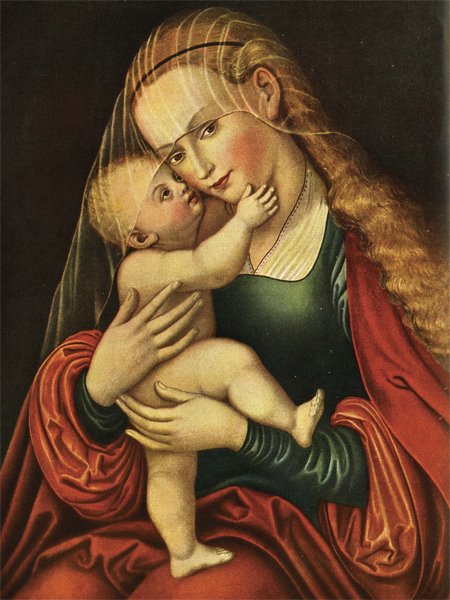
All the feasts of Our Lady are great events, because they are opportunities the church gives us to show with deeds that we love Mary. But if I had to choose one from among all her feasts, I would choose today's, the feast of the Divine Motherhood of the Blessed Virgin ...
When the Blessed Virgin said Yes, freely, to the plans revealed to her by the Creator, the divine Word assumed a human nature, with a rational soul and a body, formed in the most pure womb of Mary. The divine nature and the human were united in a single Person: Jesus Christ, true God and, thenceforth, true man: the only-begotten and Eternal Son of the Father and, from that moment on, as Man, the true son of Mary. This is why Our Lady is the Mother of the Incarnate Word, the Second Person of the Blessed Trinity, who has united our human nature to himself forever, without any confusion of the two natures. The greatest praise we can give to the Blessed Virgin is to address her loud and clear by the name that expresses her highest dignity: Mother of God.St. Josemaria Escriva, Friends of God
One could argue that these things were coincidences, that I ended up working with Chance and becoming friends with Henry Van Dyke's descendant because we are drawn to people with whom we share something. But I think it's more than that. I think these are examples of the ways that God delivers joy -- in new life, in new relationships, in pairings that seem unlikely, in circumstances that seem impossible. Part of the delight comes from recognizing the planning as well as the Planner. Like someone at a surprise party thrown in his or her honor, we're tempted to say, "For me?" The resounding response from heaven is always "Yes, my child! Just for you!"The Rosary: A Path into Prayer by Liz Kelly
 We were given a 3-month Netflix subscription and should have our first three movies by today or tomorrow. We begin with a nicely eclectic mixture of Superman Returns (Rose's choice), Mr. Smith Goes to Washington (Hannah's choice), and I Have Seen It (my choice, an Indian Bollywood-ish version of Sense and Sensibility). These will go far toward making our regular New Year's Eve movie and game fest interesting.
 The download of John Cleese reading The Screwtape Letters. I haven't had a chance to listen to much yet but Cleese so far is sardonically perfect in his delivery.
 This collection, Sugar Hill Records: A Retrospective, was given to Tom. Lucky us because it features an impressive range of artists. If you like bluegrass at all, consider getting this collection.
Distractions may make deep prayer difficult, but prayer does not necessarily need to be exceedingly deep to be deeply effective. I've learned not to fight my distractions but to lean into them, to embrace them. Sometimes I may stop my prayer and name the distraction: "Lord, I'm distracted by the people talking behind me as I'm trying to pray. Please help me get quiet inside myself." Or, "Lord, I can't get my workload out of my mind. Help me to be present to you." Surprisingly, those very distractions are often the means by which God leads me to a new understanding, an insight or an answer to a problem. God uses everything to get our attention. Don't assume that because you are distracted you are doing something wrong. That you are aware of your distractions is probably an indication that you are on the right track.The idea of using one's distractions as Kelly mentions is a new one to me but I like it. What a no brainer ... I am praying so why not ask God then to help with the distractions? I can't believe I never tried that before.The Rosary: A Path into Prayer by Liz Kelly
"At this point," he added, "I cannot fail to mention my concern over 'de facto' couples. ... When new legislation is created that relativizes marriage, the rejection of the definitive bond gains, so to speak, juridical endorsement." Moreover, "relativizing the difference between the sexes ... tacitly confirms those bleak theories which seek to remove all relevance from a human being's masculinity or femininity, as if this were a purely biological matter."He didn't stop there, of course, Celibacy, science, and culture wars were among his topics. Gee whiz, I love this pope!
"Herein is a contempt for corporeality whence it follows that man, in seeking to emancipate himself from his body (from the 'biological sphere'), ends up by destroying himself." Against those who say that "the Church should not involve herself in these matters, we can only respond: does man not concern us too?" The church and believers "must raise their voices to defend man, the creature who, in the inseparable unity of body and spirit, is the image of God."
| You Are a Traditional Christmas Tree |
 For a good Christmas, you don't have to re-invent the wheel. You already have traditions, foods, and special things you bring out every year. |
Most saints are hometown heroes, local boys and girls made good -- very good. that's not at all to diminish them. Every saint reflects the glory of Christ. But most were made saints because they were able to translate the gospel into a way of live that spoke in a special way to their time and place.I liked this book even better than I liked Scott's The Catholic Passion and you may remember that I really liked that book quite a lot.
Some saints -- a handful in the past two thousand or more years -- are sent to bear a message that transcends their moment and culture. They're raised up at critical junctures in history, when great gospel truths are in danger of being hijacked by heretics of plowed under by Christian indifference and forgetfulness.
... Catholics envision humanity -- with all its different cultures, races, and even religions -- as a single world family, a people loving one another and loving God. Mother Teresa showed us how far our world is from that. She showed us a world cleaved apart by blood and class, caste and creed, a world that fixed an impassable gulf between those who have too much and those who have nothing at all. She showed us a world in which people don't matter, especially the weak: the baby in th womb, the poor, the sick, the old. She showed us a world of people torn apart from within, not knowing who they are or what they should be about, not knowing what meaning there is to life, if any.
Mother Teresa became a household name in this world because God needed a witness, needed to send some sign that He is still on earth and that hope is growing like a seed beneath all the bleak contingencies of our days.
Mother Teresa had too much respect for the truth of her own conscience to ever fall into this trap of denying her Lord or the mission of His Church. "I love all religions but I am in love with my own," she would say. "Naturally I would like to give the treasure I have to you, but I cannot. I can only pray for you to receive it.
She earned the trust and friendship of Hindus, Muslims, Buddhists, and atheists. Many called her "Mother" and came to her for prayers and advice. But everyone knew that her heart belonged to Jesus and that she hoped that their hearts would one day belong to Him too. In this, she was a kind of missionary to missionaries, showing them new possibilities for preaching the gospel in an age of radical religious pluralism...
I must have repeated this a hundred times. I close my eyes, I open them to try to focus on the Lord by looking at Him, I close them again. Spontaneously, I pray: Have mercy on me, Lord. Instantly I can feel His presence, and I know that was the right thing to ask Him. I know all that’s between us is what I’ve put there.Brad takes us into Adoration with him. His depiction is the truest to my own sort of experience coupled with insights I really appreciate him opening up and sharing. "I know all that’s between us is what I’ve put there." No matter what separates us, isn't that the honest to goodness truth? Do go read. It is a lovely echo of a holy time.